
“Boredom is excellent, it asks you to look harder. Hype is too easy.”
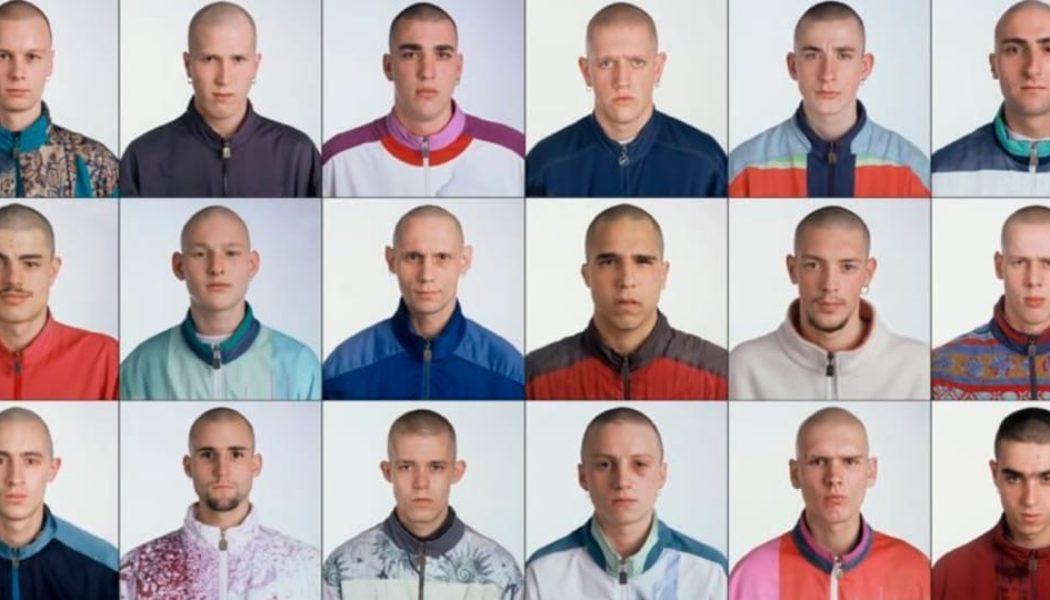
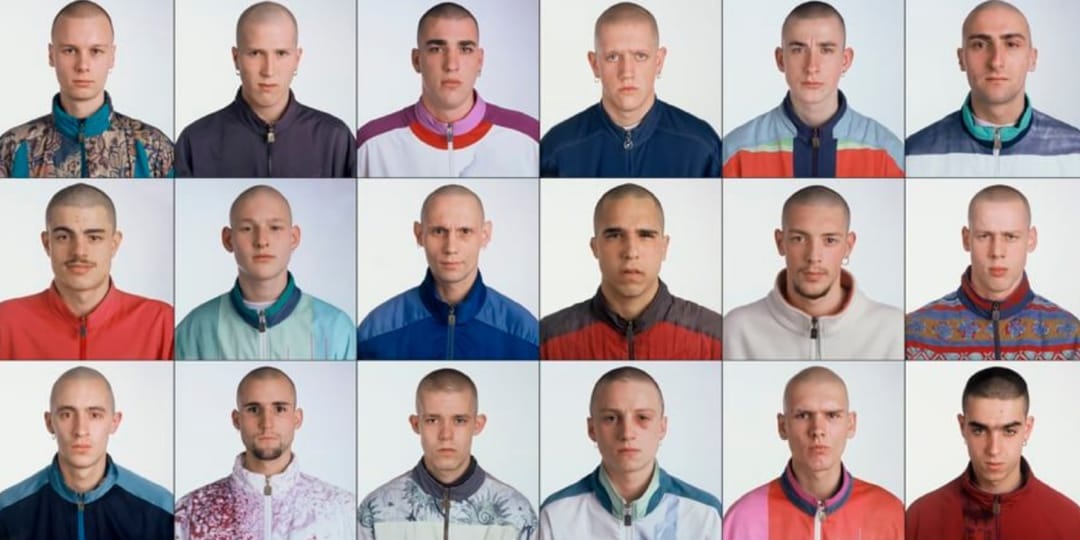
The lone gabber may turn a head or two. But 12 gabbers, 12 shaven heads and candy-colored zip-ups, makes a dress code, or as Versluis and Uyttenbroek call it, an “in-your-face uniformed identity.” With the premise of Exactitudes on lock, the artists would spend the next three decades using this same style of portraiture on other groups around the world, each grid wrought with irony: the more people broke away from the mainstream “look,” the more visible, and classifiable, their identities became. In short: you stand out by fitting in.
An Exactitude can start in several ways, the artists explain. A subculture may reveal itself, though the best way to catch one “is to sit down somewhere, stay there for weeks and let your observation guide you.” The two spent countless days combing through streets, clubs, churches, cafes and malls to scout their over 3,000 subjects. “The most memorable places we’ve been to are the most mundane. Boredom is excellent, it asks you to look harder. Hype is too easy.”
After 30 years of collaboration, Versluis and Uyttenbroek have decided to bow out with the seventh and final print edition of Exactitudes to return focus to their respective studio practices. While the project has come to a close, it will always hold a special place in the zeitgeist, having introduced a new legibility, clarity and order to street style photography, a mode typically marked by a candid grit.
A single pass through Exactitudes makes its thoughtfulness clear, with each subject posed with careful, exacting intent: the ever-so slight thigh graze in “Bimbos,” the moody “Mohawk” side profiles or the rotund, hands-on-hip confidence of the “Young Activists.”
Grids themselves swing between humor, tenacity and tenderness, without cruelty or exoticism. Subjects are plucked from their natural environments, and positioned against a white studio backdrop. Every style family is held at a healthy arm’s length – intimate enough to humanize, yet far enough to see that even our most “unique” are never alone.