HBO’s medical drama has been teasing out a smart story about what makes gen AI so tempting and concerning.
HBO’s medical drama has been teasing out a smart story about what makes gen AI so tempting and concerning.

Each episode of HBO’s The Pitt features some degree of medical trauma that almost makes the hospital drama feel like a horror series. Some patients are dealing with gnarly lacerations while others are fighting off vicious blood infections that could rob them of their limbs, and the chaos of working in an emergency room often leaves The Pitt’s central characters shaken. But as alarming as many of The Pitt’s more gore-forward moments can be, what’s even more unsettling is the show’s slow-burning subplot about hospitals adopting generative artificial intelligence.
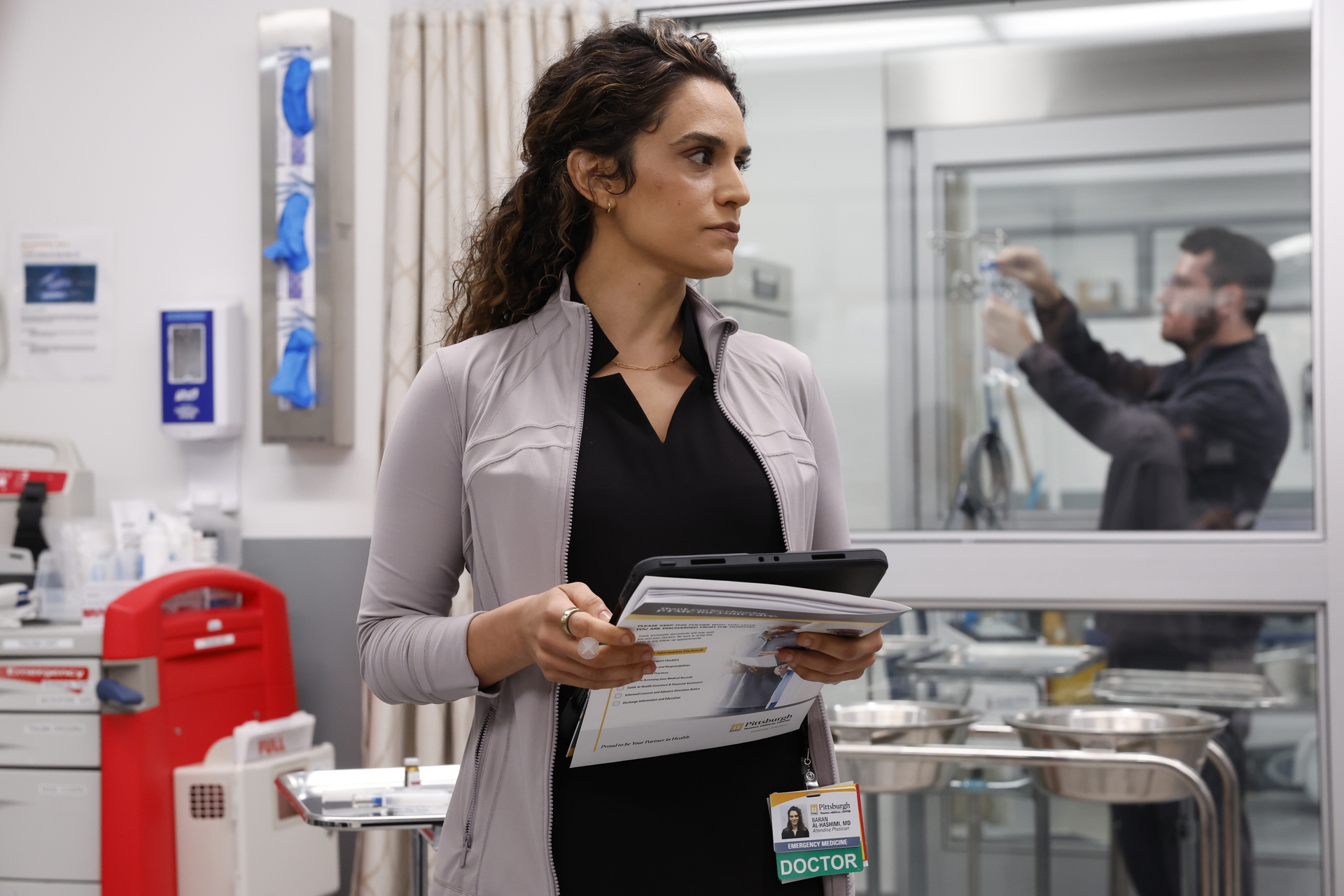
In its second season, The Pitt once again chronicles all the events that happen during a single 15-hour day shift in the Pittsburgh Trauma Medical Center’s emergency room. Season two takes place on the Fourth of July — one of the busiest days for hospitals — as senior attending physician Dr. Michael “Robby” Robinavitch (Noah Wyle) is working one last shift before he takes a much-needed sabbatical. With Dr. Robby scheduled to be away for three months, the hospital brings in Dr. Baran Al-Hashimi (Sepideh Moafi) to help lead the emergency room while he’s away. There’s some personality-based friction between the attendings, but Dr. Robby mostly respects how Dr. Al-Hashimi navigates her work except when she insists that the hospital would be better off if it committed to using a piece of AI-powered transcription software.
Though this season starts off relatively calm, the day becomes increasingly stressful for all of The Pitt’s characters as the hospital becomes filled with people needing medical attention. Staying on top of her work is especially taxing for second-year resident Dr. Trinity Santos (Isa Briones) because she simply doesn’t have enough time to see all of her patients and carefully note all of their symptoms in their medical charts.
Dr. Al-Hashimi knows that AI-generated transcripts aren’t perfect, but she sees Dr. Santos as the perfect example of a doctor who could get through their charting faster with the technology’s help. To the fictional software’s credit, it does accurately transcribe most of Dr. Santos’ dictation. But both doctors are stunned when a surgeon storms into the ER in a rage after receiving charts with very obvious, glaring errors that could have led to patients receiving incorrect care.
Rather than running headlong into a “generative AI is bad and dangerous” ripped-from-the-headlines plot, The Pitt has taken its time to explore the reasons why medical professionals might want to use this kind of technology and the importance of looking at it with some skepticism. Dr. Al-Hashimi encourages her medical students and residents to use the transcription software, but she’s also diligent about warning them that they need to double-check any work completed with AI because they — not their tools — are responsible for how patients are treated. Each of Dr. Al-Hashimi’s warnings come across as The Pitt acknowledging real-world instances of patients suing hospitals over botched surgeries involving the use of AI tools and studies that have found large language models to be unreliable in their ability to accurately predict patient health outcomes. The Pitt also uses Dr. Al-Hashimi’s AI boosterism to hammer home how adopting the technology in professional settings can actually create more busywork (see: double-checking transcriptions) while contributing to people burning out. Initially, Dr. Al-Hashimi seems like she might be a major antagonistic presence this season, but The Pitt’s writing team has very smartly chosen to focus on a bigger idea.
This season of The Pitt has been repeatedly emphasizing that technology can only do so much to solve problems when it isn’t really designed to address the real issue at hand. AI-powered transcription can help Dr. Santos finish charts more quickly (with some errors thrown in for good measure). But the software can’t do much about the emergency room being understaffed, or when the doctors and nurses are suddenly tasked with taking in more patients after another hospital goes on lockdown.
The way characters like Dr. Santos and nurses like Dana Evans (Katherine LaNasa) find themselves inundated with demanding patients who have spent hours in overstuffed waiting rooms feels like a direct reflection of the real-world challenges hospitals across the country are facing. To truly get a hold on their workloads, The Pitt’s ER staff really needs more hands on deck and more space to give patients the appropriate care. But with the country facing a nursing shortage and the fictional hospital being perpetually underfunded, it tracks that administrators would want to try boosting productivity using AI.
The Pitt easily could (and still might before the season’s over) tell a story about how errors caused by using gen AI lead to mistakes in operating rooms that can leave medical professionals open to lawsuits. But the show is right for highlighting the reality that there are some critical workplace issues that can’t be fixed simply by throwing new kinds of technology at them.