

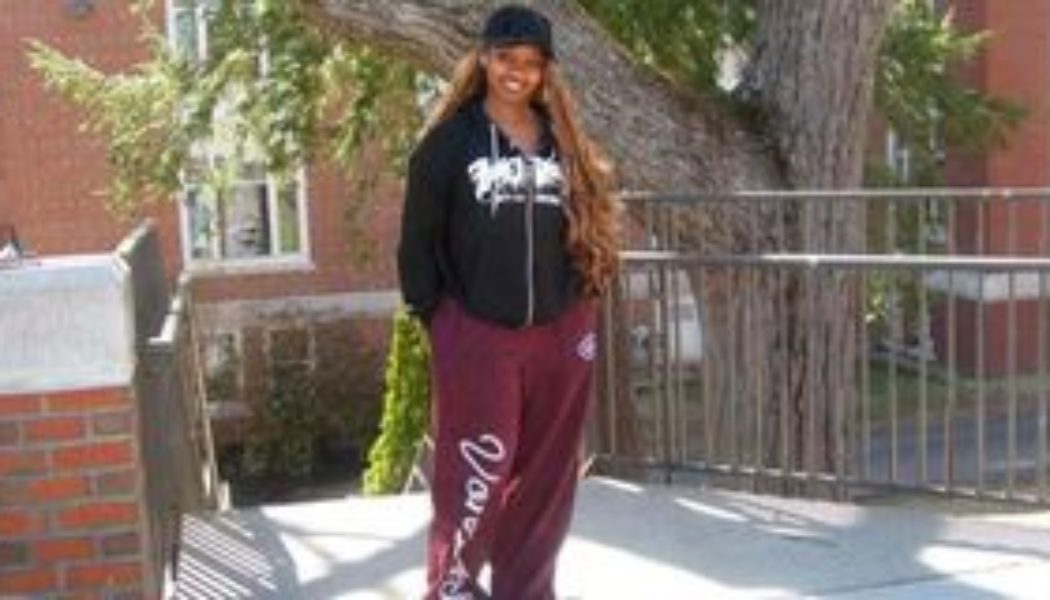
Margaret Ndirangu, a Kenyan student in the US, rarely leaves her room without all her papers. Inside her bag, she carries her passport, her I-20, letters from her college—every document that proves she is in the US legally.
“You carry everything,” she says. “It gives you peace of mind.”
For now, under the Donald Trump administration, that routine anchors her days in the US: work at the university’s IT desk, helping students fix Wi-Fi issues and connect to printers, finish her engineering readings, and keep the papers close.
She is among international students in the US who have taken a cautious approach to avoid risks of losing scholarships if unable to complete their study in the US, owing to the Trump administration’s policies.
She has been back to Kenya once and returned to the US without problems.
“They just asked for my I-20 and passport, and I got back,” she says, “But I had fears, and I cut the visit short. I was worried that the US administration might announce closures while in Kenya because of the recent Ebola cases. A travel ban can come with little warning.”
The sophomore student in Maine, US, says when reports started circulating around the university that ICE (Immigration and Customs Enforcement), agents were operating near campus, the school told them to avoid going out alone. Groceries were brought in for students who did not feel safe leaving.
“They were like, ‘if you really need to go somewhere, get an American friend to go with,” Margaret recalls. “Having all those rules around you, it makes you feel uneasy. It gives you the feeling that this is not a place where you’re wanted.”
Immigration jitters aside, Margaret looks at this as an opportunity of a lifetime. She never thought that one day she would be studying in the US. She grew up in rural Kenya.
After finishing her KCSE exams, her uncle fell ill, and she became his caretaker. University seemed unlikely. A partial scholarship to Strathmore Business School helped, but it was not enough.
Going through an old notebook from a career session at school, she found a name: Kenya Scholar Athlete Project (KenSap). It was a programme that helped Kenyan students apply to American colleges.
“I remember I sent my application to KenSap sitting outside Kenyatta National Hospital,” she says.
She got a scholarship, and when the time came to apply for her visa, she was prepared. She had her I-20, the document the US government uses to track international students, her passport, and a letter showing full financial aid from Bates College in Maine. The process was straightforward.
“If you have full financial aid and you show that the school is going to cover everything, it is easy to get the visa,” she says.
Margaret’s twist of fate
Her visa was approved about a week before the US administration began tightening its immigration rules.
Still, she was not without fear. Stories of visa denials were circulating, and she had heard of students who had done everything right and still been turned away. She held her breath until the approval came through.
Today, Margaret, in addition to studying engineering, works at the school’s IT help desk. She works up to 20 hours a week and earns about Sh1,900 an hour.
Margaret Ndirangu, 20, is a rising sophomore at Bates College in Lewiston, Maine, pursuing engineering.
Photo credit: Pool
“I earn about Sh64,700 per week, so that is like Sh129,000 per month,” she says. Since her financial aid covers food and housing, she keeps most of it. “The maximum I use in a month is like Sh12,900 to Sh25,800.”
She plays tennis, recently joined the knitting club, and is thinking about graduate school, possibly in Europe. “I feel like there is less pressure there compared to the US,” she says.
New perspective on future in US
Jada Amani is another student in the US. Since she left for the US, she has not made it back to Kenya yet. She had planned to travel home this summer, but Ebola changed things.
“You do not know what the immigration will say,” she says. “If Kenya is banned, how am I finishing my degree?”
The worry is not just about coming home. It is about getting back. She misses home deeply. She misses her grandmother. She even misses foods she never thought she would crave.
“I never thought I would say these words, but I miss ugali and omena,” she says.
The spring semester was hard. When ICE activity was reported near campus, Jada was anxious about going anywhere without her documents.
“I had to walk with my passport, my I-20, basically all my immigration documents just in case,” she says.
Sponsors pull back
The raids also changed how she thinks about her future in the US. Companies that used to offer visa sponsorship to international students have started pulling back because sponsoring a foreign worker may cost an employer about Sh1.2 million.
“The pool for international students is really low now,” she says. “Only the big companies like Google and Apple offer sponsorships. And for those, you are competing with so many students.”
She copes through community, through the African Alliance on campus, through dance clubs and birthday celebrations, and through TikTok, where her Kenyan followers showed up for her in the comments during her worst winter days.
Eye on the target
At Bowdoin College in Brunswick, Maine, in the US, she says temperatures can drop to -44 degrees Celsius. She got a special lamp to help with seasonal depression, the kind that mimics sunlight. She started eating salads to counter the French fries and hamburgers she had been surviving on.
“I started eating raw leaves,” she says. “I have graduated in that sense.”
However, Jada is happy being in the US, actualising her dream of doing a double major in mathematics and computer science, a path she had thought of since Form One, watching YouTube videos of students at schools like Harvard University.
“I arrived at Boston airport on August 23. It was just surreal,” she says. “I was looking around, seeing things I had only watched online.”
Work & scholarship
Like Margaret, Jada works on campus as an IT assistant. She fits her hours around her class schedule; working mornings on lighter days and afternoons on busier ones.
“They are very flexible,” she says. She earns around Sh2,500 an hour and can take home between Sh77,600 and Sh130,000 a month depending on how many hours she puts in. She is also on scholarship, and her financial aid covers food and housing.
“I only really spend on toiletries and my hair,” she says. “Maybe Sh12,900 to Sh25,800 a month.”
The school also covered the student and exchange visitor information system (Sevis fee), a government requirement for all international students.
“It took me two months,” she says. “And it was smoother because I got my visa before the administration (Trump administration) began the crackdowns.”