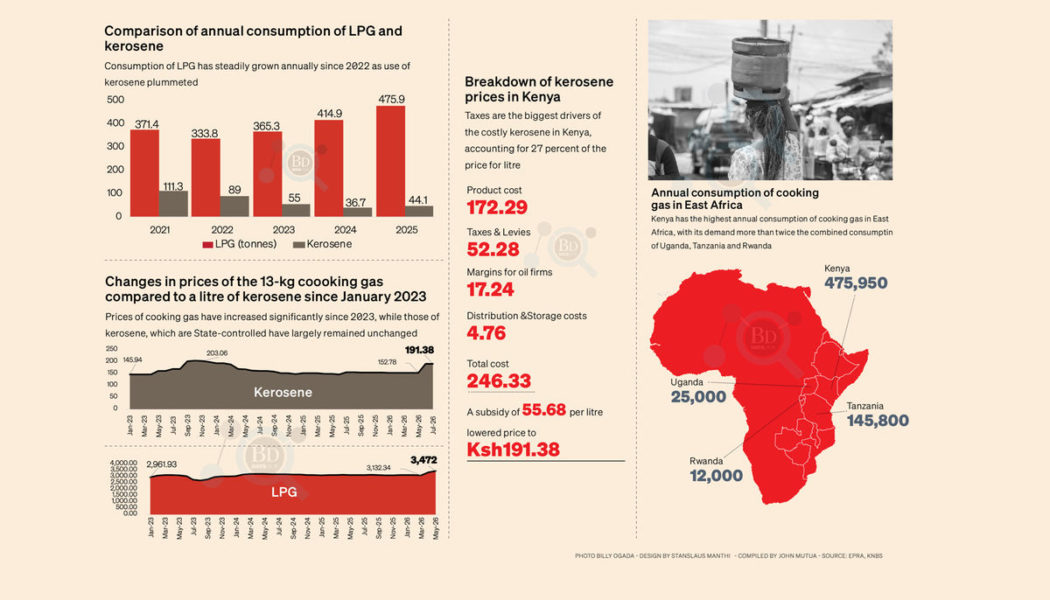
Consumption of kerosene has dropped by more than half in the past five years as more homes turn to cooking gas, boosting the government’s efforts to increase uptake of clean fuel.
An analysis of official data shows that the 44.1 metric tonnes of kerosene consumed last year marked a 60.3 percent decrease from the 111.3 metric tonnes used in 2021.
This coincided with a surge in the use of Liquified Petroleum Gas (LPG), with homes and businesses consuming 475,950 metric tonnes of cooking gas last year, a 28.2 percent increase from 371,400 metric tonnes in 2021.
The increased use of LPG is a major boost to the government’s push to reduce consumption of dirty fuels like kerosene, which pose health risks.
“The continued uptake of LPG is expected to further reduce dependence on biomass fuels and kerosene, contributing to improved environmental outcomes, enhanced health and increased household access to clean cooking energy,” Petroleum Institute of East Africa (PIEA), the lobby for oil marketers in Kenya says.
The government has employed a raft of measures to spur usage of LPG for cooking, notably the scrapping of the eight percent Value Added Tax, the 3.5 percent Import Declaration Fee and the two percent Railway Development Levy.
The tax breaks on LPG contrast with the introduction of the Sh18 anti-adulteration levy on kerosene and the removal of subsidies on the commodity in order to make it costly and discourage its consumption.
The spike in usage of LPG in the five years has made Kenya the region’s pace-setter in the shift to clean cooking fuels.
At 475,950 metric tonnes, Kenya’s annual consumption is more than double the combined usage of the fuel in Uganda, Tanzania and Rwanda. The total annual consumption in the three economies is estimated at 182,800 metric tonnes.
Tanzania has the second-highest annual consumption of cooking at an estimated 145,800 metric tonnes followed by Uganda at 25,000 metric tonnes and Rwanda (12,000 metric tonnes).
Kenya’s regional position as the leader in LPG consumption underscores the country’s status as the biggest economy in the region, with a Gross Domestic Product of $135.68 billion, ahead of Tanzania at $89.9 billion, Uganda ($66.01 billion) and Rwanda at $16 billion.
Affordability of LPG is largely linked to the purchasing power of consumers, according to the World Bank, highlighting why Kenya leads in the region.