
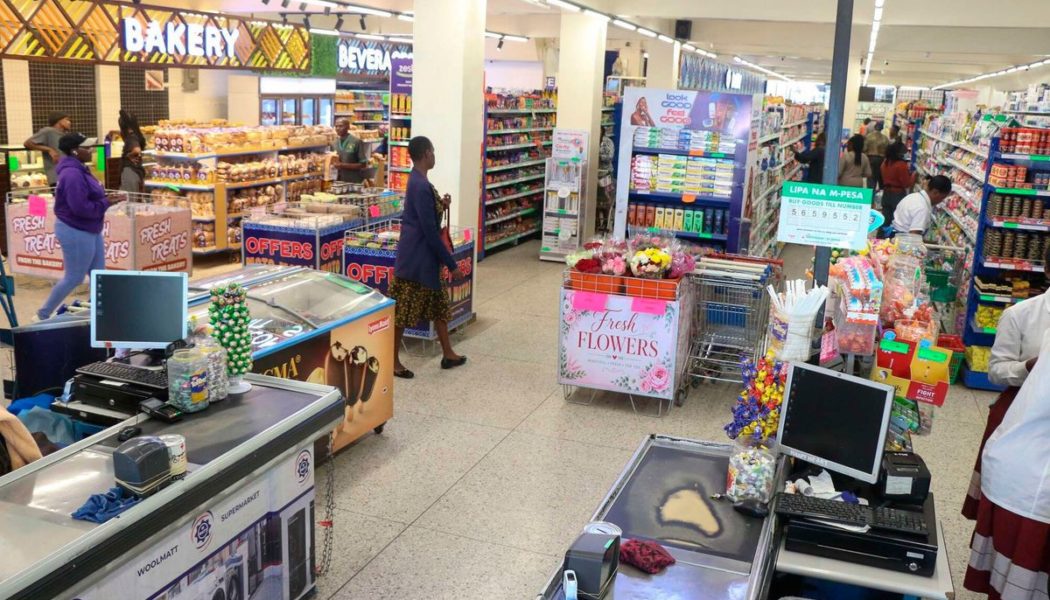

Top supermarkets, including Naivas, Carrefour and Quickmart, have found themselves on the competition watchdog’s radar over price cheating amid rising complaints from consumers.
The Competition Authority of Kenya (CAK) investigated the retailers for posting different prices on the shelves from what they were charging customers at the till.
The regulator also covertly investigated the supermarkets for cases of misleading consumers by raising prices on products before discounting them, so it would seem to consumers that the discounts were bigger.
Buyers complained of incorrect pricing at the registry, with the complaints hinged on the sticker prices being lower compared with the product cost at the cashier.
Carrefour was forced to refund a shopper, Lena Gathiri, after the purchase of a rice package that was presented as a product on promotion being charged a higher price at the counter.
“The complaint alleged that Carrefour indicated the five-kilogramme Dawaat rice was on offer, yet the price at the till was different,” the CAK states in its latest annual report.
“The complainant was refunded and a warning was issued to Carrefour and the matter was closed.”
The CAK’s sanctions on supermarket chains are backed by Sections 55 to 70 of the Competition Act, which give the watchdog powers to investigate complaints relating to false or misleading representations, unconscionable conduct and the supply of unsafe, defective and unsuitable goods.
Similar consumer complaints in rival supermarkets revealed a price violation problem in the sector.
Supermarkets have used promotions to attract buyers, driving turnover and profitability in a competitive field that has expanded steadily after the collapse of major retailers, including Nakumatt and Tuskys, nearly a decade ago.
An executive in one of the top supermarkets reckons that the pricing breach is not unique to Kenyan supermarkets, terming it unintentional.
The inconsistent prices, the executive said, often result from human error as store attendants are required to revise sticker prices manually.
The executive said the discrepancy in pricing also flips to the advantage of customers who get charged lower prices at the till compared to the product costs on the shelves.
“This is not a new problem, but it has never been an intentional error, as it has also happened in the reverse. We don’t have an automated way of changing shelf prices overnight,” said the executive who spoke anonymously.
“This phenomenon is caused by human error and happens all over the world. Most retailers have a remedy where they offer customers the price on the shelf.”
A shopper, Samuel Kinyanjui, filed a complaint alleging the purchase of an alcoholic beverage at a Naivas branch for Sh1,120, a price higher than Sh899 displayed on an advertisement on social media.
The CAK has investigated the breach, but has not made public its verdict on the probe or whether the review is ongoing.
Quickmart and Magunas Supermarket faced similar probes after consumers lodged complaints with the competition watchdog.
Quickmart faced a complaint from JME Simekha, who alleged having been charged more than the indicated offer price for refilling his cooking gas at the supermarket.
Similarly, Mohamud M and Kevin Wagwa, had grievances against Magunas for purchasing items at costs higher than their sticker prices.
The CAK independently initiated investigations into the labelling of retailer-branded products sold at supermarkets and sought to establish if their discounted prices were higher than earlier sale costs.
The watchdog made covert purchases of retailer-branded products from stores including Naivas, Mathai’s Supermarket, Kisii Mart and Cleanshelf Supermarkets.
The regulator also sought to check if the products were properly labelled, seeking standards such as display of expiry date, ingredients, nutritional attributes and place of origin.
At the end of its probe, however, the CAK did not impose sanctions on any retail outlet and closed its investigations.
The watchdog separately found the labelling of sugar under Shivling Supermarket lacked the date of manufacture, expiry and batch numbers in breach of standards set by the Kenya Bureau of Standards (Kebs).
The regulator extended the investigations on the retailer beyond June 2025.
The CAK probe of supermarkets mirrored a 2021 investigation into bread manufacturers who were put on notice for declaring false and misleading information about their products.
The watchdog said investigations revealed that the bread makers had failed to provide the date and month of manufacture on their bread wrappers, while others were printing them on seals that were not legible or visible to buyers.
The actions by the bread makers contravened Section 55(a)(i) of the Competition Act and that manufacturers were also not adhering to product information standards provided by Kebs.
The CAK ordered the bread makers to provide a list of ingredients and the net weight of their products in grams and legibly print the date and the month that the product was made on the wrappers.
The authority also asked the manufacturer to use the terms “Best Before” as opposed to “Sell By” in indicating product expiry dates and clearly specify the vitamins and minerals used in the fortification of their bread.
An earlier survey of Kenya’s retail sector unearthed challenges, including abuse of power, market allocation, the nature of contractual agreements and consumer protection concerns.
The survey observed violations contrary to consumer protection rights.
“The sector continues to record various challenges in this area. These include: dual pricing, stocking of expired/unsafe goods, product labeling, failure to honour warranties, handling consumer complaints, and return policy, among others,” CAK said in its inquiry report.
“The existence of the above practices is against various provisions that entitle consumers to certain rights.”