

Crypto
Wazupnaija – Naija Entertainment blogs & Forums – Business – Crypto


3 reasons why Ethereum price can drop below $3K by the end of 2021
Ethereum’s native token Ether (ETH) reached an all-time high around $4,867 earlier in November, only to plunge by nearly 20% a month later on rising profit-taking sentiment. And now, as the ETH price holds $4,000 as a key support level, risks of further selloffs are emerging in the form of multiple technical and fundamental indicators. ETH price rising wedge First, Ether appears to have been breaking out of “rising wedge,” a bearish reversal pattern that emerges when the price trends upward inside a range defined by two ascending — but converging — trendlines. Simply put, as the Ether price nears the Wedge’s apex point, it risks breaking below the pattern’s lower trendline, a move that many technical chartists see as a cue for more losses ahead. In doing so, t...


Matt Zhang on a mission to reinvent crypto for institutional investors
Institutional interest in cryptocurrencies is increasing as the space continues to mature. A survey released on Dec. 8 by European investment manager Nickel Digital Asset Management found that 85% of institutional investors and wealth managers have dedicated teams to review cryptocurrencies and digital assets. The study noted that the investors surveyed manage around $108.4 billion in assets. The London-based firm also released a report in September of this year showing that 62% of global institutional investors with zero exposure to cryptocurrencies expect to make their first crypto investments within the next year. It’s also notable that Wall Street veterans are beginning to enter the crypto industry. Most recently, Matt Zhang, a former trading executive at the global bank Citi, la...


A letter to Zuckerberg: The Metaverse is not what you think it is
Dear Lord Sugar Mountain, Attention: to my Facebook friend who is building a version of the metaverse that nobody wants as a starter. The last few years must certainly not have been easy. Your business model centered around polarization and, subsequently, outrage has ironically unified many of us against relying too much on your social media platform. Your government — whose sniper rifle accuracy you know all too well as they took out your ill-conceived stablecoin project shortly after your expensive global advertising campaign went live — has tuned in to the many whistleblowers exposing how your company captures and sells attention. It has called you in for questioning. Although to be fair, they also needed to speak with you to better understand the basics of digital ad revenue. What do p...

2 key Bitcoin trading metrics suggest BTC price has bottomed
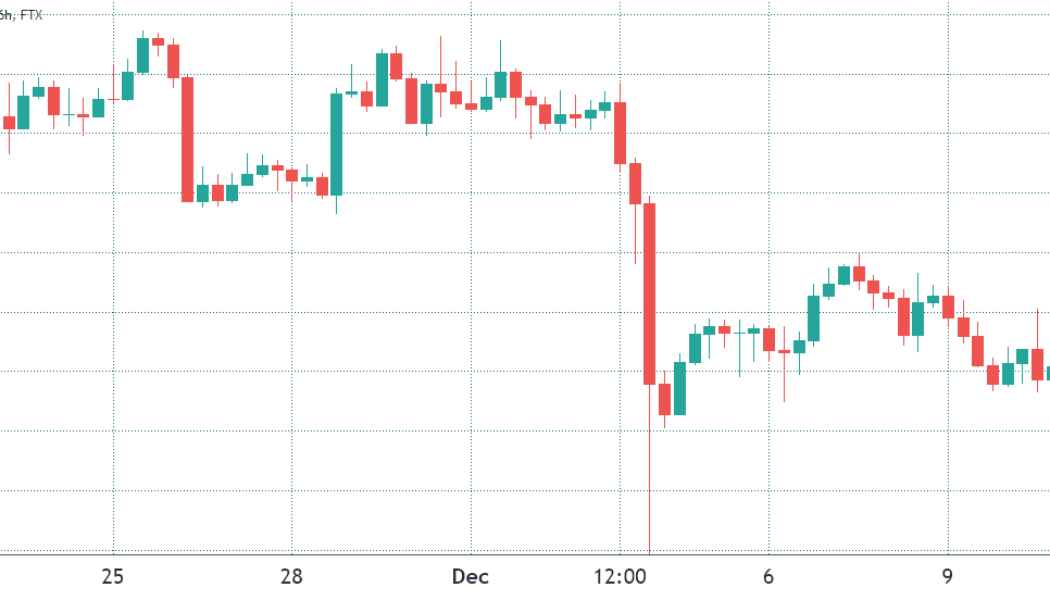
Bitcoin (BTC) has been struggling to sustain the $47,500 support since the Dec. 4 crash, a movement that wiped out over $840 million in leveraged long futures contracts. The downside move came after the emergence of the Omicron variant of the Coronavirus and recent data showing U.S. inflation hitting a 40-year high. Bitcoin/USD price at FTX. Source: TradingView While newcomers might have been scared by the 26% price correction over the past month, whales and avid investors like MicroStrategy added to their positions. On Dec. 9, MicroStrategy announced that they had acquired 1,434 Bitcoin, which increased their stake to 122,478 BTC. According to some analysts, the rationale behind Bitcoin’s weakness was the contagion fear that Evergrande, a leading Chinese property developer, defaulte...

ZK-rollups step into the limelight after the quest to scale Ethereum evolves
Scalability on the Ethereum (ETH) network has been a point of contention within the cryptocurrency ecosystem for years, primarily due to high fees and network congestion during periods of peak demand. The latest solution to emerge as the final fix to Ethereum’s scalability woes are Zero-knowledge rollups (ZK rollups), a form of scaling that runs computations off-chain and submits them on-chain via a validity proof. Zk rollup season — cryptowarlord.eth ( ͡° ͜ʖ ͡°) (@CryptoWarlordd) December 7, 2021 Earlier in the year, protocols that opted to use optimistic rollups such as Optimism and Arbitrum dominated the headlines and were touted as the best solution to scaling on Ethereum, but aside from Arbitrum, the hype for those protocols has quieted down and traders have pointed out that even opti...


Point of no return? Crypto investment products could be key to mass adoption
The first Bitcoin (BTC) futures exchange-traded fund (ETF) was launched in the United States back on October 19, 2021. Since then, a number of other cryptocurrency investment products have been launched in various markets. That first ETF, the ProShares Bitcoin Strategy ETF, quicklybecame one of the top ETFs of all time by trading volume on its debut, and soon after, several other Bitcoin futures ETFs were launched in the United States, providing investors with different investment options. To Martha Reyes, head of research at cryptocurrency trading platform Bequant, these options are important. Speaking to Cointelegraph, Reyes pointed out that in traditional finance, ETFs have “proved to be incredibly popular in recent years, with ETF assets expected to reach $14 trillion by 2024.” Reyes s...


Indian PM calls for cryptocurrencies to ’empower’ democracy at global summit
Cryptocurrency made an appearance at a global online summit for world leaders in a speech from Indian Prime Minister Narendra Modi. At Friday’s events for the Summit for Democracy hosted by U.S. President Joe Biden, Modi said India would be willing to offer other countries “innovative digital solutions” to facilitate free and fair elections and governance. In addition, the Prime Minister called for a global standard on cryptocurrencies and major social media platforms, likely referring to the impact some have had on politics in India as well as many other countries: “We must also jointly shape global norms for emerging technologies like social media and cryptocurrencies so that they are used to empower democracy, not to undermine it […] By working together, democracies can meet...


6 Questions for Jane Thomason of Kasei Holdings
We ask the buidlers in the blockchain and cryptocurrency sector for their thoughts on the industry… and we throw in a few random zingers to keep them on their toes! This week, our 6 Questions go to Jane Thomason, an entrepreneur and thought leader in technological innovation, fintech and blockchain for social impact. She is also the founder of Supernova Data, co-founder of the British Blockchain and Frontier Technologies Association, and chairperson of Kasei Holdings, an investment company specializing in the digital asset ecosystem. I have always believed we can change the world! For most of my life, I tried that in an analog way. In 2016, I discovered blockchain, and I realized it was a game-changing technology for social impact. I needed to be part of making that happen, so I left my da...

Inside the blockchain developer’s mind: Proof-of-stake blockchain consensus
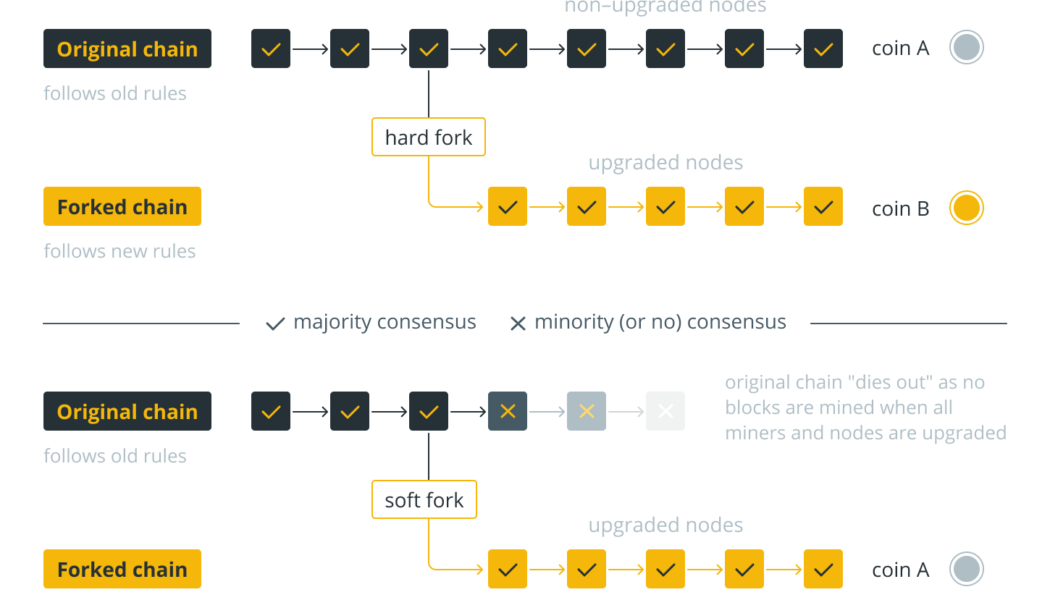
Cointelegraph is following the development of an entirely new blockchain from inception to mainnet and beyond through its series Inside the Blockchain Developer’s Mind. In previous parts, Andrew Levine of Koinos Group discussed some of the challenges the team has faced since identifying the key issues they intend to solve and outlined three of the “crises” that are holding back blockchain adoption: upgradeability, scalability and governance. This series is focused on the consensus algorithm: Part 1 is about proof-of-work, Part 2 is about proof-of-stake and Part 3 is about proof-of-burn. This article is the second in my series about consensus algorithms, in which I leverage my unique perspective to help the reader gain a deeper understanding of this often misunderstood concept. In the...


Bitcoin Core developer Samuel Dobson decides it is ‘time to go’
Developer Samuel Dobson announced via a series of tweets on Thursday night that he is stepping down as a Bitcoin Core maintainer after three years as he “can no longer dedicate the time required, as I approach the end of my Ph.D.” I am officially stepping down as a maintainer of Bitcoin Core. Serving as the wallet maintainer for the past three years has been an absolute privilege, and I want to thank my incredibly generous sponsor John Pfeffer (@jlppfeffer) for his support throughout. /1 — Samuel Dobson (@meshcollider) December 9, 2021 As a Bitcoin Core wallet maintainer, Dobson had direct access to the cryptocurrency’s code on GitHub, with permissions to approve changes and make improvements to the Bitcoin software. He was also responsible for ensuring the security of the protocol. ...


Indian prime minister Modi’s hacked Twitter account attempts BTC scam
The official Twitter account of Indian Prime Minister Narendra Modi got compromised earlier today, which was then used to share misleading information about the mainstream adoption of Bitcoin (BTC) and redistribution of 500 BTC among the Indian citizens. On Dec. 10, Modi said in a virtual event virtual summit hosted by US President Joe Biden that technologies such as cryptocurrencies should be used to empower democracy and not undermine it: “By working together, democracies can meet the aspirations of our citizens and celebrate the democratic spirit of humanity.” While the long-awaited Lok Sabha Winter Session, a parliamentary meetup intended to discuss the legality of cryptocurrencies in the region, did not conclude the government’s stance on crypto, hackers from unknown origins man...


The Metaverse will bring unbridled evolution to NFTs
Even as nonfungible token (NFT) transactions have taken off and made headlines, to most people outside the crypto world, they’re just a gimmick. The metaverse will change that. There’s always a tipping point when new technologies go from incomprehensible fringe interest to, suddenly, part of life. That point usually comes from the confluence of a number of drivers and, right now, we’re experiencing what happens when two such trends hit the inflection point together. Mark Zuckerberg’s decision to rebrand Facebook to Meta was enough to propel the metaverse into major headlines around the world, although the concept has been around for at least three decades. It is this apparent sudden emergence of the metaverse that provides the escape velocity for the rehabilitation of NFTs’ image as a spec...
