

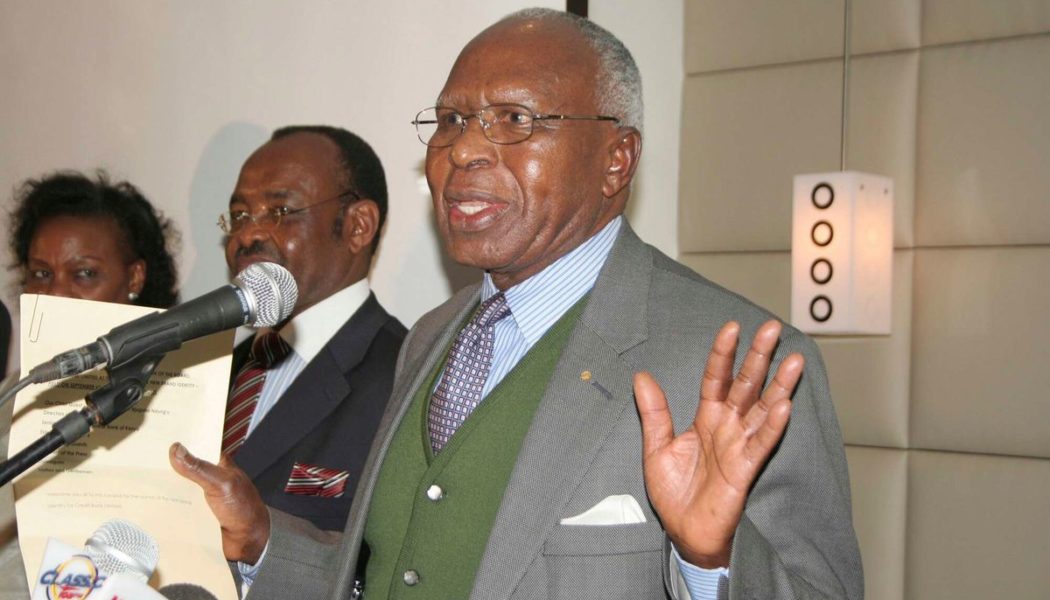
The High Court has cleared the way for the distribution of the multi-million-shilling estate of former Cabinet Minister Simeon Nyachae.
This follows dismissal of a challenge by his son, Charles Ayako Nyachae, against his stepmother Grace Nyachae and other family members over the management of the family’s income-generating properties.
The ruling removes another obstacle in the administration of the late minister’s estate, which has been the subject of several court battles since his death in February 2021, including disputes over beneficiaries, estate management and control of family-linked businesses.
The estate comprises a vast portfolio of rental properties, banking investments, manufacturing businesses and agricultural assets held through the family’s Sansora Group of Companies, although its full financial value has never been publicly disclosed.
The portfolio includes a 27.1 per cent family stake in Credit Bank, 8.6 million NCBA shares, historical investments in Transnational Bank and Kenindia Assurance, milling and grain-processing firms such as Swan Millers and Sansora Bakers, tea and large-scale farming ventures.
Nyachae served as MP for Nyaribari Chache from 1992 to 2007, having earlier risen through the ranks of the provincial administration to become Chief Secretary.
He also served as Cabinet Minister in President Daniel arap Moi’s administration and later mounted a presidential bid in 2002.
The court dismissed an application filed by Charles seeking to stop Grace Nyachae and his stepbrother Leon Nyachae from administering rental properties belonging to the estate and collecting rent through Sansora Group of Companies.
He had also sought orders compelling them to account for all rental income collected since February 2021, deposit the money in court and hand over management of the properties to Ark Consultants Ltd.
The court, however, found no evidence that the estate had been mismanaged, wasted or unlawfully handled: “The prayer for an injunction to restrain the respondents from managing the properties and the prayer to appoint Ark Consultants Ltd are hereby dismissed.”
The court further directed that management of the properties should remain under Sansora Group of Companies Ltd, saying the arrangement had been authorised by Nyachae before his death and subsequently approved by a majority of the executors named in his Will.
The dispute arose after Nyachae died on February 1, 2021, leaving behind a Will dated September 9, 2015.The Will appointed Charles, Eric Maina Nyachae and Angela Nyarangi Nyachae as joint executors of the estate. The High Court issued them with a grant of probate in May 2022.
Soon after, disagreements emerged over the management of rental properties that form part of the estate.
Charles argued that Grace and Leon had illegally taken over administration of the assets and were collecting what he described as colossal rental income without authority. He further accused his co-executors, Eric and Angela, of abdicating their duties and aiding the alleged interference with estate affairs.
Through his court filings, Charles maintained that administration of the estate should rest with the executors and not with a private company.
But the respondents told the court that Sansora Group was not a stranger to the estate. They said the company had been appointed by the late Nyachae himself under a written agency agreement signed in December 2015 and had managed the properties for years before his death.
Leon told court the arrangement continued with the consent of the majority of executors. Eric and Angela also defended the arrangement, citing a clause in the Will that allows decisions to be made by a majority of executors whenever disagreements arise.
The court agreed, holding that the late Nyachae had expressly anticipated possible disagreements among executors and provided a mechanism for resolving them through majority decisions.
“To override this clause on the application of a single dissenting executor would be to defeat the testator’s clear intention,” the judge said.
The court also noted that audited statements prepared by HLB Cezam and Associates had been provided and showed the estate’s rental income was being accounted for and held in interest-earning accounts.
The ruling comes weeks after the grant relating to the estate was confirmed on June 2, 2026, a development the court said effectively overtook some of the complaints raised in the application. The court held that executors had already met their accountability obligations and should proceed with distribution of the estate.
“Overall, this application stands as dismissed,” the judge ruled.
The decision marks a significant step toward winding up one of the most prominent succession cases and distributing the assets and business empire the politician built over decades.