
“We saw a need for the reemergence of a modern spirituality, and FriendsWithYou gave us a means to battle forces of sadness and isolation, with cuteness and joy as our secret weapons.”
In your own words, what is the FriendsWithYou origin story?
Samuel Borkson: It all happened organically. We both had a real love for humanity and saw that people were growing colder and darker in their isolation. We saw a need for the reemergence of a modern spirituality, and FriendsWithYou gave us a means to battle forces of sadness and isolation, with cuteness and joy as our secret weapons.
When we started this, nothing was cute — everything was about being cool. We were just guys living in Miami who wanted to spread love and kindness in a way that was healing and powerful. It was our way of being superheroes in the world.
Arturo Sandoval: The a-ha moment came when we first worked together. Our first project was a collection of plush toys — conceptual artworks that functioned as amulets for the contemporary age. Right after we did the toys, we tried installation and performance, and thought, ‘This is working.’ It was north of how we intended to express ourselves, but it guided us through multitudes of artistic expressions. Even 25 years later, we’re still trying to figure it all out.
In embarking on a path of spiritual connection to the world and ourselves, we took on this punk rock, naive version to the traditional white-walled gallery dynamics. We weren’t aspiring to exist in a small niche within the art world. We wanted our work to get to everyone.
How do you see these concepts of cute and cool talking to, or finding tension with, one another?
SB: Cute has become a major player in this world. People want to be loving and cute and now that’s become cool. We started this at a time when everybody was so apathetic, giving up and becoming corporate. Humans need to be the loving force and the pursuit of “cool” started to steer us away from that.
Little Cloud has become an emblem of FriendsWithYou. How did you land on this character to symbolize your mission: “magic, luck and friendship”?
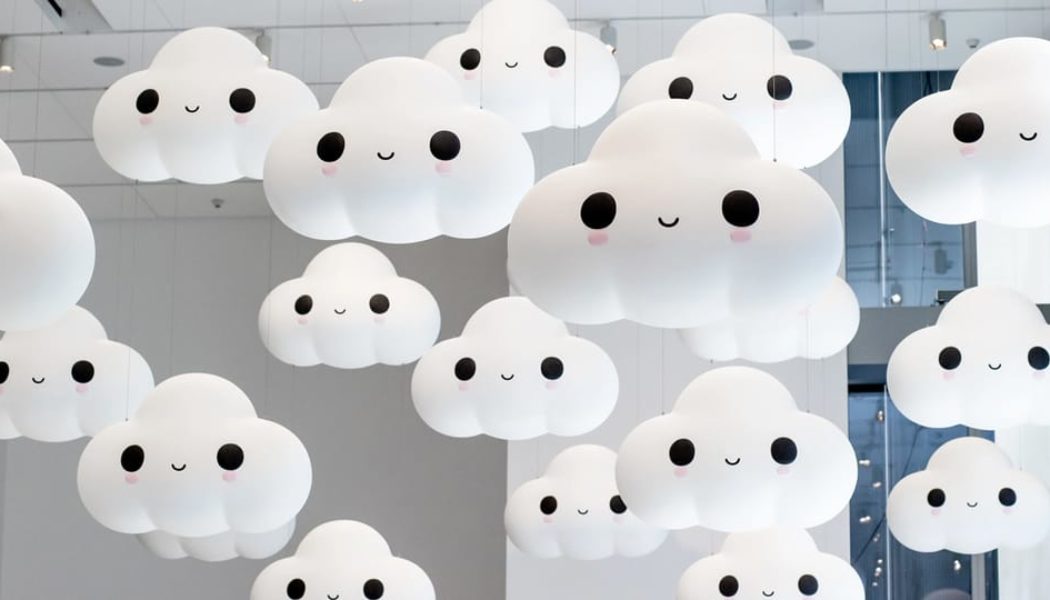
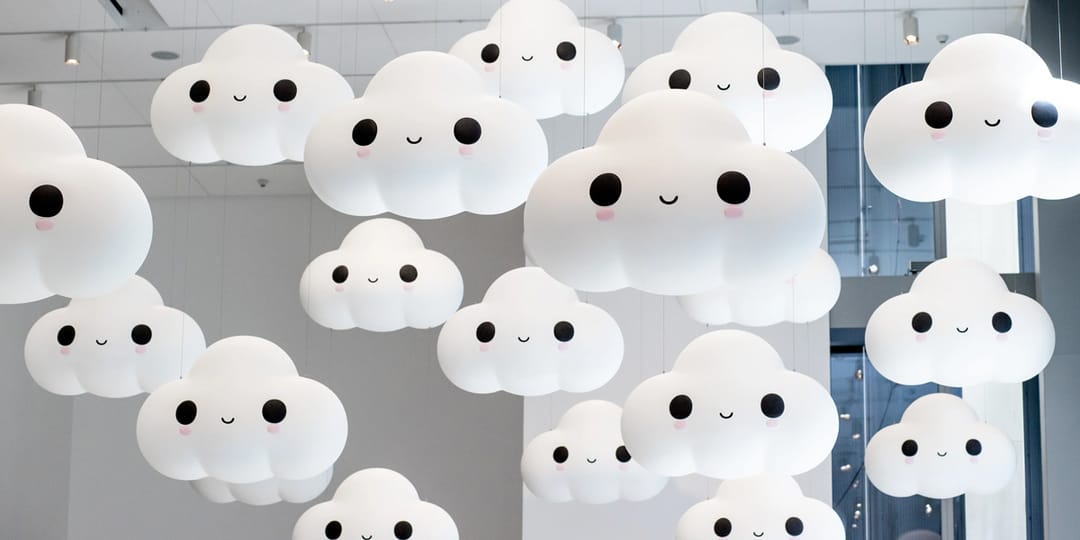
AS: Animism is a key component of our practice, so, for us, Little Cloud embodies the idea that someone, even if hanging above, will always have your back. It’s a condensed expression of our core philosophy: optimism, lightness and not taking yourself too seriously. Letting it pass and letting things change.
Little Cloud sky-scapes have made stops all around the world. What do you hope audiences take away from your ongoing Seattle presentation of Little Cloud Sky?
SB: We’re interested in psychology, comparative mythology, relational aesthetics and the simplicity of the human mind. We’re seeing all of humanity through this character, like a reflective point. The presentation at Seattle Art Museum is a big moment for Little Cloud: there’s an army of them, it’s as if they’re in-step, making this sacred geometrical pattern in the sky to show the importance of the message we’re trying to convey. As simple or as vapid as it may seem, Little Cloud has the ability to draw everyone in, regardless of age or language, to be in sync with us.
In addition to your signature soft flair, there’s a formal curiosity that threads through your practice. Out of all the different mediums you’ve explored, which do you find yourselves drawn to? Does the message dictate the medium?
AS: The message does lead some of our projects, but some mediums are conduits to feelings you can’t get out of others. We’re not selling craft, so it’s less important to us whether we’re the best oil painters or sculptors in the world. It’s more about the conceptual framework, which is why we also give ourselves the latitude to try new things and focus on the message we’re trying to get across.
Some artists become so enthralled by mastering just one medium because it feels good to know you can totally control a material, to know that you’re really good at it. That, however, can be its own kind of drug, one that just holds you in one place. We always try to change things up. We don’t have the most by-the-book approach – it’s a little bit risky – but we’ve built our whole career outside of the norms.