
Summary
- Kawasaki has officially announced plans to transition its wild Corleo robotic mobility concept into a production-ready vehicle
- The mechanical horse utilizes a 150cc hydrogen combustion engine to generate electricity for independent drive units in each leg
- Designed for extreme off-road navigation the vehicle uses AI-assisted weight-shift controls to mimic the experience of riding a living animal
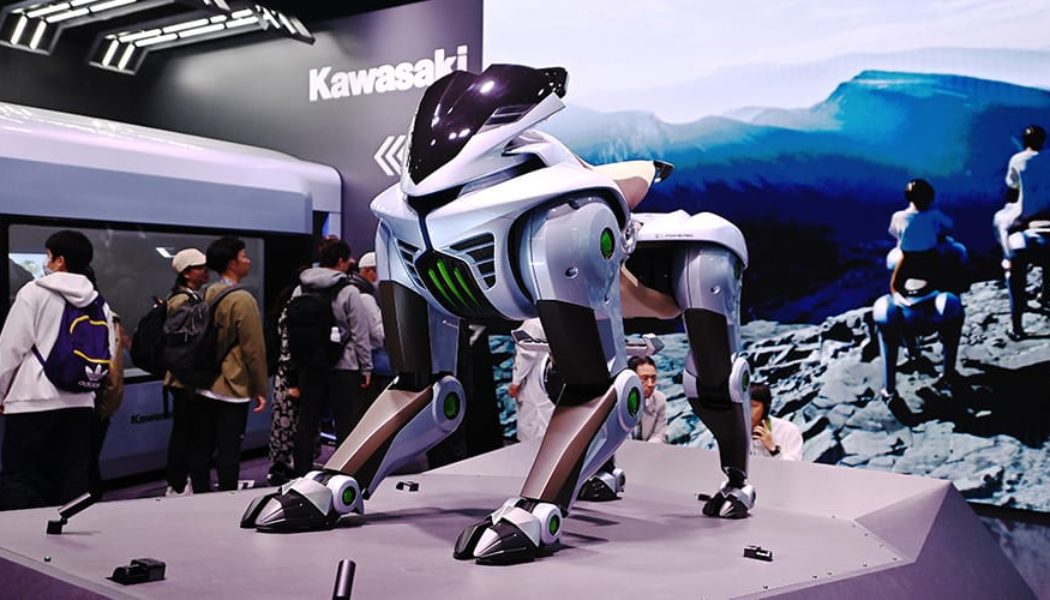
Kawasaki is redefining the future of off-road adventure by bringing the Corleo, its ambitious four-legged robotic vehicle, into a tangible production timeline. Moving beyond its initial status as a distant design study, the Japanese manufacturer has established a dedicated development team to prepare the hydrogen-powered quadruped for commercial reality. By blending motorcycle-inspired stability with advanced robotics, the Kawasaki Corleo aims to conquer vertical terrain and rocky landscapes that remain inaccessible to even the most capable traditional ATVs.
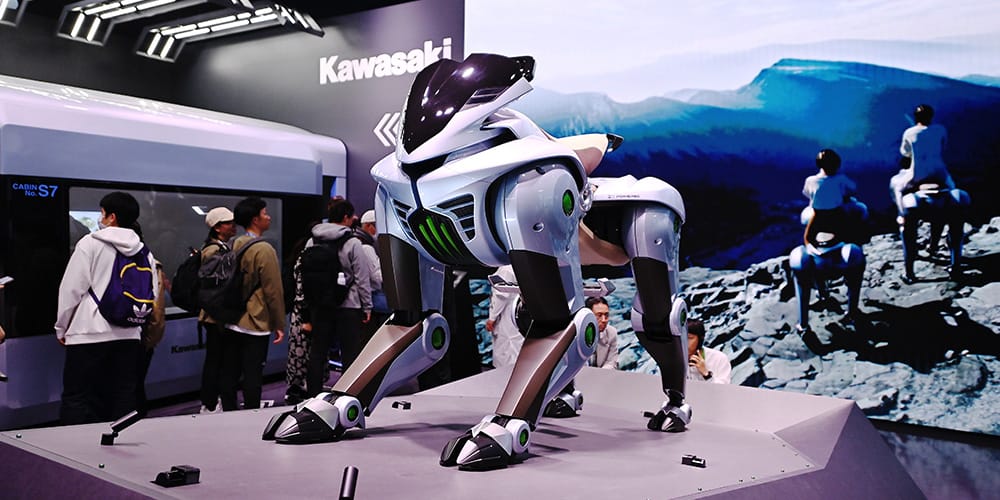
The engineering behind the Corleo departs from conventional automotive design, replacing a wheeled chassis with a skeletal structure inspired by the anatomy of a lion. Power is derived from a 150cc hydrogen engine acting as a generator, which feeds electricity to motors located in each of the four legs. This setup allows for silent, low-emission operation while providing the torque necessary for scaling steep inclines. The vehicle features a unique “hoof” design consisting of divided rubber pads that adapt to surface irregularities, ensuring maximum grip on mud, gravel, and rubble.
Riding the Corleo is an intuitive experience that relies on the rider’s body movement rather than traditional throttles. An onboard AI suite constantly monitors weight distribution, allowing the machine to stay balanced while the rider leans forward to accelerate or shifts laterally to change direction. The cockpit is equipped with a high-tech instrument panel and a ground-projection navigation system that maps out the safest path forward in real time. To ensure comfort during high-intensity treks, the rear leg unit operates as an independent swingarm to absorb shocks and maintain a level posture for the pilot.
Kawasaki aims to debut the first working Corleo prototypes at Expo 2030 in Riyadh, with full commercial availability slated for 2035.