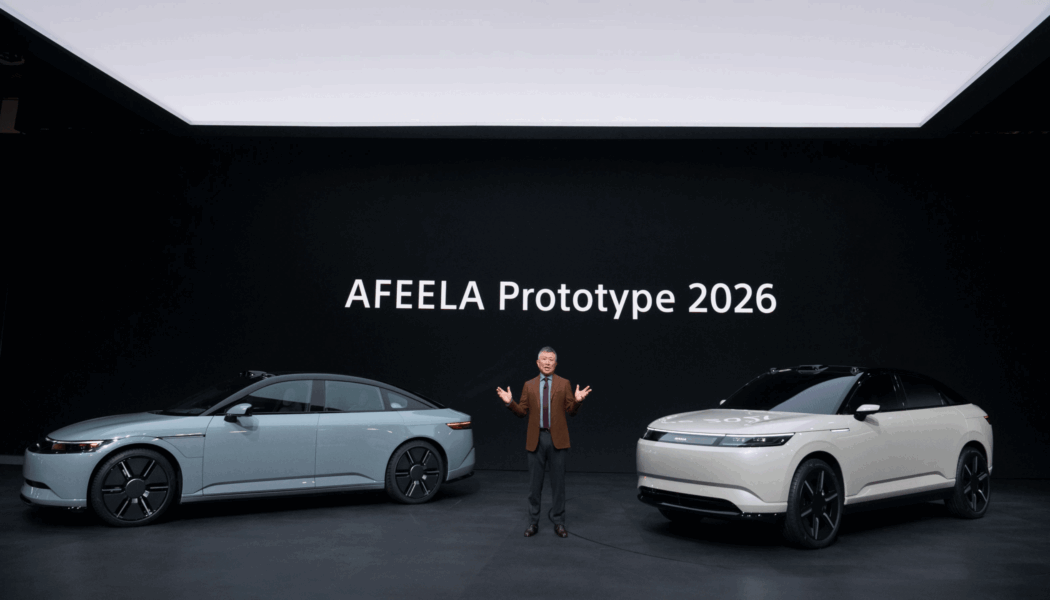
The joint venture also revealed an SUV concept that will go into production as early as 2028.
The joint venture also revealed an SUV concept that will go into production as early as 2028.
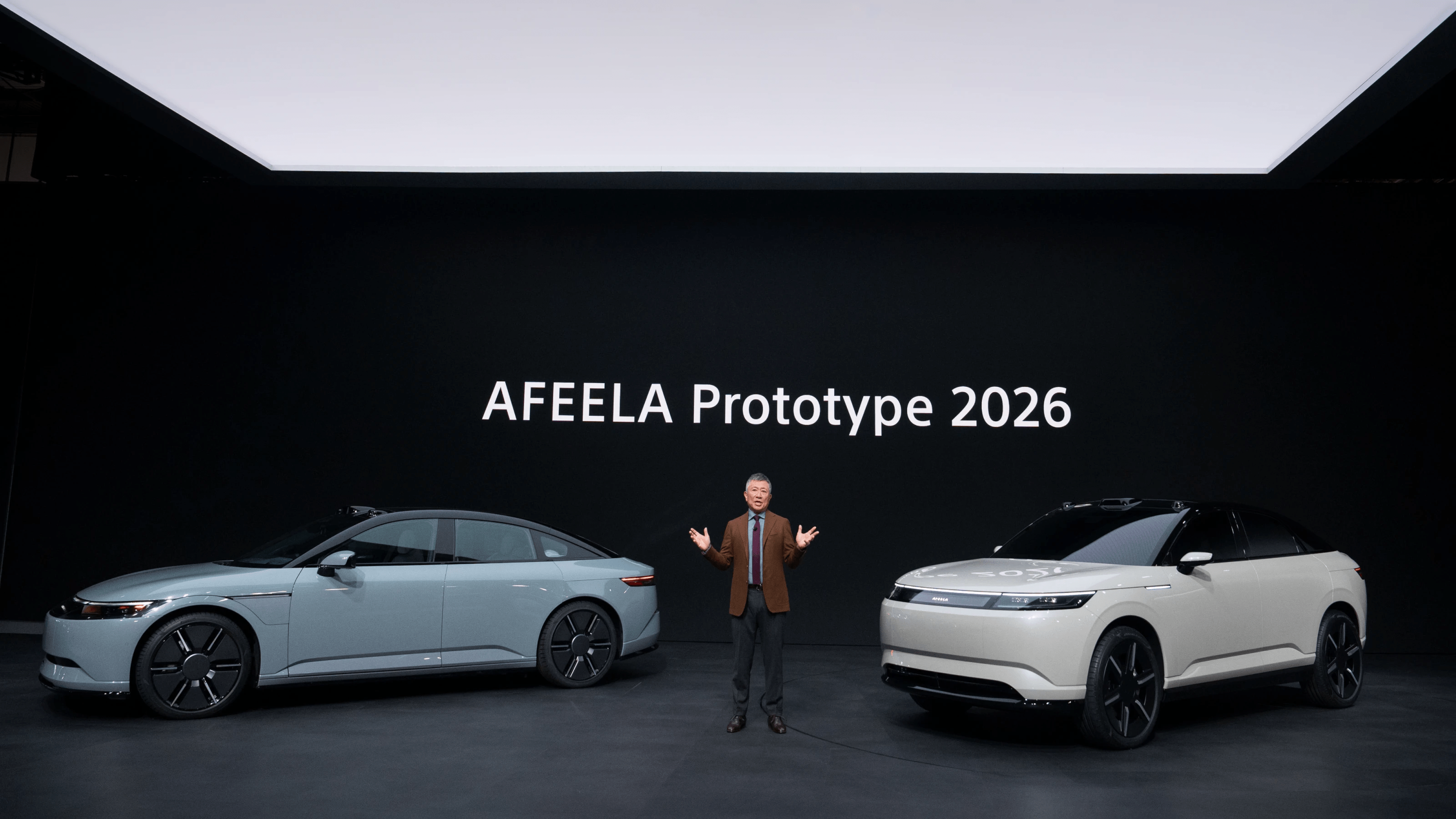

Sony and Honda’s joint venture, Sony Honda Mobility (SHM), said it will start customer deliveries of the $90,000 Afeela 1 electric vehicle in in the US in late 2026. The company also showed off an SUV concept that it said would inform a production model in the US for as early as 2028.
The new Afeela Prototype 2026 looked remarkably similar to the Afeela 1 pre-production unit, with short overhangs, a long wheelbase, and an overall larger footprint. No other details about the vehicle were released. SHM CEO Yasuhide Mizuno called it an “early-stage concept.”
The announcement of customer deliveries, though, was arguably more notable. The Sony-Honda joint venture has been a regular presence at CES since first revealing its Vision-S concept in 2020. Since then, the companies have inched closer to production, but not close enough to offer us a test drive or anything beyond a hands-on with the high-powered infotainment system. Earlier this month, SHM said it had started trial production of the Afeela 1 at Honda’s East Liberty Auto Plant in Ohio.
In advance of deliveries, SHM said it would offer phased demo drives to early reservation holders. The company also said it would extend sales to Arizona, in addition to California, in 2027. Japanese customers can expect first deliveries to commence in early 2027, Mizuno said.
In some respects, Afeela feels more like a platform for Sony’s entertainment offerings than a driving machine. It boasts screens across the width of the dashboard, 40 sensors and cameras for semi-autonomous driving assistance, all-wheel drive, and hints at augmented reality integration and “virtual worlds” embedded into the driving experience. Sony recently said that Playstation 5 owners would be able to stream games directly on to the vehicle’s infotainment system.
When it does go on sale, Afeela will be entering a crowded market for EVs priced above $90,000. Demand for these models has cooled significantly thanks to saturation and intense competition from brands like Tesla, Mercedes, Audi, and BMW. Most of the industry is now shifting to developing more affordable models in an effort to counteract the increasing influence of Chinese automakers.