
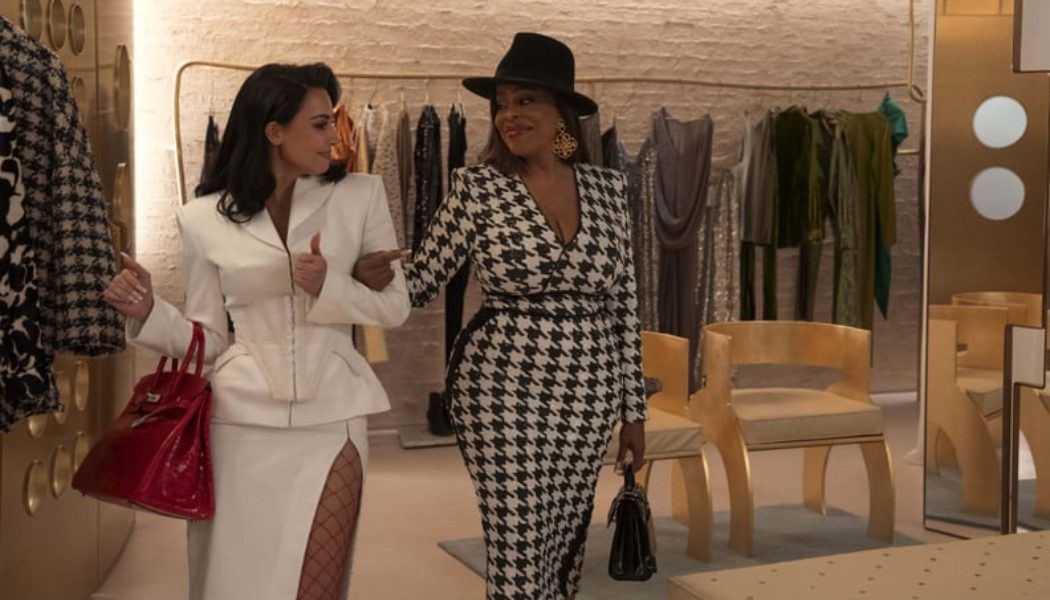

In All’s Fair, Ryan Murphy’s star-studded new legal drama, the costuming is not just a background element of the show – it’s arguably one of the main characters, vying for the viewer’s attention at any given moment. I, for one, often found myself more distracted by divorce attorney Allura Grant’s officewear-meets-couture wardrobe than paying attention to the narrative in the first three episodes, but as a Sex And The City superfan who managed to stick with And Just Like That until the very end, I know how to persevere in the name of style.
For background, the show follows a group of high-flying female lawyers who leave their former male-dominated firm and set up their own agency, working only with women as clients. There’s high budgets, high heels and high stakes – with each episode tackling a different case of a woman scorned by her millionaire husband.
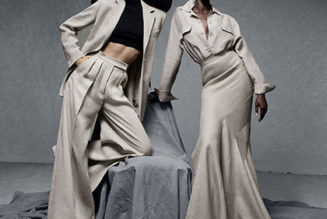
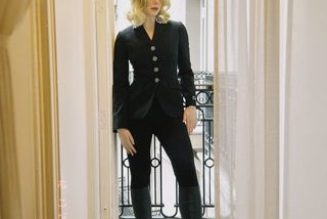
Alongside its almost-unbelievable casting of Kim Kardashian, Naomi Watts, Glenn Close, Sarah Paulson, Niecy Nash-Betts and Teyana Taylor, All’s Fair has promised high fashion from the outset. Its trailer, which became Hulu’s most watched ever within a week of release, featured plenty of shoulder pads, trouser suits and sharp tailoring – a.k.a the classic markers for what most would call “power dressing”. Before it was even released, fans likened the show to the high-camp TV dramas of the ’80s such as Dynasty or Dallas.
“The power suit, with its broad, padded shoulders, was a way of visually ‘taking up space’ in the boardroom.”
Of course, it was during the ’80s when the term “power dressing” really took off. What we wear has reflected status throughout human history, but in the 1980s, we witnessed a shift in power – when women entered the workplace in their droves.
“The term and the specific look we now think of – an angular suit and shoulder pads – absolutely exploded in the 1980s,” says fashion historian Serena Dyer. “It was a direct response to a massive social shift: for the first time, a huge wave of women were entering high-powered corporate and political professions that previously had been male territory. They needed a new kind of professional uniform to navigate these spaces. The power suit, with its broad, padded shoulders, was a way of visually ‘taking up space’ in the boardroom.”
While fashion media and references from that time often showcased bold tailoring in joyful colours that allowed women to be truly seen (look to “king of shoulder pads” Claude Montana and Thierry Mugler for some of the more fabulous examples), in many workplaces, the reality was quite different.

The power dressing lexicon is actually credited to John. T. Molloy, a business consultant who wrote a best-selling book, The Women’s Dress For Success Book, on what women should wear to get ahead at work. His advice? Blend in, stay conservative and essentially wear as close to what a man would wear as possible (without – God forbid – looking too masculine). His instructions in a 1978 New York Times article noted plain colours, white blouses and basic pumps – perhaps depressingly, he seemed to genuinely come from a place that was willing women to succeed. As the article states: “the real male chauvinist is a man in a three-piece pinstripe suit who says to a woman: ‘Wear anything your little old heart desires to the office’.”
Simply put, the notion of ’80s power dressing is a perfect example of how women had to mould themselves to fit into a male environment – if they didn’t, they would not be successful. “It was a way of using clothing to convey messages of competence, authority and confidence,” fashion psychologist Dion Terrelonge tells PS UK. “The suit – the sharpness, the angles, the colours – all of that was associated with masculinity, being male, and men as being where power lies.”
“If you wear something that you believe conveys or holds certain values, then you yourself might imbue and take on those traits yourself.”
Deeply misogynistic or an empowering shift that allowed women to claim their space? You could look at it both ways. As for whether the concept of power dressing actually works in achieving success and productivity, it has certainly become a modern symbol of outward confidence – and those visual clues are genuinely influential.
Dion tells me about a theory called “enclothed cognition“, which claims that our thoughts and even our competence can be influenced by what we wear. “If you wear something that you believe conveys or holds certain values, or you ascribe those values to someone else who wears that item of clothing – in this case, a smart suit worn by a successful businessperson – then you yourself might imbue and take on those traits yourself,” she says.
“A perfect example would be our recent shift to more home working,” she adds. “During the pandemic, a lot of people were wearing joggers or pyjamas at home – what they found was that their motivation dropped, their confidence dropped, their output dropped. We are quite habitual animals, and we need markers that help delineate our days and where we are. One such marker is our clothing – it’s about the perceptions you’re creating and projecting to others, but also the messages you’re sending to yourself as well.”

After watching the first three episodes of All’s Fair, it’s clear that the show has its own language when it comes to power dressing, while still nodding to its origins. Costume designer Paula Bradley told The Zoe Report that while she referenced ’80s power suits when mapping out her vision for the show, many other factors applied (Kim Kardashian used her own stylist for her outfits, for example). There is, clearly, an arc to the characters’ workwear, with the women wearing dark, monotonous shades and less glamorous silhouettes in the early scenes at the male-run law firm. When they start their own agency, there’s a definite shift towards bolder colours and a sense of individuality.
Despite this, and like the aforementioned And Just Like That, the show could be accused of using fashion for fashion’s sake (an exposed-thong look worn by Kim immediately springs to mind, plus numerous unexplainable hats and gloves) – but no cast member has been shy about the clothing’s part in the show.
Glenn Close previously told Entertainment Weekly: “This is boss chicks in great clothes who have their own private plane to go see clients if necessary. It’s kind of like the old-school soap operas. . . you get the shiny version of people, but with the backdrop of their drama. And we all are very glamorous. That’s another thing that Ryan promised – that we’d all have fabulous clothes and fabulous jewels and that kind of thing.”
“They’ve used fashion to show who these women are – a bunch of powerful, bad-ass women – through things like heels, sharp suits and perfectly-coiffed hair. But why can’t softness be strong?”
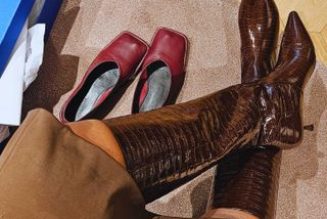
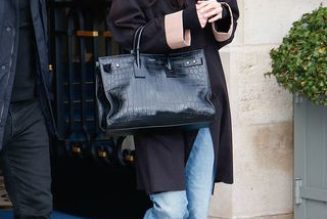
But what do “boss chicks” wear in 2025? In the All’s Fair universe, it’s vintage couture, Birkins and bling – so by those standards, the show is certainly expanding the notion that women should lean into their own creativity. One of Molloy’s steadfast rules was never to wear designer labels. “A $2,000 Chanel suit says, ‘My husband probably has a lot of money.; It doesn’t say, ‘I’m in charge; I’m able’,” he told the LA Times in 1985. Fast forward 40 years, and actually Mr Molloy, it does.
One of All’s Fair’s criticisms is its blatant materialism – presumably intended to celebrate a group of successful female characters in that campy, OTT way only a Ryan Murphy creation could. Whether it achieves that is up for debate, though it does stick two fingers up at the idea that any woman should censor her success, or herself, in order to achieve it.
“I still think it’s a little lazy,” Dion admits, when I ask her what she thinks of the show’s costuming. “They’ve used fashion to show who these women are – a bunch of powerful, bad-ass women – through things like heels, sharp suits and perfectly-coiffed hair. But why can’t softness be strong?”
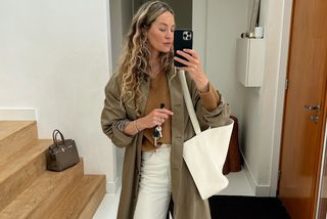
Today, power dressing can be interpreted in many forms – though its ’80s influences are certainly re-emerging in recent collections from Saint Laurent, Versace and Acne Studios. Could an inherently feminine floral dress ever indicate the same authority as a power suit? One can only hope. As for All’s Fair, I never thought I’d say it, but I could use a little less fashion and a lot more depth as the series continues. Watch this space.
Hulu Original All’s Fair is streaming on Disney+ UK from 4th November, with new episodes every Tuesday.
Fiona Ward is a freelance journalist and editor, covering everything from fashion and feminism to health, beauty and wellbeing. She was the acting website director at Glamour UK and has also written for Stylist, Refinery29, Grazia, Hello! and The Telegraph. Fiona has a degree in journalism from Southampton Solent University and won the PPA New Talent Award for new consumer journalist of the year in 2016.