

China


China is looking to adopt a crypto-free model in its NFT industry
The Asian country will model its NFT industry around the Blockchain Services Network China is setting boundaries that would define the scope of the booming NFT sector in the country. Despite having previously declared a crackdown on cryptocurrencies (primarily used in NFTs transactions), the Chinese government does not intend to be left out in the new collectibles’ wave. The South China Morning Post reported on Wednesday that the government-supported Blockchain-based Service Network (BSN) will later this month deploy infrastructure to support NFTs. The tech will provide application programming interfaces to businesses and individuals to develop user apps & modules to manage their NFTs. The project, also referred to as the BSN-Distributed Digital Certificate (BSN-DDC), aims t...


China aims to separate NFTs from crypto via new blockchain infrastructure
China is planning to draw a clear line between cryptocurrencies and nonfungible tokens (NFTs), pretty much the same way it did with its digital currency efforts, before the crypto crackdown in the country harms the local NFT industry. The Blockchain-based Service Network (BSN), a government-backed blockchain project in China, is working on infrastructure that would support businesses and individuals to build platforms and apps to manage NFTs, the South China Morning Post reported. Officially called the BSN-Distributed Digital Certificate (BSN-DDC), the project aims to support the deployment of non-crypto NFTs by offering application programming interfaces for the development of user portals and apps where fiat money would be the sole payment method. Underscoring that NFTs have no leg...


Bitcoin mining manufacturer Canaan expands footprint in Kazakhstan
Bitcoin (BTC) mining hardware manufacturer Canaan Inc is expanding its footprint in Kazakhstan after signing new strategic partnerships with multiple crypto mining firms in the country. The Nasdaq-listed company announced Tuesday that it had deployed 10,300 AvalonMiner units in Kazakhstan as of Dec. 31, 2021, finalizing phase one of its deployment in the central Asian country. Canaan is partnering with local firms as part of its business expansion plans outside of China. However, the company declined to list any of its local partners. Although Canaan is based in Hangzhou, China, the company is eyeing expansion outside of its home country following Beijing’s wholesale crackdown on crypto mining in 2021. Zhang Nangeng, Canaan’s CEO, spoke out against the mining ban during an earnings c...


China’s central bank releases pilot version of digital yuan wallet
As China’s central bank steps up its effort to create a digital currency, the country has released a pilot edition of its digital yuan wallet application on mobile phone app stores. The People’s Bank of China (PBoC) digital currency research institute developed the “e-CNY (Pilot Version)” app, which was available for download on Chinese Android and Apple app stores on Tuesday in Shanghai. According to a tweet from BlockBeats, a local news source, individual users in China now can download an earlier version of the app to test opening and managing a personal wallet, as well as digital yuan transactions. The e-CNY app is now available on iOS and Android app stores. This App is the official service platform of China’s CBDC for individual users to carry out pilot trials, providing e-CNY ...
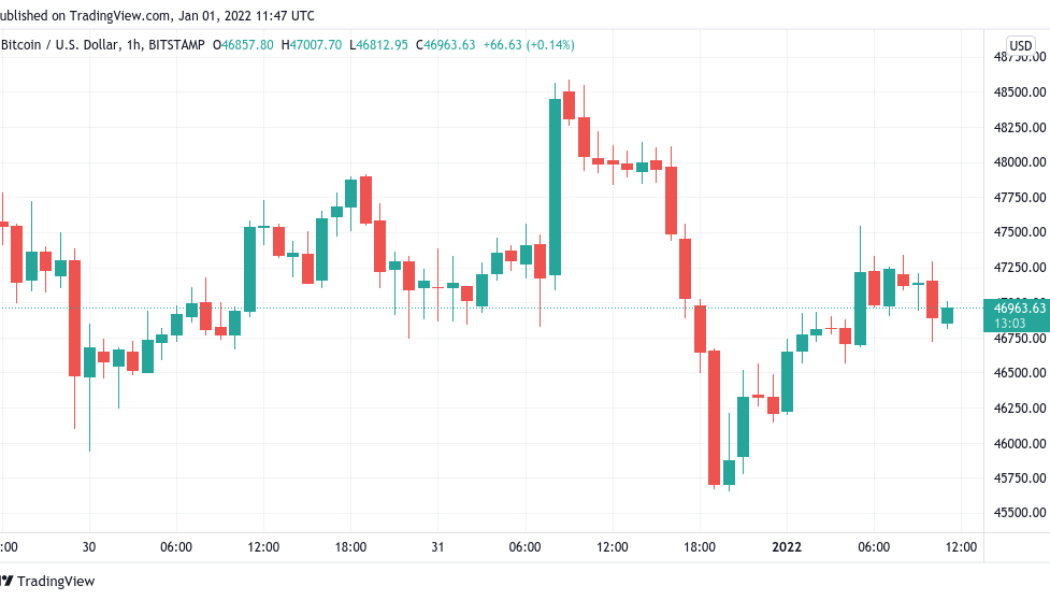

Bitcoin starts 2022 at $47.2K as fresh research pins performance on China trader exodus
Bitcoin (BTC) bears lost out at the last minute as 2021 came to an end — and consensus is building around China again being the reason for weakness. BTC/USD 1-hour candle chart (Bitstamp). Source: TradingView China “last hammer” could now provide optimism on BTC Hours before the yearly close, BTC/USD dived $2,000 to lows of $45,630 on Bitstamp before a modest recovery drew a line under 2021 at $47,200, data from Cointelegraph Markets Pro and TradingView shows. While something of an anticlimax and far below many popular projections, the lack of parabolic upside for Bitcoin has recently seen explanations shift to exchanges. Chinese users, following years of the government tightening the screws around crypto trading, had until Dec. 31 to leave the major Chinese exchanges, whi...


Shanghai includes metaverse in its development plan
Shanghai, China’s most crowded city, is looking for ways to use a metaverse in public services over the next five years. Shanghai Municipal Commission of Economy and Information Technology’s five-year development plan for the electronic information industry listed four frontiers for exploration, and one of them is the metaverse. According to a CNBC report, the paper called for promoting the metaverse’s use in public services, business offices, social leisure, industrial manufacturing, production safety and electronic games. The commission plans to encourage further study and development of underlying technologies, such as sensors, real-time interactions and blockchain technology. China’s interest in new technology has been unwavering in recent years, and its efforts to establish ...
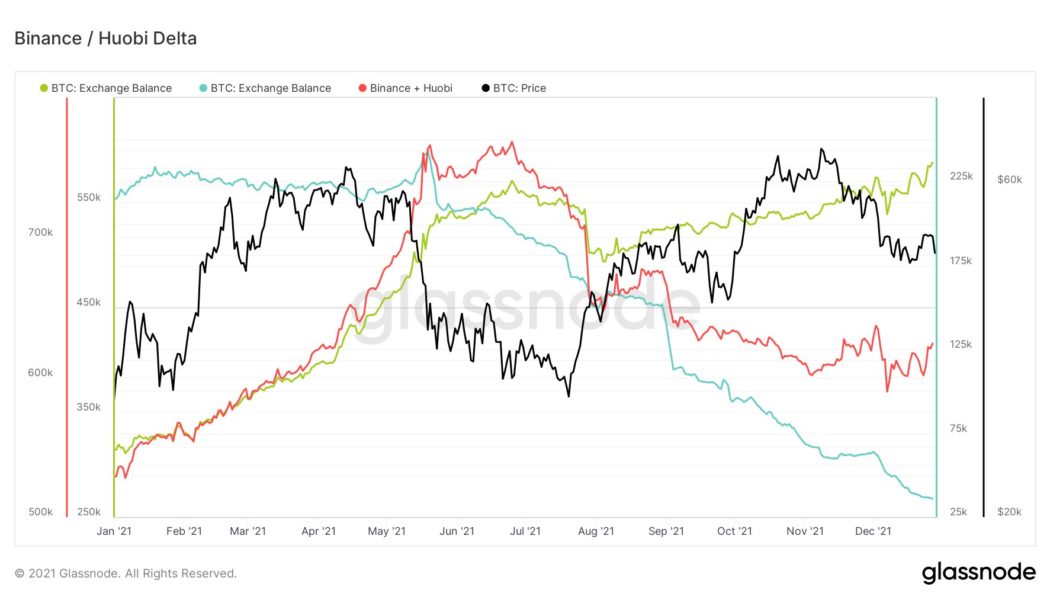

‘Net neutral’ — Rising Bitcoin exchange balances could be due to Huobi Chinese user block
Bitcoin (BTC) balances rising on exchanges may not be a sign of investors preparing to sell, new research argues. Unveiling the latest data from across exchanges on Dec. 28, Glassnode on-chain analyst TXMC pointed the finger at fresh changes in China for rising balances elsewhere. Binance “absorbing” orphaned Huobi users The end of December is seeing nerves fray as a rangebound BTC price combines with increased inflows to exchanges. A classic indicator that traders are at least arming themselves to de-risk in the event of further price weakness, Binance has been particularly closely eyed as its BTC stocks rise. At the same time, however, Chinese investors are being frozen out of international spot trading venues in the aftermath of China’s ongoing crackdown on cryptocurre...


Law Decoded: Three regulatory trends of 2021, Dec. 20–27
It is that time of the year: Singular events must be abandoned in favor of end-of-year, big-picture narratives and yearly lessons learned. As many governments across the globe finally had to face the rapidly mainstreaming realm of digital finance, the year is packed with developments in crypto policy and regulation that are impossible to fit into a neat little summary. However, it is possible to try and distill several major trends that have come to the fore during the past 12 months, and that will keep shaping the relationship among societies, state power and the crypto space as we roll into 2022. Below is the concise version of the latest “Law Decoded” newsletter. For the full breakdown of policy developments over the last week, register for the full newsletter below. U.S. Congress notic...


Baidu metaverse app would take 6 years for a full launch, VP says
The Chinese internet giant Baidu doesn’t expect to fully launch its XiRang metaverse app soon despite the app’s initial would debut on Monday, according to a senior executive. Baidu vice president Ma Jie believes that it is still “negative six” years to full XiRang’s launch, CNBC reported on Thursday. He noted that the development of the app started in December 2020. Ma spoke of “Create 2021,” Baidu’s upcoming annual developers’ event, which the company promotes as the first Chinese conference to be hosted in a metaverse space through XiRang. The app will reportedly handle up to 100,000 virtual members interacting with each other using metaverse avatars at the three-day conference starting on Monday. The exec noted that Baidu intends to create an open-source platform targeting metaver...


China’s state-run news agency to launch NFT collection
In an announcement made on Wednesday, China’s official Xinhua News Agency will issue its first series of nonfungible token (NFT) collectibles. The move is a thumbs up to blockchain technology previously shunned by the People’s Republic of China (PRC). In an official notice, Xinhua plans to publish 10,000 copies of 11 photos taken by journalists in 2021. The stride into NFTs is puzzling in light of recent events in the world’s second-largest economy. Following a nationwide crypto crackdown where Bitcoin (BTC) and Ether (ETH) mining was banned, China has recently taken aim at NFTs and metaverses and proposed that they should be heavily monitored. Despite the anti-crypto sentiment, tech giants Tencent and Huawei were not discouraged from pursuing trademarks in the metaverse. Elsewhe...
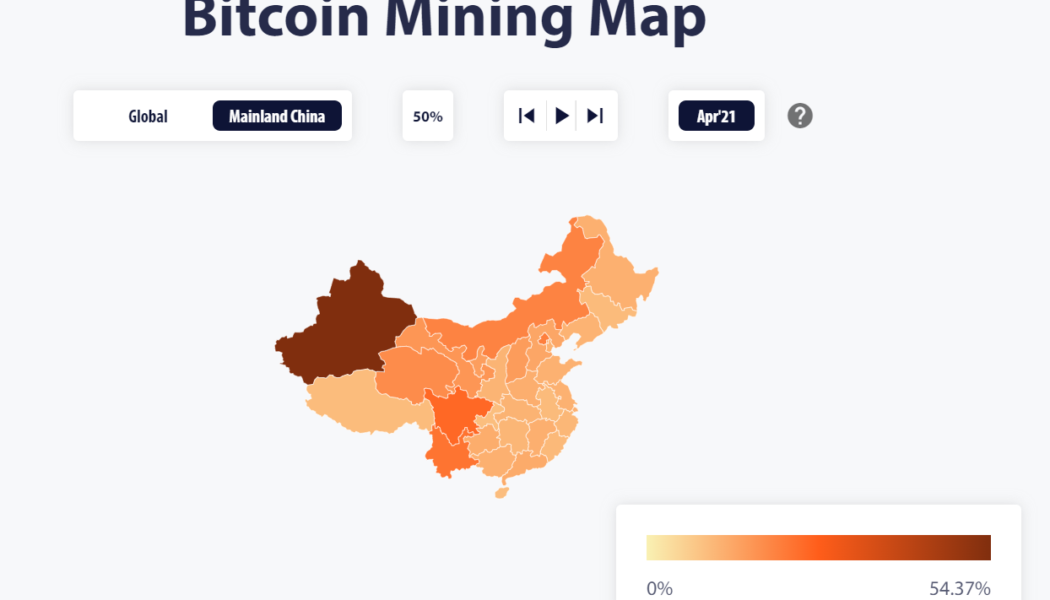

Beijing court rejects monetary compensation in Bitcoin mining contract plea
A district court in Beijing has rejected monetary compensation in a Bitcoin (BTC) mining contract plea against a blockchain company. The Chaoyang District People’s Court on Wednesday deemed the Bitcoin mining contract between the plaintiff and the blockchain firm “invalid,” the South China Morning Post reported on Dec. 16. The plaintiff in the case reportedly paid 10 million yuan ($1.6 million) to the blockchain firm for deployment of mining machines, but incurred losses on his investment. The Beiijng based plaintiff claimed he earned only 18.5 Bitcoin on his investment and demanded an additional 217.17 BTC in compensation for his losses. The court rejected the plea and also directed the Sichuan branch of the National Development and Reform Commission to look into any illegal mining going ...
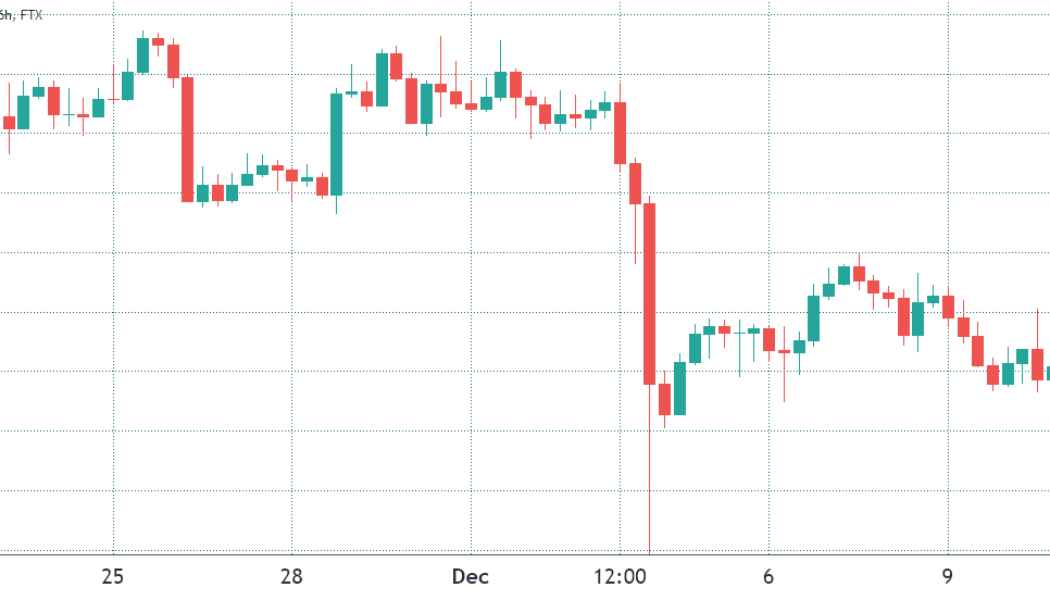

2 key Bitcoin trading metrics suggest BTC price has bottomed
Bitcoin (BTC) has been struggling to sustain the $47,500 support since the Dec. 4 crash, a movement that wiped out over $840 million in leveraged long futures contracts. The downside move came after the emergence of the Omicron variant of the Coronavirus and recent data showing U.S. inflation hitting a 40-year high. Bitcoin/USD price at FTX. Source: TradingView While newcomers might have been scared by the 26% price correction over the past month, whales and avid investors like MicroStrategy added to their positions. On Dec. 9, MicroStrategy announced that they had acquired 1,434 Bitcoin, which increased their stake to 122,478 BTC. According to some analysts, the rationale behind Bitcoin’s weakness was the contagion fear that Evergrande, a leading Chinese property developer, defaulte...
