

Colombia


Aston Villa interested in signing Liverpool youngster
Aston Villa are interested in signing the Liverpool youngster Rhian Brewster this summer. The 20-year-old striker was on loan at Swansea City last season and he managed to score 11 goals for them. Brewster needs to leave the club in order to play regular first-team football and it will be interesting to see if the likes of Villa can agree on a fee with Liverpool in the coming weeks. According to Independent, Sheffield United are keen on signing the young striker as well and they have already spoken to the Reds regarding a move. Liverpool value the young striker at £25 million and they are hoping to insert a buy-back clause in the contract if Brewster is sold this summer. Such a deal would be ideal for Liverpool as it would allow the player to develop with the regular first-team football el...


Nigerian striker tests positive for coronavirus
Few days after opening his goals account for the season, Nigerian forward David Okereke has tested positive for coronavirus. Okereke’s Belgian team Club Brugge in a short statement on their official website on Tuesday confirmed the positive status of their Nigerian forward. The club wrote: “Attacker David Okereke took a positive Corona test this morning. The attacker was immediately quarantined and will be retested next week.” Okereke has thus become the third high-profile Nigeria player to test positive for Coronavirus. Paul Onuachu of Genk and Samuel Kalu of Ligue 1 club Bordeaux also tested positive for Covid-19, but the duo have since recovered and already back in action for their respective team. Get more stories like this on Twitter You Deserve to Make Money Even When you are looking...


James Rodriguez set to join Everton
James Rodriguez is very close to completing a move to Carlo Ancelotti’s Everton. The Italian coach has been key in convincing the Real Madrid midfielder and, while negotiations are not yet closed, they are on the right track. An agreement could be closed between Everton and Real Madrid for a fee between 25 and 30 million euros. Ancelotti got the best out of James in a Real Madrid shirt during the 2014/15 season, while the 61-year-old also brought the playmaker to Bayern Munich on a loan deal in 2017. The relationship between Ancelotti and James is strong, which is why the 29-year-old has given the green light to move to Everton ahead of other options he had on the table. James stated in an interview with a Mexican media outlet last week that his priority is to leave Real Madrid for a club ...


FIFA to pick 2023 Women’s World Cup host in June
World governing football body, FIFA, will pick a host for the 2023 Women’s World Cup on June 25. The host will be selected by FIFA’s ruling council and it is a contest between Brazil, Japan, Colombia, and a joint bid from Australia and New Zealand. According to reports, the selection will be done in an open vote of the 37-member FIFA Council and the result of each round of balloting and each voter’s choice will be made open. “FIFA is now finalizing the evaluation report, which will be published in early June,” FIFA said in a statement on Friday. Newsmen report that FIFA inspection teams had initially visited the four bid candidates in January and February before international travel was restricted due to the coronavirus pandemic. The 2023 World Cup will be the first to feature 32 teams. Th...


Another Premier League player tests positive for novel coronavirus
A third first-team player from Brighton & Hove Albion tested positive for COVID-19 on Saturday, the Premier League club’s chief executive Paul Barber has confirmed. Two Brighton players had contracted the novel coronavirus in March and April and the latest positive result could cast doubts on the Premier League’s plans to resume the season that has been suspended due to the pandemic. Clubs are due to meet on Monday to further discuss “Project Restart” which envisages a return to play in June once given the green light from government, with the remaining 92 matches held behind closed doors at neutral venues. “It is a concern. Unfortunately we’ve had a third player test positive yesterday,” Barber told Sky Sports on Sunday. “So despite all of the measures that we’ve been taking over the ...
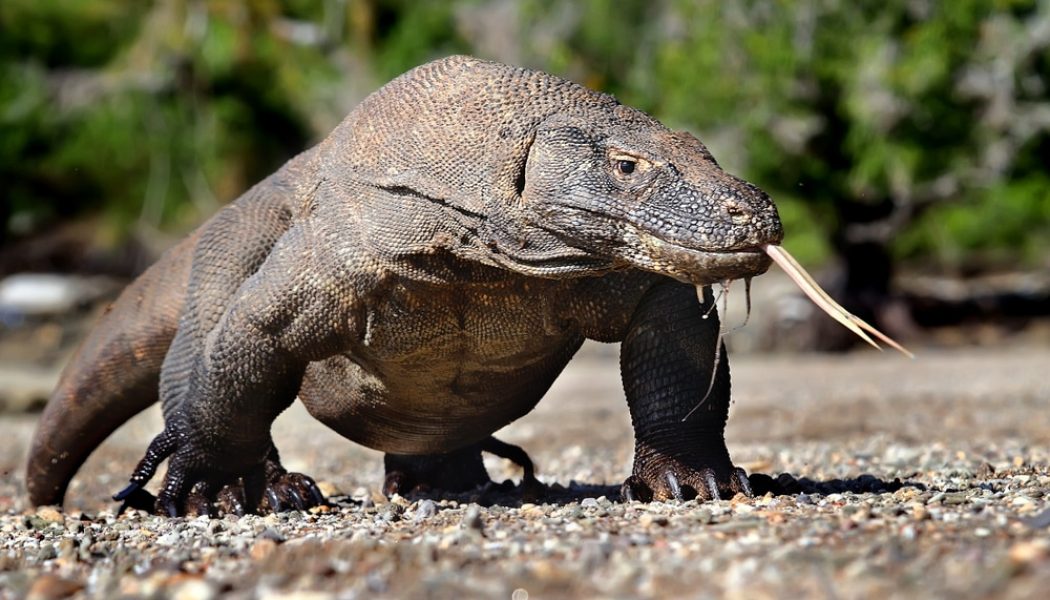

17 megadiverse countries of the world
We profile the world’s megadiverse countries, from obvious contenders like Ecuador and Brazil to one or two surprise entries It should be comforting to know that a mere 17 countries hold more than 70% of the world’s species. It should be easy to rally this small group of ‘megadiverse countries’ to protect the planet’s extraordinary biodiversity. Alas, some of these countries are also the world’s biggest consumers and polluters. In July 2000, the UN’s World Conservation Monitoring Centre recognised 17 megadiverse countries which hold the majority of Earth’s species and high numbers of endemic species (i.e. those unique to an area or country). To be termed megadiverse, a country must have at least 5,000 of the world’s plants as endemics and have marine ecosystems within its borde...
