

Congress

Thousands petition for congressional investigation of alleged Gensler–SBF links
Almost 4,000 people have used a CryptoLaw petition app to demand that Congress investigate United States Securities and Exchange Commission head Gary Gensler’s “actions in the FTX fraud,” the organization claimed in a tweet on the morning of Nov. 14. The CryptoLaw website is run by lawyer John Deaton, who is representing Ripple against the SEC and contributes frequently to the public discourse on the case. The petition reads, in part: “Evidence has emerged that proves that Gensler met with […] [FTX CEO] Sam Bankman-Fried, before the $14 billion collapse of FTX. Members of Congress have already been informed that Gensler was working with Bankman-Fried to give FTX a regulatory free pass while a massive fraud was going on right under the SEC’s nose. […] It’s time for a full Congressiona...


US lawmakers question regulators over ‘revolving door’ with crypto industry
Several Democratic members of the United States Senate and House of Representatives have requested information from top regulators and agencies in the country regarding crypto firms hiring government officials upon their departure. In letters dated Oct. 24 addressed to the heads of the Securities and Exchange Commission, Commodity Futures Trading Commission, Treasury Department, Federal Reserve, Federal Deposit Insurance Corporation, Office of the Comptroller of the Currency, and Consumer Financial Protection Bureau, five U.S. lawmakers asked for a response in regard to the steps the government departments and agencies were taking “to stop the revolving door” between themselves and the crypto industry. Senators Elizabeth Warren and Sheldon Whitehouse and Representatives Alexandria Ocasio-C...


US lawmaker says crypto regulation from SEC is ‘needed now’
John Hickenlooper, a United States Senator representing Colorado, has penned a letter to Gary Gensler urging the Securities and Exchange Commission chair to establish “clear rules” for the crypto market. In an Oct. 13 letter, Hickenlooper called on the SEC to take action on regulatory issues including identifying the cryptocurrencies that will be considered sasecurities, establishing registration guidelines for trading platforms, and “determining what disclosures are necessary for investors to be properly informed.” According to the senator, the lack of a coordinated regulatory framework from the government has led to uneven enforcement, while the SEC is the agency “well positioned to offer regulatory guidance.” “Given the complexity of these issues, and recognizing that some digital asset...


US lawmakers request Justice Dept share CBDC assessment
Republican members of the U.S. House Financial Services Committee have requested the Department of Justice provide its assessment and legislative proposals regarding a digital dollar within ten days. In an Oct. 5 letter addressed to U.S. Attorney General Merrick Garland, 11 Republican lawmakers asked the Justice Department for a copy of its “assessment of whether legislative changes would be necessary to issue a CBDC,” as required by President Joe Biden’s executive order on digital assets issued in March. The House members claimed the “appropriate place for the discussion” on legislation concerning a central bank digital currency would be in the U.S. legislative branch rather than the federal executive department. “The House Committee on Financial Services […] has spent considerable ...


US lawmaker hints at calling for Republican votes in 2022 midterms over crypto policies
North Carolina Representative Patrick McHenry may have used his virtual appearance at a cryptocurrency conference as a soapbox to call for votes in the 2022 United States midterm elections. In a prerecorded message for the attendees of the Converge22 conference in San Francisco on Sept. 29, McHenry suggested that the goal of a “clear regulatory framework” for digital assets could drive U.S. lawmakers to develop legislation. The Republican lawmaker used terms including “bipartisan consensus” and support from both major political parties over certain regulatory frameworks related to digital assets and stablecoins before seemingly encouraging crypto users to vote red in the next election. “To ensure that these technologies flourish here in the United States, we need to provide regulatory clar...


US congressman and crypto skeptic explains why a crypto ban won’t work
In a recent interview, United States congressman and a known crypto skeptic Brad Sherman claimed that banning cryptocurrencies is not an option at this point. In a statement to LA Times, the Northridge-area Democrat said that the crypto industry has become quite powerful over the years. He added that the high capital donations to the politicians and strong crypto lobbying make it impossible for them to impose a blanket ban. He explained: “We didn’t ban it at the beginning because we didn’t realize it was important, and we didn’t ban it now because there’s too much money and power behind it.” The democratic representative is a well-known skeptic who has been demanding a crypto ban since 2019. Nearly three years later, Sherman has changed his tune about a ban and now advocates for regul...


GameFi developers could be facing big fines and hard time
Are cryptocurrency games innocent fun? Or are they Ponzi schemes facing an imminent crackdown by regulators in the United States? Tokens related to cryptocurrency games — known colloquially as “GameFi” — were worth a cumulative total of nearly $10 billion as of mid-August, give or take a few billion. (The number may vary depending on whether you want to include partially finished projects, how you count the number of tokens that projects technically have in circulation, and so on.) In that sense, whether the games are legal is a $10 billion question that few investors have considered. And that’s an oversight they may soon regret. That’s because a bipartisan consensus appears to be forming among legislators in the U.S. that the industry needs to be shut down. They haven’t addressed the issu...
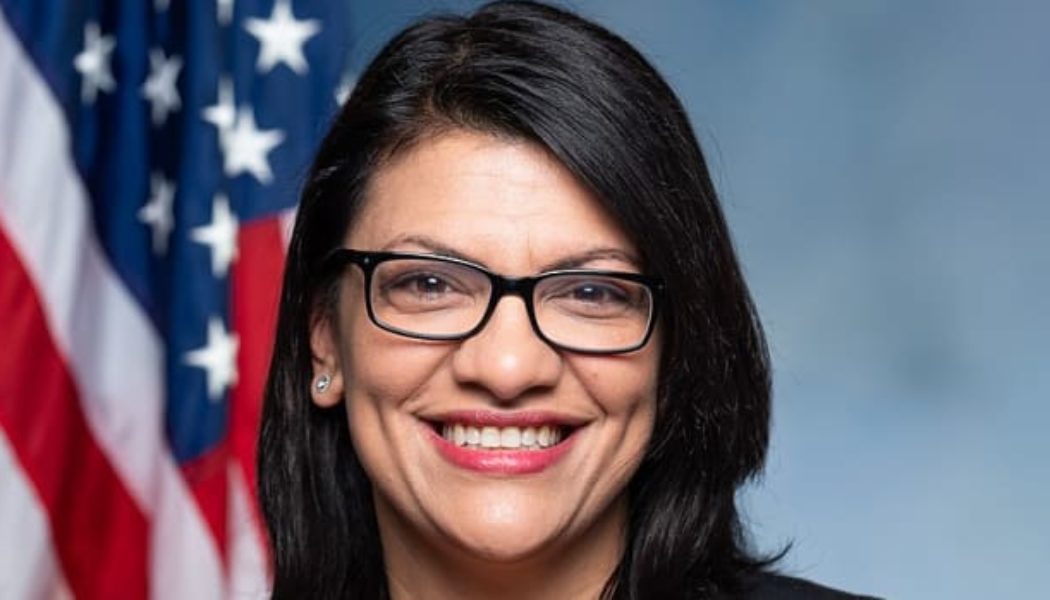

House Representative Rashida Tlaib Takes Aim at Music Streaming Services In New Resolution
Rashida Tlaib, House Representative for Michigan’s 13th congressional district, has introduced a resolution that seeks to establish a new royalty program. The resolution effectively continues her fight for musicians to earn a “reasonable” living from their recorded music. “Expressing the sense of Congress that it is the duty of the Federal Government to establish a new royalty program to provide income to featured and non-featured performing artists whose music or audio content is listened to on streaming music services, like Spotify,” reads the bill. Tlaib’s resolution proposes the royalty rate be administered by SoundExchange and the Copyright Royalty Board, who would calculate, collect, retain and distribute payments to the appropriate copyright ...


Congress will likely decide the fate of crypto jurisdiction: Lummis staffer
A United States Senator Cynthia Lummis staffer believes that U.S. Congress will have to step in and resolve the dispute between the Securities and Exchange Commission (SEC) and the Commodity Futures Trading Commission (CFTC) regarding who regulates cryptocurrencies if the matter cannot be resolved internally. The issue stems from 2014 when the CFTC first asserted jurisdiction over virtual currencies. This was later reaffirmed by a U.S. Federal Court ruling in 2018, which stated that CFTC had jurisdiction to prosecute criminals over fraud cases involving virtual currencies. However, it has been the SEC that has predominantly been investigating U.S.-based crypto exchanges and crypto assets to date. On Aug. 3, Senators Debbie Stabenow (Michigan) and John Boozman (Arkansas) introduced th...


Rap Snitches: Congress To Review RAP Act Barring Use of Lyrics In Court
HipHopWired Featured Video Source: Fulton County PD / Fulton County Sheriff’s Department The movement to prohibit the usage of rap lyrics in criminal cases by prosecutors has now reached the federal level, as a new bill with that aim has been introduced in the United States Congress. On Wednesday (July 27th), the RAP Act was introduced on the floor of the House of Representatives by Democratic Representatives Hank Johnson (GA-04) and Jamaal Bowman (NY-16). The Restoring Artistic Protection Act looks to protect artists from the wrongful usage of their lyrics against them in civil and criminal court cases. Representative Johnson shared the news through his Twitter account. “Freedom of speech is the constitutional foundation the framers thought necessary to enable a new and free soc...

Rap on Capitol Hill: Proposed Federal Law Would Ban Lyrics From Criminal Cases
A proposed law introduced in Congress on Tuesday (July 27) would heavily restrict when federal prosecutors can cite rap lyrics as evidence during a criminal case, mirroring recent efforts in California and New York to limit the increasingly controversial practice. Introduced by U.S. Reps. Hank Johnson (D-Ga.) and Jamaal Bowman (D-NY), the Restoring Artistic Protection Act (RAP Act) would sharply limit when any form of creative or artistic expression could be used as evidence against the person who created it. “Our judicial system disparately criminalizes Black and brown lives, including Black and brown creativity,” Bowman said in a statement announcing the bill. “We cannot imprison our talented artists for expressing their experiences nor will we let their creativity be suppressed.” The bi...


Bill addressing stablecoins risks in US likely delayed until September: Report
Lawmakers in the United States House of Representatives have reportedly pushed back the timeline for considering a bill addressing the potential risks of stablecoins. According to a Monday report from the Wall Street Journal, people familiar with the matter said House members will likely delay voting on a stablecoin bill until September after being unable to complete a draft in time for a Wednesday committee meeting. The unresolved issues in the bill reportedly included provisions on custodial wallets from the Treasury Department and concerns from the Securities and Exchange Commission. Treasury Secretary Janet Yellen reportedly wanted to coordinate with the Biden administration for her response to the bill. Neither has publicly weighed in on the proposed legislation, but Yellen previously...
