

Congress
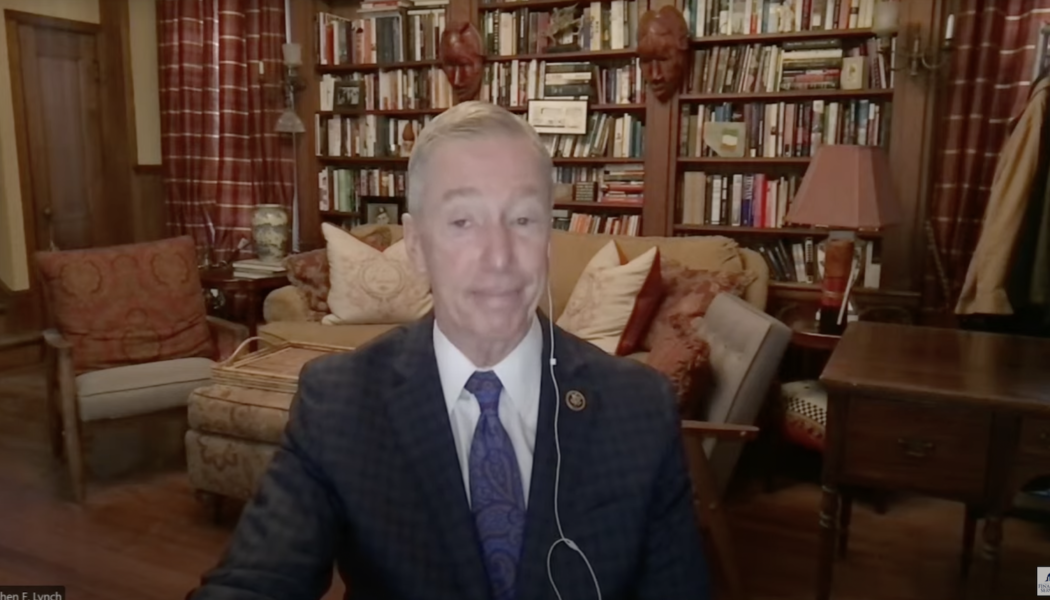

US lawmakers say crypto industry has a ‘tech bro’ problem hurting innovation
According to some United States lawmakers in the House Financial Services Committee, the lack of diversity in the financial technology space could be hurting many companies’ bottom lines. In a Thursday virtual hearing on “Combatting Tech Bro Culture,” U.S. lawmakers and witnesses discussed how women and people of color were underrepresented in leadership positions in the financial technology industry, including crypto firms. Massachusetts Representative Stephen Lynch cited data that only 2% of venture capital funding went to firms in which the founders were women, while only 1% went to those with black founders, and 1.8% for Latinx. According to Lynch and some on the committee, this trend suggested an “old boys club” culture in companies including those involved with cryptocurrencies, in w...


Not the best week for crypto lending: Law Decoded, June 20-27
Due to Celsius Network’s withdrawal suspension in mid-June, the very topic of crypto lending made its entryway to the acute issues list for the regulators. Last week, lawmakers and officials continued to raise the question of necessary action, with significant utterance belonging to one of the key European crypto skeptics, Christine Lagard. European Central Bank president got so impressed with the Celsius crisis that she coined the term “MiCa II,” referring to the main regulatory package for crypto in the European Union. Lagarde believes the new MiCa should include separate crypto-asset staking and lending guidelines. It’s not necessary to be a civil servant to discern the flaws of the current lending model, though. A hardcore Bitcoin (BTC) maximalist and Swan Bitcoin CEO...


US lawmakers urge EPA to consider the potential benefits of crypto mining
A group of 14 United States senators and House representatives have signed a letter to the Environmental Protection Agency extolling what they believe are the benefits of crypto mining. In a Thursday letter, many U.S. lawmakers including pro-Bitcoin Senator Cynthia Lummis and Representative Tom Emmer addressed EPA administrator Michael Regan, requesting the government agency analyze the potential impact of crypto mining in an effort to balance innovation with environmental concerns. The group of 14 senators and representatives claimed mining could have a “substantial stabilizing effect on energy grids” and cited examples of mining operations using flared gas and renewable energy sources. “Digital assets, and their related mining activities, are essential to the economic future of the Unite...


Crypto advocate mounts challenge to longtime Silicon Valley Congresswoman
In terms of policy, Greg Tanaka calls himself a legislator for the digital age and possibly the most pro-crypto person running in this election cycle. Now a Palo Alto City Council member, he has set his sights on the United States House of Representatives seat for California’s 16th: the Silicon Valley district. In an interview with Cointelegraph, the self-described nerd exuded enthusiasm and spoke with an unwavering smile about crypto and the financial system. Legal DAOs and crypto tax holidays “It’s the first form of truly better money,” Tanaka said of crypto. “More benefit goes to the people creating the value versus with traditional finance.” He envisioned a future where everyone would have their own token. That “will create a lot more economic equity,” he said. In addition to his polit...


Open Letter From Congress Rips Spotify’s Controversial Discovery Mode, Seeks Financial Transparency
Congressional leaders representing the Caucus on Multicultural Media are taking issue with a perceived lack of financial transparency on the part of Spotify. In a recent letter dated March 26th and signed by Democrat Representatives Tony Cardenas, Yvette D. Clarke, and Judy Chu, the caucus raised concerns that the streaming giant’s controversial Discovery Mode presents artists with a “prisoner’s dilemma,” when it comes to their ability to monetize on the platform. Discovery Mode, unveiled in November of 2020, is a relatively new feature on the Spotify platform which allows artists the option to boost the visibility of their songs on the platform in exchange for a lower promotional royalty rate. As the letter identifies, however, there is the cha...


Spotify’s Discovery Mode Under Scrutiny by Congress (Again)
Members of Congress are once again taking aim at Spotify’s controversial Discovery Mode feature, which allows artists and labels to receive a lower royalty rate on select tracks in exchange for higher priority in the platform’s algorithms. In a letter obtained by Billboard, dated March 29, 2022 and addressed to Spotify founder, CEO and chairman Daniel Ek, Reps. Yvette D. Clarke (D-NY), Judy Chu (D-CA) and Tony Cardenas (D-CA) – co-chairs of the Congressional Caucus on Multicultural Media – express concerns that Discovery Mode “lacks transparency” for both artists and consumers and ask the company to publish “on a monthly basis the name of every track enrolled in the program” and the agreed-upon discounted royalty rate for each. Variety first reported on the letter. “Choosing to accept...


Law Decoded: Arab States of the Gulf open up to digital asset services, March 14–21
Last week got off to an antsy start as the clause that many interpreted as a direct route to ban proof-of-work-(PoW)-based cryptocurrencies made a sudden comeback to the draft of the European Union’s key directive on digital assets. Many in the crypto policy space got immediate flashbacks to other instances of harmful last-minute additions to must-pass legislation days and hours before the vote. It all ended well, though, as the Committee on Economic and Monetary Affairs voted against the draft that contained the hostile language. Over in the United States, monetary policy kept growing more political, as evidenced by Sarah Bloom Raskin, President Joe Biden’s pick for the Federal Reserve’s vice chair for supervision, being forced to withdraw her nomination due to a Senate gridlock. Ukrainia...


Congress members concerned SEC stifling innovation with crypto scrutiny
In a bipartisan letter put forward by Republican Minnesota Congressman Tom Emmer, a cohort of Congress members has written to Securities and Exchange Commission (SEC) Chairman Gary Gensler, challenging the regulator’s scrutiny of cryptocurrency firms and expressing concern that “overburdensome” investigation may be suffocating the crypto industry. They suggest the SEC is drowning companies in paperwork in contravention of the SEC’s stated aims and mandated jurisdiction. Emmer tweeted to his 51,000 followers: “My office has received numerous tips from crypto and blockchain firms that SEC Chair @GaryGensler’s information reporting ‘requests’ to the crypto community are overburdensome, don’t feel particularly… voluntary… and are stifling innovation.” This is why I sent a bipartisa...
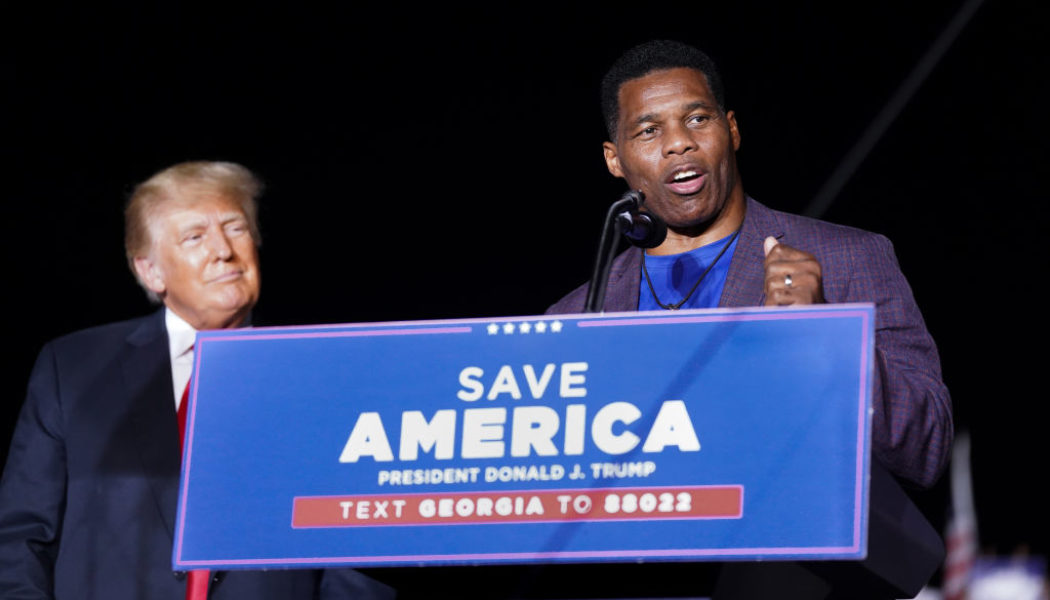

GOP Stooge Herschel Walker Brazenly Questions Theory Of Evolution
HipHopWired Featured Video Source: Sean Rayford / Getty Herschel Walker certainly deserves accolades for his time on the football field and nothing can take away those achievements, but his current bid for a U.S. Senate seat is raising some eyebrows. While the former NFL and USFL star isn’t engaging in any debates ahead of primaries, Walker was seen questioning the theory of evolution with the same expertise as his hopeful political career. As noted by Huffington Post, Walker made an appearance at the Sugar Hill Church in Georgia over the weekend. The environment wasn’t a hostile one for the political neophyte, but one moment stood out clearly among others. “At one time, science said man came from apes, did it not? If that is true, why are there still apes? Think about it,” Walker said, de...


Crypto industry seeks to educate, influence US lawmakers as it faces increasing regulation
Interaction between the cryptocurrency industry and Capitol Hill is becoming ever more intensive as efforts to regulate crypto grow in tandem with its popularity. The surge in crypto industry lobbying last year was given some concrete parameters in February by crypto analytics startup Crypto Head. It released a report showing that the crypto companies that spent the most money on lobbying in 2021 were Robinhood, Ripple Labs, Coinbase and the Blockchain Association. These organizations were the lobbying leaders during the past five years as well, although with different rankings. Here is what the United States crypto-lobbying landscape looks like today. Metrics of influence Robinhood spent $1.35 million on lobbying in 2021 and was the only crypto-related organization to spend more than $1 m...


Law Decoded: Bitcoin’s censorship resistance capacity enters the spotlight, Feb. 14–21
Amid the barrage of last week’s regulatory news, from rumors of Joe Biden’s upcoming executive order on digital assets to another round of the Russian government’s crypto tug of war, the storyline that was arguably the most consequential for the mainstream narrative on the social effects of crypto has been the one around the Canadian government’s standoff with the Freedom Convoy. The government’s invocation of emergency powers to put down a protest movement — combined with the movement’s financial infrastructure being one of the main attack vectors — has led many observers to appreciate with renewed vigor Bitcoin’s capacity to resist state financial censorship. If a government as “civilized” as Canada’s can arbitrarily cut off a group it doesn’t like from the financial system, then any sta...


BTC helps our effort to unseat a 20+ year incumbent: Aarika Rhodes on Bitcoin Day
Aarika Rhodes, an elementary school teacher-turned congressional candidate, recently featured in the Bitcoin Day Sacramento 2022 event to discuss the impact of Bitcoin (BTC) in local politics. Speaking to Cointelegraph, Rhodes highlighted the difficulty for grassroots candidates like herself to compete against established members of the US Congress. Our campaign has officially adopted Lighting for campaign contributions.⚡️ This revolutionary technology creates accessibility and looks towards the future. I am excited to provide this option to our supporters across all 50 states. #Bitcoin — Aarika for CA-32 (@AarikaRhodes) November 30, 2021 “If it wasn’t for Bitcoin and the Lightning Network, a grassroots campaign like ours wouldn’t have made it this far with the amount o...
