

crypto blog
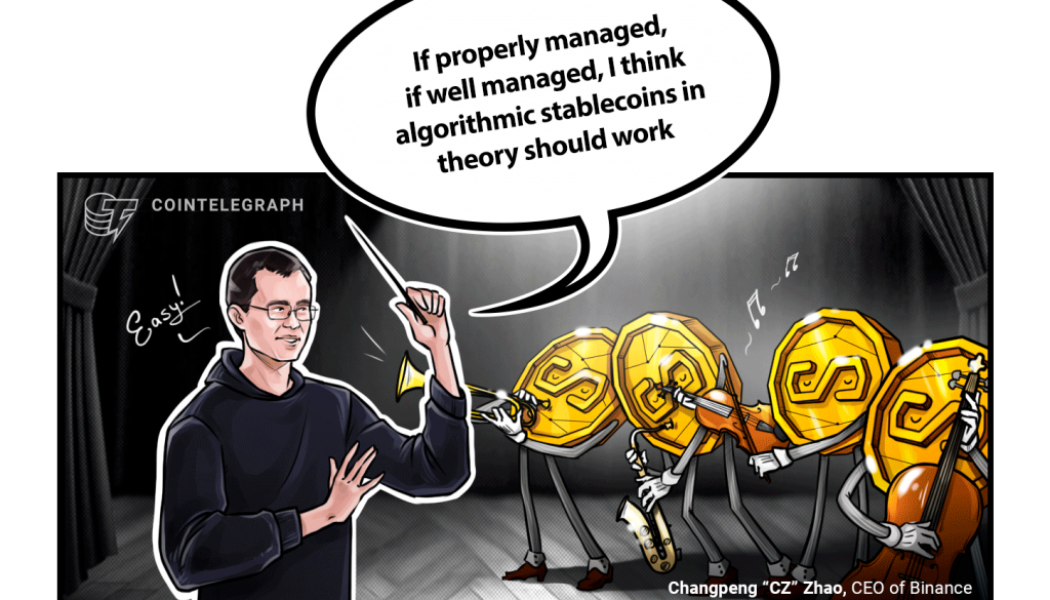

US Fed begins quantitative tightening, Japan restricts stablecoin issuance and LUNA 2.0 rides a price roller coaster: Hodler’s Digest, May 29-June 4
Coming every Saturday, Hodler’s Digest will help you track every single important news story that happened this week. The best (and worst) quotes, adoption and regulation highlights, leading coins, predictions and much more — a week on Cointelegraph in one link. Top Stories This Week Fed money printer goes into reverse: What does it mean for crypto? Over the last two years or so, the United States Federal Reserve has flooded the financial system with excess liquidity — benefiting stocks, crypto and other markets as well. Now, the Fed is going in the opposite direction in order to combat inflation. In addition to raising interest rates, the central bank has begun the process of quantitative tightening (QT). It’s not entirely clear how the crypto markets will respond to the Fed’s QT efforts,...


Alchemy announces support for Solana Web3 applications the day after blockchain halted
In an announcement published by Alchemy just one day after the Solana network temporarily halted on June 1, the Web3 development platform and infrastructure provider announced its support for the controversial blockchain. Caused by a bug that made it impossible to reach network consensus, the Solana blockchain was halted for approximately four hours on Wednesday. This isn’t the first time the system has been compromised, as normal functionality has been halted five times already this year. That didn’t seem to be a problem for Alchemy, which gives developers the ability to use its software and infrastructure in Solana-built applications. Now reportedly valued at $10.2 billion, the company is the creator of a Web3 API called Alchemy Supernode and a development suite used for monitoring and d...

CBDCs can “kill” private crypto: India’s RBI deputy governor to IMF
In discussion with the International Monetary Fund (IMF), T Rabi Sankar, the deputy governor of the Reserve Bank of India (RBI), reflected an anti-crypto stance as he spoke about India’s potential to disrupt the crypto and blockchain ecosystem. Rabi Sankar started the conversation by highlighting the success of the Unified Payments Interface (UPI), India’s in-house fiat-based peer-to-peer payments system — which has seen an average adoption and transaction growth of 160% per anum over the last five years. “One of the reasons it is so successful is because it’s simple,” he added while comparing UPI’s growth with blockchain technology. According to Rabi Sankar: “Blockchain, which was introduced six-eight years before UPI started, even today is being referred to as a potentially revolut...


South Korea ramps up crypto investigations and regulations
On Friday, June 3, South Korea’s Financial Supervisory Service (FSS) began an investigation into payment gateway services that work with digital assets. The FSS is South Korea’s financial regulator that operates under the Financial Services Commission (FSC), both of which are government institutions. As reported by local news outlet Money Today Co., the FSS had recently demanded reports from 157 payment gateways about any service related to crypto, their plans for the future, and disclosure of digital assets. But an FSS report stated that only 6 held any digital assets. Related: How Terra’s collapse will impact future stablecoin regulations Although the FSS is currently the primary financial regulator, on May 31st, 2022, South Korea announced the upcoming launch of the Digital Assets Commi...


Is education the key to curbing the rise of scammy, high APY projects?
Most people who have dealt with cryptocurrencies in any capacity over the last couple of years are well aware that there are many projects out there offering eye-popping annual percentage yields (APY) these days. In fact, many decentralized finance (DeFi) protocols that have been built using the proof-of-stake (PoS) consensus protocol offer ridiculous returns to their investors in return for them staking their native tokens. However, like most deals that sound too good to be true, many of these offerings are out-and-out cash grab schemes — at least that’s what the vast majority of experts claim. For example, YieldZard, a project positioning itself as a DeFi innovation-focused company with an auto-staking protocol, claims to offer a fixed APY of 918,757% to its clients. In simple term...

Total crypto market cap risks a dip below $1 trillion if these 3 metrics don’t improve
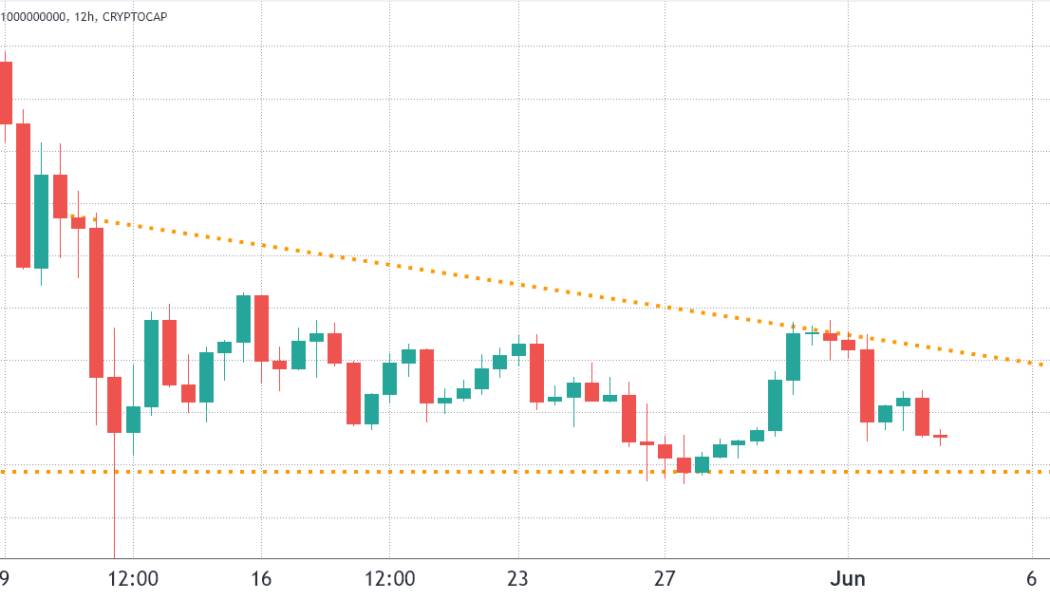
The total crypto market capitalization has ranged from $1.19 trillion to $1.36 trillion for the past 23 days, which is a relatively tight 13% range. During the same time, Bitcoin’s (BTC) 3.5% and Ether’s (ETH) 1.6% gains for the week are far from encouraging. To date, the total crypto market is down 43% in just two months, so investors are unlikely to celebrate even if the descending triangle formation breaks to the upside. Total crypto market cap, USD billion. Source: TradingView Regulation worries continue to weigh investor sentiment, a prime example being Japan’s swift decision to enforce new laws after the Terra USD (UST) — now known as TerraUSD Classic (USTC) — collapse. On June 3, Japan’s parliament passed a bill to limit stablecoin issuing to licensed banks, registered money t...

Finance Redefined: Maker founder proposes endgame, Singapore explores DeFi and more
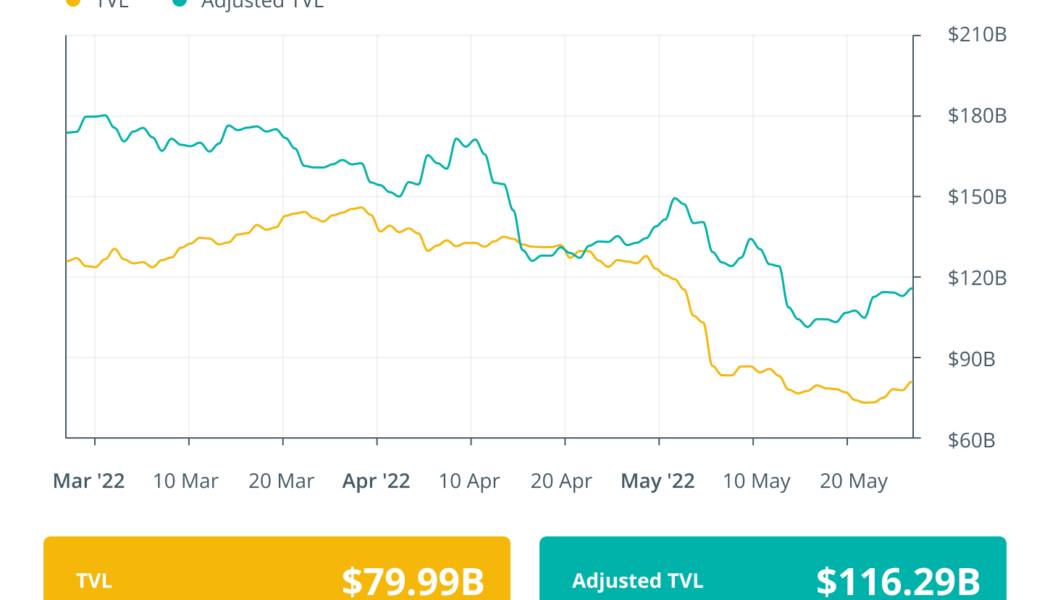
The past week in the decentralized finance (DeFi) ecosystem saw many new developments, including the rebirth of the Terra 2.0 blockchain. Meanwhile, Binance’s incubation platform Binance Labs launched a $500 million fund to support and promote Web3 adoption. Singapore’s central bank partnered with JP Morgan to explore DeFi applications in wholesale funding markets by establishing tokenized bonds. KuCoin launched its very decentralized wallet with DeFi and nonfungible token support. The top-100 DeFi tokens showed signs of a breakout from a month-long bearish trend, with most of the tokens showing overall gains in the past seven days. Maker founder proposes MetaDAOs and synthetic ETH in ‘Endgame Plan’ MakerDAO co-founder Rune Christensen has issued a new monumental proposal to push the proje...


Smart contracts can redesign legal agreements, but businesses beware
When was the last time you got a late payment? Chased an invoice? Waited for your monthly paycheck only to realize it’s late yet again? You might relate to these headaches as an investor, employee or client. But the tension that affects each of these unique parties is often caused by one unwavering contributor: an underlying traditional contract. Contracts affect every organization’s workforce, and 26% of employees are involved in managing these agreements at some point, according to the World Commerce and Contracting Association. With such a vast effect on a company’s contributors, these contracts should be up to par with the rest of a business’s advancements. Unfortunately, contracts are still typically left to human maintenance and execution by either involved party, which can lead to s...


Web3 is crucial for data sovereignty in the metaverse
Wandering around the metaverse is like being in a computer game, but soon, it will look exactly like real life. Unlike some dystopian visions of the metaverse, I don’t think we will give up on reality and stop participating in the physical world. On the other hand, advancements in artificial intelligence content generation will likely lead to a photo-realistic metaverse featuring exact replicas of ourselves and propel us toward a hyper-reality that combines our real-world and digital lives. Everything we do today on the internet will happen in the metaverse, just with a more engaging visual interface. The virtual content we interact with today is low-resolution and cartoonish, which makes sense because making realistic content is expensive, and gaming makes up the majority of what is curre...


Fed governor explains who needs crypto regulation and why demand for it is growing
Regulation is needed to open the crypto ecosystem to a larger public, United States Federal Reserve Board Governor Christopher Waller told an audience at the SNB-CIF Conference on Cryptoassets and Financial Innovation in Zurich, Switzerland. Financial intermediaries can help manage risk for new crypto users, but cannot eliminate it, Waller said, and new and fast-growing financial products need public confidence to survive. The banking official used historical examples to show the relationship between technical innovation, regulation and the amassing of fortunes. “New technology — and a lack of clear rules — meant some new fortunes were made, even as others were lost,” Waller said. Experienced investors know how to operate in unregulated marketplaces and may not need or want regulation, Wal...
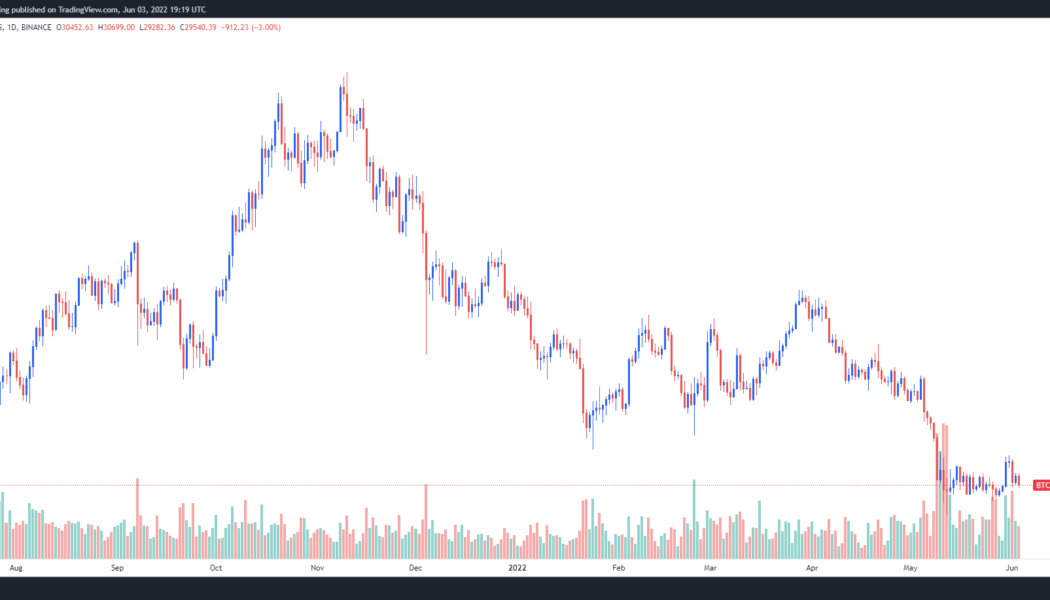

Bitcoin’s move to $32.4K was a fakeout — Here’s the price level most BTC traders are waiting for
The end of the first week in June brought more pain to global financial markets as the tech-heavy Nasdaq composite closed the day on June 3 down 2.3%, while the S&P 500 shed 1.4% of its value. The cryptocurrency market hasn’t faired any better and data from Cointelegraph Markets Pro and TradingView shows that an early morning attempt to push Bitcoin (BTC) above $30,000 was hit with a wave of selling that dropped it to a daily low of $29,286. BTC/USDT 1-day chart. Source: TradingView Here’s a look at what several market analysts are saying about the outlook for BTC as it remains pinned inside a narrow trading range. Price is stuck in the lower range Bitcoins’ slide back into its current range was “expected,” according to crypto trader and pseudonymous Twitter user Altcoin Sh...


Brazilian central banker describes how CBDC system can halt bank runs
In a paper recently published by the Bank for International Settlements (BIS), Fabio Araujo, an economist at the Central Bank of Brazil (CBB) who is also responsible for the country’s central bank digital currency work, revealed that the monetary authority will have greater control over the population’s money once its CBDC is rolled out. Through the so-called Real Digital, the central bank will be able to halt bank runs and impose other restrictions on citizens’ access to money. Real Digital, the digital version of Brazil’s national currency, has been debated at the central bank since 2015 and will have its first tests in 2023 through nine solutions presented by private companies during the recent Lift Challenge event that was carried out by the CBB. Cointelegraph reported that the v...
