

Crypto news
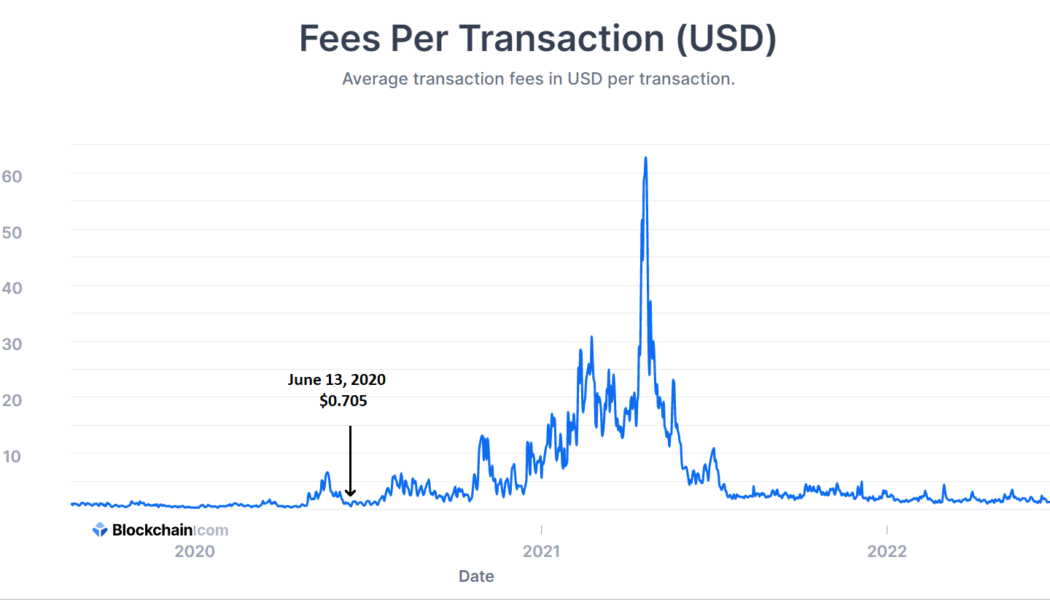

Average Bitcoin transaction fee drops under $1 as network difficulty recovers
The average transaction fees on the Bitcoin (BTC) blockchain fell below $1 for the first time in over two years, further strengthening its use case as a viable mainstream financial system. High transaction fees over blockchain networks work against the users, especially when making low-value transactions. For example, transaction fees over Ethereum (ETH) blockchain skyrocketed several times during the nonfungible token (NFT) hype, inducing stress on general users. While the Bitcoin ecosystem has also endured its fair share of high transaction fees in the past, timely upgrades — including the Lightning Network and Taproot — guarantee faster and cheaper transactions over time. As of Aug. 22, the average Bitcoin transaction fees fell down to $0.825, a number last seen on June 13, 2020. Averag...
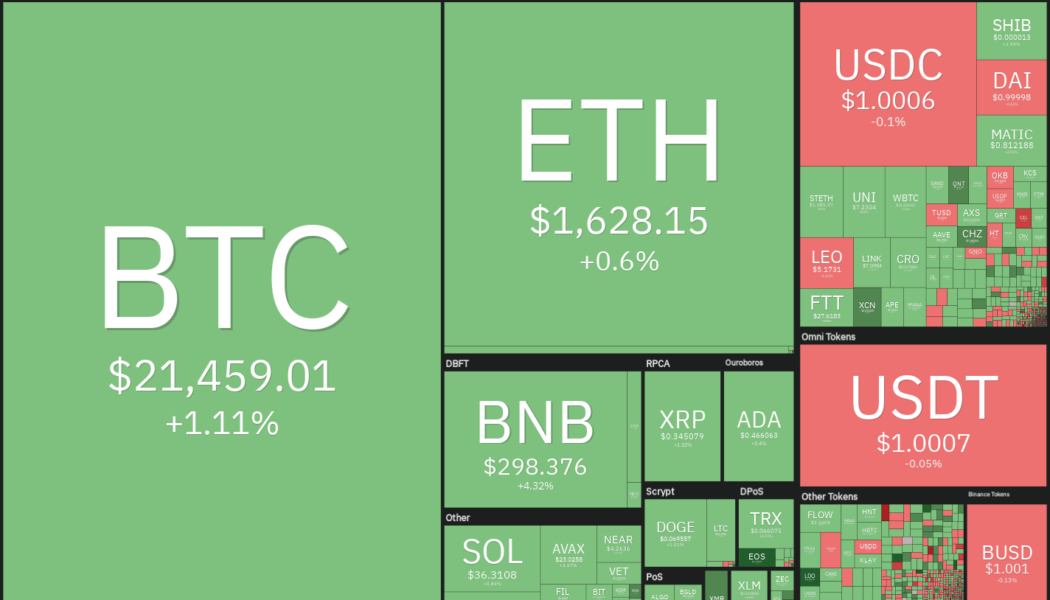

Here’s 5 cryptocurrencies with bullish setups that are on the verge of a breakout
The S&P 500 ended its four-week-long recovery last week after minutes from the Federal Reserve’s July meeting hinted that the central bank’s rate hikes will continue until inflation is under control. Members of the Fed said there was no evidence that inflation pressures appear be easing. Another dampener was the statement by St. Louis Fed president James Bullard who said that he would support a 75 basis point rate hike in September’s Fed policy meeting. This reduced hopes that the era of aggressive rate hikes may be over. Crypto market data daily view. Source: Coin360 Weakening sentiment pulled the S&P 500 lower by 1.29% for the week. Continuing its close correlation with the S&P 500, Bitcoin (BTC) also witnessed a sharp decline on Aug. 19 and is likely to end the week with ste...

The Philippines pushes back against foreign exchanges, continuing a protectionist streak
The pressure on crypto is growing swiftly in the Philippines. After a recent series of controversial moves from the state regulators and local think tanks, the country’s central bank published a warning to the citizens, discouraging them from engaging in any operations with unregistered or foreign crypto exchanges. The announcement itself doesn’t sound menacing but taken in the context of accompanying developments, it makes a 112-million nation a restive region for crypto. On Thursday, the Bangko Sentral ng Pilipinas (BSP) published a warning note to the country’s citizens, “strongly urging” them not to deal with virtual asset service providers (VASPs) that are either unregistered or domiciled abroad. The Bank emphasized that any deals with virtual assets are high-risk activities by ...


Huobi explains what went wrong with HUSD after stablecoin is back on track
After recovering the HUSD stablecoin’s dollar peg, crypto exchange Huobi explained what had caused the short-term liquidity problem and assured users that it had been resolved. On Thursday, HUSD started to fall from its dollar value, trading at $0.92 at the start of the day and falling as low as $0.82 a few hours later. This alarmed community members, who speculated what mig happen if the stablecoin doesn’t recover its dollar peg. HUSD was once one of the safest stablecoins. Now it’s off its peg. If HUSD doesn’t return to $1, it’d be the first fully-reserved centralized stablecoin to fail. pic.twitter.com/9WmROQR6lD — John Paul Koning (@jp_koning) August 18, 2022 In response to the concerns, the crypto exchange platform immediately announced that they had been in co...


Fake employees and social attacks: Crypto recruiting is a minefield
Hiring in the crypto world can be difficult. Web3 companies are often disorganized and lack HR departments. Developers sometimes want to remain anonymous — even to their potential employers. Some employees don’t exist at all, while others are secretly juggling three other remote gigs. Then there are those who pretend to be employees but are really just plotting to rug everyone. The job of a hiring manager is no easy one. This goes doubly so for the Web3 world, where expectations both from employers and employees can be drastically different compared to the Web2 corporate world. Magazine spoke to Declan Strain, managing partner of Dubai-based talent consultancy BlockDelta, which helps companies in the Web3 industry connect with workers of all levels. After 20 years as a recruiter, he became...


Merkle trees vs. Verkle trees, Explained
Merkle trees are employed in Bitcoin (BTC) and other cryptocurrencies to more effectively and securely encrypt blockchain data. Verkle trees allow for smaller proof sizes, particularly important for Ethereum’s upcoming scaling upgrades. But, how do you identify a Merkle tree? Leaf nodes, non-leaf nodes and the Merkle root are the three essential parts of a Merkle tree in the context of blockchains. Transaction hashes or transaction IDs (TXIDs) reside in leaf nodes, which can be viewed on a block explorer. Then, above the leaf nodes, a layer of non-leaf nodes is hashed together in pairs. Non-leaf nodes keep the hash of the two leaf nodes they represent below them. Related: What is blockchain technology? How does it work? As the tree narrows as it ascends, half as many nodes ...


FTX revenue reportedly grew 1000% in one year, leaked documents reveal
FTX was among the many crypto exchanges with a front-row seat to witness the crypto hype of 2021, back when Bitcoin (BTC) and other cryptocurrencies hit their all-time highs. Driven by massive customer onboarding, partnerships, sponsorships and other factors, FTX’s revenue reportedly grew 1000% in 2021 — revealed internal documents. Audited financials of FY 2020-2021 show FTX witnessing a 1000% increase in revenue — growing from $90 million in 2020 to $1.2 billion in 2021, claimed CNBC alleging access to the documents. The revenue breakdown discloses a 1842.85% increase in operating income for FTX, from $14 million to $272 million in one year. The crypto exchange amassed $388 million in net income, a 2182.35% increase from last year’s $17 million. FTX has reportedly made $270 million in th...


Can Web3 be hacked? Is the decentralized internet safer?
Web3 came into existence posed as a blockchain-powered disruption to the current state of the internet. Yet, as a nascent technology, a fog of assumptions plagues discussions about the real capabilities of Web3 and its role in our day-to-day lives. Considering the promise of a decentralized internet using public blockchains, a complete transition to Web3 would require scrutiny across several factors. Out of the lot, security stands as one of the most crucial features as, in a Web3-powered world, tools and applications hosted over the blockchains go mainstream. Smart contract vulnerabilities While the blockchains that host Web3 applications remain impenetrable from being hostage to attackers, hackers target the vulnerabilities within the project’s smart contracts. Smart contract attacks on ...
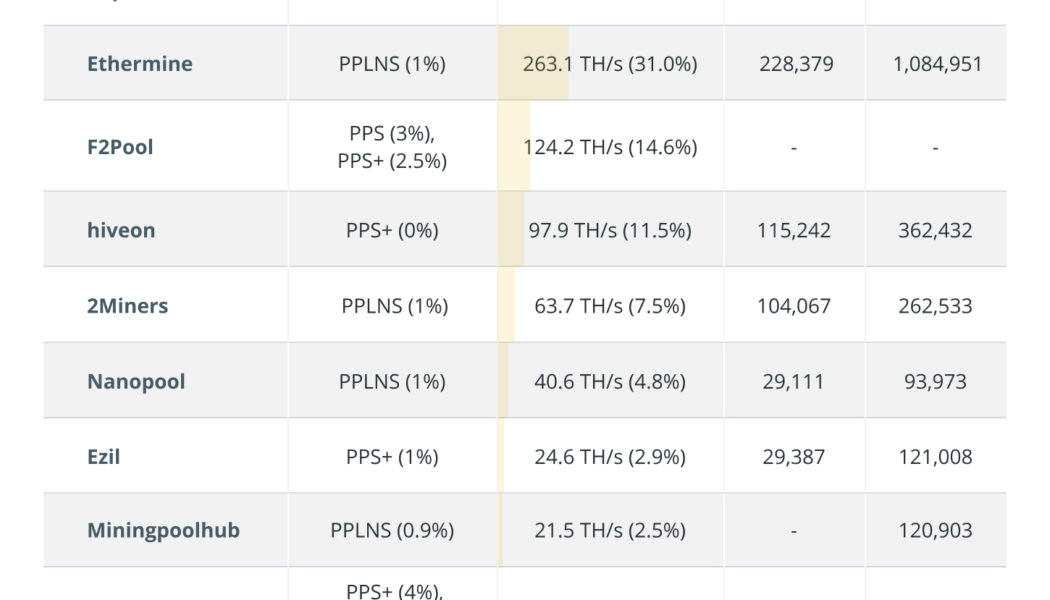

Ethereum Merge prompts miners and mining pools to make a choice
The Ethereum blockchain is all set to make its highly anticipated transition from its current proof-of-work (PoW) mining consensus to proof-of-stake (PoS). The Merge date is officially scheduled for Sept. 15–16 after the successful final Goerli testnet integration to the Beacon Chain on Aug. 11. At present, miners can create new Ether (ETH) by pledging a huge amount of computing power. After the Merge, however, network participants, known as validators, will be required to instead pledge large amounts of pre-existing ETH to validate blocks, creating more ETH and earning staking rewards. The three-phase transition process began on Dec. 1, 2020, with the launch of the Beacon Chain. Phase 0 of the process marked the beginning of the PoS transition, where validators started staking their ETH f...


What is an NFT and why are they so popular?
Nonfungible tokens (NFTs) have been part and parcel of the cryptocurrency space for the last couple of years. Still, their value and utility across several industries have driven their proliferation into mainstream consciousness. Cointelegraph’s director of video production Jackson DuMont delves into the intricacies of NFTs, highlighting the importance of the underlying blockchain technology in proving ownership of digitally scarce assets: “NFTs provide unique, verifiable and immutable proof of ownership of digital goods. True digital ownership of assets through NFTs is a revolutionary idea that will transform how we interact with the internet.” Another important aspect of NFT technology highlighted by DuMont is handing the ownership of digital assets to users as Web3 functionality begins ...


BlockFi tops revenue grower list with 250,000% increase, BitGo aims to sue Galaxy Digital, and Bitcoin’s price drops: Hodler’s Digest, Aug. 14-20
Coming every Saturday, Hodler’s Digest will help you track every single important news story that happened this week. The best (and worst) quotes, adoption and regulation highlights, leading coins, predictions and much more — a week on Cointelegraph in one link. Top Stories This Week Fed to issue long-awaited guidelines for granting master accounts to crypto banks Crypto’s continued journey into the mainstream has come with various levels of regulatory action across the globe. This week brought clarity in terms of expectations for crypto-focused banks seeking accounts with the United States Federal Reserve. A framework released by the Federal Reserve Board details expectations for such applicant banks, including the level of due diligence to be provided based on each applicant’s risk level...


DeFi needs to start creating real-world value if it wants to survive
The total value locked in decentralized finance (DeFi) projects is hovering around $62 billion as of mid-August, down from a peak of over $250 billion in December 2021. Capital is fleeing the crypto space amid war, soaring inflation and whatever other surprises 2022 may still have in store for us. However, unlike previous crypto bull runs, it was not just retail interest that drew in this capital in the first place. Rather, major institutional players, which have recently opened up to crypto, quickly developed an appetite for the yields DeFi is known for. But now that winter is upon us, the pitfalls of high-yield platforms have become more apparent. Value can’t come out of thin air In some sense, value is always somewhat subjective, defined by one’s personal considerations and goals. A pho...
