

Crypto news

Fed adds a new layer of bureaucracy for US banks engaging in crypto asset activities
The United States Federal Reserve Board issued a letter Tuesday to its supervisory officers, staff and the banks they supervise regarding activities with crypto assets. The letter covers the preliminary steps a bank must go through before engaging in activities with crypto and instructs banks to notify the board before proceeding with those activities. The letter, signed by the directors of the regulatory and community affairs divisions, applies to all banks supervised by the Fed with no threshold of minimum assets. It begins with a warning about the risks associated with crypto, specifically mentioning evolving technology and its governance, Anti-Money Laundering and transparency and the stability of assets such as stablecoin. The Fed is monitoring banks’ activities, the letter noted: “Gi...


European Central Bank addresses guidance on licensing of digital assets
The European Central Bank, or ECB, laid the foundation for the criteria it would be considering when harmonizing the licensing requirements for crypto in Europe. In a Wednesday statement, the ECB’s banking supervision division said it would be taking steps to regulate digital assets as “national frameworks governing crypto-assets diverge quite extensively” and given the seemingly differing approaches to harmonization following the passage of the Markets in Crypto-Assets (MiCA) regulation and the Basel Committee on Banking Supervision issuing guidelines for banks’ exposure to crypto. The ECB said it would apply criteria from the Capital Requirements Directive — in effect since 2013 — to assess licensing requests for crypto-related activities and services. Specifically, the central bank will...


‘There’s a lot less land to go around’ — why White Rock established off-the-grid mining in Texas
Amid many cryptocurrency mining firms in Texas scaling down operations to reduce the load on the power grid, at least one company set up miners not quite as affected by the state’s energy requirements during extreme heat. In June, White Rock Management expanded its crypto mining operations to Texas — its first in the United States — but reported its facility in the Brazos Valley region would mine Bitcoin (BTC) using “environmentally responsible” methods. While the firm’s mining operations in Sweden used hydroelectric power, White Rock CEO Andy Long told Cointelegraph that its Texas facility was “off grid”, powered only by natural gas that would otherwise be burned. “The U.S. is where the action is in terms of markets, so we plan to be in at least another couple of states as well as Texas w...


Senator asks FDIC about allegations it discourages bank relations with crypto companies
Pennsylvania Senator Pat Toomey, ranking member of the United States Senate Banking Committee, has sent a letter to Federal Deposit Insurance Corporation (FDIC) director and acting chairman Martin Gruenberg informing him of allegations made by a whistleblower concerning FDIC activities. The senator suspects the FDIC “may be improperly taking action to deter banks from doing business with lawful cryptocurrency-related (crypto-related) companies.” Toomey wrote that there is corroboration of whistleblower allegations that “personnel in the FDIC’s Washington, D.C. headquarters are urging FDIC regional offices to send letters to multiple banks requesting that they refrain from expanding relationships with crypto-related companies, without providing any legal basis for sending such letters...
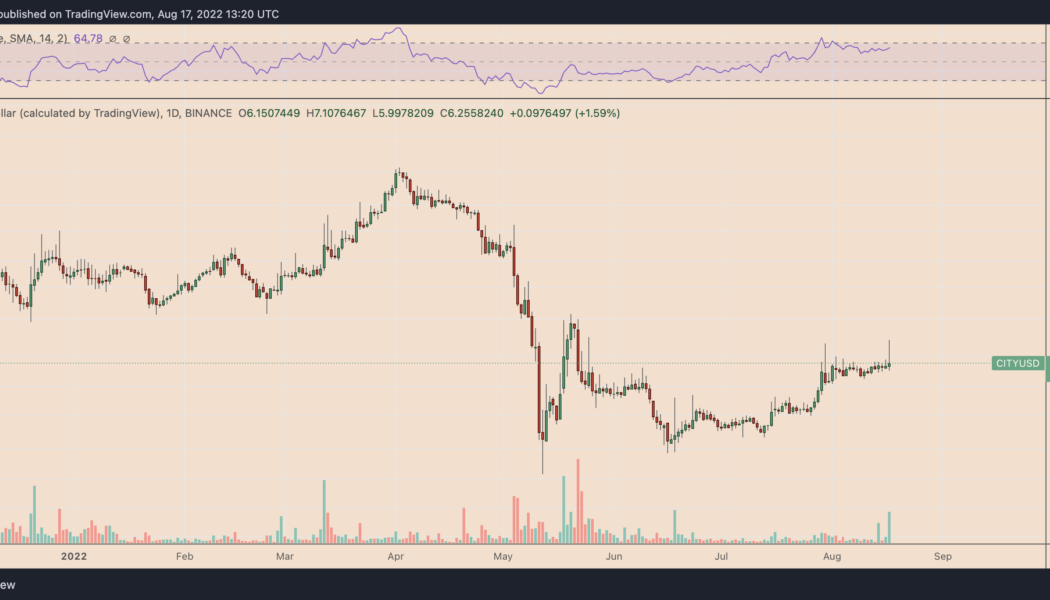

Fake Manchester United token soars 3,000% after Elon Musk jokes about buying team
Manchester United Fan Token (MUFC) is a dead coin and not related to the sports franchise, but one Elon Musk tweet was enough to revive it on Aug. 17. Also, I’m buying Manchester United ur welcome — Elon Musk (@elonmusk) August 17, 2022 Fake Man U token pumps after Elon Musk’s tweet To clarify, MUFC is not an official Manchester United crypto token. It came to life in August 2021 after a team of programmers, who are said to be hardcore Manchester United fans, falsely claimed that holding MUFC would give buye influence on the football club’s decisions. The team later conducted an “airdrop” round of 10,000,000,000 MUFC in November 2021, promising to provide 10,000 MUFC to users who followed its official social media handles. The prospects of getting free MUFC tok...
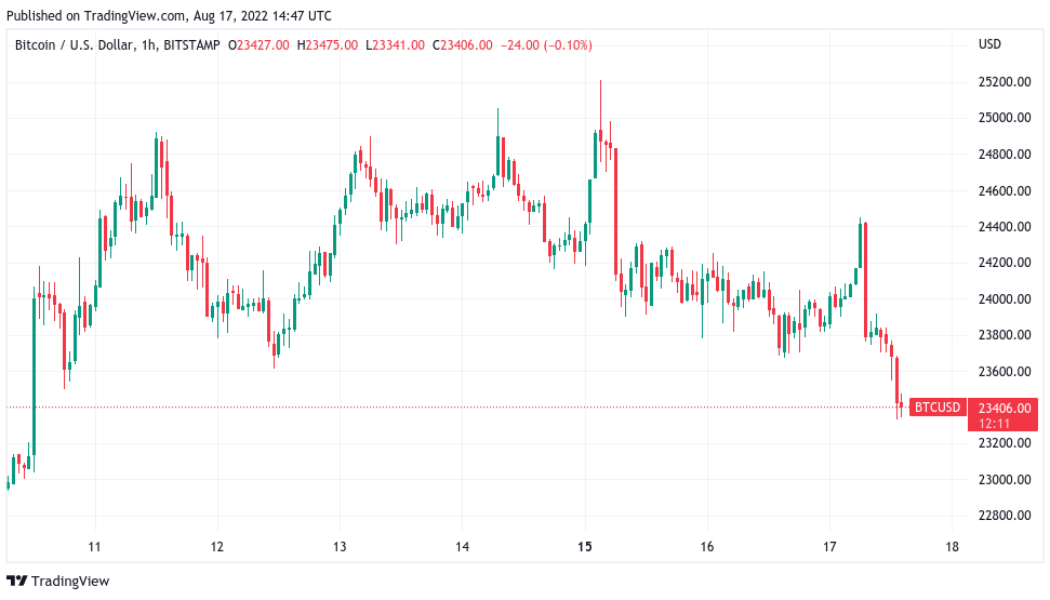

Bitcoin price dives pre-FOMC amid warning $17.6K low was not the bottom
Bitcoin (BTC) dropped to weekly lows at the Aug. 17 Wall Street open as upcoming Federal Reserve comments unsettled risk assets. BTC/USD 1-hour candle chart (Bitstamp). Source: TradingView Dollar climbs as Fed minutes due Data from Cointelegraph Markets Pro and TradingView tracked a more than 2% daily decline in BTC/USD, which hit $23,325 on Bitstamp. Already showing signs of weakness, the pair slid further as United States equities began trading, hours before the Federal Open Markets Committee (FOMC) was due to release minutes from its latest meeting. While not involving a decision on interest rates, the meeting was cued to give an insight into the Fed’s thinking in terms of the next rate tweak due in September. “The important event tonight with the FOMC minutes, through which information...
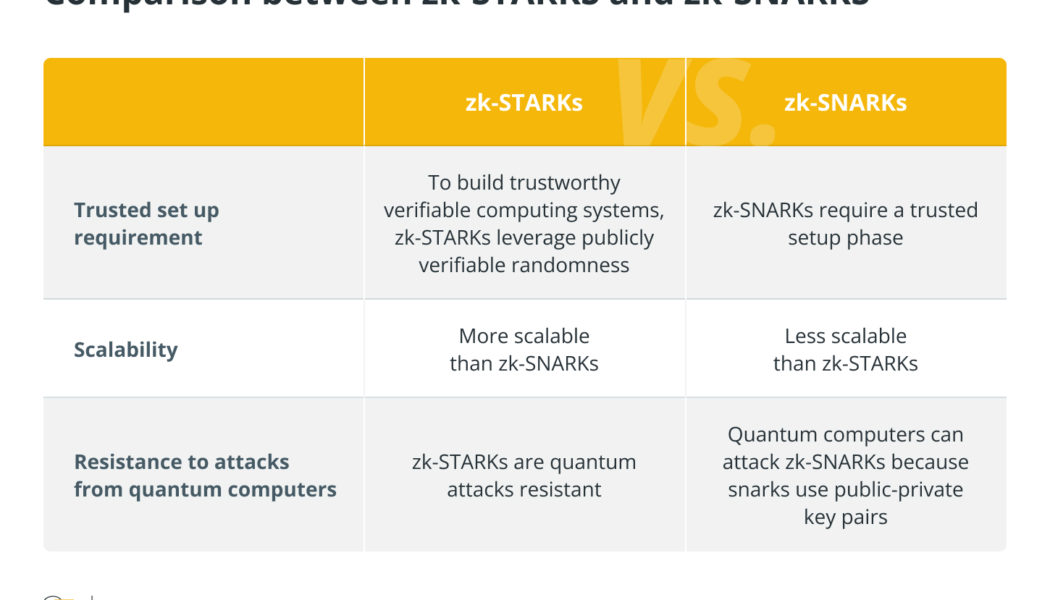

Pushing Bitcoin to become more scalable with zero-knowledge proofs
For all the good that Bitcoin brings to the table, it also possesses a commonly accepted issue in scalability. Bitcoin can only process a limited number of transactions per block and, as of Aug. 17, 2022, can handle about five transactions per second, which in comparison to most other blockchains is low. The factor limiting scalability lies in Bitcoin’s cryptographic algorithm. The Elliptic Curve Digital Signature Algorithm (ECDSA) is the essential cryptographic algorithm that powers Bitcoin and ensures that only the rightful owner can access and manage their funds. Currently, verification of the ECDSA, a Bitcoin signature allowing to carry out transactions and send Bitcoin (BTC), is not efficient and limits the scalability of the Bitcoin blockchain. A potential solution is using zero-know...


Ethereum Foundation clarifies that the upcoming Merge upgrade will not reduce gas fees
According to a new clarification by the Ethereum Foundation on Wednesday, the network’s upcoming proof-of-stake transitory upgrade — dubbed the “Merge,” — will not reduce gas fees. Regarding this, the Ethereum Foundation wrote: “Gas fees are a product of network demand relative to the network’s capacity. The Merge deprecates the use of proof-of-work, transitioning to proof-of-stake for consensus, but does not significantly change any parameters that directly influence network capacity or throughput.” The Merge, which seeks to join the existing execution layer of the Ethereum mainnet with its new proof-of-stake consensus layer, the Beacon Chain, will eliminate the need for energy-intensive mining. It is expected to land within the third or final qua...

For greater good: NY judge allows Celsius to mine, sell Bitcoin
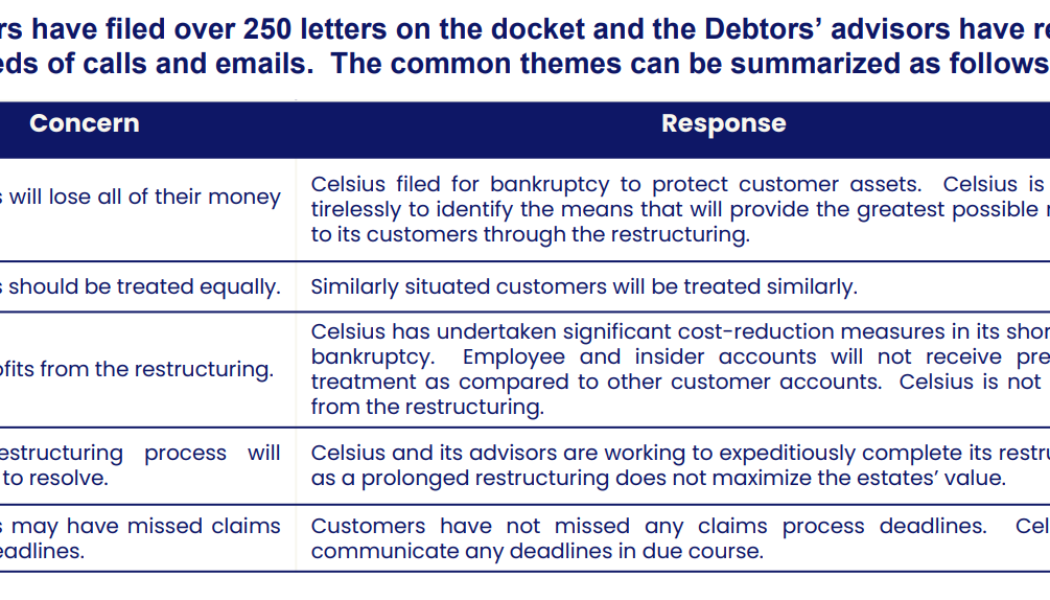
Not even 24 hours after revealing a three-month cash flow forecast that threatens total exhaustion of funds, a New York judge allowed crypto lender Celsius Network to mine and sell Bitcoin (BTC) during its bankruptcy. Since July 2022, Celsius Networks stands at the crosshair of United States officials after reports of bankruptcy surfaced, which risks losing the live savings of numerous crypto investors. Last week many got very upset with me as I said @CelsiusNetwork would run out of money & solutions needed to be acted upon faster. I was told I don’t understand Chapter 11. They have now confirmed they run out of money by October. https://t.co/CyzjgKpId7 pic.twitter.com/vBIRIGEmG2 — Simon Dixon (Beware Impersonators) (@SimonDixonTwitt) August 15, 2022 During the second day of the case h...

EOS price jumps 20% for biggest gain in 15 months — What’s fueling the uptrend?
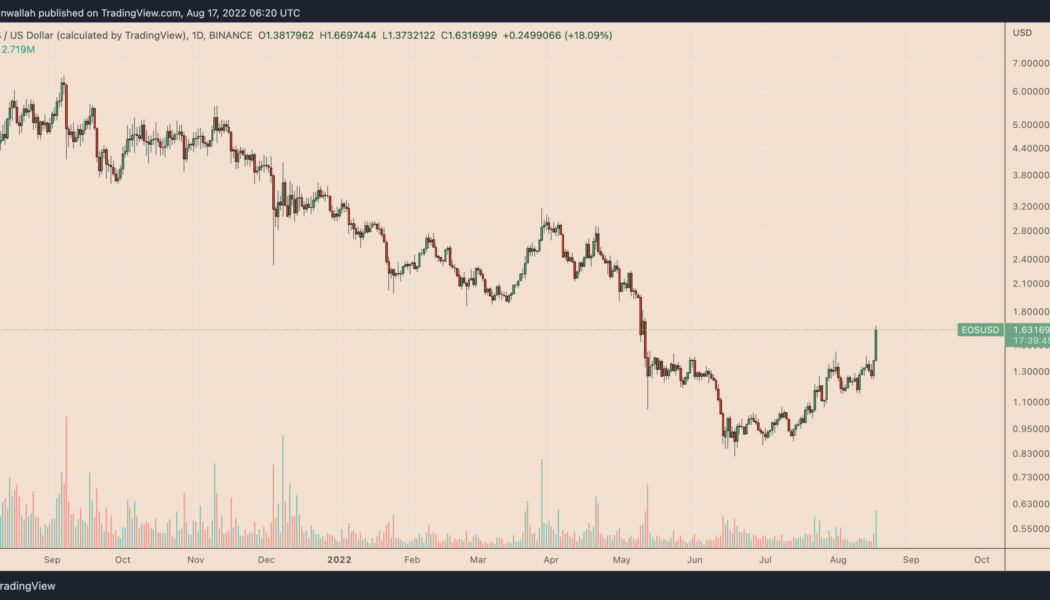
EOS rose approximately 20% to reach $1.66 on Aug. 17 and was on track to log its best daily performance since May 2021. Initially, the EOS rally came in the wake of its positive correlation with top-ranking cryptocurrencies like Bitcoin (BTC) and Ether (ETH), which gained over 2% and 3.75%, respectively. But, the upside move was also driven by a flurry of uplifting updates emerging from the EOS ecosystem. EOS/USD daily price chart. Source: TradingView EOS incentive program launch On Aug. 14, the EOS Network Foundation (ENF), a nonprofit organization that oversees the growth and development of the EOS blockchain, opened registrations for its upcoming Yield+ incentive program. The Yield+ is a liquidity incentive and reward program to attract decentralized finance (DeFi) application...


What is CeDeFi, and why does it matter?
Among the advantages of CeDeFi are lower fees, better security, accessibility, speed and lower cost. CeDeFi’s innovative approach to decentralized banking enables users to trade CeDeFi crypto assets without requiring a centralized exchange. This implies that users may transact directly with one another, removing the need for an intermediary. Among CeDeFi’s major advantages is lower fees. CeDeFi transactions cost lower than those on comparable platforms since there are fewer middlemen involved, especially on networks that are not Ethereum-based. Ethereum has very high gas fees, for instance, with DEX transactions running into hundreds of dollars. It also often causes network congestion issues, leading to delays. Binance CeDeFi, on the other hand, has much lower fee...

Another depeg — Acala trace report reveals 3B aUSD erroneously minted
High-profile security incidents continue to be a theme in 2022 as the Acala Network joined a long list of stricken platforms to fall prey to exploits. Acala’s aUSD token, which acts as the native stablecoin for the Polkadot and Kusama blockchains, saw its value plummet 99% after a misconfiguration of the iBTC/aUSD liquidity pool was exploited after its launch on Aug. 14. Initial estimates from Acala noted that 1.2 billion aUSD were minted without the necessary collateral – seeing the token’s value depeg from its 1:1 USD ratio to a bottom of $.01. Acala put its network in maintenance mode to freeze funds and eventually managed to recoup a significant portion of the uncollateralized tokens. The Acala community proposed and voted on a referendum to identify and destroy the erroneously m...
