

Finance


The Future of Micro-finance in Emerging Markets
The pandemic has emphasised, beyond a point of reasonable doubt, the importance of technology to our modern world. Just as video calling and messaging have allowed us to work, study and socialise, fintech has played a similarly critical role in ensuring that people can still access the banking system. However, entirely too many people still lack access to financial services, leaving them without recourse in these unprecedented times. Financial inclusion is vital if we are to ignite economic growth, yet major obstacles remain. Reports suggest that as many as 40% of Nigerians are excluded from the banking system. To bring basic banking to everybody, we must still contend with limited access to technology, insufficient infrastructure, isolated areas, jealous hoarding of data by traditional in...

Use of Digital Payments is Growing Rapidly in South Africa
Sourced from Htxt.Africa The accelerating rate at which retail merchants are enabling consumers to pay digitally at point of sale is said to be fueling the growth of digital payments in South Africa. This is according to FNB, which revealed that its Scan-to-Pay and Tap-to-Pay functionality on the FNB APP recorded the highest month-on-month usage growth in August 2020 since launch. The Bank states that month-on-month transaction volumes on Scan-to-Pay – which allows users to scan a QR Code to make secure payments at a physical point of sale or on an online merchant website – grew by 36% in August while values increased by 39%. Similarly, month-on-month usage of Tap-to-Pay functionality – which allows users to pay for goods by simply tapping their smartphone to pay at a point of sale – incre...


Mukuru Adds Sign-Up Feature to WhatsApp
Mukuru has upgraded its app and added a new self sign-up feature to its WhatsApp offering. The new app – available on Android and IOS – will allow users to send money to 12 countries including Botswana, Bangladesh, DR Congo, Eswatini, Kenya, Lesotho, Malawi, Mozambique, Pakistan, Uganda, Zimbabwe and Zambia. Both channels are expected to enable customers to sign-up and conduct important transactions from home. “Our customers have been asking for a Mukuru App, and we have made sure to develop and present a solution that empowers our customers to send money back home to their families in an even safer and more convenient way. Mukuru has always given its customers the ability to transact when and wherever they need to through our existing USSD and WhatsApp offerings – the Mukuru App adds a ri...


Airtel, MTN and Stanbic Bank Fall Victim to Major Data Breach in Uganda
Sourced from IDG Connect Mobile money transaction company, Pegasus technologies has suffered a major data breach resulting in the loss of billions of Ugandan Shillings – according to PLM Daily. The breach is said to have impacted telcos, Airtel and MTN Uganda, as well as Stanbic Bank, Uganda’s largest bank. “Stanbic Bank Uganda, MTN Uganda and Airtel Uganda inform the public and their customers that on Saturday 3 October 2020, a third-party service provider experienced a system incident which impacted Bank to Mobile Money transactions. All Bank to Mobile Money/Wallet services have since been temporarily suspended,” reads an official statement from the companies. “This system incident has had no impact on any balances on both Bank and Mobile Money accounts. Our technical teams are analysing...

FNB Introduces QR Code Payments to all Speedpoint Devices
Sourced from Htxt.Africa FNB has revealed that shoppers across South Africa will now be able to make QR code payments at all standalone sale terminals. The bank says that this forms part of the ongoing expansion of its payments ecosystem and integrated App-based QR code, aimed at accelerating the adoption of digital payment solutions in the country. FNB Merchant Services CEO, Thokozani Dlamini says given the challenges we are currently facing globally due to the COVID -19 pandemic, it was essential that FNB fast-track the rollout of QR code payments for enhanced convenience and safety. “Added to the cost-effective, convenient and efficient payment process of contactless payments, both consumers and merchants will have peace of mind from a safety perspective, as physical contact will be lim...

Nigeria to begin business sample census October 12
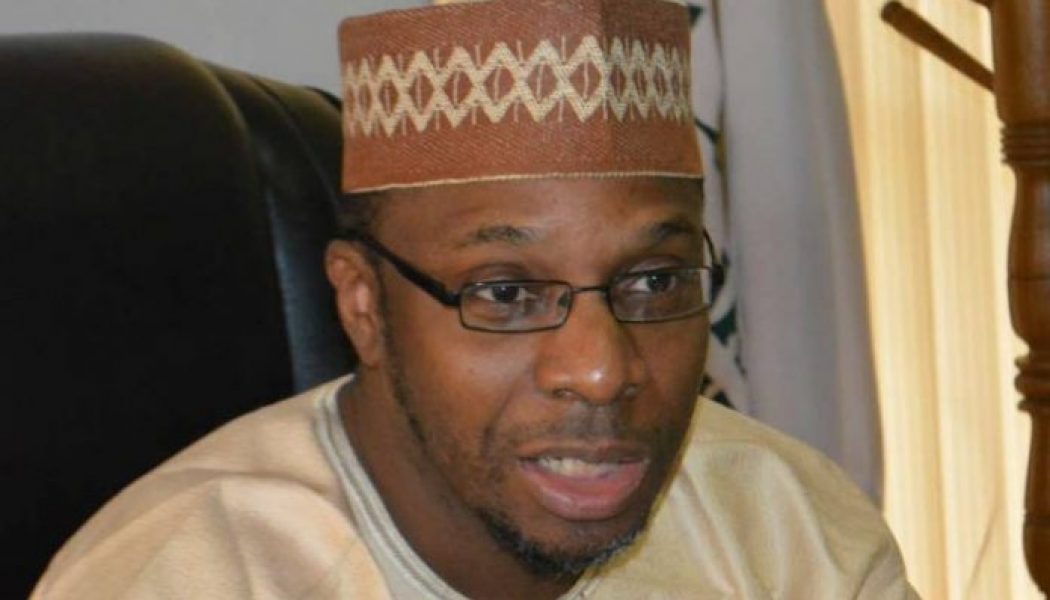
File Photo The National Bureau of Statistics, NBS, is to commence National Business Survey after 22 years. The statistician General of the Federation, Dr. Yemi Kale, announced this on Monday while delivering a keynote address at the Training of Trainers for the National Business Sample Census (NBSC) 2020 in Abuja. Kale said the information emanating from the census activity would be primarily useful in understanding the nature and structure of the economy, as well as providing a sound business frame for the conduct of economic surveys in the country. The Business Census also known as an Economic Census is a statistical exercise that involves the enumeration of formal and informal business establishments across the country. During this process, commercial and industrial business operations ...


CBN: Nigeria far from financial inclusion target
A report by the Central Bank of Nigeria and the Enhancing Financial Innovation & Access has said that Nigeria is far from achieving its financial inclusion target in 2020. The CBN disclosed this in the report titled ‘Assessment of women’s financial inclusion in Nigeria’ for December 2019 period which was released on Monday. Part of the report read, “Not surprisingly, financial exclusion stands at 36 per cent for women and 24 per cent for men. “The relative gender gap related to financial inclusion is ~20-30 per cent, placing Nigeria below its peers. “Since 2012, although women’s exclusion has dropped, the gender gap has grown, revealing that men’s inclusion has improved more rapidly than women’s. “The National Financial Inclusion Strategy was launched in 2012 to reduce financial exclus...


Lagos financially, economically viable – official
Contrary to the publication by BudgIT, a public finance analyst, the Lagos State Government said it is economically and financially solid. The state Commissioner for Finance, Dr. Rabiu Olowo, made the assertion in a statement on Monday in reaction to BudgIT, publication, titled: ‘Ability of States to Meet Monthly Recurrent Expenditure and Loan Repayment Obligations, 2019’, which the state Governor, Babajide Sanwo-Olu, administration described as “misinformation”. According to Olowo, BudgIT has apologized for its error in the report. According to Olowo, the facts are: “Lagos State continues to meet all its recurrent and loan service obligations and the information that was published in incorrect, inaccurate and a gross distortion of the actual facts. “The accurate information that ought to ...


Jumia and Airtel Kenya Partner to Enable Mobile Payments
Jumia and Airtel Kenya have partnered to allow consumers to complete their online payment transactions using Airtel Money. “Millions of Kenyans rely on mobile money daily to make fast payments. By expanding our payment options to include Airtel money, it will make it easier for more consumers to incorporate online shopping as part of their daily transactions,” says Nelly Movine, Head of Financial Services at Jumia. The service is expected to further enhance the Jumia contactless-delivery initiative launched in March as a safety measure against COVID-19. Consumers are encouraged to prepay for their purchases to avoid cash exchange or pay with Airtel money upon delivery. “We are delighted to be working with Jumia on this exciting partnership to enhance customer experience on the Jumia platfo...


Major banks moved vast sums of illicit money – investigation
Massive sums of allegedly dirty money have flowed for years through some of the world’s largest banking institutions, said an international journalism investigation published Sunday, which denounced shortcomings in sector regulations. “Profits from deadly drug wars, fortunes embezzled from developing countries, and hard-earned savings stolen in a Ponzi scheme were all allowed to flow into and out of these financial institutions, despite warnings from the banks’ own employees,” according to the probe from Buzzfeed News and the International Consortium of Investigative Journalists (ICIJ). The investigation, which was led by 108 international media outlets from 88 different countries, is based on thousands of suspicious activity reports (SARs) submitted to the US Treasury Department’s financi...


Paxful breaks ground on fourth in 100-school initiative
Paxful team with pupils in Rwanda Paxful, a global peer-to-peer bitcoin marketplace, announced today that it has broken ground on the fourth in its 100-school initiative aimed at building quality education centers in emerging countries. The fourth school, located in Nigeria, will come fully equipped with a state-of-the-art solar-powered and water well system, and in response to safety requirements associated with COVID-19, Paxful will also provide Personal Protective Equipment for all teachers and students including facemasks and hand sanitizers. According to Ray Youssef, CEO, and co-founder of Paxful, “The #BuiltWithBitcoin initiative now supports over 400 students.” He highlights that through the 100-school plan, Paxful expects to bring education to nearly 15,000 young people throughout ...


Central bank okays N200 billion housing loan for low income earners
The Central Bank of Nigeria (CBN) has announced N200 billion mortgage finance loan to Family Homes Fund (FHF). The fund is for the building of 300,000 homes in the 36 states of the federation and the Federal Capital Territory. It is also expected to help create up to 1.5 million jobs in five years. The CBN framework for the implementation of the Family Homes Financing Scheme released yesterday indicates that the fund would be released to FMF on project basis, subject to the cumulative maximum limit of N200 billion. According to the framework, the three-year term loan will enable FHF finance the construction of social housing units for people on low income at an interest rate not more than five per cent per annum (all inclusive). The apex bank said it introduced the financing initiative to ...
