

IT News


Calls for Safaricom to Share Telco Infrastructure by Kenya Competition Authority
Image sourced from Techweez The Competition Authority of Kenya (CAK) has approached Parliament with new laws that would require the country’s telco’s – mainly Safaricom – to share their private infrastructure on a commercial basis. “The authority’s view is that ab initio infrastructure provisions in the sector should have been separated from the mobile network operators. Primarily regulations should have been developed to ensure that third parties provide the infrastructure. Unfortunately, this did not happen,” says CAK Director-General, Francis Wang’ombe Kariuki. “It is with this reality that we opine regulations should be promulgated and enforced in regard to infrastructure sharing on a commercial basis and in case of dispute, the sector regulator [Communications Authority of Kenya] may ...

3 Cybersecurity Challenges Triggered by COVID-19 Lockdown
The global COVID-19 pandemic disrupted the everyday operations of businesses and as a result, the cyber risk still remains a grave concern as many business practices have been compromised. The ZA Central Registry organisation, which is the administrator of South Africa’s .za domain name, recently warned that South Africa is a global target for international fraudsters and cybersecurity measures are more important now than ever before. “It is essential for businesses to be aware of the nature of these cybercrimes and technology countermeasures to protect their businesses, especially when considering the cybersecurity challenges that have occurred during lockdown”, says Riaan de Villiers, Cybersecurity Expert and Business Analyst at LAWtrust. Here’s a Quick Look at the Top 3 Cybersecurity Ch...


Unpacking the Economic Impact of COVID 19 on SMBs in South Africa
One in two small and medium-sized businesses (SMBs) in South Africa has yet to see revenues recover to pre-pandemic levels, according to the latest edition of Facebook’s Global State of Small Business Report. 50% of operational South African SMBs on Facebook reported that their sales in February were lower than the equivalent month last year. Some 74% reported that they were operational or engaging in any revenue-generating activities, while 8% of operational SMBs on Facebook expected challenges related to cash flow and 20% expected challenges related to demand or a lack of customers in the next few months. Continuing trends observed throughout the pandemic: Women-owned South African businesses have been hit especially hard. Some 71% of women-led SMBs (vs. 77% of men-led SMBs) on Facebook ...


Zeepay Ghana Acquires Zambian Mobile Money Platform
Image sourced from Modern Ghana Zeepay Ghana has revealed its plans to acquire a majority stake (51%) in Zambian company Mangwee Mobile Money – although, it is not yet known how much Zeepay paid for the majority stake. “The merger is the first of its kind – that two indigenous African fintech companies in mobile money operations have come together to grow. It represents a wind of change ongoing on the African continent,” reads a statement from Zeepay. Managing Director of Zeepay, Andrew Takyi-Appiah believes that this deal will allow Zeepay to expands its operations through Southern Africa. He says “this will give Zeepay access to Mozambique, Malawi, Angola and Namibia amongst others in our efforts to capture Africa’s $70billion remittance market and opportunity to deploy our award-winning...


Safaricom is Testing a Digital Health Passport Programme
Image sourced from Techweez Safaricom has begun testing Afya Moja – a mobile health records system – in partnership with Nakuru County. The initial pilot programme will see over 100,000 people be part of the integrated electronics medical records program. According to TechIsh, Afya Moja is a simple mobile-based Digital Health Passport that receives and securely stores patient information. With the platform, users can access a copy of their health information, and share it with trusted healthcare providers. “So, a doctor can for example, upon receiving consent from a user, have access to their medical background, helping them effectively handle whatever [medical] situation is at hand.” Steve Chege, Chief of Corporate Affairs at Safaricom, says “what we aim to do through Afya Moja, is to mak...
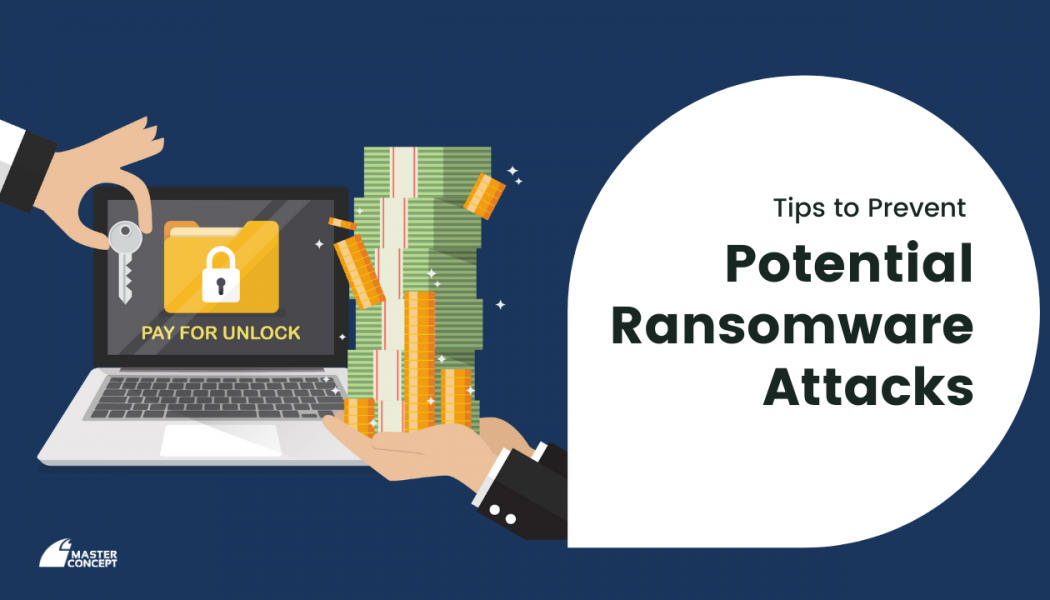

Are BaaS Solutions the Answer to Spike in Ransomware Attacks?
With an ever-growing number of people working from home, primarily due to the global COVID-19 pandemic, cybersecurity attacks are on the rise, meaning that dealing with security risks is an ongoing journey for enterprises. IDC predicts that by 2023, 60% of data will be generated at the edge by people working from home and from devices outside of the corporate firewall. While at the same time, many corporate cloud services are already being rendered from locations outside the data centre. This has given rise to ransomware attacks as many employees who are working remotely have their firewalls and access points configured to allow remote access. This has also seen an increase in ransomware attacks against Software-as-a-Service (SaaS) applications. While SaaS applications are generally secure...


Dell to ‘Spin-Off’ Shares in VMware
Image sourced from TechCrunch Dell has revealed its plan to spin off its 81% stake in VMware in an attempt to reduce its debt. According to TechCrunch, the way that the deal works is that “Dell plans to offer VMware shareholders a special dividend of between $11.5 and $12 billion. As Dell owns approximately 81% of those shares that would work out to somewhere between $9.3 and $9.7 billion coming into Dell’s coffers when the deal closes later this year”. Dell CEO, Michael Dell says that by spinning off VMware, “we expect to drive additional growth opportunities for Dell Technologies as well as VMware, and unlock significant value for stakeholders. Both companies will remain important partners, with a differentiated advantage in how we bring solutions to customers”. This is a move long ...

Paratus Appoints New Group CCO
Image sourced from Patriot Paratus has announced the appointment of Martin Cox as its new Group Chief Commercial Officer (CCO). He brings a wealth of experience as a founder shareholder of Neotel and Executive for Strategy, Commercial and M&A at Internet Solutions. Cox will run the commercial operation for Paratus from Johannesburg, South Africa, where he is expected to focus on driving the company’s aggressive growth plans for its expansion in Africa. UK born and educated, Cox is a qualified lawyer and MBA graduate. His work in the international telecommunications sector began in the late ‘90s with a private equity development company that invested in telecom operators in emerging markets. More recently, Cox was responsible for Strategy, Commercial and M&A Internet Solutions (part...
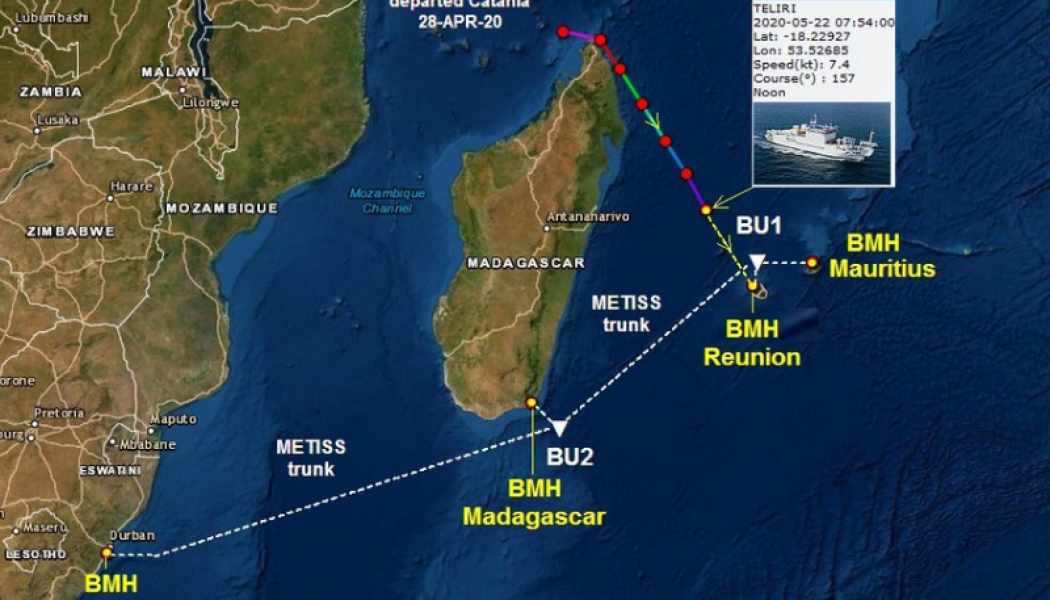

Fibre Cable Connecting South Africa to Mauritius is Operational Thanks to Emtel
Image sourced from @philBE on Twitter Emtel has provided the official landing point – a ANSI/TIA tier 3 certified data centre – for the METISS (Meltingpot Indianoceanic Submarine System) fibre optic cable in Mauritius – this will see the country connected to Reunion Island, Madagascar and South Africa via a 3,200 km cable. “METISS is already connected to many global public cloud services, application providers and African exchanges with fully redundant backhaul in Mauritius and South Africa,” says Kresh Goomany, CEO of Emtel. “It provides global telecoms organisations, multinationals and enterprises with interests in connected regions, with the reliable services and capacities they need for telecommunications that empower digital enterprises. The whole offer comes with a world-class qualit...


Twitter to Build African HQ in Ghana
Image sourced from Mission Statement Academy Twitter is set to base its African headquarters in Ghana. According to Business Insider, the social media company is hoping to fill 12 positions and will hold off on opening a physical office until the COVID-19 pandemic subsides. 🇬🇭 Twitter is now present on the continent. Thank you Ghana and @NAkufoAddo. #TwitterGhana https://t.co/tt7KR3kvDg — jack (@jack) April 12, 2021 Twitter chose the West African country because of its commitment to freedom of speech. /* custom css */ .tdi_3_4a4.td-a-rec-img{ text-align: left; }.tdi_3_4a4.td-a-rec-img img{ margin: 0 auto 0 0; } “As a champion for democracy, Ghana is a supporter of free speech, online freedom, and the Open Internet, of which Twitter is also an advocate,” reads a stateme...


14.3 Million South African Facebook Users Implicated by Data Breach
On April 3, Business Insider uncovered how more than 530 million Facebook users personal information had been made publicly available in an unsecured database – this included names, email addresses, and phone numbers. And now, VPN provider Surfshark has revealed that of the affected users, Egypt is the number one victim of this hack with the accounts of 45.1 million users being exposed while 14.3 million users were South African. In general, the top 10 countries by breaches make up 50% of all the breach cases – and of those cases, fewer than 10% of the profiles had their addresses exposed. On the other hand, nearly 90% of the users suffered from phone number leaks /* custom css */ .tdi_3_009.td-a-rec-img{ text-align: left; }.tdi_3_009.td-a-rec-img img{ margin: 0 auto 0 0; } Faceb...


Kaspersky Discovers Zero-Day Exploit in Desktop Window Manager
Sourced from International IDEA Kaspersky has discovered another zero-day exploit, however, researchers are currently unable to link this exploit to any known threat actor. This kind of vulnerability is basically an unknown software bug – upon identification and discovery, they allow attackers to conduct malicious activities in the shadows, resulting in unexpected and destructive consequences. While analysing the CVE-2021-1732 exploit, Kaspersky researchers found another such zero-day exploit and reported it to Microsoft in February. After confirmation that it is indeed a zero-day, it received the designation CVE-2021-28310. According to the researchers, this exploit is used in the wild, potentially by several threat actors. It is an escalation of privilege (EoP) exploit, found in Desktop ...
