

IT News


Payflex Introduces Online ‘Buy Now Pay Later’ Service in South Africa
Image sourced from Travel Money Oz Payflex has launched its buy now pay later online retail service to South Africa. The company – which has seen extraordinary popularity in Australia, the USA and Europe – lets users shop online and pay later, interest-free over six weeks. “Traditionally paying via instalments in South Africa has been associated with high-interest charges, as you are penalised for paying for the item over time,” says Paul Behrmann, CEO and founder of Payflex. “But by using Payflex, every purchase you make is interest-free. You’ll know exactly when each of the four interest-free payments is due and there are no hidden costs. It puts you in control of your finances.” Here’s how to use Payflex /* custom css */ .tdi_3_dee.td-a-rec-img{ text-align: left; }.tdi_3_dee.td-a-rec-im...


Protecting the IT Landscape in a Borderless World
The evolution of technology has pushed the perimeter of organisations further and further towards the edge, and we no longer have the monolithic structures we did in the past. The cloud, the Internet of Things (IoT), even the COVID-19 pandemic accelerating the adoption of a work from home model, have contributed to what has, in effect, become a borderless world. This means that the traditional approach to security of locking down the perimeter is simply no longer enough. The perimeter cannot be easily defined, and the way in which we access services has fundamentally changed. Cybersecurity mesh has emerged as a framework to address this challenge, with a distributed security architecture that more effectively meets the challenges of today’s landscape. Trust no one With IT infrastructure so...


Why Reimagined IT Strategies are Mission Critical for SMEs
Image sourced from IT Web Small and medium enterprises (SMEs) have been severely affected by the pandemic – many of which are struggling to ensure continuity, let alone achieve sustained growth. However, the news is not all negative. We have also seen countless examples of entrepreneurs rising to the challenge and tackling the unexpected head-on. SMEs who move quickly to take advantage of new technology business models are not only keeping afloat but are actually thriving. According to an article by the World Economic Forum (WEF), SMEs make up 90% of formal businesses in South Africa. These businesses contribute 34% to the country’s GDP and employ up to 60% of the labour force. For this reason, it is crucial that these small businesses continue to embrace technology and digital solutions i...


Fixing Your Cybersecurity Issues 1 Next-Gen Firewall at a Time
Stefan van de Giessen, General Manager: Cybersecurity at Networks Unlimited Africa When did you last check your firewalls as a barrier to entry against cybercriminals? And, perhaps more importantly: does your organisation still rely on a legacy firewall, or has it upgraded to a next-generation firewall (NGFW)? And have you considered the ‘Broken window’ principle when looking at your internal cybersecurity posture, in order to have a positive effect on your business processes? These questions are posed by Stefan van de Giessen: General Manager: Cybersecurity at Networks Unlimited Africa, who says, “The broken window theory rests on the idea that a neighbourhood or community that appears to be orderly and well-kept will be less susceptible to crime. Conversely, one that has many broken wind...

3 Things to Consider When Implementing an Effective Zero Trust Access Strategy
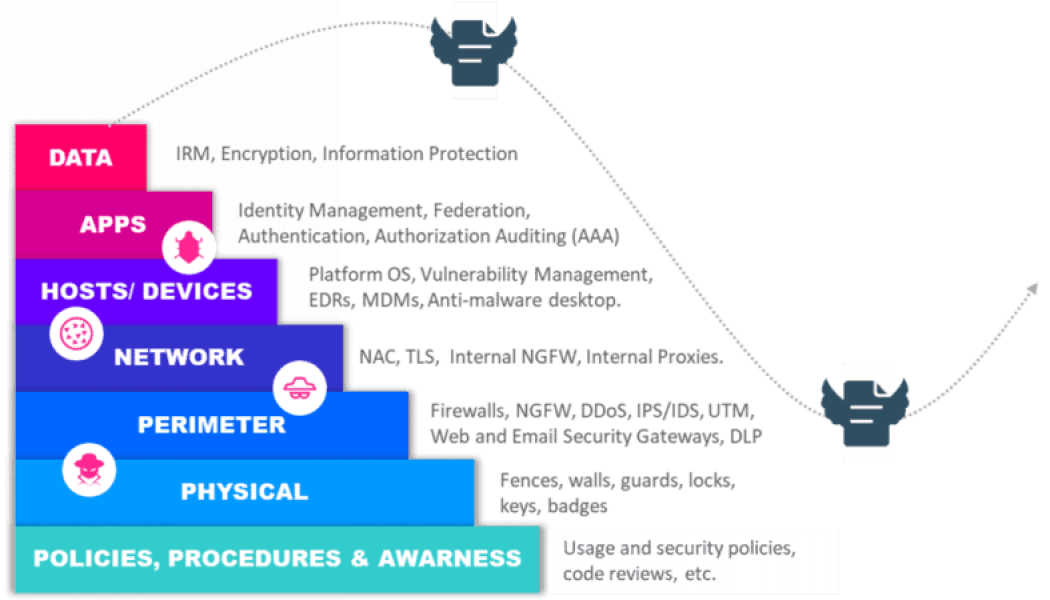
The most secure network is one that has no connections. Of course, that idea is not only impractical, it defeats the purpose of a network. The reality is that no network is an island, and as businesses become more digital, networks inevitably become more complicated and dispersed. Today’s networks now have many “edges,” so it’s much harder than it used to be to create a single defensible boundary. In the face of these changes, the traditional network perimeter is dissolving, and it’s far more difficult to tell who and what can be trusted. To respond to increasing threats, best practices now stipulate a “trust no one, trust nothing” attitude toward network access. Protecting the network with this zero-trust access (ZTA) approach means that all users, all devices, and all web appli...


5 Reasons Why (Not Only) Financial Companies Struggle with Cybersecurity
Financial services companies have been a popular target for cybercriminals for a long time. Not without good reason, since beyond working with money, financial companies handle a slew of sensitive client data that criminals utilise in various fraud schemes or sell-off on dark web bazaars. According to Verizon’s 2020 Data Breach Investigations Report, in the past year alone the financial industry has suffered more than 1,500 incidents, with 448 confirmed data disclosures. Carey van Vlaanderen, CEO of ESET says that in addition to the long-standing threats, most companies have had to contend with the rapid transition to remote work. “The shift happened on extremely short notice, leaving companies with little time to deploy adequate cybersecurity measures or to prepare employees for looming c...

Paratus Zambia Introduces New Unlimited Internet Deals for Businesses
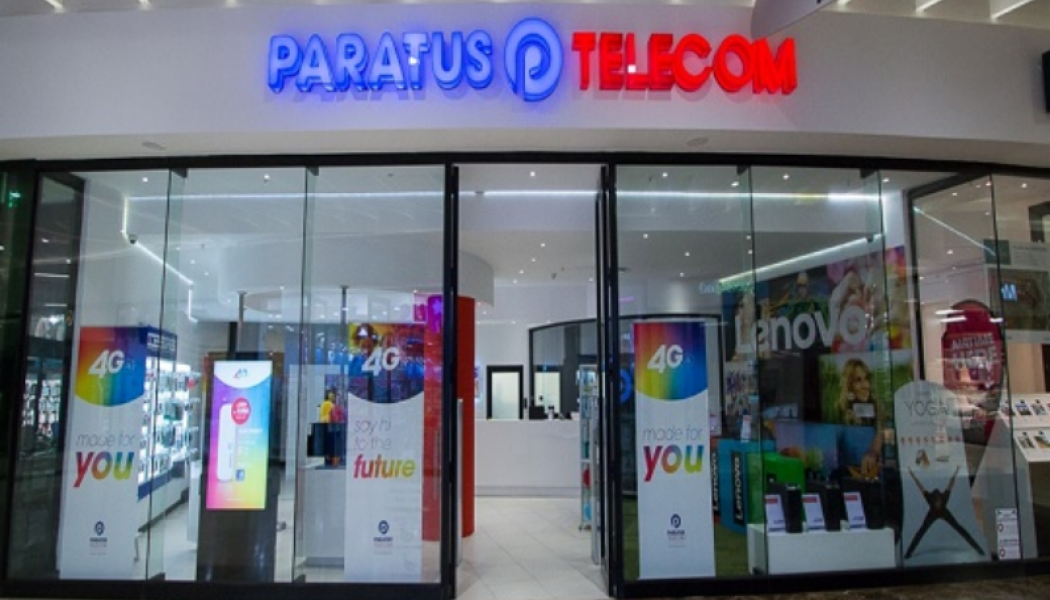
Image sourced from Patriot Paratus Zambia has introduced a new range of Infinity business deals. The telco says that these packages have been designed to give business customers access to more affordable and unlimited connectivity in Zambia, a market where a quality affordable internet connection is difficult to obtain. “We have created these Paratus Infinity packages because we fully understand how important it is for businesses to have access to quality unlimited connectivity,” says Paratus Zambia Country Manager, Marius van Vuuren. “We do not cap or shape our connectivity solutions because we know that our customers need to be always online to do their business.” The Infinity packages give customers access to uncapped and unthrottled data without dips in service quality or speeds due to...

Best and Worst Mobile Networks in South Africa Revealed
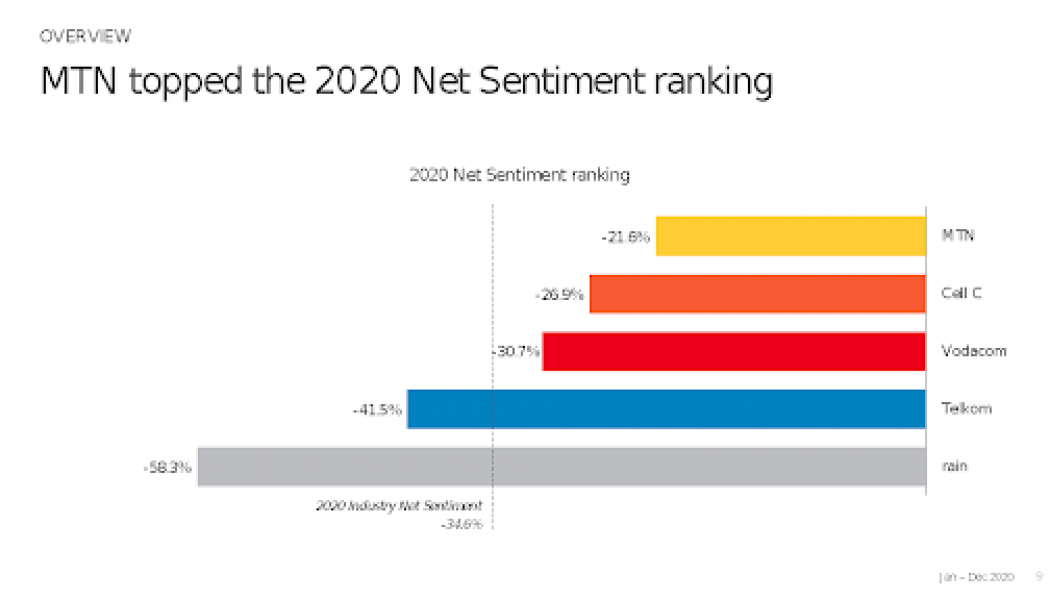
2020 was a tumultuous year for the South African telecommunications sector which saw network providers left to grapple with calls for data price cuts in the face of a pandemic-driven demand for connectivity and digital customer service. From the perspective of consumers, however, the performance of local telcos has left much to be desired. That said, having tracked over two million social media posts about Cell C, MTN, rain, Telkom, and Vodacom throughout the year, BrandsEye’s latest Telco Sentiment Index – conducted in partnership with Deloitte Africa – found that some telcos received significantly more negativity than others. MTN comes out tops while rain gets left in the gutter Newcomer rain ranked last, scoring over 20 percentage points below the industry average. On the other end of t...


Nutanix and CLC Africa Partner to Provide Digital Skills Across East Africa
Image sourced from Glassdoor Nutanix and Computer Learning Centre (CLC AFRICA) have joined forces to provide access to technical and sales skills across Kenya, Tanzania, Uganda, Ethiopia and Rwanda. The partnership is expected to help provide access to valuable certified digital training to a region where demand for hyper-converged and cloud solutions is growing. “As legacy environments come to their end-of-life, African businesses are rapidly upscaling their environments to software-defined environments based on hyper-converged infrastructure solutions that will ready them for the cloud,” says Rowen Grierson, Sales Director for Sub-Saharan Africa at Nutanix. “We are delighted to announce that CLC is now an official ATP for the region. Their experience in training, the quality of their ins...

Elon Musk Confirms Tesla Now Accepts Payment in Bitcoin
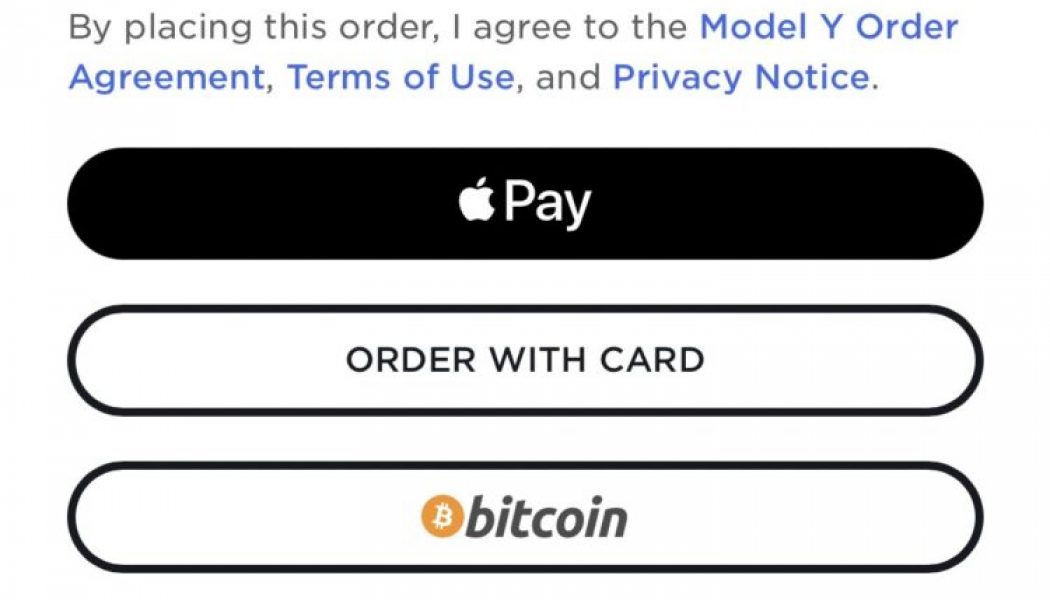
Image sourced from CNBC Telsa CEO, Elon Musk has confirmed that the electric car company will now accept Bitcoin as a form of payment – news that has caused the price of Bitcoin to rise 5%. In a tweet, Musk says “You can now buy a Tesla with Bitcoin” and then goes on to reveal that Tesla is only using internal and open-source software and operates Bitcoin nodes directly. And that Bitcoin paid to Tesla will be retained as Bitcoin, not converted to fiat currency. You can now buy a Tesla with Bitcoin — Elon Musk (@elonmusk) March 24, 2021 According to Simon Peters, crypto analyst at eToro, the decision for Tesla to accept Bitcoin as a form of payment “will likely build more momentum for the cryptoasset“. /* custom css */ .tdi_3_65b.td-a-rec-img{ text-align: left; }.tdi_3_65b.td-a-rec-img...

4 Tips to Protect Your Family Online
A recent survey revealed that 51.5% of South African children have been cyberbullied. “The reason for this is the increase in connected societies, more and more people are online, especially the youth,” says Simon Campbell-Young, co-founder and VP of global sales at Digimune. “There is clearly a lack of good cyber education and defensive tools. With this in mind, here are four tips to protect you and your family: 1. Remember that education is key This is the first awareness step. The vast majority of children have access to a wide variety of online devices — either shared or their own device — from a young age. By the age of 10, 30.5% of children have their own smartphone and 41.5% have access to a shared smartphone. It is thus imperative to take time to go about the internet – the good an...


Nutanix Appoints New Channel Director for Sub-Saharan Africa
Nutanix has appointed Andrew Gill as Channel Director for Western Europe & Sub-Saharan Africa (WEURSSA). Responsible for leading all channel and OEM activities in WEURSSA, Gill will oversee Nutanix’s go-to-market relationships with resellers, distributors, regional system integrators and technology partners in the region. Additionally, he will play a key role in driving channel-focused initiatives such as Nutanix Cloud Bundles, a strategic and unified offering to access Nutanix enterprise cloud software and solutions, while providing partners with greater value and autonomy through the sales channel. This unified management bundle enables Nutanix to expand access to its solutions, with an offering that meets the needs and budgets of any company as an essential addition to their En...
