

Security


Ripple CEO: SEC case is going ‘much better than I hoped’
Ripple CEO Brad Garlinghouse is increasingly optimistic that the long-running case with the Securities and Exchange Commission (SEC) will deliver a positive result for the blockchain-based global payments company. Speaking on the main stage at Paris Blockchain Week on Thursday, Garlinghouse told attendees of the fireside chat that Ripple’s defense in the ongoing case was faring better than he expected. “The lawsuit has gone exceedingly well, and much better than I could have hoped when it began about 15 months ago.” Live from #PBWS2022, @bgarlinghouse sat down with @cnbc‘s @ryan_browne_ to talk crypto regulation, Ripple’s global traction and use cases that he sees growing across the industry. pic.twitter.com/ouQYhY3B5n — Ripple (@Ripple) April 14, 2022 The SEC filed...


A Brief View of Data Protection Laws in Africa
Image sourced from Pixabay In Africa, various jurisdictions have data protection laws to secure the transfer of personal data between entities. These laws largely affect multinational companies that do international trade. Organizations with a global footprint require personal data transfer across countries, and these data protection laws must be complied with to transfer data across borders legally. Organizations around the world are increasingly investing in the African market. To lawfully carry out business operations in Africa, it is imperative for organizations to understand the data protection landscape in Africa. Data protection laws are proposed by governments not to hinder personal data transfer by organizations but to regularize how organizations handle personal data. These laws ...


The Importance of Training in Managing a Cybersecurity Skills Shortage
According to a report released by Ireland-based multinational professional services company Accenture, a low investment in cyber security, and immature cybercrime legislation, makes South Africa a target for cybercrime, with the country registering the third-highest number of cybercrime victims worldwide. In addition, as with other countries, the cybersecurity skills shortage is hindering the ability of businesses to effectively manage and stay ahead of constantly-evolving cyberthreats. The lack of skills means businesses find themselves on the back foot, looking for individuals who are able to manage and run solutions, manage incident and security teams, and having to ensure the implementation of a strong security posture. This is not isolated to a single partner or end-user o...


FNB Partners with AURA to Keep Customers Safe
Sourced from Htxt.Africa FNB today announced that it has partnered with AURA, a safety marketplace platform that uses smart auto-dispatch technology, to add GuardMe to its banking app. FNB banking customers can now access instant emergency response services, anywhere, anytime via the FNB banking app. A new addition to the eBucks Rewards app. Powered by South Africa’s leading security and medical response marketplace, AURA, the in-app panic button, GuardMe, is available to all FNB customers who register for the service. This technology solution allows FNB customers to immediately request rapid mobile emergency responses in the event of an emergency or the threat of a crime such as theft or hijacking. As soon as the panic button is activated, the AURA-powered platform auto-dispatches the clo...

How to Secure Your Remote Work Environment from Cybersecurity Threats
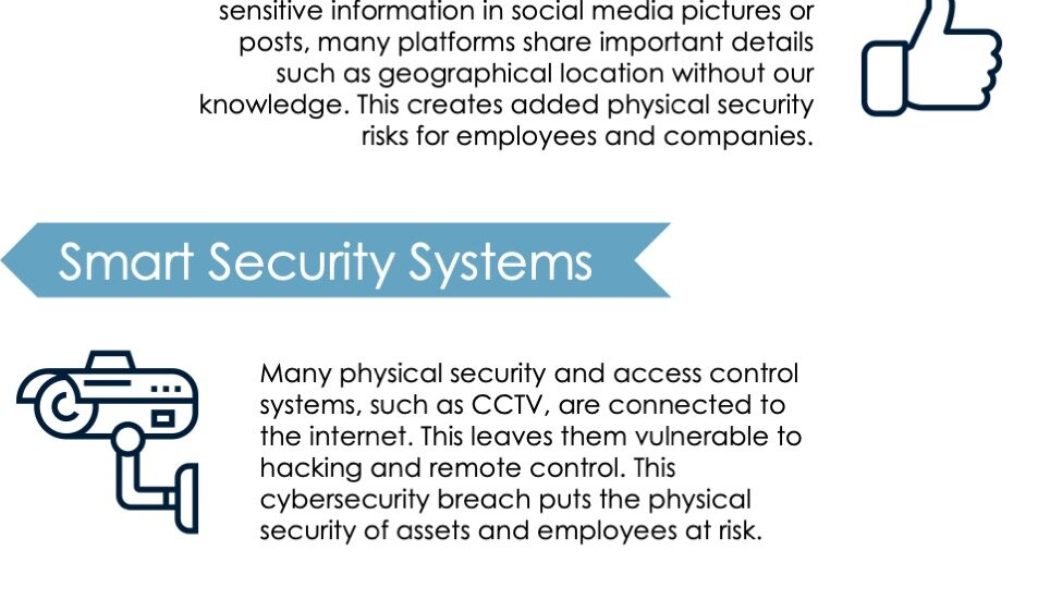
Sourced from International IDEA Cybersecurity threats are at an all-time high. With organizations increasingly employing hybrid work models, it has become more vital than ever to educate employees on the various cybersecurity risks that come with a distributed work environment. In a hybrid work environment, employees working from home pose a greater security risk compared to those working at the office. Home networks are less secured than corporate networks, unprotected by in-office firewalls and advanced fraud detection systems. In the comfort of one’s home, a small mistake by an employee could potentially risk the company’s confidential data being leaked. However, risks like data leaks and device compromise can be managed by following certain best practices. Here are some of the practice...

Global Russian Hack Attack Targeted SA Energy Sector, US Claims
Sourced from International IDEA South Africa came out as one of 135 countries that the US claims Russian government employees targeted between 2012 and 2017 as part of two massive hack campaigns allegedly aimed at disrupting energy companies and critical infrastructure. According to Daily Maverick, the aim was to undertake a sophisticated campaign to target, compromise, and maintain continued access to the networks of critical infrastructure and energy companies worldwide. When asked if Eskom was targeted by Russia, the South African energy utility said that it, like many organisations, combats many cyber-attacks. Eskom, however, did not specify if it was targeted by Russian actors, specifically, or not. “We are aware that, daily, cybercriminals are actively targeting various sectors, incl...


Seven common mistakes crypto investors and traders make
Investing in cryptocurrencies and digital assets is now easier than ever before. Online brokers, centralized exchanges and even decentralized exchanges give investors the flexibility to buy and sell tokens without going through a traditional financial institution and the hefty fees and commissions that come along with them. Cryptocurrencies were designed to operate in a decentralized manner. This means that while they’re an innovative avenue for global peer-to-peer value transfers, there are no trusted authorities involved that can guarantee the security of your assets. Your losses are your responsibility once you take your digital assets into custody. Here we’ll explore some of the more common mistakes that cryptocurrency investors and traders make and how you can protect yourself from un...

How Emails Can Cause Cybersecurity Vulnerabilities in Your Organisation
Sourced from International IDEA Since the start of the pandemic, many businesses have shifted to remote work. Cybercriminals saw the opportunity to target businesses’ remote users leaving unprepared businesses vulnerable to cyberattacks. Phishing attacks have become one of the most prominent data security problems for a number of businesses in South Africa. “Remote working increased organisation’s reliance on email, creating the perfect conditions for email fraud and phishing,” says Riaan de Villiers, Business Analyst at LAWtrust Information Security. In the Mimecast State of Email Security 2020 study, businesses in South Africa reported a 53% increase in phishing attempts and a 46% increase in incidences of impersonation fraud compared to previous years. Email is a common channel used for...


Understanding the Risks to Cryptocurrency Trading
Sourced from Hacker Noon. Alongside self-fertilizing crops and low-carbon shipping, cryptocurrencies have made the World Economic Forum (WEF) list of top tech trends in 2022 bolstered by research by the Thomson Reuters Foundation that describes it as moving from the ‘fringes of finance to the mainstream’. Perceptions around cryptocurrencies have shifted, with several countries adopting it as legal tender, banks looking to create their own forms of digital currency, and consumers putting their savings into crypto wallets instead of traditional financial institutions. Anna Collard, SVP Content Strategy & Evangelist at KnowBe4 Africa. Countries are either considering or are already partially using Central Bank Digital Currency (CBDC), which essentially allows for companies and individuals...

How to Be Safe From the “Reset Password” Email Scam
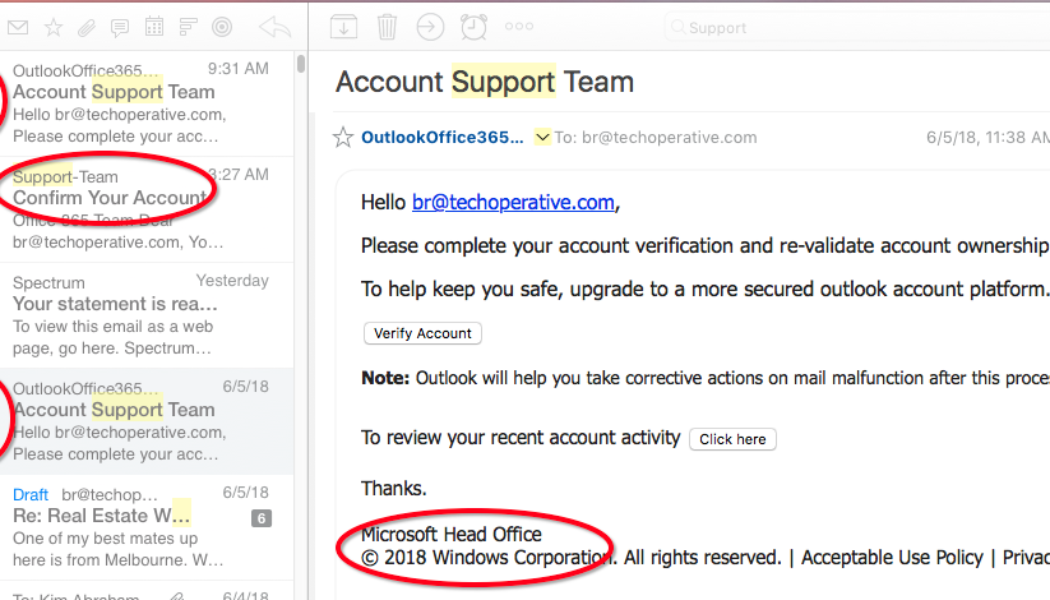
Image sourced form Broad Media Most online services have built-in security systems that alert employees when the systems detect “unusual” activity on their accounts. For example, legitimate email services or similar will send notifications about attempts to reset the phone number and e-mail address linked to the account, or the password. Of course, as soon as such messages became commonplace, enterprising cybercriminals tried to imitate this mechanism to attack corporate users. As cyberattacks rely on the human factor more often each year, and as cybersecurity technologies progress, such tricks are becoming more and more common and are being registered in multiple mailouts around the world. The scenario is usually as follows: if it’s a public online service attacker it will usually make ev...
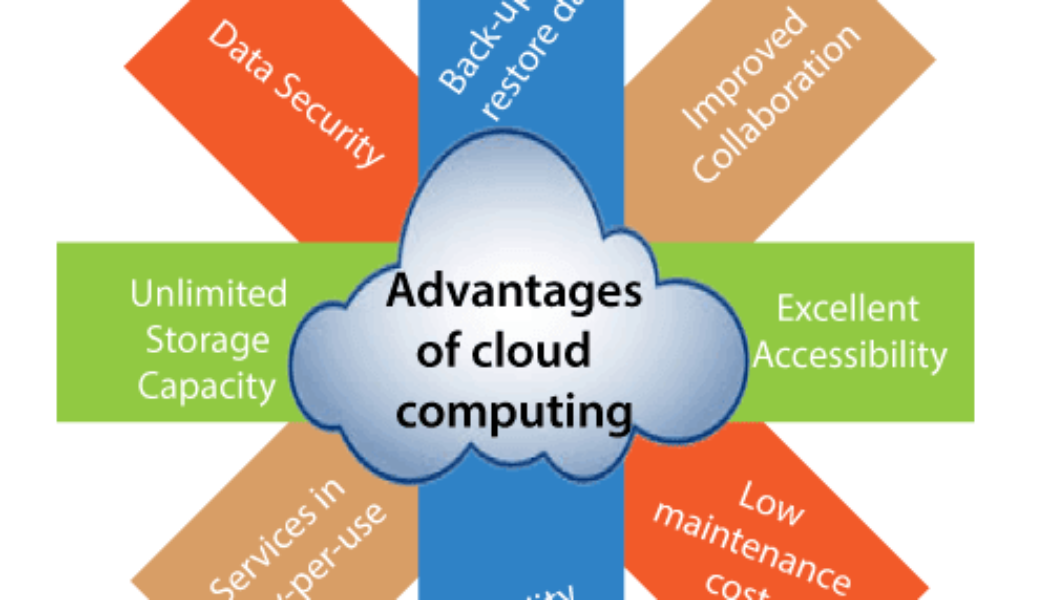

5 Advantages to Cloud Computing Security for Your Business
The COVID-19 pandemic has forced numerous businesses to adapt to remote working. The trend does not just affect huge companies but small businesses too. To support a successful transition to remote working, it is important to have the right tools in place. “As more businesses shift to cloud-based services, it is vital that companies protect their applications and data from cybercriminals,” says Riaan de Villiers, Business Analyst at LAWtrust Information Security. A 2019 MyBroadband report examined the South African cloud market and business use of cloud services. According to the study, 71% of companies back up their data to the cloud, making cloud computing security-critical for ensuring high levels of security and preventing data breaches. Cloud computing security ensures that company da...


Italy Investigates Russia’s Kaspersky for Allegedly Launching Cyberattacks
Sourced from Hypertext On Friday, Italy’s data watchdog said it is investigating Kaspersky, a Russian multinational cybersecurity company, for launching cyberattacks. According to The Guardian, the agency says it followed “alarms sounded by many Italian and European organisations specialised in computer security” over the potential use of Kaspersky software for hacking assaults in the wake of Russia’s invasion of Ukraine. The agency reportedly asked the company to provide details on the number and profiles of Italian users and whether their data was being transferred to Russia or elsewhere. Reuters reported that Germany’s British Standards Institution (BSI) also warned users of the antivirus software, saying the company could be coerced by Russian government agents to hack IT systems abroa...
