

Security

2022 Predictions: These are The Five Tech Trends That Will Dominate Business in 2022
Pressure from the global COVID pandemic has forced businesses to embrace bold changes. Currently, digital transformation has a significant impact on organisations. A recent forecast the digital transformation market will grow at a Compound Annual Growth Rate of 19.1% by 2026. “Data is the backbone of digital transformation. As organisations manage larger and larger data sets, the chances of security breaches and losses increase. However, digital transformation will continue as the benefits outweigh the risks,” says Business Analyst at LAWtrust, Riaan de Villiers. According to research conducted by the Finances Online Reviews for Business Research Centre, 27% of the companies surveyed felt that implementing digital transformation initiatives is a matter of survival in their respec...


Kaspersky, Scuderia Ferrari extend partnership
Eugene Kaspersky (CEO Kaspersky) and Benedetto Vigna (CEO Ferrari) Leading global cybersecurity company, Kaspersky, has announced the continuation of its partnership contract with Scuderia Ferrari. In addition, the company joins a lineup of partners for the Ferrari Esports FDA team competing in the world Esports Series. The iconic partnership between Kaspersky and Scuderia Ferrari started in 2010 and since then has expanded year-on-year. United by shared values, including technological excellence, teamwork, and passion for innovation, the companies have been able to build a strong and proven relationship, including a technological partnership. Kaspersky provides Ferrari with world-class cybersecurity and data protection 24/7, at every point – from the company’s HQ factory in Maranello, Ita...


2022 Predictions: This could be a tough year for SA companies
Image sourced from Finance Times. While most of the world dealt with the impact and disruption of Year Two of the COVID-19 pandemic, cybercriminals expanded their activities with ambitious attacks on critical infrastructure. Armed with sophisticated and brute-force attack methods, threat actors continue to capitalise on the ongoing disruption of the pandemic and are leveraging the world’s shift to digital services to launch cyberattacks at an unprecedented scale. Can we expect a more cyber-secure world in 2022, or will cybercrime continue to disrupt our increasingly digital workplaces and lifestyles? Mimecast global experts weigh in on their predictions for the year ahead, which include: Social media & past breaches will come back to haunt us Peter Bauer, Mimecast CEO, predicts: “After...

Mass spyware campaign unveiled
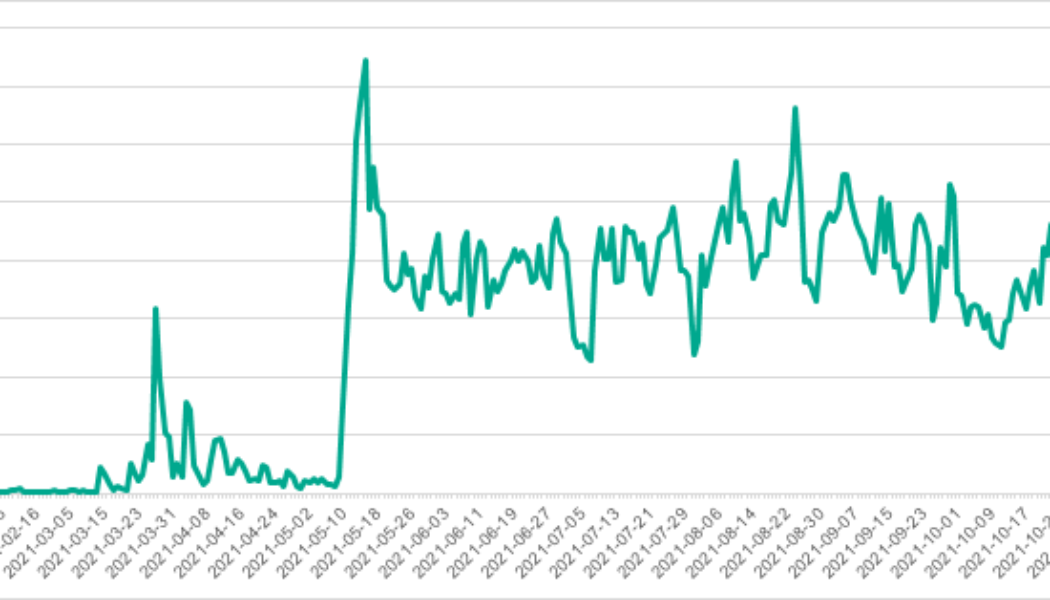
Mass spyware campaign targets thousands of ICS computers around the world, Kaspersky From the 20th of January to the 10th of November 2021, Kaspersky experts uncovered a new piece of malware that has targeted more than 35,000 computers across 195 countries. Dubbed “PseudoManuscrypt” for its similarities with the advanced persistent threat (APT) group Lazarus’ Manuscrypt malware, this new malware contains advanced spying capabilities and has been seen targeting both government organisations and industrial control systems (ICS) across numerous industries. Industrial organisations are some of the most coveted targets for cybercriminals – both for financial gain and intelligence gathering. In fact, 2021 saw significant interest in industrial organisations from well-known APT groups like Lazaru...


What will online privacy and security look like in 2022?
Image sourced from Intel. In many ways, 2021 was a landmark year for online privacy. In April 2021, Apple rolled out an update allowing users to opt out of app tracking, with most iPhone users having done so by the end of the year. There were even talks to disable tracking technology on the world’s most popular web browser. We also saw movement on the legislative front, with South Africa’s Protection of Personal Information Act (POPIA) coming into effect in July. (Kenya and Nigeria’s equivalent acts came into effect in 2019). In fact, Gartner predicts that modern privacy laws will cover 75% of the world’s population by the end of 2023. But there’s also clearly still a lot of work to be done. By the end of September 2021, there had been more data breaches than in the whole of 2020, impactin...


South Africa: 40% of healthcare providers use medical equipment with a legacy OS
Image sourced from Healthcare Finance. Medicine has always been a field where innovations play a crucial and truly life-saving role. However, during the pandemic, the healthcare industry was forced to significantly speed up the implementation of new developments. Indeed, this pace of change and urgent digitalisation within medical organisations was noted by 81% of executives in a recent Accenture report. To determine whether this mass transition to telehealth is keeping pace with security measures, Kaspersky conducted a global survey of healthcare providers. The research found that organisations globally widely use medical equipment with a legacy OS, mainly because of high upgrade costs, compatibility issues, or a lack of internal knowledge on how to upgrade, among other reasons. The usage...

Utilities vulnerable to cyber attacks
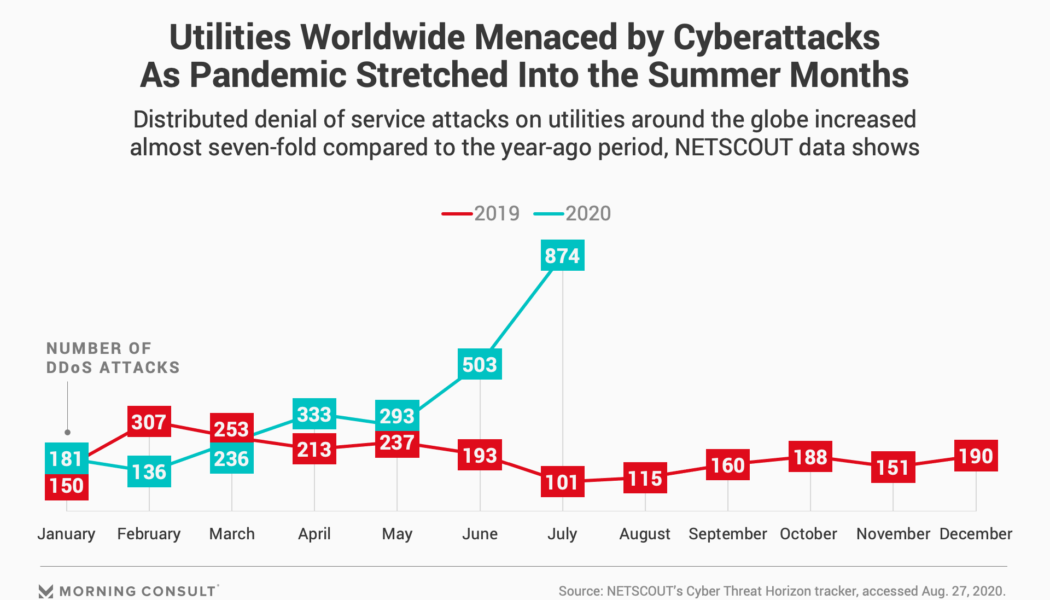
The Pelindaba Nuclear Power research facility located near Pretoria, South Africa. Image sourced from EE Publishing. The evolution of technology has brought with incredible advancements, particularly in unprecedented times where both organisations and individuals have had to adapt to stay competitive. But it’s a bit of catch-22; as technology continues to progress, so do cyber criminals become more sophisticated, exploiting the vulnerabilities that come with online, digitised environments. Municipal utilities are unfortunately a practical example. In the last year, various security reports have warned against an increase in cyber attacks (against utilities) across the globe, citing vulnerabilities and the resultant disastrous effects. Why utilities? A utilit...


Watch out for this credential-stealing Microsoft Exchange add-on
Image sourced from Discover Germany Kaspersky has uncovered a previously unknown IIS module (a piece of software aimed at providing additional features to Microsoft web servers) they have since dubbed Owowa that steals credentials entered by a user when logging into Outlook Web Access (OWA); it also allows the attackers to gain remote control access to the underlying server. Compiled sometime between late 2020 and April 2021, this module is a stealthy theft method that is difficult to detect with network monitoring. It’s also resistant to software updates from Exchange, meaning it can stay hidden on a device for a long time. In 2021, advanced threat actors were increasingly exploiting vulnerabilities of Microsoft Exchange Server. In March, four critical vulnerabilities in the servers allow...

ITC Secure and Cassava Technologies Announce Security Partnership
Image by Darwin Laganzon, Pixabay. ITC Secure (ITC), a leading advisory-led cyber security services company and a Microsoft Gold cyber security partner, and Cassava Technologies (CassavaTechnologies.com), the pan-African technology leader, announced today that they have entered into a Joint Venture (JV) to build and launch an extensive portfolio of cyber security services, powered by Microsoft Azure cloud technologies in Africa. Hardy Pemhiwa, the CEO of Cassava Technologies said: “Digital transformation in Africa is accelerating the adoption of cloud services which is creating an urgent need to better protect users and business-critical data. Cassava Technologies footprint covering more than 15 countries in Africa, we are well-positioned to meet the growing needs of businesses and individ...


Data centre risks: steps to protect the backbone of your business
Image sourced from Capacity Media. Data centres are the invisible but essential backbone of any modern business. Companies throughout the world have shifted to remote working, depending on cloud storage and cloud-based software as a service (SaaS) solution to ensure business continuity through the pandemic, and beyond. It’s anticipated that cloud solutions will account for more than 45% of IT spending by 2024, as corporations turn to these platforms to enjoy the benefits of lower costs, enhanced data analytics, and ways to collaborate more effectively. As much as these solutions are ‘cloud’ based, they’re hosted in massive terrestrial data centres, either owned by external providers, or by corporations themselves. They are vulnerable to various types of risks, including security threats su...

Kenya’s businesses are dealing with 1 400 cyber-attacks each week
This year has seen a 29% rise in cyberattacks against businesses across the world. In Africa, this growing threat is driven by an increase in users accessing the internet, creating a larger pool of targets for criminals, which is what we’ve witnessed in Kenya. The country’s connected population nearly reached 22 million users in January – a figure likely to have grown as pandemic lockdowns forced many business and government services online. With digital transformation being embraced across Kenya, how has cybercrime impacted local businesses? Statistics from the Check Point Research Threat Intelligence Report for Kenya highlight how widespread the problem is. Globally, the average number of weekly attacks experienced by organisations was 870. In comparison, Kenya’s busine...


How to Future Proof Your Email Security With Conditional Email Access
Sourced from My Smart Choice The contemporary world runs on rapid communication and while emphasizing corporate communications, the most reliable, cost-effective and quick means of formal communication is still considered email. But due to its popularity and widespread use, emails also happen to be the most targetted mediums for cyber attacks and spreading malware.One of the major concerns of enterprises is to safeguard their confidential data that contains their business secrets, plans of action, finance details and much more. Phishing attacks intending to hack into an enterprise’s systems and networks can expose the business’s vulnerabilities and lead to a loss of revenue and market share which makes it critical for a business to not take their corporate email security lightly.Why is cor...
