

tech news


iOCO Brings Fortinet’s Secure SD-WAN to Local Financial Services Institution
iOCO, the ICT services business of the JSE-listed EOH Group, has been chosen to assist a large financial services company in the implementation of its software-defined wide-area networking (SD-WAN) rollout. This has allowed the firm to take a bold move forward in its stated aim of building a network incorporating the ‘modernised branch of the future’. Brett van Rensburg, Sales Director for iOCO’s Compute division, says: “Having recently undertaken a rigorous year-long request for proposal (RFP) process to choose our SD-WAN providers, we were duly impressed with the Fortinet Secure SD-WAN offering. “This new project with the financial services company has now allowed us to test the scope and breadth of the Fortinet solution, with truly impressive results. The top benefits that Fortine...


Visa Could Soon Allow Users to Settle Payments with Cryptocurrency
Image sourced from Headquarters Office Visa has revealed that it could soon let customers settle transactions using cryptocurrency. According to Reuters, the company has launched a pilot programme that uses USD Coin – a stablecoin that is pegged directly to the US dollar – across its payment network. “We see increasing demand from consumers across the world to be able to access, hold and use digital currencies and we’re seeing demand from our clients to be able to build products that provide that access for consumers,” says Cuy Sheffield, Head of Cryptocurrency at Visa. This comes shortly after crypto-enthusiast and Tesla founder, Elon Musk confirmed that the electric car company will now accept Bitcoin as a form of payment – news that has caused the price of Bitcoin to rise 5%. ...


Why Private Cellular Networks are Critical to Trade
Increases in global development and international populations have put bigger demands on trade and in turn, ports and shipping. To manage the boom, ports are improving operations and efficiency with automation, powered by 5G-ready private cellular networks. According to the World Bank, trade represented more than 60% of the global gross domestic product (GDP) in 2019. And 90% of the world’s trade is facilitated by the shipping industry, according to the International Chamber of Shipping. The vast importance of future ports to shipping makes them a vital element for the function of the global economy. According to statistics data from the United Nations Conference on Trade Development, of the four main types of shipping vessels (oil, bulk cargo, general cargo, and globally standardised cont...


ahomé Cloud as a Service, a New Generation Multi-Cloud Management Tool
In February 2021, Cloud Inspire sas, launched its self-service cloud portal called ahomé. ahomé is a cloud management tool, developed on a powerful automation engine, able to build, orchestrate, deploy and manage a multi-cloud infrastructure. With its intuitive web application interface, ahomé aims at eliminating the complexities of orchestrating a hybrid cloud infrastructure, hence making it accessible to all. Danny Afahounko, CEO of Cloud Inspire, says: “ahomé is a tool designed to counter IT challenges, especially in Africa, where IT progression might be more complicated due to the challenges of the continent. We have developed ahomé to enable Africa into the 4th industrial revolution. By this, we mean that ahomé can enable companies to easily operate a hybrid cloud infrastructure...


DiDi Ride-Hailing Service to Rival Uber in South Africa
Image sourced from Reuters DiDi Chuxing Technology Co has announced it would launch a ride-hailing service in South Africa. The Chinese company already has more than 600 million users across Asia, Latin America & Russia. In a statement, DiDi says it “understands the challenges [South African] communities and the transportation industry face with the evolution of urban mobility (rideshare) and as a result is committed to creating the freedom and convenience to go places, open up horizons and give access to new experiences through our platforms.” The company then reveals that it’s now on a mission to help South Africans “move freely and to unlock their potential and that of the cities they live in”. UberGo Launches in South Africa Uber has launched its low-cost ride-hailing service ...


Apple Pay Launches in South Africa
Image sourced from BusinessTech Apple Pay – Apple’s digital payment platform – is now available in South Africa. The service allows users to load their bank cards – from supported banks like Absa, Discovery Bank, and Nedbank – onto their Apple devices in order to make contactless payments. According to Discovery Bank, every Apple Pay purchase is secure because it is authenticated with Face ID, Touch ID, or device passcode, as well as a one-time unique dynamic security code. Apple Pay users can also make faster and more convenient purchases in apps or on the web in Safari without having to create accounts or repeatedly type in shipping and billing information. “We are thrilled to announce Apple Pay is here for all Discovery Bank clients, providing an easy, secure and contactless way to pay,...

Bolt Kenya Launches Food Delivery Service to Rival Uber Eats
Bolt has officially launched a new food delivery service in Kenya after announcing this plan in 2020. So far the service – which aims to give users access to restaurants and menus from the palm of their hands – has partnered with around 200 restaurants, including KFC, Big Square, Pizza Mojo, Urban Gourmet Burger, Debonairs Pizza, Steers, Ohcha Noodle Bar, The Chef House, Wings Kenya Alchemist, Shokudo Japanese, Barista & Co, Mercado, Awash Ethiopian restaurant, Charlie’s Bistro and Bao Box. “Food delivery has been a popular request for quite some time and we are glad to bring this service to the millions of people who are using our platform. The infrastructure and experience we have built up with our ride-hailing business give us a good platform to expand and diversify our services,” s...
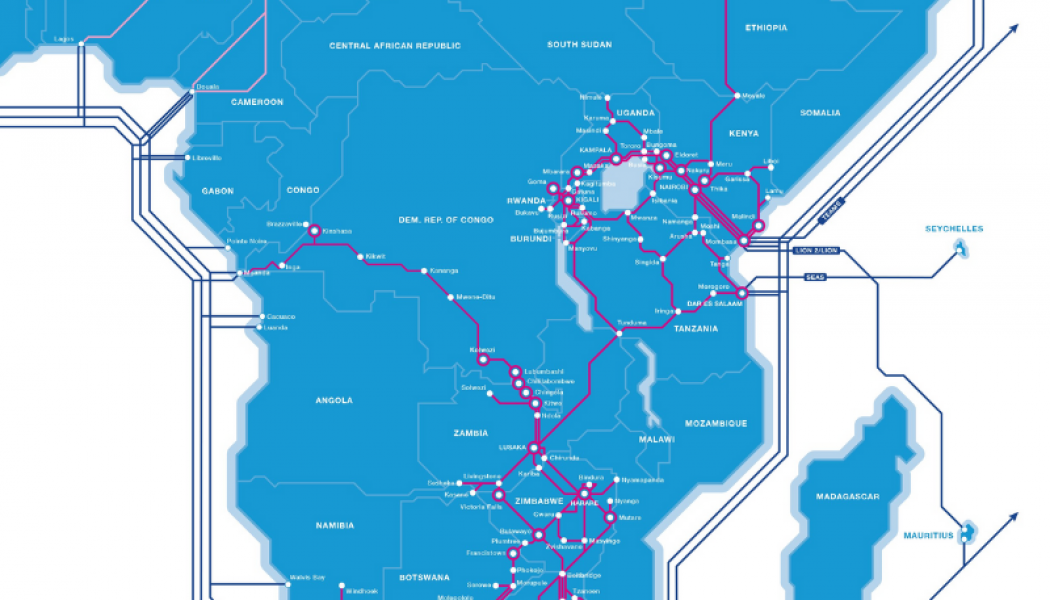

Liquid Expands Across South Africa with 2 New Fibre Routes
Liquid Intelligent Technologies (Liquid) has announced the successful completion of two key digital corridors – NLD5 and NLD6 connecting Durban to Cape Town via the inland route. The completion of this fibre network is expected to support the surging demand for high-speed internet as an increasing number of local businesses continue their digital transformation journeys. “The completion of these two digital corridors is yet another milestone achieved as part of our on-going investment into the South African economy. Liquid has been instrumental in the fruition of routes 1 through to 8, providing a digital backbone that connects metropolitan cities like Cape Town, Johannesburg and Durban to more remote areas like Nelspruit Bloemfontein, Lady Smith, Mthatha,” says Deon Geyser, CEO of Liquid ...


Nokia Joins Forces with Safaricom to Launch the First Commercial 5G Network in East Africa
Nokia and Safaricom have joined forces to launch the first 5G commercial services in East Africa. According to the companies, Nokia’s 5G Single Radio Access Network (SRAN) technology and 5G FastMile gateways will enable ultra-fast Fixed Wireless Access (FWA) services to Safaricom’s subscribers across Kisumu and the Western Province of Kenya. 5G technology is expected to enable new applications in areas such as virtual reality, augmented reality and artificial intelligence for Safaricom subscribers. It will also benefit enterprises across important energy, healthcare, education, transport and entertainment applications. “We are proud to be the first operator in East Africa to launch 5G services, bringing the benefits of 5G technology to our customers. 5G capabilities will change a lot ...


Why Cybersecurity is Crucial in the Age of Tap-to-Pay
Tap-to-Pay is by no means a new technological development, but thanks to the COVID-19 pandemic, it has become increasingly popular as a method of payment since it is ostensibly contactless. It is also a payment method that can be used even without a card, since many wearable devices such as smartwatches feature tap and go payment options. With rumours that Apple Pay will be launching in South Africa this year, it is likely to become increasingly available. However, this begs the question, what about security? When no physical card is required and often not even the authentication of a Personal Identification Number (PIN) for smaller transactions, who is responsible? The reality is that banks, merchants and users all need to play their part to minimise fraud and safeguard their money. Are c...


Payflex Introduces Online ‘Buy Now Pay Later’ Service in South Africa
Image sourced from Travel Money Oz Payflex has launched its buy now pay later online retail service to South Africa. The company – which has seen extraordinary popularity in Australia, the USA and Europe – lets users shop online and pay later, interest-free over six weeks. “Traditionally paying via instalments in South Africa has been associated with high-interest charges, as you are penalised for paying for the item over time,” says Paul Behrmann, CEO and founder of Payflex. “But by using Payflex, every purchase you make is interest-free. You’ll know exactly when each of the four interest-free payments is due and there are no hidden costs. It puts you in control of your finances.” Here’s how to use Payflex /* custom css */ .tdi_3_dee.td-a-rec-img{ text-align: left; }.tdi_3_dee.td-a-rec-im...


Protecting the IT Landscape in a Borderless World
The evolution of technology has pushed the perimeter of organisations further and further towards the edge, and we no longer have the monolithic structures we did in the past. The cloud, the Internet of Things (IoT), even the COVID-19 pandemic accelerating the adoption of a work from home model, have contributed to what has, in effect, become a borderless world. This means that the traditional approach to security of locking down the perimeter is simply no longer enough. The perimeter cannot be easily defined, and the way in which we access services has fundamentally changed. Cybersecurity mesh has emerged as a framework to address this challenge, with a distributed security architecture that more effectively meets the challenges of today’s landscape. Trust no one With IT infrastructure so...
