

tech news


Sony Launches FX3 Full-Frame Camera
Sony has unveiled the FX3 (model ILME-FX3) full-frame camera. The device combines digital cinema technology with imaging features from Alpha mirrorless cameras to create the ultimate cinematic look. “The FX3 was designed to turn creative vision into reality,” says Ryo Ochi, GM of Digital Imaging Division at Sony. “It allows creators to bring their visual expression into the world of cinema through immersive content. We will continue to support the world’s creators through Sony’s Cinema Line Series.” As the latest addition to Sony’s Cinema Line, the FX3 delivers a cinematic look and professional operability and reliability all in one device. The new model provides outstanding image quality and usability for small scale and one-person shooting. Key Specifications: /* custom css */ .tdi_...


How the ‘Broken Window’ Theory Affects Cybersecurity Matters
Stefan van de Giessen, General Manager: Cybersecurity at Networks Unlimited Africa Here at Networks Unlimited Africa, we are applying the ‘broken window’ principle when looking at our internal cybersecurity posture and how it affects business processes. The term ‘Broken window’ comes from George Kelling, a criminologist, who wrote in 1982 that, “social psychologists and police officers tend to agree that if a window in a building is broken and is left unrepaired, all the rest of the windows will soon be broken… vandalism can occur anywhere once communal barriers…are lowered by actions that seem to signal that ‘no one cares’.” This theory had also been the subject of experiments previously (1969) by a professor at Stanford University, Philip Zimbardo. Zimbardo arranged to have a car w...


LinkedIn Up After Mobile and Desktop Outage
Image sourced from Search Engine Journal LinkedIn users around the world have reported outages on mobile and desktop that saw API requests to take longer or fail unexpectedly across the platform. The career networking site says the outage mostly affected North America and Europe. “We are currently experiencing an issue across the platform that may cause some API requests to take longer or fail unexpectedly. We are investigating the issue and working on a resolution,” reads LinkedIn’s status page. “We know some members are experiencing an issue with accessing LinkedIn on mobile and desktop. We’re working on this as we speak and will provide updates as we have them” As of the time of publishing, LinkedIn has announced that everything is operating as normal. /* custom css */ .tdi_3_c6d.td-a-r...


A New Business Offering for a New Business World
As the coronavirus pandemic has changed the world around us, organisations have had to adapt to a new, remote way of working, and in response, many have shifted to focus on cloud-first strategies. To streamline this transition, ESET has launched ESET PROTECT, to assist businesses in gaining centralised visibility, management and insights across the security of their endpoints. The ESET PROTECT platform is available either in the cloud to accommodate businesses looking for affordable and easy deployment, or on-premises for increased control. Save, save, save As some businesses find their budgets increasingly squeezed in the face of renewed lockdown restrictions, optimising the use of your money is even more necessary. It may be tempting to leave security aside but moving to the cloud can pr...

Microsoft Word to Introduce New Text Predictions Feature
Image sourced from Lifewire Microsoft is set to introduce text predictions for Word. This new feature is expected to help users write “more efficiently” by reducing spelling and grammar errors. According to Neowin, text predictions uses a Machine Learning model to “make suggestions based on the text typed by the user”. How Word Text Predictions Work Simply start typing in a Word document and note that predictions start appearing. Press the TAB key to accept a prediction and the ESC key to reject it. Text prediction learns and improves over time. /* custom css */ .tdi_3_666.td-a-rec-img{ text-align: left; }.tdi_3_666.td-a-rec-img img{ margin: 0 auto 0 0; } Text predictions are supported in English only and available on the following word platforms and builds: The f...


Ghana Set to Receive Free Covax COVID-19 Vaccines
Image sourced from TimesLIVE Ghana is set to receive 600,000 COVID-19 vaccines from Covax. After a year of disruptions and more than 80,700 Ghanaians getting infected with the virus, the path to recovery for the people of Ghana is expected to finally begin. “We are pleased that Ghana has become the first country to receive the COVID-19 vaccines from the COVAX Facility. We congratulate the Government of Ghana – especially the Ministry of Health, Ghana Health Service, and Ministry of Information – for its relentless efforts to protect the population,” reads a statement from UNICEF. “As part of the UN Country Team in Ghana, UNICEF and WHO reiterate our commitment to support the vaccination campaign and contain the spread of the virus, in close cooperation with all partners, including Gavi and...


LG Initiates Global Rollout of 2021 OLED TVs
LG has initiated the global rollout of its 2021 TV lineup including OLED, QNED Mini LED and NanoCell TVs. The collection is set to offer a wide range of screen sizes from the most compact 43 inches to a new-to-market 83 inches and a mesmerizing 88 inches. LG’s series Z1, G1, C1, B1 and A1 boast self-lit panels that produce ultra-sharp, ultra-realistic picture quality and smooth, natural motion, as well as strikingly slim designs that complement any décor. All models in the G1 range feature the new OLED evo technology, the next step in the evolution of OLED TVs that delivers better luminosity for higher brightness and punchy images with amazing clarity, detail and realism. The C1 series, LG’s most popular OLED TV range, offers the most screen size options to accommodate diverse user needs a...
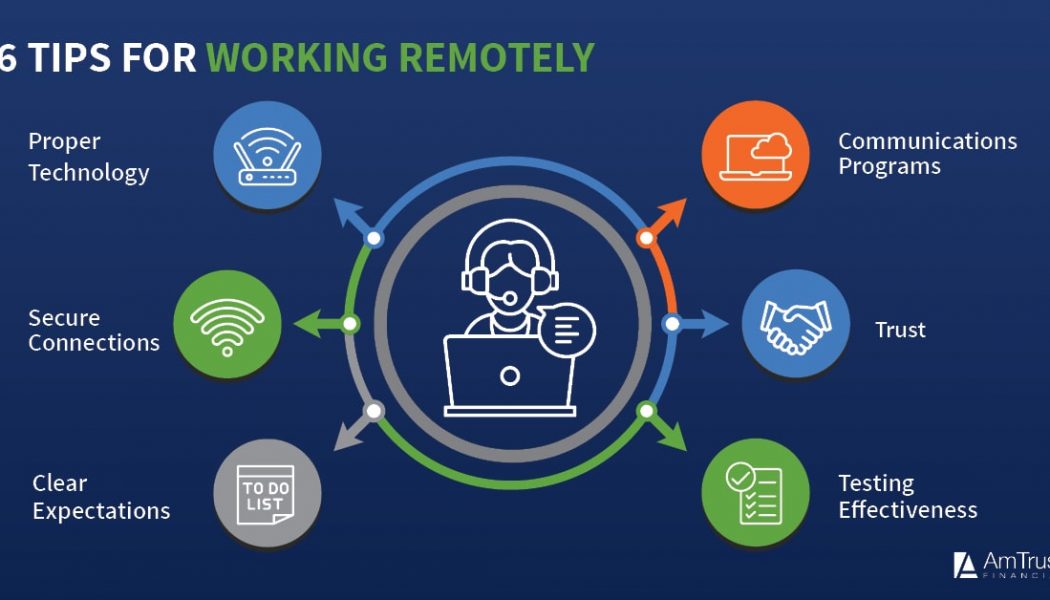

5 Steps to Secure a Work-From-Anywhere Environment
Sourced from TTEC.com When COVID-19 closed offices worldwide, it created a new urgency for organisations of all kinds and sizes — and particularly the CIOs, CISOs and IT leaders within them — to secure their remote work environments. As the need for remote work grew, so too did the threat landscape. For companies not born in the digital age, it was overwhelming to juggle their first cloud migration while conjuring overnight a new kind of security posture that met internet-scale levels of trust and performance. Where those businesses left gaps, often as a result of human error, cybercriminals were happy to exploit them. As we enter the next phase, one where “work-from-anywhere” environments are here to stay, let’s rewind, pause and remember that the secret to success is to do common things ...


Unpacking the Status of Cloud in South Africa
Sourced from ZDNet. Most strategic discussions in boardrooms around the world will include cloud-based offerings because the services offered have become fundamental to a modern, resilient enterprise. in 2020 many organisations may well have been taking a wait-and-see approach, but the pandemic has forced everyone’s hand and sped up digital transformation in all its guises. Cloud computing is believed to have been invented by Joseph Carl Robnett Licklider in the 1960s with the idea of being able to connect people and data from anywhere at any time. Fast-forward 60 years and the various lockdowns around the world have made this idea an absolute and immediate necessity. There have been winners and sadly there were losers during the pandemic. Some businesses thrived and others paid the ultima...


Google News Initiative Launches in Africa
Image sourced from Pymnts Google has announced the second Google News Initiative Innovation Challenge in Africa, with an “open call for projects that increase reader engagement and explore new business models for media”. The first GNI Innovation Challenge saw 21 projects in 13 countries receive funding last year. Awardees were from Côte d’Ivoire, Ghana, Iraq, Israel, Jordan, Kenya, Lebanon, Morocco, Nigeria, Rwanda, South Africa, Turkey, and the UAE. In Nigeria, Ringier Africa Digital Publishing was awarded funding to increase personalisation across its platform using a blend of prediction, recommendation and local information pages to increase user engagement. Kenyan awardee Africa Uncensored is aggregating news from members of the public to produce at scale. Applications open today ...
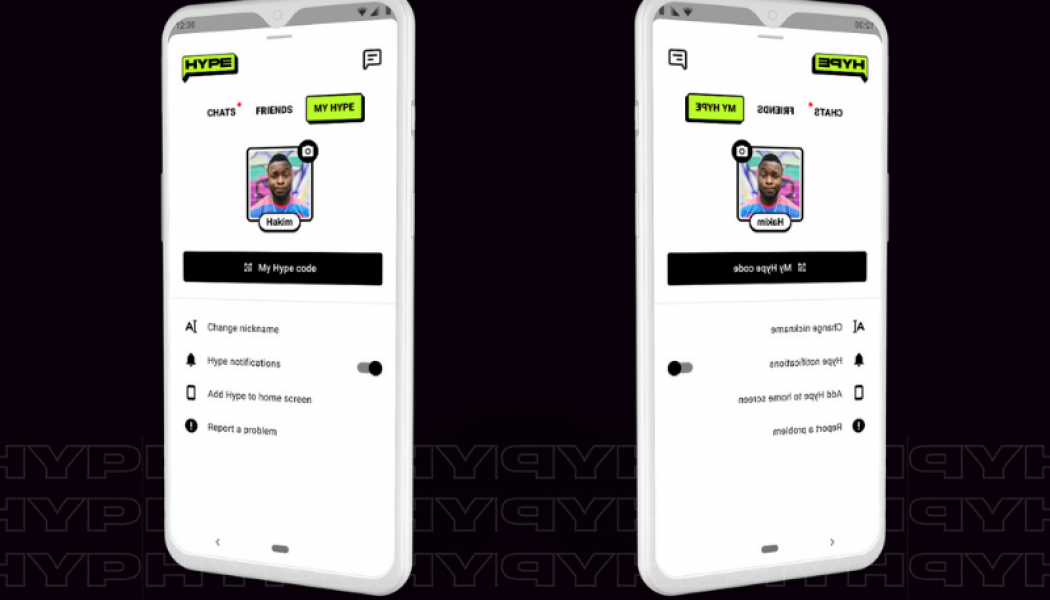

Opera Unveils African Inspired Chat Service in Kenya
Opera has launched the newly dedicated chat service Hype in Kenya. Built into the mobile web browser Opera Mini, this service is expected to enable seamless surfing, chatting and sharing content– without compromising speed or driving increased data consumption. “Chat services and browsers are apps people use every day and feel very personal about,” says Charles Hamel, Product Lead for Hype. “With the integration of Hype in Opera Mini, we are not only rethinking what a chat service should be like in 2021, but also changing the very definition of what a mobile browser should be.” Hype is launching first in Kenya as a pilot market, where users will be able to easily set up their account and start chatting with secure end-to-end encryption. This launch is a facet of Opera’s emphasis on investi...


Microsoft Offers OCR Support for Official South African Languages
Microsoft has revealed it would add Optical Character Recognition (OCR) support for two of South Africa’s official languages, Afrikaans and Zulu. “Adding support for these languages is part of Microsoft’s mission to build meaningful cognitive products and services that improve local engagement,” says Rory Preddy, Senior Cloud Advocate at Microsoft South Africa. “This support, which now counts a total of 73 languages, means that more people are able to connect in their own language and that language will become a seamless feature of using technology, rather than a hindrance.” OCR support for local languages allows users to use visual data processing to label content with objects and concepts, extract text, generate image descriptions and moderate content. /* custom css */ .tdi_3_a3a.td...
