

technology news
SoftwareONE South Africa Appoints New Country Lead
SoftwareONE has appointed Marilyn Moodley its new South African Country Leader – she takes over the reins from Grant Bryce who is now leading SoftwareONE Ireland. Her new role comes at an exciting time for SoftwareONE as it rapidly expands its capabilities into areas like SAP migration services, application modernisation and hyperscale cloud services and solutions. In the last six months alone, the organisation has acquired five companies and formed two strategic partnerships – including a global SAP and app modernisation focused alliance with Microsoft – to rapidly increase its breadth and depth of services, with a primary focus on helping organisations to digitally transform by moving to the cloud. “At SoftwareONE we believe that digital transformation is underpinned by commercial and te...
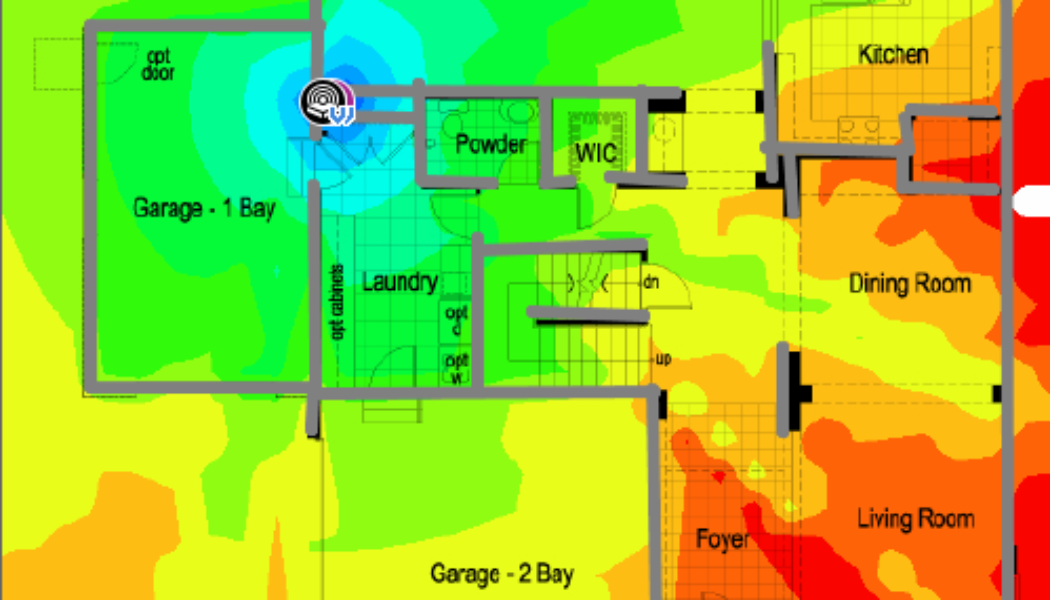

How to Find WiFi Dead Spots at Home
Sourced from The Guardian Nigeria We tend to take Wi-Fi for granted at times, expecting it to miraculously work 24/7 and in every room of our homes – even on that remote patio that doesn’t quite reach the wireless router’s signal. As wireless connectivity runs on radio waves, obstructions and interferences come with the territory, resulting in Wi-Fi dead spots where wireless signals can’t penetrate. This means that your wireless devices won’t pick up Wi-Fi signals in these zones, and you’ll have to move to gain Internet access again – a particularly annoying ordeal if you’ve just settled in a comfy, quiet spot away from your kids or colleagues. For a frustration-free connection that you can count on, identifying these network dead zones and fixing them is a must. Let’s look at how yo...


Clubhouse Finally Reveals Android App
Image sourced from Daily Express Clubhouse has finally revealed its Android app – albeit only to a select number of users. The social platform says that its plan is to “collect feedback from the community, fix any issues we see and work to add a few final features like payments and club creation before rolling it out more broadly.” The invitation-only audio-chat company has been available to iOS users for more than a year. Is the Clubhouse App Safe to Use? Clubhouse appears to be a reflection of the growing interest in sound-based products with the recent rebound of the podcast. Kaspersky researchers believe that the app can create a false sense of security, privacy, and closeness, in part because of how its registration works (it’s invitation-only at the moment). This creates several...


TelOne Zimbabwe Partners with Tejas to Expand Network Footprint
TelOne Zimbabwe has deployed Tejas’ 100G/100G+ coherent DWDM solution for its network expansion. This partnership is expected to see the high-speed transmission of multiple 100G lambdas while meeting the stringent performance and reliability requirements in a cost-effective manner. CEO and MD of Tejas Networks, Sanjay Nayak says “We are delighted that TelOne has deployed our latest 100G/100G+ DWDM/OTN technology for its network expansion. Our solution empowers our customers to diversify their existing DWDM vendor base and use our proven, cost-effective solution to expand and inter-operate”. MD of TelOne, Chipo Mtasa says “TelOne offers access to a vast network footprint in Zimbabwe. With the rising demand for bandwidth and higher speeds from our customers, we were looking for a versat...

7 Common Ways Cybercriminals Compromise Passwords
One of the most important parts of avoiding compromise is understanding how cybercriminals may attempt to gain access to your critical data, reveals Renee Tarun, VP of Information Security at Fortinet. He goes on to say that attack techniques continue to evolve and become more sophisticated, giving cybercriminals a vast toolkit to use to exploit users. Here are seven techniques to look out for: Social engineering attacks: Attacks such as phishing through emails and texts, where users are tricked into providing their credentials, clicking on malicious links or attachments, or going to malicious websites. Dictionary attacks: Attacker uses a list of common words, called the dictionary to try to gain access to passwords in anticipation that people have used common words or short pass...


Paxful Records Over 6 Million Users
Paxful now has more than six million users across its peer-to-peer payments platform. The fintech allows users to buy and sell cryptocurrencies, make payments and send money. “Our mission at Paxful is to give everyone equal access to finance, no matter who they are or where they are, so they can control their own money and build the future they want with financial freedom,” says Ray Youssef, CEO of Paxful. “The financial system is failing 99% of the world’s population; it’s disconnected and out of date. This means there’s no way out of income inequality for a lot of people in the world. With crypto-currencies, we see an alternative way to create a financial system based on equality. Hitting the $5 billion volume mark shows us we are making a difference and we’re just getting started.” Paxf...


IBM Introduces World’s First 2 Nanometer Chip
Image sourced with Learn Bonds IBM has unveiled the world’s first 2 nanometer (nm) chip – this technology uses semiconductors that play critical roles in everything from computing to appliances, to communication devices, transportation systems, and critical infrastructure. Demand for increased chip performance and energy efficiency continues to rise, especially in the era of hybrid cloud, AI, and the Internet of Things. IBM’s new 2 nm chip technology is expected to help advance the state-of-the-art in the semiconductor industry, addressing this growing demand. It is projected to achieve 45% higher performance, or 75% lower energy use, than today’s most advanced 7 nm node chips. The potential benefits of these advanced 2 nm chips could include: Quadrupling cell phone battery life, only requ...


Sub-Saharan Africa Trade Agency Appoints Kaspersky as Cybersecurity Partner
Image sourced from Discover Germany Africa House London – a trade agency established to encourage trade, commerce, and investment between the UK and a selected number of Sub-Saharan African high-growth markets – has appointed Kaspersky as its cybersecurity risk management commercial partner for its trade initiative. This is expected to see Kaspersky provide cybersecurity services to both British companies setting up business in Africa and African organisations establishing themselves in the UK. “Being named a Commercial Partner in this significant programme designed to increase UK and Africa bilateral trade and ensure stability and prosperity for the markets in a post-Brexit landscape, highlights the trust and belief in Kaspersky as a leading cybersecurity vendor. As such, Kaspersky i...


Unpacking the Improved Huawei MateBook Lineup
Image sourced from Basic Tutorials Huawei has launched a number of improvements to its laptop range – including the MateBook X Pro, MateBook D14 and the MateBook D15 – in the hopes of making them smarter, easier-to-use devices that add value to everyday life. Here’s a look at how Huawei has improved these devices: Huawei MateBook X Pro 2021 The Huawei MateBook X Pro 2021, which comes in Emerald Green or Grey, has been elevated from its predecessor on aesthetics and performance, with a sleeker design, latest gen processor, long-lasting battery life, brand new touchpad, 3k touch-screen display, fast network connection and multi-screen collaboration. Super performance /* custom css */ .tdi_3_f11.td-a-rec-img{ text-align: left; }.tdi_3_f11.td-a-rec-img img{ margin: 0 auto 0 0; } This ult...


3 Tactics Hackers Use to Steal Passwords
Passwords, a basic yet essential part of cybersecurity, are the first line of defence against cyberattacks in our increasingly digital world. However, according to research from Check Point Software, many users are under the false impression that cybercriminals have no interest in their personal information or data on their computers. And it is for this reason that the robustness and strength of passwords are more important now than ever. With that in mind – thanks to Checkpoint – here are three of the tactics used to steal passwords along with the necessary steps to prevent any person from becoming a victim of cybercrime: 1. Phishing attacks This method has become one of the most widely used tactics for stealing passwords and usernames. It works in a simple way: by sending an email that a...

Africa Tech Week Day 2: Africa is a Magnet for Investors
The second day of Africa Tech Week was bursting with tech trends and practical insights from speakers and acclaimed sponsors Vaxowave, Liquid Intelligent Solutions, Visa, PPC and Gijima, the overarching emotion is one of gratitude and the outlook optimistic. The main focus was strategies for living in a digital world – a reality that has abruptly arrived on the globe’s doorstep. 54 Million Jobs to be Created As Zahra Baitie from the Jack Ma Foundation reiterated, Africa is a recently connected continent, a new market and magnet for those seeking to make their mark on the world stage. Over the course of the two-day summit, Africa Tech Week certainly made a mark on the world stage! It is predicted that Africa will create 54 million jobs by 2022, largely generated by small and medium enterpri...
