

Tintri

AI & Data Storage: Tintri & DDN Together Enable this Symbiotic Relationship
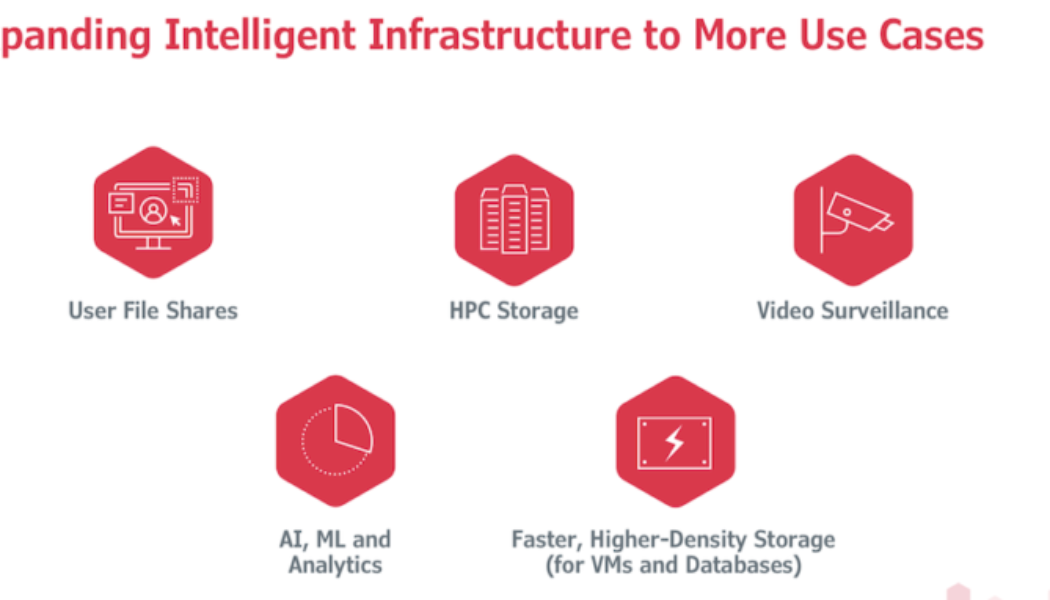
Image by Mohamed Hassan: Pixabay. In the field of enterprise IT, artificial intelligence (AI) is a buzzword that we’ve seen used time and again over the past few years, with the promise of making every part of a business better. What does this mean specifically for data storage? This is the question posed in a recent Tintri blog, which clarifies that AI can be considered as any system that can sufficiently process data to augment, mimic or, in some cases, replace human cognitive functions. As outlined by Tintri co-authors Erwin Daria, Ram Narayanan and Kurt Kuckei, AIs perform within a ‘feedback loop’ that can be categorised by the following key stages: Data analysis: where data is fed into the AI. Inference: where the AI infers a condition from that data. Prescription/action: in most case...


Embracing the Philosophy of ‘More is More’ with Tintri
Image sourced from Networks Unlimited. The saying ‘Less is more’ was first popularised by German architect Ludwig Mies van der Rohe, and today minimalism is a movement that extends to many aspects of life, including architecture, lifestyle, home décor, and fashion. But Tintri would argue that, in the arena of IT, sometimes you need to embrace a philosophy of ‘More is more’. So says Michael Donaldson, Tintri Product Manager at value-added distributor Networks Unlimited, who explains, “Tintri, a provider of intelligent infrastructure for virtualised and non-virtualised enterprise IT, brings better insights into systems, as well as improved understandings of workload activity: how your organisation and its users are behaving as regards interaction with data. “Intelligent infrastructure means ...

Tintri Drives Intelligent Infrastructure so You Can Get Ready to ‘Let Go of the Wheel’
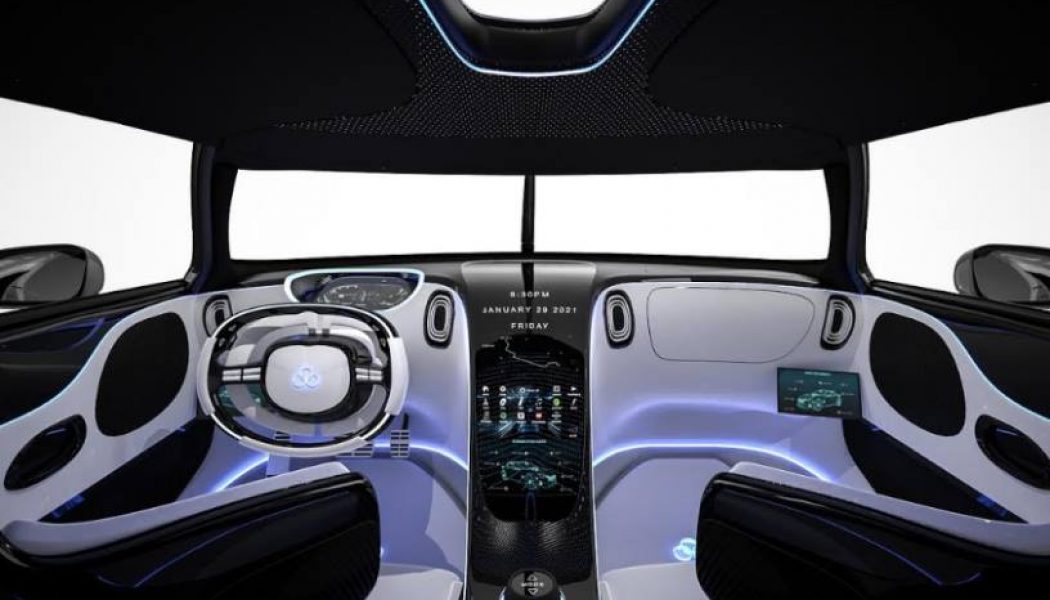
The concept of self-driving cars is controversial and tends to polarise opinion. At the heart of it is the idea that a car will be capable of the same split-second decision-making as a human – or even better – with the ultimate goal of creating accident-free roads. For a vehicle to be autonomous, it needs to be continuously aware of its surroundings: firstly, by identifying and classifying information, and then by acting on the information through the computer control of the vehicle. And for this to happen, artificial intelligence (AI) is required, it is a critical technology in the goal of realising autonomous driving. “One of the main premises of self-driving cars is the idea that autonomy equals safety,” says Michael Donaldson, Tintri Product Manager at value-added distributor Net...

Unpacking Intelligent Infrastructure in the Modern Data Centre
As the world’s largest IT companies realise the importance of ‘intelligent infrastructure’ in the modern data centre, the race is on between storage competitors to provide products and solutions that are actually truly intelligent, and not merely standard infrastructure. So says Marcel Fouché, Networking and Storage General Manager at value-added distributor Networks Unlimited Africa, which partners in South Africa with Tintri, a provider of intelligent infrastructure for virtualised and non-virtualised enterprise IT environments. He clarifies, “In order to get to grips with this challenging issue, Tintri recently held a free webcast to unpack the differences between intelligent and standard infrastructure, looking at the topic from the perspectives of the customer, the vendor and th...


Enterprise Data Storage ‘business as usual’ with Tintri and Networks Unlimited
As the world grapples with a totally different business dynamic in the wake of the global lockdowns currently in place, the enterprise storage industry must continue showcasing the continuous innovation that enables compelling solutions for its clients. This, however, is not so easy for all players in the current economic downturn. This is according to a recent blog entry by Tintri, which provides AI-enabled intelligent infrastructure, and partners in South Africa with value-added distributor Networks Unlimited Africa. According to the blog, “Innovation and continuous investment therein are key drivers that enable compelling solutions to reach customers’ data centres. But in these extraordinary times business cannot operate as usual, and some vendors are finding their ability to maintain c...
