

United States

SEC approves BSTX for blockchain settlements on traditional markets
The Boston Security Token Exchange (BSTX), a new facility of the Boston-based BOX exchange, received regulatory approval from the United States Securities and Exchange Commission (SEC) to operate as a blockchain-based securities exchange. BSTX was launched jointly by BOX and Overstock’s blockchain arm tZERO, originally seeking approval for launching publicly-traded registered security tokens. However, the SEC approval to operate as a national securities exchange allows BSTX to use blockchain technology for faster settlements in traditional markets. According to the SEC, “The Commission notes that the [BSTX] Exchange’s current proposal does not involve the trading of digital tokens and such a proposal, or any other additional use of blockchain technology.” While the SEC has previously...


Clampdown on crypto ads: A one-off or a new phase of global regulation?
Over the last week, regulators in three major jurisdictions across two continents introduced new rules governing cryptocurrency-related promotions and advertisements. Citing consumer risks associated with digital asset investments, authorities in the United Kingdom, Singapore and Spain tightened the requirements around crypto firms’ marketing messaging and customer recruitment practices. While some experts view this emerging trend as a sign of a new global phase of cryptocurrency regulation, questions about the efficiency and universal applicability of this approach persist. New measures In the United Kingdom, Her Majesty’s Treasury issued a report summarizing the results of a public consultation on crypto-asset promotions, published in July 2020, as well as the government’s further steps ...

House members urge US Treasury Secretary to clarify definition of broker in infrastructure law
A bipartisan group of members from the U.S. House of Representatives called on Treasury Secretary Janet Yellen to clarify the language in the infrastructure bill signed into law in November around the definition of “broker.” In a Wednesday letter, House Financial Services Committee ranking member Patrick McHenry and ten other representatives urged Yellen to reference the Keep Innovation in America Act to “ensure that any future guidance” in the November infrastructure bill would provide “the necessary clarity to the digital asset ecosystem.” In addition to the reporting requirements, the lawmakers said that the Treasury Department should narrow the scope of the information a broker can capture, as it would risk “the creation of an unlevel playing fie...

Crypto policy advocacy group warns of ‘disastrous’ provision in a new US bill
Jerry Brito, the executive director of non-profit crypto policy advocate group Coin Center, suggested U.S. residents call their elected officials over possible privacy and due process concerns in a new bill proposed by House leaders. According to a Wednesday Twitter thread from Brito, the America COMPETES Act recently released by House members contains a provision that he said would be “disastrous” for crypto users from both a privacy and due process standpoint. According to the Coin Center director, a section of the bill on the “prohibitions or conditions on certain transmittals of funds” proposed by Representative Jim Himes would give the U.S. Secretary of the Treasury “unchecked and unilateral power to ban exchanges and other financial institutions from engaging in cryptocurrency transa...

U.S. Congressman calls for ‘Broad, bipartisan consensus’ on important issues of digital asset policy
In a letter to the leadership of the United States House Financial Services Committee, ranking member Patrick McHenry took a jab at “inconsistent treatment and jurisdictional uncertainty” inherent in U.S. crypto regulation and called for the Committee to take on its critical issues. McHenry, a Republican representing North Carolina, opened by mentioning that the Committee’s Democrat Chairwoman Maxine Waters is looking to schedule additional hearings addressing matters pertinent to the digital asset industry. He further stressed the need for identifying and prioritizing the key issues and achieving a “broad, bipartisan consensus” on the matters affecting the industry that holds immense promise for the financial system and broader economy. Citing the confusion that the industry faces due to ...
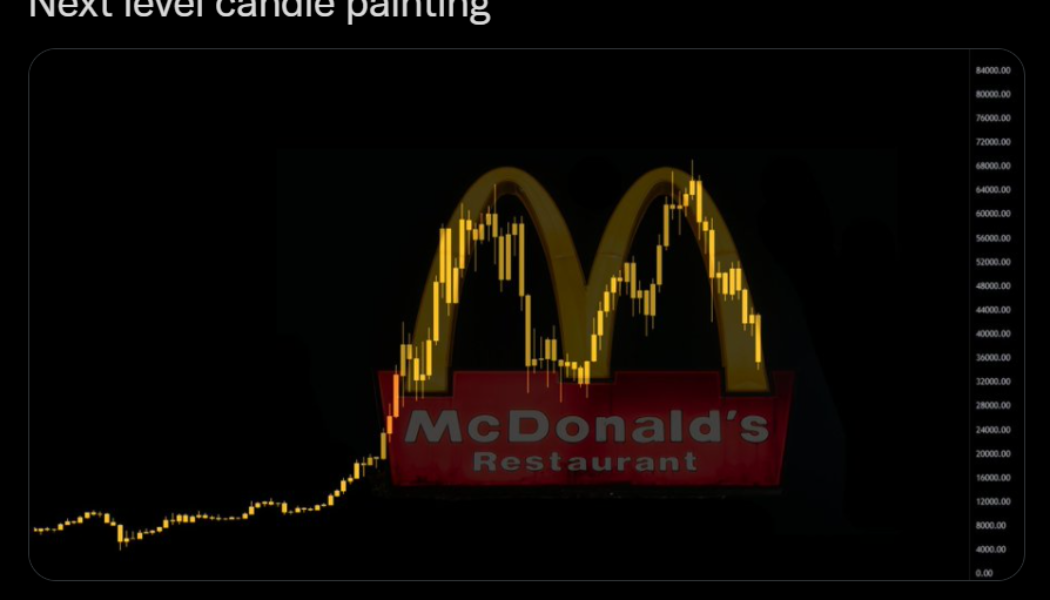

McDonald’s jumps on Bitcoin memewagon, Crypto Twitter responds
Prominent crypto entrepreneurs and supporters, who shared memes on Twitter about doing odd jobs amid an ongoing market crash, were joined by global fast-food giant McDonalds — the brand infamously linked with temporary Bitcoin (BTC) market crashes. BTC’s price has seen a steady downfall ever since breaching an all-time high of $69,000 back in November 2022. Eventually, as Bitcoin started trading below the $40,000 mark, crypto millionaires and investors on Twitter started sharing memes about getting jobs at fast-food restaurants. Source: Twitter/PlanB Salvadoran President Nayib Bukele, too, embraced the meme culture and uploaded a new profile picture that shows him at one of his speeches sporting a badly photoshopped McDonald’s branded cap and T-shirt. #NewProfilePic pic.twitter....


House members call for an end to lawmakers trading stocks — is crypto next?
Congresspeople currently HODLing or actively trading in crypto may have to stop doing so while in office if recent pushes to ban lawmakers from investing in stocks gain enough support. In a Monday letter addressed to Speaker Nancy Pelosi and Minority Leader Kevin McCarthy, 27 members of the U.S. House of Representatives called for action “to prohibit members of Congress from owning or trading stocks.” Among the bipartisan group of lawmakers who signed onto the letter was Illinois congressperson Bill Foster, who is also a member of the Congressional Blockchain Caucus. In addition, the letter seems to have support from politicians diametrically opposed on major issues like Progressive Democrat Rashida Tlaib and Republican Matt Gaetz, who is reportedly under investigation by the Justice Depar...
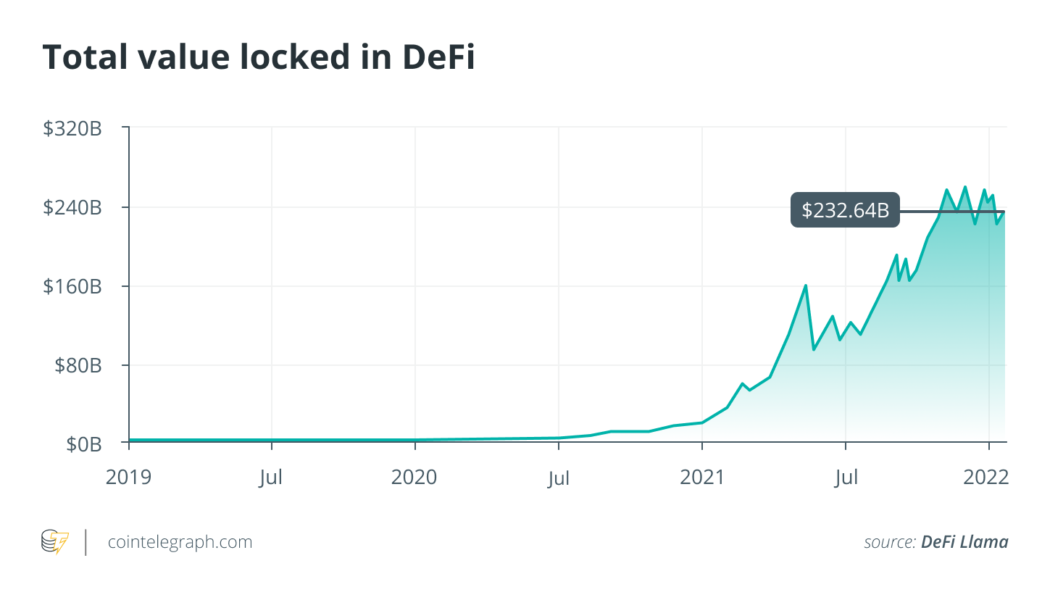

How should DeFi be regulated? A European approach to decentralization
Decentralized finance, known as DeFi, is a new use of blockchain technology that is growing rapidly, with over $237 billion in value locked up in DeFi projects as of January 2022. Regulators are aware of this phenomenon and are beginning to act to regulate it. In this article, we briefly review the fundamentals and risks of DeFi before presenting the regulatory context. The fundamentals of DeFi DeFi is a set of alternative financial systems based on the blockchain that allows for more advanced financial operations than the simple transfer of value, such as currency exchange, lending or borrowing, in a decentralized manner, i.e., directly between peers, without going through a financial intermediary (a centralized exchange, for example). Schematically, a protocol called a DApp (for decentra...


Former Binance US CEO Catherine Coley is still missing, and no one seems to be talking
Around the time Binance.US announced former Comptroller of the Currency Brian Brooks would be leading the crypto exchange, former CEO Catherine Coley effectively dropped off the face of the digital world. Coley, who had regularly posted updates on Binance.US and her personal life to her Twitter account, has been inactive on the social media platform since April 19. Her job experience on LinkedIn ends with her two years as CEO of Binance.US, which she left in June 2021, and her online silence has led at least one news outlet to reach out to San Francisco authorities to determine if she had been reported missing — as of October, the answer was “no.” Major figures in crypto also noticed the absence of Coley. Ripple chief technology officer David Schwartz said in July that the former Binance.U...


Law Decoded: First-mover advantage in a CBDC conversation, Jan. 10–17
Last week saw an unlikely first move in the opening narrative battle around a prospective U.S. central bank digital currency: Congressperson Tom Emmer came forward with an initiative to legally restrict the Federal Reserve’s capacity to issue a retail CBDC and take on the role of a retail bank. This could be massively consequential as we are yet to see a similarly sharp-cut expression of an opposing stance. As a matter of fact, it is not even clear whether other U.S. lawmakers have strong opinions on the matter other than, perhaps, condemning privately issued stablecoins as a digital alternative to the dollar. By framing a potential Fed CBDC as a privacy threat first, Emmer could tilt the conversation in the direction that is friendly to less centralized designs of digital money. Below is ...

OCC Comptroller calls for federal collaboration with crypto intermediaries
The Acting Comptroller of the Currency, Michael J. Hsu, highlighted the need for collaboration and coordination with large crypto intermediaries to better understand the risks within the growing $2 trillion cryptocurrency market. Speaking at the Transatlantic Finance Forum on the topic of “The Future of Crypto-Assets and Regulation”, Hsu pointed out the various venues — crypto exchanges, nonfungible tokens (NFT) and metaverse — where anyone with an internet connection can invest, adding: “The mainstreaming of crypto has occurred despite regulatory and legal uncertainty, and a series of scams, hacks, and other disruptive events. For financial regulators like me, this presents a host of questions. Where should regulatory attention be focused? What should be done? By whom? And why?” Acc...
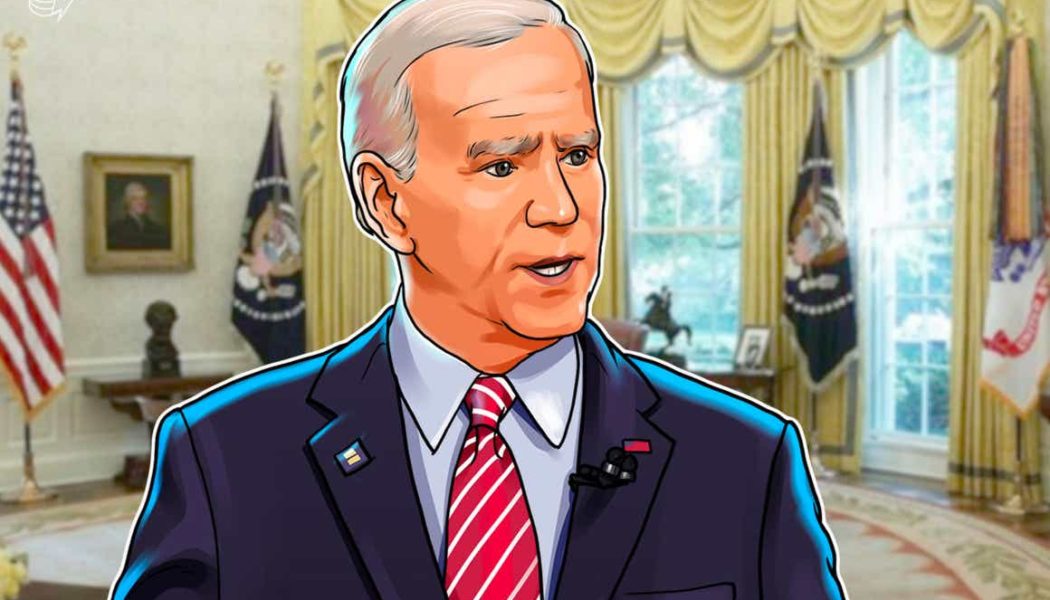

President Biden taps economists for Fed governors’ seats, Sarah Bloom Raskin as vice chair for supervision
The White House has officially tapped former Fed governor Sarah Bloom Raskin to serve as the vice chair for supervision for the Federal Reserve, as well as economists Lisa Cook and Philip Jefferson to fill two empty seats on its board of governors. In a Friday announcement, U.S. President Joe Biden said he had nominated Cook, an Obama-era economic adviser and Michigan State University faculty member, as well as Jefferson, a former research economist for the Fed, to the board of governors in addition to Raskin. Jefferson and Cook will take two of the vacant seats in the group of seven governors, with Jerome Powell and Lael Brainard nominated to serve as chair and vice-chair, respectively. According to the president, the three nominees have the “experience, judgment and integrity to lead the...
