

USA


Law Decoded: Crypto taxes and taxes on crypto, March 21–28.
It was relatively quiet in the digital asset policy department last week, as regulators and lawmakers in most key jurisdictions retreated to their offices to do the necessary homework. In the U.S., federal agencies got on with the various reports that President Joe Biden’s recent executive orders directed them to produce. Over in the United Kingdom, both the central bank and the Financial Conduct Authority also dropped position papers on crypto-related issues. After thorough deliberation, Thailand’s financial authorities spoke out against using crypto as a means of payment, while rumors of potential legal tender adoption of crypto emerged and died in Honduras. One theme that has been conspicuous throughout the week is the relationship between digital assets and taxation. Few would argue th...


Mexico vs USA live stream: How to watch World Cup Qualifiers for free
Mexico are currently third in the World Cup CONCACAF standings and they will be hoping to close the gap with the leaders Canada with a win when they host the United States of America this week. Colombia vs Bolivia live stream Disclaimer: Geo-restrictions apply. All you need is a funded account or to have placed a bet in the last 24 hours to qualify. T&Cs apply, 18+. Bet £10 Get £20 In Free Bets Claim Offer New members. £10 min deposit & bet on sportsbook, placed & settled at 1.5 min odds within 14 days of sign-up. Win part of E/W bets. 2 non-withdrawable £10 Free Bet Tokens: accept in 7 days, valid for 7 days from acceptance (ex. E/Ws & Multiples), stakes not returned. Click here for Rules & Exclusions. Bet Responsibly. BeGambleAware.org. 18+. Top five football live str...


Law Decoded: Arab States of the Gulf open up to digital asset services, March 14–21
Last week got off to an antsy start as the clause that many interpreted as a direct route to ban proof-of-work-(PoW)-based cryptocurrencies made a sudden comeback to the draft of the European Union’s key directive on digital assets. Many in the crypto policy space got immediate flashbacks to other instances of harmful last-minute additions to must-pass legislation days and hours before the vote. It all ended well, though, as the Committee on Economic and Monetary Affairs voted against the draft that contained the hostile language. Over in the United States, monetary policy kept growing more political, as evidenced by Sarah Bloom Raskin, President Joe Biden’s pick for the Federal Reserve’s vice chair for supervision, being forced to withdraw her nomination due to a Senate gridlock. Ukrainia...


Old but gold: Can digital assets become part of Americans’ retirement plans?
On March 11, the United States Department of Labor warned employers that sponsor 401(k) retirement plans to “exercise extreme care” when dealing with cryptocurrencies and other digital assets, even threatening to pay extra legal attention to retirement plans with significant crypto investments. Its rationale is familiar to any crypto investor: The risk of fraud aside, digital assets are prone to volatility and, thus, may pose risks to the retirement savings of America’s workers. On the other hand, we are seeing established players in the retirement market taking steps toward crypto. For one, retirement investment platform ForUsAll decided last year to implement crypto as an investment option for 401(k) fixed retirement accounts in partnership with Coinbase. Is this the beginning of a large...


New Hampshire hopes its express approval of crypto-friendly law will attract new business
The New Hampshire House of Representatives passed a bill on Tuesday to adopt the new version of Chapter 12 of the Universal Commercial Code, or UCC, which will govern transfers of digital assets. The chapter is still in draft form, but if HB1503 is signed into law, New Hampshire will be the first U.S. state to adopt the chapter. Like the draft chapter of the UCC, the bill — titled “Exempting the developer, seller, or facilitator of the exchange of an open blockchain token from certain securities laws” — seeks to create a “workaround” to make it easier to buy and sell cryptocurrencies by stipulating conditions under which “a developer or seller of an open blockchain token shall not be deemed the issuer of a security.” It passed by a vote of 187 to 150. The UCC is a set of model l...


Congress members concerned SEC stifling innovation with crypto scrutiny
In a bipartisan letter put forward by Republican Minnesota Congressman Tom Emmer, a cohort of Congress members has written to Securities and Exchange Commission (SEC) Chairman Gary Gensler, challenging the regulator’s scrutiny of cryptocurrency firms and expressing concern that “overburdensome” investigation may be suffocating the crypto industry. They suggest the SEC is drowning companies in paperwork in contravention of the SEC’s stated aims and mandated jurisdiction. Emmer tweeted to his 51,000 followers: “My office has received numerous tips from crypto and blockchain firms that SEC Chair @GaryGensler’s information reporting ‘requests’ to the crypto community are overburdensome, don’t feel particularly… voluntary… and are stifling innovation.” This is why I sent a bipartisa...


Ally or suspect? The war in Ukraine as a stress test for the crypto industry
It has been two weeks since Russia kicked off the first large-scale military action in Europe in the 21st century — a so-called “special operation” in Ukraine. The military conflict immediately triggered devastating sanctions against the Russian economy from the United States, the European Union and their allies and has put the crypto industry in a position that is both highly vulnerable and demanding. As the world watches closely, the crypto space must prove its own standing as a mature and financially and politically responsible community, and it must defy the allegations of being a safe haven for war criminals, authoritarian regimes and sanctioned oligarchs. Up to this point, it has been going relatively well. But despite reassurances from industry opinion leaders, some experts say that...


Biden to sign executive order on crypto, authorize all-government effort to consolidate regulation
Later today, U.S. President Joe Biden will sign a long-anticipated executive order on digital assets. Despite fears that the order may resound a regulatory clampdown on the industry, the language of the document is fairly favorable, the key focus being the coordination and consolidation of various agencies’ efforts within a unified national policy. The order designates six key areas of the federal government’s involvement with the digital asset ecosystem — consumer and investor protection, financial stability, financial inclusion, responsible innovation, the United States’ global financial leadership and combating illicit financial activity — and directs specific agencies to lead in designated policy and enforcement domains. The Department of the Treasury will take the lead in developing p...


Crypto industry seeks to educate, influence US lawmakers as it faces increasing regulation
Interaction between the cryptocurrency industry and Capitol Hill is becoming ever more intensive as efforts to regulate crypto grow in tandem with its popularity. The surge in crypto industry lobbying last year was given some concrete parameters in February by crypto analytics startup Crypto Head. It released a report showing that the crypto companies that spent the most money on lobbying in 2021 were Robinhood, Ripple Labs, Coinbase and the Blockchain Association. These organizations were the lobbying leaders during the past five years as well, although with different rankings. Here is what the United States crypto-lobbying landscape looks like today. Metrics of influence Robinhood spent $1.35 million on lobbying in 2021 and was the only crypto-related organization to spend more than $1 m...


Arctic or Antarctic: how to pick your polar adventure
Can’t decide between the Arctic or Antarctic for your polar adventure? Our guide will help you choose between 66° north or south The North and South Poles were only “conquered” in relatively recent history. The South Pole was first attained in 1911 by the Norwegian Roald Amundsen after his epic race with the ill-fated Robert Falcon Scott. The conquest of the North Pole is a little murkier thanks to its location in the middle of the Arctic Ocean among waters that are almost always covered with shifting sea ice. It’s possible that Frederick Cook was the first to reach the North Pole in 1908 or perhaps it was Robert Peary in 1911 or maybe Richard E. Byrd who was the first to fly over it in 1926… But it wasn’t until Roald Amundsen’s definitive flight over the Pole...


Seizure of Bitfinex funds is a reminder that crypto is no good for money launderers
As public understanding of how digital assets work becomes more nuanced along with the mainstreaming of crypto, the language of Bitcoin’s (BTC) “anonymity” gradually becomes a thing of the past. High-profile law enforcement operations such as the one that recently led to the U.S. government seizing some $3.6 billion worth of crypto are particularly instrumental in driving home the idea that assets whose transaction history is recorded on an open, distributed ledger are better described as “pseudonymous,” and that such a design is not particularly favorable for those wishing to get away with stolen funds. No matter how hard criminals try to obscure the movement of ill-gotten digital money, at some point in the transaction chain they are likely to invoke addresses to which personal details h...
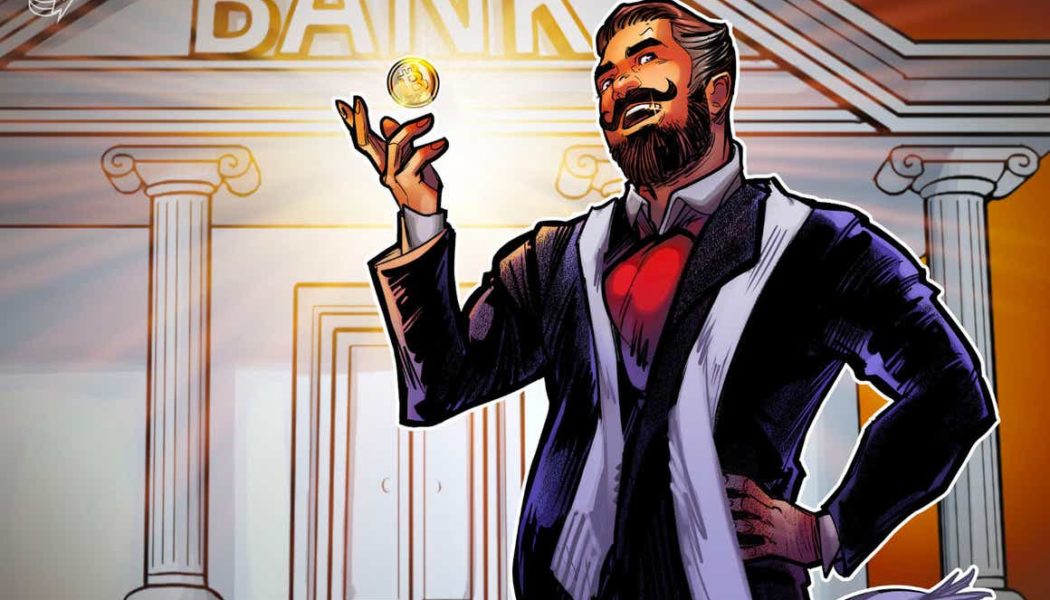

Future of finance: US banks partner with crypto custodians
Grayscale Investments’ latestreport “Reimagining the Future of Finance” defines the digital economy as “the intersection of technology and finance that’s increasingly defined by digital spaces, experiences, and transactions.” With this in mind, it shouldn’t come as a surprise that many financial institutions have begun to offer services that allow clients access to Bitcoin (BTC) and other digital assets. Last year, in particular, saw an influx of financial institutions incorporating support for crypto-asset custody. For example, Bank of New York Mellon, or BNY Mellon, announced in February 2021 plans to hold, transfer and issue Bitcoin and other cryptocurrencies as an asset manager on behalf of its clients. Michael Demissie, head of digital assets and advanced solutions at BNY ...
