
Following the stellar box office success of Chainsaw Man – The Movie: Reze Arc around the world, fans are naturally hungry for more stories from creator Tatsuki Fujimoto. The new animated anthology, 17-26, provides exactly that. An adaptation of eight of his bizarre manga one-shots, this definitive collection serves as a roadmap of Fujimoto’s genius, featuring stories written between the ages of 17 and 26. From early sketches like A Couple Clucking Chickens Were Still Kickin’ in the Schoolyard to the darker themes in Nayuta of the Prophecy, the full anthology showcases his rapid evolution.
To see the foundation of Fujimoto’s genius for yourself, the entire 17-26 anthology is currently available on streaming via Prime Video. Continue reading for our deep-dive review of every short film.
WARNING: Spoilers ahead.
A Couple Clucking Chickens Were Still Kickin’ in the Schoolyard
Clocking in at less than 20 minutes, the animated short A Couple Clucking Chickens Were Still Kickin’ in the Schoolyard is a rollercoaster ride of wacky, disturbing and mind-probing concepts. Adapted from Fujimoto’s 35‑page debut manga on Shonen Jump+ in 2011, the story was first submitted when he was 17, though it wasn’t published until he was 19. Even at that age, Fujimoto’s favored motifs were already clear.
Set in a fictional 2019 where aliens have overtaken Earth, the narrative follows Yuto and Ami, who survive by disguising themselves as chickens in a schoolyard. Initially, the short film follows Yohei, a kind‑hearted alien high schooler, through what seems like a normal day — until events unravel in unsettling ways.
In fiction, aliens are often portrayed as terrifying predators. But Fujimoto cleverly reimagines this stereotype with mundaneness and inevitable conflict. The story carries messages and consequences reminiscent of Masaaki Yuasa’s brilliantly thought-provoking and immensely dark 2018 series Devilman Crybaby, specifically exploring how motives are easily warped by cravings and peer normalcy. In one key scene, Ami confronts an alien who massacred her classmates, asking why aliens kill humans. The alien, puzzled, compares it to humans slaughtering pigs and cows. Ami counters, “Would that make it okay for us to eat you?” to which the alien replies simply, “I don’t know.”
The short film adaptation is produced by ZEXCS, a studio known for OVAs and co‑animation projects, often based on games and light novels. Screenplay and direction are helmed by Seishirō Nagaya, key animator of Chainsaw Man Season 1, Episode 10. His balance of emotional buildup and bursts of violent action resonates throughout A Couple Clucking Chickens Were Still Kickin’ in the Schoolyard.
Sasaki Stopped a Bullet
Following the intense impact of the previous short film, Sasaki Stopped a Bullet initially presents itself as a more lighthearted and bizarrely comedic tale — until an unsettling threat emerges, shifting the tone into uncomfortable territory. The narrative focuses on Sasaki, a student who harbors a crush on his homeroom teacher, Ms. Kawaguchi, elevating her to the status of a goddess. As the title suggests, the story explores the idea of believing in the impossible, suggesting that love can transcend not only common sense but also ordinary human capabilities.
Published in Shonen Jump+ in 2013, the original short story won the Special Jury Prize at the 5th CROWN New Manga Awards. Judges applauded the then 20-year-old Fujimoto for his intuitive and lively storytelling, with one judge noting that “the word genius comes to mind.” The film, directed by Nobukage Kimura at Lapin Track, achieves its distinct surrealistic tone by pairing relatively realistic character designs against oddly accented colored surroundings. This is amplified by dramatic voice acting, comedic timing and Maurice Ravel’s “Boléro” playing consistently as the background music.
Love is Blind
Also produced by Lapin Track, Love is Blind unfolds as an absurd romantic comedy centered on Ibuki, a high schooler determined to confess his feelings to fellow student council executive Yuri. The 13‑minute short delivers laughs and chuckles through its dramatic portrayal of a teenage boy consumed by the belief that this is his final chance to declare his love — his last day of high school. In his desperation, Ibuki shuts out every obstacle, from looming threats to cosmic disruptions amid tempestuous weather, blinded entirely by his singular goal.
The original manga was published in Jump Square in 2013, winning an Honorable Mention award at the 9th CROWN New Manga Awards, just months after Fujimoto’s success with Sasaki Stopped a Bullet. Directed by veteran animator Nobuyuki Takeuchi – who has worked on notable film projects like Studio Ghibli’s Ponyo on the Cliff by the Sea and Makoto Shinkai’s Weathering With You – his adaptation captures the original’s dynamic development with dramatic visuals that perfectly match the outlandish premise.
Shikaku
Shikaku in Japanese could translate to “assassin,” but it’s also the name of the female lead in this short film. From a young age, the titular heroine displays psychotic tendencies, and after years of being shunned for her erratic behavior and lack of empathy, she eventually becomes a hitman under the codename Shikaku. The narrative truly begins when Shikaku takes a job from Yugeru, a client with one simple request: to be killed. As it turns out, Yugeru cannot be killed; he is a 3,500-year-old being so bored that he is literally dying to be assassinated.
While it initially promises a violent thriller, Shikaku evolves into a twisted love story. Released in 2014, just one year after Love is Blind and Sasaki Stopped a Bullet, the manga demonstrates Fujimoto’s growing refinement as a storyteller. Love remains central, but the themes are darker and more complex, with echoes of Chainsaw Man — even Shikaku’s design feels like a precursor to Makima from Chainsaw Man.
The 18‑minute adaptation, based on the manga’s 51 pages, inevitably limits character depth, yet its execution is striking. Directed by Naoya Ando – previously of Paradox Live The Animation – and produced by the new studio GRAPH77, whose only prior credit was in‑between animation for Chainsaw Man: The Movie – Reze Arc, the film impresses with gory action, tense monologues, to even sensuous and lighthearted moments. While the ending feels unexpectedly gentle, Shikaku leaves a strong impression as an early exploration of Fujimoto’s blend of romance, violence and solitude.
Mermaid Rhapsody
Derived from 22-26 of Fujimoto’s two-part anthology, Mermaid Rhapsody strikes a tone noticeably different from the other films: a blend of fantasy and heartwarming romance. The story centers on a young boy, Toshihide, who spends his days diving into the sea to play a grand piano submerged on the ocean bed. A mermaid girl, Shiju, observes him until she rescues the boy from nearly drowning. In return, Toshihide promises to teach Shiju how to play the piano, sparking a heartfelt bond.
Originally published in 2014, the manga may feel out of place for audiences familiar with Fujimoto’s darker works like Chainsaw Man or the coming-of-age premise of Look Back. Yet romance has always been a recurring theme in his storytelling — sometimes fragile and budding, other times bittersweet and twisted. Mermaid Rhapsody falls into the former, leaning toward a more conventional, fairy‑tale tone that highlights Fujimoto’s versatility.
The adaptation is produced by 100Studio, a relatively young animation studio previously credited with 2nd Key Animation on series such as Bleach: Thousand‑Year Blood War – The Separation and Dr. Stone: New World. Directed by Tetsuaki Watanabe, known for helming the first season of BLUELOCK, the film takes a faithful, understated approach to the short story. At its core, it explores the inevitable consequences of young love across different worlds, carrying a message of following one’s heart despite fear or uncertainty.
Woke-Up-as-a-Girl Syndrome
When one thinks of Tatsuki Fujimoto, “wacky” often comes to mind — and Woke‑Up‑as‑a‑Girl Syndrome perfectly illustrates his penchant for kooky settings intertwined with young love. Set in the year 2000, the story begins when high school boy Toshihide quite literally wakes up one morning as a girl. As Toshihide grapples with the irrevocable reality of having a female body, he immediately becomes the recipient of sexual harassment from male classmates, until his girlfriend’s older brother, Akira, comes to his rescue.
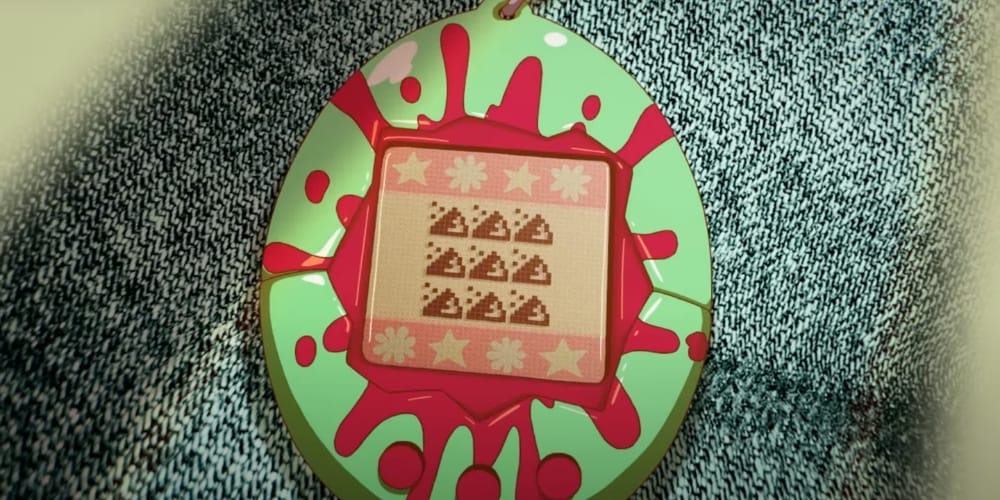
What begins as purely comedic quickly introduces threats that are real and relatable. The plot not only puts the male lead in a position where he must fend for himself – as girls his age regularly do – but also explores the struggles of gender conformity. Aesthetically, this is perhaps the most vibrant entry, with Director Kazuaki Terasawa and Studio Kafka lending a distorted, surrealistic touch to mundane settings. Experimental colors, stylish still shots, and retro cues like Tamagotchi and flip phones enrich the film’s sense of familiarity and artistic transition.
Nayuta of the Prophecy
With Nayuta of the Prophecy, 100Studio and director Tetsuaki Watanabe return to a darker, dystopian premise. The story follows Kenji and his younger sister, Nayuta, as they struggle to survive in a cruel world. Born with horns, Nayuta becomes the target of fear and scorn, as many believe in a prophecy that a horned girl will bring about the world’s end. Her existence embodies the tension between superstition and innocence, casting her as both victim and symbol of society’s anxieties.
Originally released in 2015 on Jump Square, Nayuta of the Prophecy feels like a prototype for the thematic groundwork later explored in Chainsaw Man. Fujimoto uses the narrative to comment on the plight of those shunned by society, despite their simple desire to live a quiet, ordinary life. The story’s bleak setting and emotional weight highlight his growing ability to blend social commentary with fantastical elements. The adaptation emphasizes this duality, balancing moments of tenderness with looming dread, while also demonstrating Fujimoto’s earlier explorations with isolation, prejudice and the fragile hope for peace in a hostile world.
Sisters
Closing out 17–26, Sisters feels like an early draft of Look Back, a melancholic tale that explores the fragile balance between friendship and rivalry among two budding artists. The story follows Akiko and Kyoko after both enroll in the same art school, immediately revealing the growing distance between them — particularly Akiko’s jealousy of her younger sister’s talent.
The film’s opening sets the tone for their conflict: Akiko is humiliated when Kyoko’s award‑winning painting is displayed at the school entrance. Though Akiko never modeled for her sister, the work depicts her completely nude, sparking her resentment. This moment becomes the tipping point, driving Akiko to confront Kyoko in hopes of revenge, before gradually embarking on an introspective journey that reexamines their strained relationship.
Directed by Shu Honma and produced by P.A.WORKS, both seasoned in the industry yet new to leading a project of their own, the adaptation masterfully brings this coming‑of‑age one‑shot to life. The animation is fluid, with still frames steeped in detail reminiscent of the art school depictions in Blue Period. More importantly, Sisters delivers a compelling study of emotion and conflict, its beginning and end echoing each other in a full‑circle moment — not of bitterness, but of acceptance and growth.
The Tatsuki Fujimoto 17-26 anime film anthology is currently available for streaming via Prime Video.