
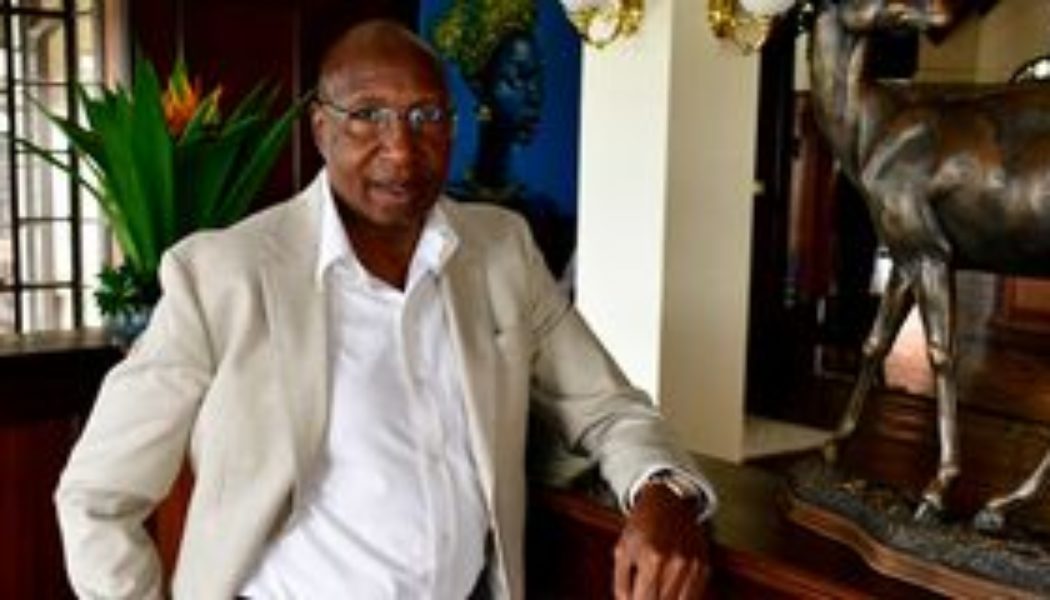
Engineers, at least real engineers, build things that are meant to outlast them. Roads, bridges, structures, things that carry other people’s weight. Peter Njeru Njagi has spent his entire life building. First, for the government, building roads and infrastructure, which he did for over 20 years.
Then, for himself, laying the foundations of an oil empire from a Sh45,000 sacco loan. And underneath all of it, a third structure – quieter, less visible, but the one he’ll tell you matters most. A faith that has been both the blueprint and the load-bearing wall.
Njagi has built Riva Petroleum largely in the shadows. He will tell you, with some discomfort, that he has never quite figured out how to stand in what he has built.
Not because he lacks confidence, but because the Bible tells him to think of himself with sober judgment, and he takes that seriously. He seems to live by Proverbs 27:2 – “Let another praise you, and not your own mouth.”
He takes that seriously.
Today, Riva is a family business in the fullest sense. His wife Dorcas, a trained paediatrician, gave up medicine to run the company’s finances. His two daughters – one an engineer, one a lawyer – now head different sections of the business.
“You cannot push your children to join your business,” he says, “but you can encourage them through exposure.” He did. They came.
He engineered something meant to outlast him. A company, a family, a set of principles that his daughters now carry forward.
In a country where the shortcut is always available, he has spent 30 years proving it is not always necessary. “It is not easy,” he says. “But it is possible.”
Were you afraid when you left civil service to start a business?
By the time I left, I was confident that it was the right choice. And this confidence came from years of business activity, going back to my days in high school when I was into photography. I would take my schoolmates’ pictures, print and sell to them over the weekend, making good money.
When I left college, I started saving very aggressively. The plan was to buy a matatu. I was eyeing a secondhand Nissan or Toyota van, which cost nearly Sh70,000. I had saved Sh45,000 and went to take up a loan to top up the difference only to find out that the prices had risen, and so I couldn’t afford the matatu. So I was stuck with my savings.
I started thinking of what to do next.
By then, I was working in Nyeri. I decided to buy timber since I was an engineer in the field, truck it over the weekend, and sell it to major companies in Nairobi. A few truckloads in, I had significantly grown my money. Unfortunately, I couldn’t continue with that line of business after I was shortly transferred from Nyeri.
Then I ventured into the hardware business, and then got into the car imports business, especially from Japan. I was making good money, and that’s when I started thinking of going into fuel. By the time I resigned, I had no fear because my accumulated capital had really grown.
What was your most challenging period in business?
Business runs in cycles, so challenges are inevitable. The first real hurdle came when I transitioned from hardware into fuel. My bank was unwilling to support a new venture, but KCB stepped in and gave me a chance. Even then, I quickly realised my capital was a drop in the ocean, and I couldn’t supply most of my customers. Fortunately, the margins were good, and the business grew gradually.
There were other difficult seasons. The market was liberalised, margins shrank, and competition intensified. Later, moving from reseller to independent oil marketer required significant capital, and at one point, I was short by about Sh36 million.
I leased out one of our petrol stations to raise funds and managed to get through that phase. Ten years later, we got the station back, by which time the business had grown considerably.
Business is a process of facing challenges, overcoming them and preparing for the next one. The challenges never end; they simply change.
What has running a business taught you about human nature?
We are created to be innovators and very resilient, but resilience and creativity depend on how much challenge you are willing to take on yourself. I have seen people who have gone so far down – in business, through serious health challenges, through loss of loved ones. And human nature is that as long as you are willing to face the challenge head-on, you can come around, stand up, and move on again.
Have you thought about succession?
Yes, succession has been at the back of my mind for many years. First, my wife — who is a trained paediatrician — exited her career to do accounting and became a qualified accountant so that she could run much of the finance activity in the business in the earlier years.
For the children, I learned from older friends that you cannot push your children to join your business, but you can encourage them through exposure.
So, right from the days when they were in primary school, we would pick them up from school and bring them to the office so they could see what we do. I have two daughters, and over their holidays they would work — doing filing, front office work, working at the pumps, learning how to fill fuel in cars — and we would pay them.
When they finished university, both of them worked with other companies first. One is an engineer, the other is a lawyer. And at each point, because of the exposure, they would say: Dad, I’m ready to come and join you and mum, because my contribution where I am could be better placed where you are. So, eventually we made them company shareholders, and as we declared profits, we would declare a fraction to them so they could invest in their own things. Now they are working in the business, heading different sections.
Was it challenging raising girls?
We were very blessed to have daughters who were not very chaotic from the word go. But the biggest challenge was a deliberate one. We decided to raise them in a very independent way of thinking. We took them through programmes that teach people how to survive on their own.
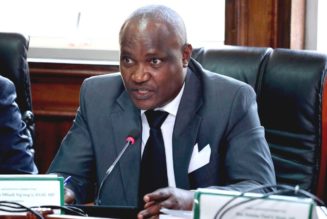
Riva Petroleum Dealers Limited Managing Director (Founder) Eng Peter N. Njeru poses for a picture after the interview at Windsor Golf and Country Club on June 24, 2026.
Photo credit: Francis Nderitu | Nation Media Group
We gave them a lot of freedom, with controls. If they wanted to go out with their friends, fine. But one thing we did right – we told them quite early: if you have a friend, whether a boy or a girl, bring them over so that we can interact with them.
So my daughters had many school friends, boys and girls, visiting us continuously – when they were young, when they were teenagers, when they were young adults.
A parent always fears what could go wrong. But nothing went wrong. There were times when they would come home late from university, and we would worry. But it never resulted in any form of disaster.
One of my daughters did martial arts for fitness. They were members of various clubs, and they would travel far, long bus journeys out of the country – and that made them more independent. I think they still survive well in a world where women are disadvantaged compared with men.
How hard is it to run a business with principles and a firm Christian grounding, seeing as there are many external forces that can force your hand into corruption?
Corruption is a major concern, and in business, it comes from different directions. One is the agencies you get services from, such as licensing, inspectorate, and those who enforce regulations.
I discovered a long time ago that if you don’t want to get involved in corrupt practices with such agencies, the answer is to do it right the first time. For instance, if you are building a site, get all your permits at the same time. It may be slow, but it pays in the long run. Our slogan is we deliver quality. So, as a policy, we stick to selling the pure product and don’t try to take shortcuts.
The other side is getting jobs and tenders. We have chosen to work with like-minded organisations, customers and suppliers whose policies and principles align with ours.
Then there is corruption when dealing with employees of other organisations. Once in a while, you come across somebody who wants a kickback, and we tell them outright: the company does not give kickbacks, even if you bring a job to us.
In many cases, we have found that when people know our principles, they either try their luck elsewhere or deal with us without corrupt practices. Sometimes you have to give up an opportunity or wait a long time. But eventually it pays. It is possible for people to know your principles and to work with you. It is not easy, but it is possible.
Is there anything else you want to be or do in life?
One thing I have found great value in, observing people talking in eulogies, in funerals, writing biographies, is serving society and changing people’s lives. We started an organisation called Nakuru Christian Professionals, which runs a school educating children from disadvantaged backgrounds.
We call it Centre of Hope. I serve the Centre by working with university students on values and morals. I chair the Council of International Leadership University, which focuses on teaching integrity. In my church, I use my engineering skills to support the building committee and the marriage ministry. Doing things that can change humanity — that has become something I value quite deeply.
Is it harder for born-again Christians to run a business?
The answer could be yes and no. It matters what kind of business you are getting into. There are businesses that by their very nature require underhanded dealings; for people who are born again, entering such a situation will definitely present challenges. But there are many other businesses where your principles will be challenged, but it is possible to survive. If your trucks meet all the requirements, it is possible to work with the traffic police without a reason for collision.
Once in a while, you find an officer who thinks you must give something small. But when we stand our ground, we are still left free. I think it is possible to do business in this country without getting involved in corruption.
What questions about your faith do you still struggle with?
I have associated with friends in the Hindu and Muslim communities and found people dedicated to their faith who share the same values as I do. And what I struggle with is what will happen to people in those religions who are not Christians, because some of them are living according to the very values I live by? I feel it is important for us to accommodate them in society, not necessarily transition to their beliefs.
The other thing I struggle with is our faith being challenged by changing dynamics, things coming up as socially acceptable but biblically not accepted. About gender, about many things. I struggle with how we handle them, because Christianity is not about the majority. It is about principles and values.
What flaw in yourself have you spent the most energy trying to overcome?
I have a challenge – influenced quite a bit by my wife – of balancing between being too conservative about self and not showing off. Balancing what to say without being proud or being seen to be proud.
The Bible talks of letting no man think of himself more highly than he ought, or lower than he ought, but with sober judgment. I am able to think of myself with sober judgment. But showing it to others in the exact right way – that I struggle with.
If people think an engineer is successful and I understate it, they think it’s a fake show of who I am. If the engineer is thought to be just struggling, and I seem to be saying I’m doing very well, again, that’s wrong.
That balance of what image to project has been one area I think I’ve been poor at getting right. Sometimes I understate. Sometimes I think I overdid it in showing who I am. That balance – I don’t think I’ve ever gotten it exactly right.
What’s your take on divorce?
I actually wouldn’t say there’s a take that I can say in this interview. When Paul was talking about divorce and remarriage, he went into a kind of discourse in Corinthians where he talked of if a man leaves his wife and is unbelieving. And at times he would say, this is I, not the Lord — this is the Lord, not I.
He talked of adultery as a source of divorce, but how he responds to what should happen to the other party is different from when he talks of things like violence.
I would say it is one of those very complicated subjects because the root cause of the divorce and the response by the other party is very subjective in many circumstances. Not being a theological expert, I would say it is a subject that requires a lot of grace, caution, and interpretation. I am not going to give a take of my own. I just declare it a very difficult subject in our society as it is today.