

This year’s event brought us a taint-zapping stick-on, rollable headphones, and one big blow-dryer.
This year’s event brought us a taint-zapping stick-on, rollable headphones, and one big blow-dryer.

There’s never a shortage of exciting and innovative tech at CES. A superthin TV and tri-folding phone are cool and all, but sometimes the weirdest gadgets are the ones that make us go “huh.”
Luckily, there was plenty of wacky stuff on the show floor this year, and we’ve rounded up some of the most bizarre (in no particular order).
Instead of stepping out of the shower and having to wave your hair dryer around your head for 15 minutes, imagine just sitting on your couch while a crescent-shaped device hangs over your head, drying your hair as you watch TV or play a video game. Well, that’s exactly what a company called Dreame has developed, and I think it’s kind of a good idea — but maybe not for $700.
The device is also a lamp, so at least you won’t have to explain to people why you have a giant, standing hair dryer in your living room.
Our very own Victoria Song braved the taint-zapping booth at CES 2026, which is exactly what it sounds like: a device that sends electrodes into a man’s perineum, with the goal of preventing premature ejaculation.
The device, called Mor, is attached to an adhesive patch containing electrodes that you, well, stick on your taint. And no, this isn’t vaporware — the starter pack is available for about $300.
I’m not sure what’s scarier: a friend armed with clippers and exactly one YouTube tutorial, or putting AI in charge of your haircut. Glyde claims its smart clippers allow for “mistake-proof” cuts by automatically adjusting their blades as you go.
But first, you have to strap on a “fade band” that the clippers use to detect their position on your head. Then, just turn them on and hope for the best.
Desktop anime girls made a comeback at CES 2026. This time around, Razer showed off its Project Ava pod, featuring a 5.5-inch hologram of the cat-ear-wearing anime waifu Kira, or the tattooed husbando, Zane. They’re supposed to look at you using a built-in camera (or your webcam) and can see what’s happening on your computer screen via the device’s USB-C connection to offer gaming tips. The avatars are powered by xAI’s Grok (ew), and you can chat with them using the pod’s dual-mic array.
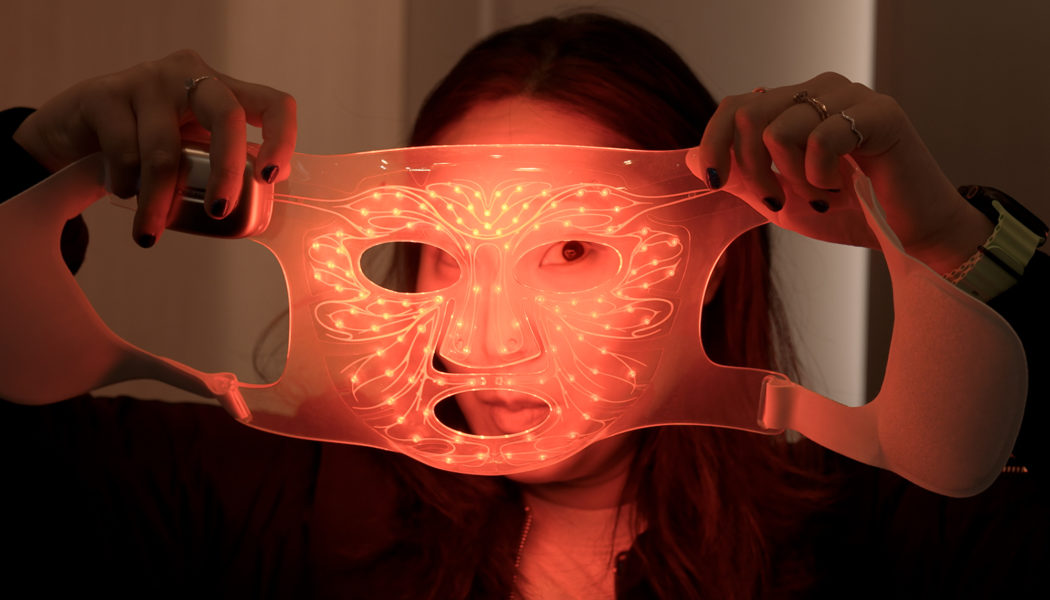
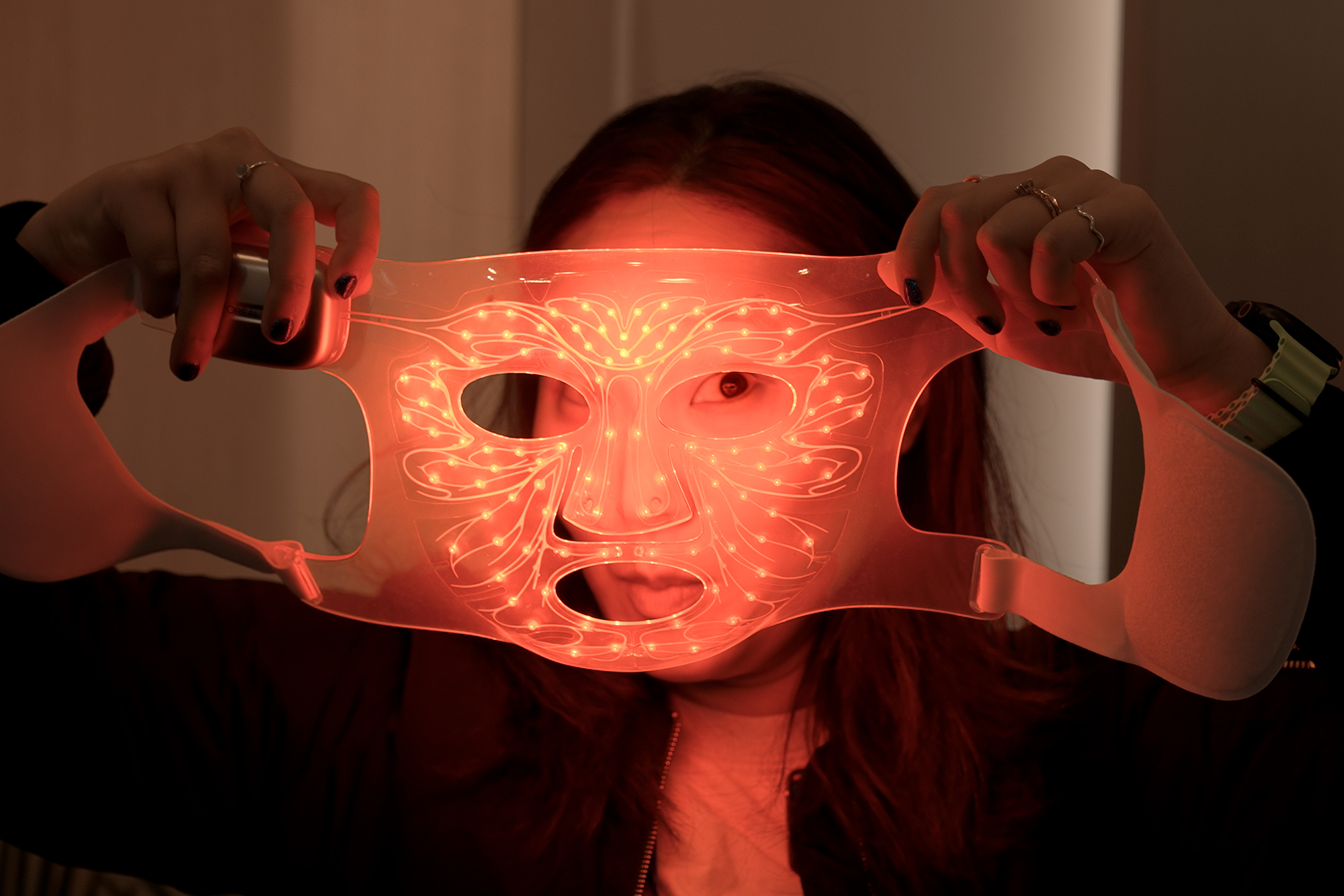
L’Oréal’s creepy LED mask
No, this isn’t a prop from The Silence of the Lambs; this is L’Oréal’s LED Face Mask. The flexible, silicone mask looks like another layer of skin, complete with red lights that highlight a veinlike pattern. L’Oréal claims its face mask tightens and smooths skin using targeted red light and near-infrared light. The company expects to launch the LED Mask in 2027.
A company called Tomorrow Doesn’t Matter (TDM) is launching Neo over-ear headphones that you can transform into a speaker by folding in the flexible headband. Along with 40mm drivers on the inside of the Neo’s ear cups, the device offers a separate pair of 40mm drivers that activate when using speaker mode.
TDM’s Neo headphones are launching as part of a Kickstarter campaign and will cost $249.
The home battery company Jackery took the wraps off a solar-powered gazebo that looks more like an incomplete storage container than something that I’d want to put in my backyard. It comes equipped with 2,000W of solar panels, built-in lighting, a pull-down projector screen, and two AC outlets.
What’s perhaps even more outrageous than the design is its price tag: it’s expected to cost anywhere between $12,000 and $15,000, not including battery storage.
The Chinese phone maker Honor offered a closer look at a non-working Robot Phone prototype during CES 2026, which comes with a camera mounted on a tiny gimbal that folds out from the back of the device. Based on a promo shared by Honor, the camera appears to move on its own and track subjects, but what else it can do will remain a mystery — at least until the company launches it at MWC 2026.
This little bot may give you a better understanding of a day in the life of your pet while you’re not home. The bot is called Vex, and it’s built to follow your cat or dog around your house, capturing videos while it attempts to play with them. Vex will even edit the video itself by using AI to create “moving narratives and shareable stories.”
It’s an adorable concept — if it works. FrontierX, the bot’s manufacturer, hasn’t shared footage edited by Vex yet.
The health tech startup Vivoo has created a “smart” menstrual pad that’s designed to detect follicle-stimulating hormone, as high levels may suggest lower ovarian reserves, fertility issues, or conditions like polycystic ovary syndrome (PCOS). The pads are pricey at $4 to $5 apiece, but they display results on the back, which users can snap a picture of using the Vivoo app for more information.
A $399 chef’s knife from Seattle Ultrasonics promises to cut with 50 percent less effort, thanks to piezoelectric ceramic crystals that vibrate more than 30,000 times per second. The company claims you can’t see or even feel the vibration when activated.
You can charge the knife with a USB-C charger or a $149 mahogany wireless charging tile that you can stick on your wall or place on your counter (and yes, you need to charge this device, too).