

As Parliament prepares to debate the Finance Bill 2026, economists, policymakers, tax experts and academics are confronting a central question: how to position Kenya for a rapidly changing global economy without deepening pressure on households and businesses already grappling with rising costs.
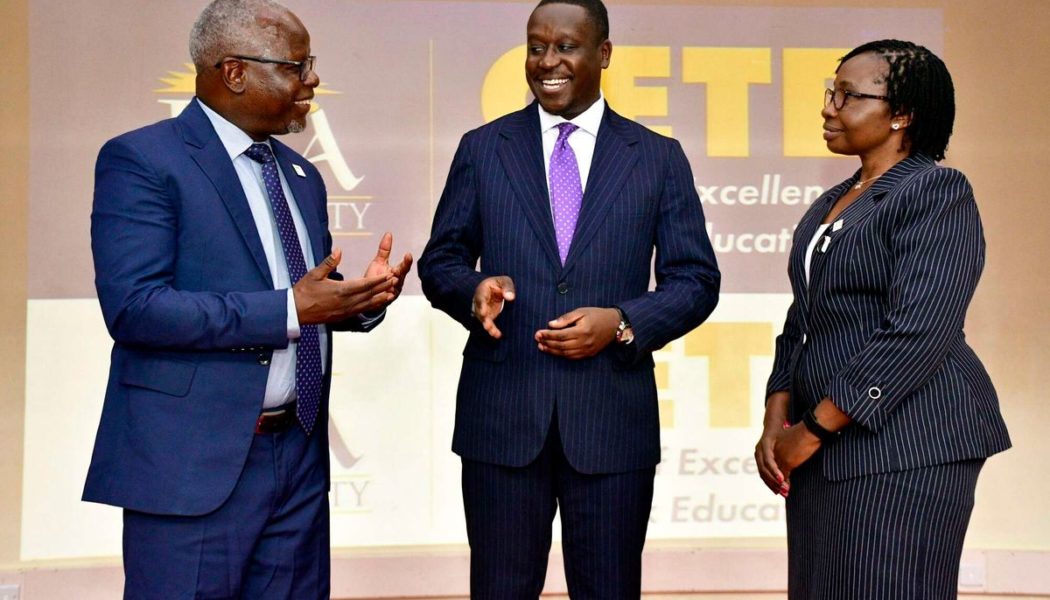
That tension framed discussions at a fiscal policy dialogue hosted by KCA University through its Centre of Excellence in Tax Education (CETE), where speakers examined the implications of the Finance and Appropriations Bills 2026 and what they signal about Kenya’s economic direction.
The forum brought together policymakers, tax practitioners, academics, students and private sector players to interrogate fiscal sustainability, taxation, public expenditure and investment priorities at a time of rising public debt and heightened scrutiny of government spending.
Speaking at the forum, Nairobi International Financial Centre (NIFC) Chief Executive Daniel Mainda said Kenya’s fiscal and regulatory choices must increasingly be understood as signals of Kenya’s economic ambitions, not just revenue tools.
He said Kenya is now competing for capital in a global marketplace that extends far beyond the region.
“Kenya is not only competing with its neighbours. Nairobi today is competing with Dubai, with Singapore, with Mauritius, with Abu Dhabi and increasingly with digital ecosystems that do not care about borders anymore,” he said.
“The countries that will win are not necessarily those with the most capital. They will be those with innovation, institutions and environments where capital feels safe.”
Mr Mainda said the Finance Bill should therefore be read as a blueprint of the kind of economy Kenya is trying to build, particularly as it increasingly engages with digital finance, startups and cross-border investment flows.
He pointed to Kenya’s fintech sector, mobile money ecosystem and startup activity as evidence that the country already has the foundations of a regional innovation hub.
“There is a reason Nairobi continues to attract startups, venture capitalists, regional headquarters, fintech firms and technology companies,” he said. “Every day, young Kenyans are building businesses from laptops, from phones, from co-working spaces and small offices across the city.”
He noted that Kenya remains among Africa’s leading destinations for venture capital and continues to process trillions of shillings annually through mobile money platforms, reflecting a fast-evolving digital economy.
However, economist and public finance expert Dr Patrick Mumo Muinde cautioned that macroeconomic stability must be matched with attention to lived economic realities.
Big numbers
While noting improvements in inflation and a rebound in private sector credit, he warned that headline indicators often mask the strain on households and small businesses.
“We can talk about big numbers and growth projections, but the real question is how these policies affect households, businesses and taxpayers,” he said.
Dr Mumo pointed to fuel price volatility and global economic uncertainty as key risks undermining business planning and investment confidence.
“What investors and businesses need is predictability and stability. If businesses cannot predict their production costs, they cannot accurately determine their margins or plan for growth,” he said.
He argued that the success of the Finance Bill and broader fiscal policy should ultimately be judged by their impact on ordinary citizens.
“The final resting place of every policy is the household and the taxpayer,” he said.
“How does it affect the person selling vegetables? How does it affect the business owner? How does it affect household purchasing power?”
While Mr Mainda emphasised Kenya’s long-term competitiveness and global positioning, Dr Mumo underscored the short-term pressures facing households and enterprises, highlighting a policy tension between growth ambitions and economic relief.
KCA University Vice Chancellor Prof Isaiah Wakindiki said universities are increasingly becoming critical spaces for public policy engagement, bringing together experts, policymakers and young people in structured dialogue.
“How we allocate resources reflects who we are as a society and what we value for tomorrow,” he said.
He noted that such forums help bridge the gap between academic theory and real-world policymaking, especially for students preparing to enter governance, finance and industry.
“Universities exist as an intersection of knowledge and society. We are stewards of inquiry and incubators of solutions that outlive political cycles,” he said.
Prof Wakindiki added that exposure to fiscal debates allows students to understand how policy decisions translate into national outcomes.