
When you think of prestige perfumery, your mind likely trails to the rosy lilts of French fragrance houses or the haute bottled scents from Italian fashion ateliers. But the oft-overlooked United Kingdom—stretching from London’s metropolis to the serene Scottish Highlands—has long stood as a quiet, unshakeable pillar of the fragrance industry. “British perfumery doesn’t shout. It lingers,” says fragrance designer Gustavo Romero, founder of the Fragrance Alliance Network and partner at Team of Two Perfumers.
“Historically, the UK shaped perfumery through structure and ritual rather than spectacle,” he continues. “Its roots lie in grooming culture, apothecaries, barbershops, and tailored elegance—scents meant to belong to the wearer, not perform for an audience.” Essentially, it was daily life that originally inspired the UK palette: the pulling on of leather gloves, the pressing of fabric, the soaps and aftershaves in the bathroom. “If French perfumery is couture, British perfumery is sartorial, focused on fit, proportion, and the quiet confidence of something made to be worn, not displayed,” he adds.

There are legacy perfumeries that have left indelible marks on the fragrance field following centuries of intertwinement with the British royal family, such as Penhaligon’s and Floris, which still thrive today. However, there is a bounty of niche brands influencing the new age of UK fragrance that’s “shaped by global perspectives and personal storytelling rather than by aristocratic heritage alone,” explains Cherry Cheng, founder of London-based brand Jouissance.
Ahead, read our deep dive into the storied perfume houses that have cemented the UK’s place as a steadfast fragrance destination and the niche brands carving a modern, more inclusive chapter.
Legacy Brands
“What makes many UK fragrance houses feel distinctly British isn’t a specific formula or signature note; it’s temperament,” explains Romero. “Brands like Penhaligon’s, Floris, and Ormonde Jayne tend to value pacing and proportion over drama. Their fragrances rarely rush to make a point. They unfold gradually, revealing themselves in layers rather than with a headline-grabbing opening.”
Fragrance-making in the UK originally had medicinal roots and eventually expanded into the aesthetic realm to mask bodily odor. Its origins in functionality over fashion influenced the way legacy brands approached perfume-making for years, but by the 19th century, fragrance had blossomed into a status symbol—with the royal family awarding prestigious Royal Warrants to select brands. But it wasn’t about the brand certain scents came from. It was about the people and places influencing them.

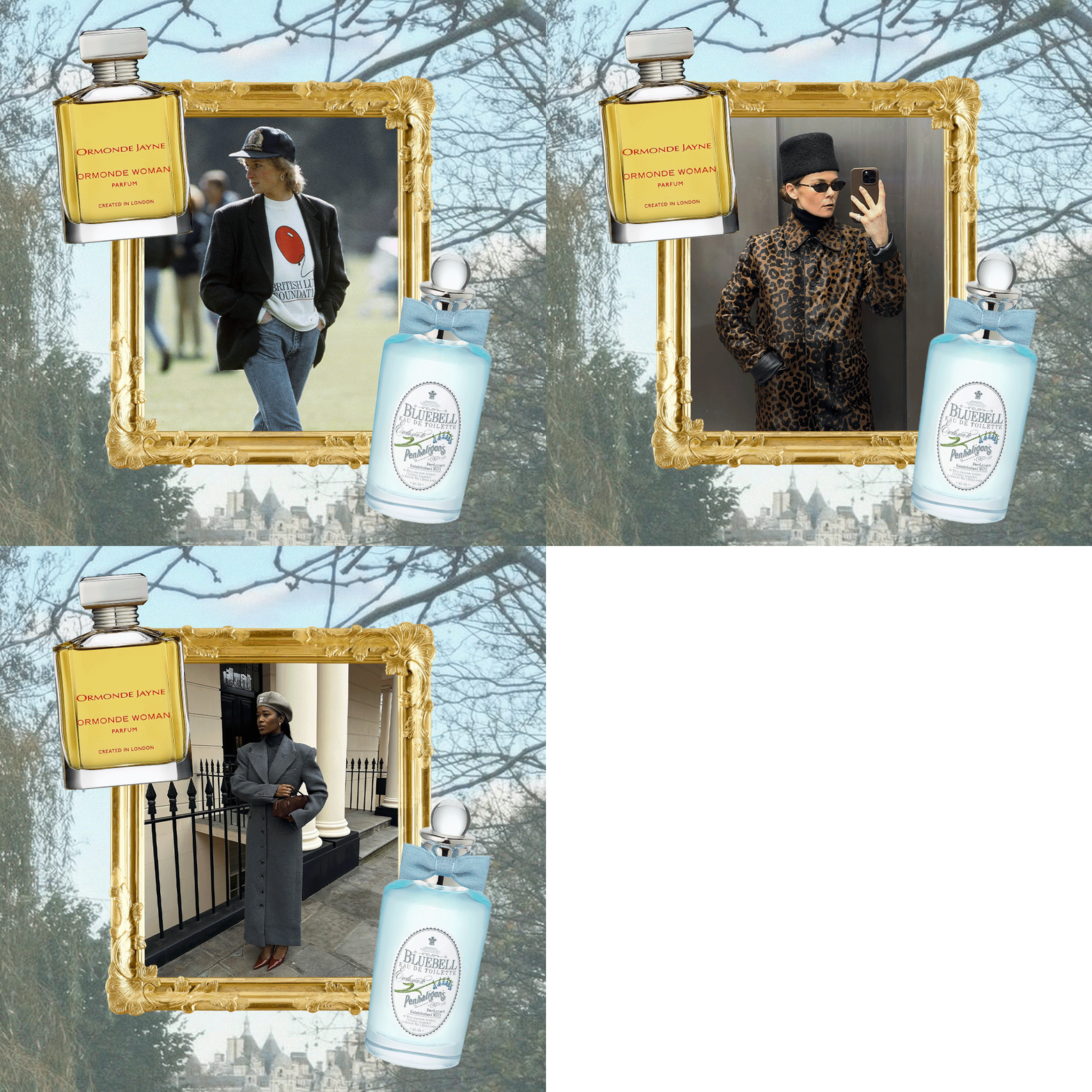
(Image credit: Tim Graham Photo Library via Getty Images)
“From writers and artists to members of the royal family, British perfumery has long been shaped by the personalities who wore, commissioned, or inspired these scents—figures such as Oscar Wilde or Princess Diana,” explains Cheng. “Cultural icons become natural ambassadors for prestige brands, lending fragrance a human and emotional context rather than simply a commercial one.”
The contents of British fragrances also reflect this notion. “Woods, herbs, leathers, resins, and natural florals are favored over decorative excess,” explains Romero. “Even richness is handled with restraint: Roses are rarely jammy, oud is controlled rather than bombastic, and lavender is nuanced instead of nostalgic. Nothing feels overworked.”
However, British noses are far from the only ones shaping the UK’s sensorial climate. “Scottish and Northern [Irish] influences add another dimension altogether—more austere, more atmospheric,” Romero adds. “You see smoke, peat, salt air, moss, and mineral woods. These scents often feel shaped by weather and landscape rather than ornament.” In general, legacy UK houses approach scent like an extension of self: “confident, composed, and never in a hurry to announce itself,” says Romero.

Legacy Brands to Shop
Penhaligon’s

Penhaligon’s
Bluebell Eau de Toilette
Famous for crafting scents with and being popularized by the royal family, Penhaligon’s has been concocting rich, refined fragrances since 1870. Princess Diana is often associated with Bluebell, which is marked by citrus and floral notes inspired by spring showers.
Floris

Floris
White Rose
“For me, a ‘royal’ scent is usually fresh, polite, prim and proper florals—something elegant and understated,” says Cheng. “Think Floris White Rose, worn by Queen Elizabeth II on her wedding day.”
Jo Malone

Jo Malone
Orange Blossom Cologne
Founded in 1990, the London-born fragrance brand Jo Malone quickly ascended to legendary status with its enthralling assortment of refined scents. The brand was one of the first to popularize scent stacking, a trend that is very much coming back ahead of 2026. Cheng also lauds Orange Blossom as a royal scent, as Kate Middleton, Princess of Wales, is a known fan.
Ormonde Jayne

Ormonde Jayne
Woman Parfum
Another newer legacy-building brand is Ormonde Jayne. “When I want something cleaner and more contemporary, Ormonde Jayne stands out,” says Romero. “Ormonde Man and Ormonde Woman are great examples of clarity paired with confidence.”
Roja Dove Perfumery

Roja Dove Perfumery
Elysium Pour Femme Eau de Parfum
“Roja Dove represents opulence grounded in classical technique. Even when the fragrances are extravagant, the craftsmanship is unmistakable,” says Romero.
Niche, New-Age Brands
“Beyond heritage houses, the UK is experiencing a real renaissance in home-grown fragrance brands and perfumers,” say publicists Charlie-James Taylor and Shannon Travis, cofounders of 1996Comms. The modern UK-based perfume scene is a kaleidoscope of cultures, twisting the historical structure of heritage fragrance into something more abstract and, well, interesting.
“New and independent brands are redefining what British fragrance can be, including our own work, which draws inspiration from French literary icons as well as brands like Gabar and Maya Njie, both deeply rooted in the founders’ personal cultural histories,” explains Cheng. “Together, these voices show how British perfumery has moved from inherited tradition toward a more inclusive, plural, and creatively expansive identity.”

Niche Brands to Shop
Gabar

Gabar
No. II Ground Eau de Parfum
“Brands like Gabar, based in London but shaped by Burmese heritage, point toward where British niche perfumery is heading: more global, more introspective, and less bound by traditional luxury codes,” muses Romero. “I’ve been closely involved in creating a couple of Gabar’s fragrances, which gives me a firsthand view of how intentionally and thoughtfully these newer brands are operating. Together, they show a UK scene that spans classic to experimental, restrained to opulent, without losing its identity.”
Jorum Studio

JORUM STUDIO
Trimerous Eau de Parfum
“Jorum Studio in Scotland works through texture and atmosphere, often evoking place and weather rather than narrative,” Romero remarks. “When I’m drawn to something moodier or more introspective, I tend to look north toward Jorum Studio or darker British houses like BeauFort London, where scent becomes texture, weather, and space.”
Perfumer H

Perfumer H
Leather Eau de Parfum
“In many ways, Perfumer H feels like one of the most authentic, purest fragrance brands. The scents speak entirely for themselves without leaning heavily on story or association,” says Cheng.
“Founded by Lyn Harris, one of Britain’s most respected perfumers, the house is widely celebrated for its intellectual, minimalist approach to fragrance,” Taylor and Travis add. “The fragrances feel refined yet quietly experimental, often built around a single idea or raw material and expressed with exceptional clarity. It’s this balance of classical discipline and modern creativity that makes the brand feel timeless.”
Kingdom Scotland

Kingdom Scotland
Kingdom Botanica Eau de Parfum
“Another brand firmly on our radar is Kingdom Scotland, a fragrance house that handcrafts its scents in Scotland,” say Taylor and Travis. “The brand collaborated with the Royal Botanic Garden Edinburgh on Kingdom Botanica, a scent that captures both botanical heritage and modern craftsmanship.”
Jouissance

Jouissance
En Plein Air Eau de Parfum
Founded by Cheng under the trance of literary erotica, Jouissance is a celebration of feminine sexuality. “People often mistake us for French, but—like Jane Birkin—we’re unmistakably British,” says Cheng of her fragrances. “I’d like to think of us as the cool British girl with a touch of French chic.”
Miller Harris

Miller Harris
Hydra Figue Eau de Parfum
“Miller Harris offers a refined, modern approach to wearability, often grounded in naturalistic materials and quiet elegance,” says Romero. Founded in 2000—also by Lyn Harris—the sustainable brand builds rich olfactory stories out of natural ingredients.