

Anna Wanjiru did not start her bakery to make money. It was her way of dealing with her child’s medical condition.
“My daughter was diagnosed with severe eczema in 2018, when she was about two years old. One of the things the doctor recommended was removing gluten from her diet,” says the 38-year-old mother of three.
“When I did some research, I found out that this would mean cutting out treats such as chapati, biscuits, toast and cake. I kept wondering: what would I do on her birthdays?”
It was this question that set Anna on a path of exploring and experimenting with gluten-free options.
“I wasn’t going to let my daughter miss out on life,” she says. “So I joined an online school and took a course in culinary nutrition.”
The course also helped her pursue a personal goal of embracing healthier eating without feeling like her options were limited.
“I gained a lot of knowledge on how to work with different ingredients and create healthy, appealing and delicious food,” she says. “After I was certified, I started experimenting with different flour combinations, searching for one that behaved like wheat.”
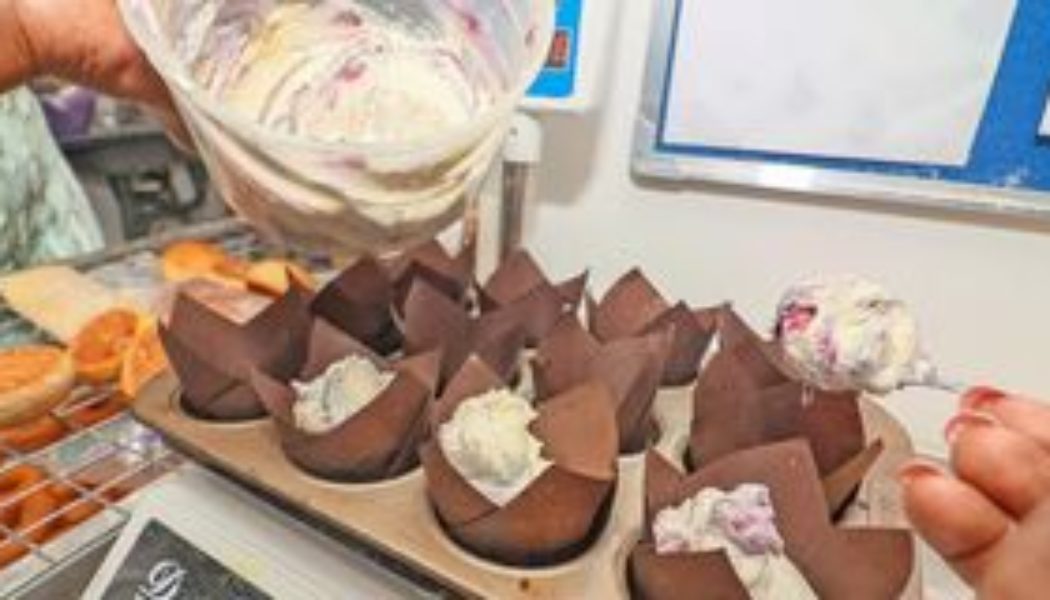
Freshly baked gluten-free muffins displayed at Homechef Bakery and Café at Gigiri Box Park in Nairobi on May 22, 2026.
Photo credit: Wilfred Nyangaresi | Nation Media Group
She explains that gluten acts as the natural glue that holds dough together, giving wheat its stretch and structure. However, replicating that quality proved challenging. Anna kept searching because most combinations required the addition of xanthan gum, a binding agent, but this can cause stomach irritation in some people. It took her about three years of trial and error to come up with the right mixture.
“I discovered that Indians often fast from gluten, yet they still make foods like naan and roti,” she says. “I was curious about how they managed that, and that’s how I found the perfect mixture.”
She says that a blended combination of amaranth, tapioca, and water chestnut closely mimics the behaviour of wheat. The breakthrough made her so excited that she didn’t hesitate to open a bakery straight away.
“I had tried it at home, and we were eating everything from chapati to cinnamon buns and cake,” she says. “I quickly wanted to share these options with others who had the same dietary restrictions.”
However, she didn’t anticipate the level of demand.
“We started getting orders from outside Nairobi. But, as you can imagine, when you ship doughnuts or chapati all the way to Kisumu, they’re not in the best condition by the time they arrive,” she says.
Anna shut down all operations and went back to the drawing board when she saw that the model was not immediately scalable. This was in 2021. With a broader customer base in mind, she decided to focus on one core product: gluten-free all-purpose flour.
“I concentrated on perfecting the flour’s consistency and getting the right suppliers, as well as its packaging,” she says. “It is particularly sensitive to moisture in the air, so if you leave it out, it can start to clump together.”
Today, Homechef’s gluten-free flour is packaged in waterproof 500-gramme packs designed to preserve freshness for about two years and easy to transport. Each pack retails at Sh395.
However, flour is not the only product that Homechef offers. In 2024, Anna returned to the bakery business, initially operating from home before securing a dedicated space in July 2025. Despite having never sold it before, she also introduced gluten-free bread to her menu.
“The demand shocked us again,” she says. “People started asking for variety, so we introduced different types of bread, cakes, and muffins.”
As the range of products expanded, the space quickly became too small. After only six months, the business relocated to its current premises in Gigiri. What started with just two employees has grown into a bakery and café with 10 staff, offering more than 40 gluten-free products, as well as vegan and sugar-free options.

Gluten-free donuts displayed at Homechef Bakery and Café at Gigiri Box Park in Nairobi on May 22, 2026.
Photo credit: Wilfred Nyangaresi | Nation Media Group
The majority of their ingredients are locally sourced and natural, except for the water chestnut used in the flour blend, which is imported from Asia because it is not grown locally.
Customers include families with one or more members who have dietary restrictions, young health-conscious consumers, and businesses such as health stores, restaurants and a regional airline caterer.
“Mothers are our biggest customers because they tend to have a similar story to mine, and they feel understood,” says Anna, adding that their best-selling product is the sandwich bread, which retails at Sh650. “Businesses mostly buy the flour from us so they can offer healthier options to their clients, although some also purchase the bread.”
Homechef sells about four to five tonnes of gluten-free flour per month for its core product. This figure is a combination of sales from their online platform, the bakery and stockists spread across the country, as well as a few in Uganda and Tanzania. However, while the revenue is enough to cover overheads, Anna is cautious about describing the business as profitable.
“I have invested around Sh4 million into it so far, and I keep reinvesting more,” she says. “Setting up and maintaining the standards for a fully gluten-free commercial kitchen is quite costly. But as a category leader, you’re also constantly investing in ways to improve and expand.”
However, behind Homechef’s growth story lies a set of challenges.
“Initially, it was education,” says Anna. “A lot of people just knew that when they ate certain foods, they would feel unwell. They didn’t know that they needed to avoid gluten altogether. They certainly didn’t know about alternative options. So we had to start by educating the market.”
The business used social media to address this issue, sharing information and raising awareness. Anna says that this approach also helped them to secure their first clients and has been a key driver of sales so far.
Another major challenge has been securing capital for expansion.
“Many customers, including foreigners from around Africa and beyond, tell us that what we offer either does not exist in their countries or is simply not of the same standard,” says Anna. “It’s not easy to get bread that tastes like wheat yet is not wheat, but we have that expertise. However, we still haven’t been able to meet demand, even here in Kenya, fully.”
She says the main reason for this is the difficulty in finding the right partners. These are people who are committed to producing real food without additives and maintaining the required standards.
“We don’t have to be the only company in this field, and it would be great if we could receive support to serve customers who really need this product,” she says. “Since relocating to our current location, for example, we have seen demand grow by about 30 per cent every month.”
The constant rise in taxation has also presented a hurdle for Homechef, particularly with regard to pricing.
“Most of our customers do not buy these products out of luxury, but necessity,” she says. “So, while I consider all the work that goes into our products, I also consider how expensive it can be to cater to the needs of someone who requires specialised care when setting prices. That is why we didn’t change the price of our flour for such a long time. It’s only recently that we have adjusted it slightly due to the cost of fuel.”
Throughout her journey, Anna says she has learned the importance of reading the small print, asking questions and not making any decisions in haste.
“I have signed one or two agreements, including verbal ones, that have really set me back in business,” she says. “I’ve also realised that whenever I rush into something, I end up getting burned, so I’ve become more patient.”

Gluten-free butter croissants, pain au chocolat, and raisin cinnamon rolls displayed at Homechef Bakery and Café at Gigiri Box Park in Nairobi on May 22, 2026.
Photo credit: Wilfred Nyangaresi | Nation Media Group
In the near future, Homechef plans to introduce a five kilogramme pack of flour for businesses. Looking further ahead, Anna’s goal is not only to grow the customer base, but also to make Homechef more accessible.
“Even here in Gigiri, there are still so many people who don’t know about us,” she explains. “At the same time, there are people who drive all the way from Lang’ata or place orders and pay high delivery fees, so we are looking to open a second bakery.”
She also plans to partner with a hospital and certain communities, such as those supporting children on the autism spectrum.
While Anna enjoys having the café because it allows people to sample products before buying them, she also appreciates the opportunity to interact with her community. Ultimately, however, her dream is to set up a large production-only kitchen.