

“Two-Car Solution” (noun): the possession of two vehicles in one garage, one with daily drivability, and the other prioritizing fun and track driving.
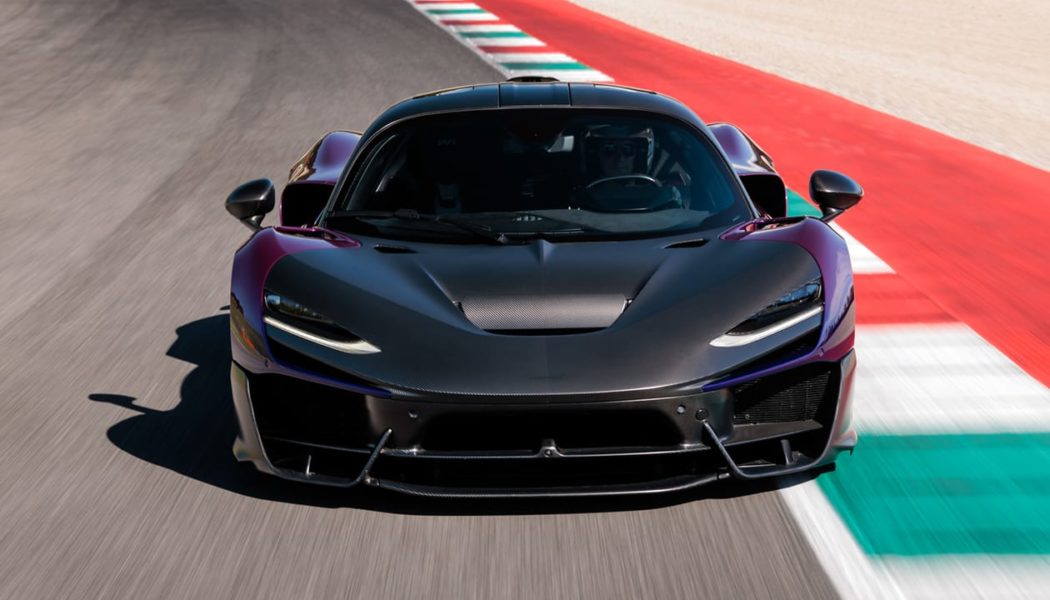
This is the ultimate setup. But could one supercar achieve both? Largely no, and we’re in no way saying that this is a review of a daily-able track monster, but the McLaren W1 has a bit of this philosophy in its DNA.
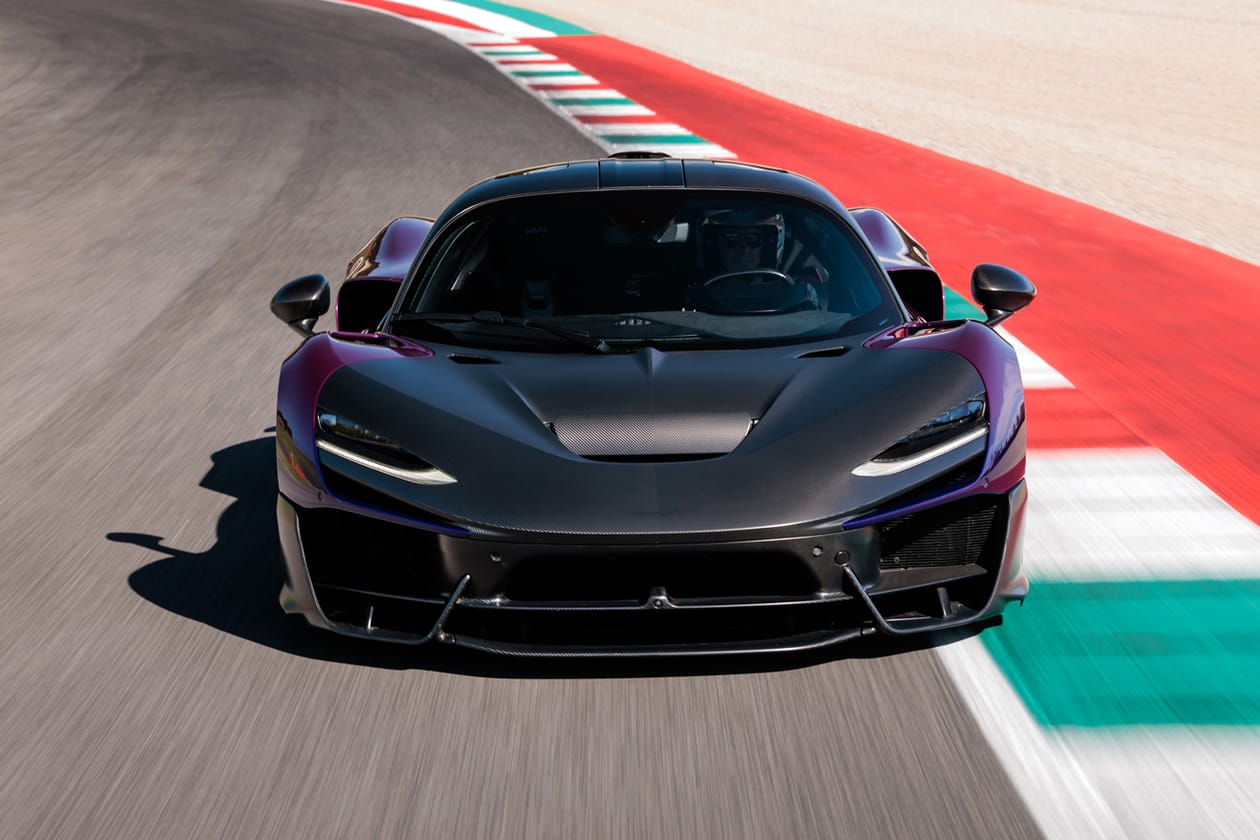
We were invited to a private press trip to Florence, Italy for a first-drive of the all-new McLaren W1 over the course of a weekend. The time allowed for both track time at the MotoGP-favored Mugello Circuit, and road-driving through the streets of Tuscany, to experience everything it had to offer. We toyed around with its suspension settings, unleashed its power, gazed at its idiosyncrasies, and marveled at its aerodynamics.
But, like its dual personality, we ended the adventure being a bit divisive on the W1.
Mclaren
Mclaren
Mclaren
Mclaren
Mclaren
Mclaren
Mclaren
Mclaren
Mclaren
Mclaren
Mclaren
Mclaren
Mclaren
Mclaren
Mclaren
Mclaren
Mclaren
As a Track Car
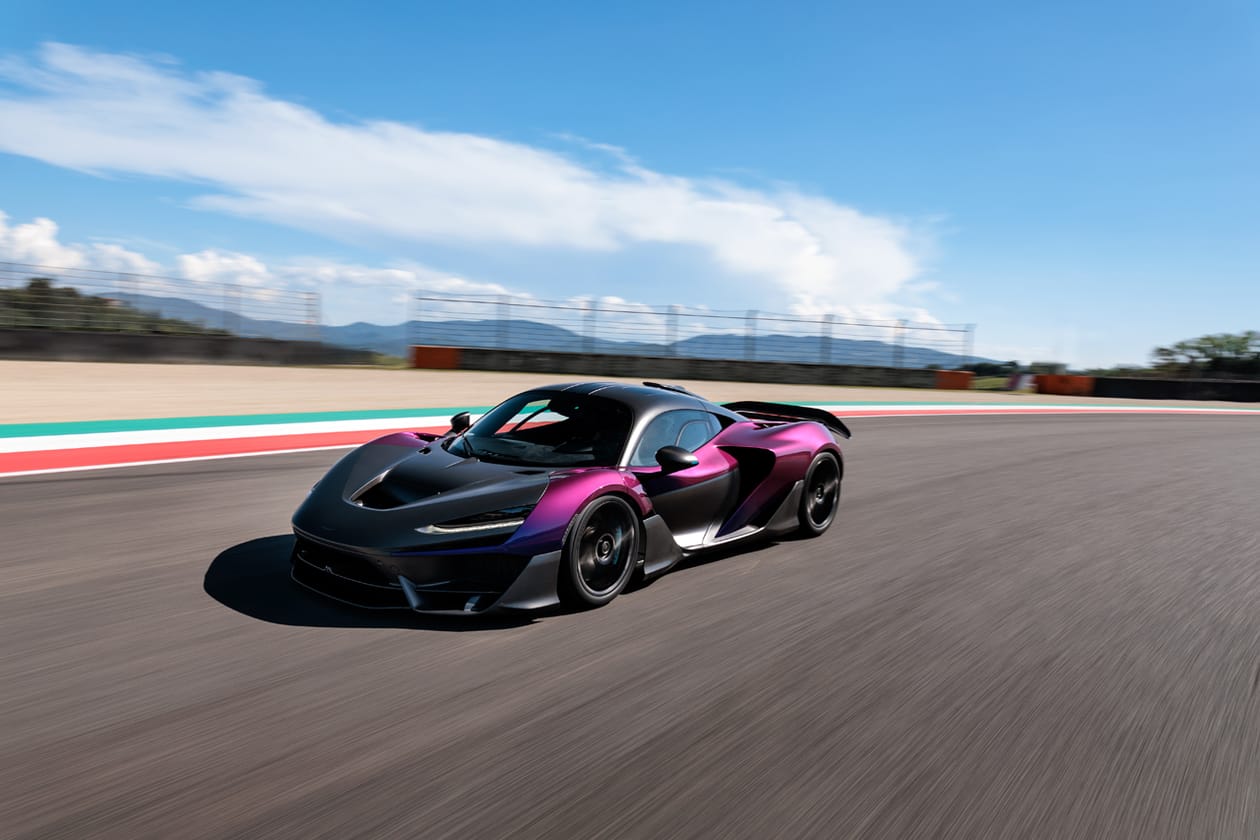
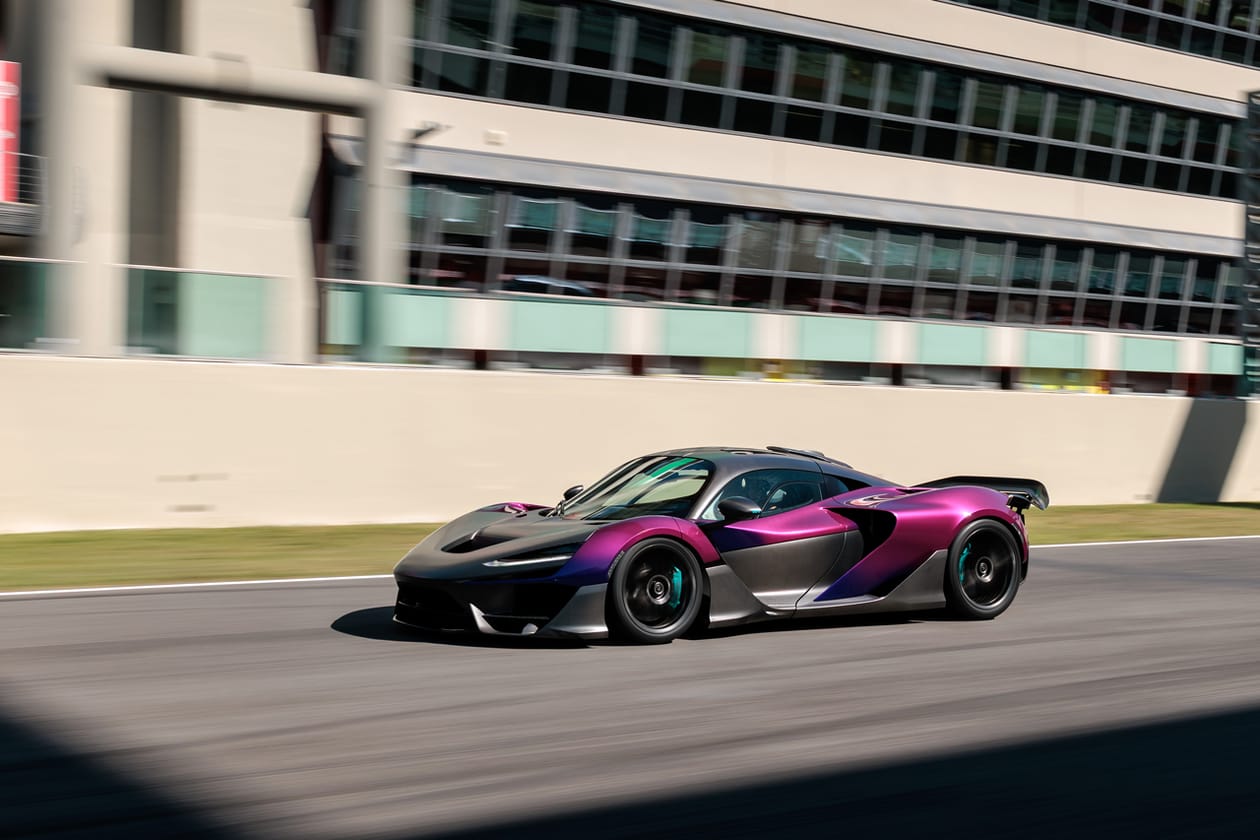
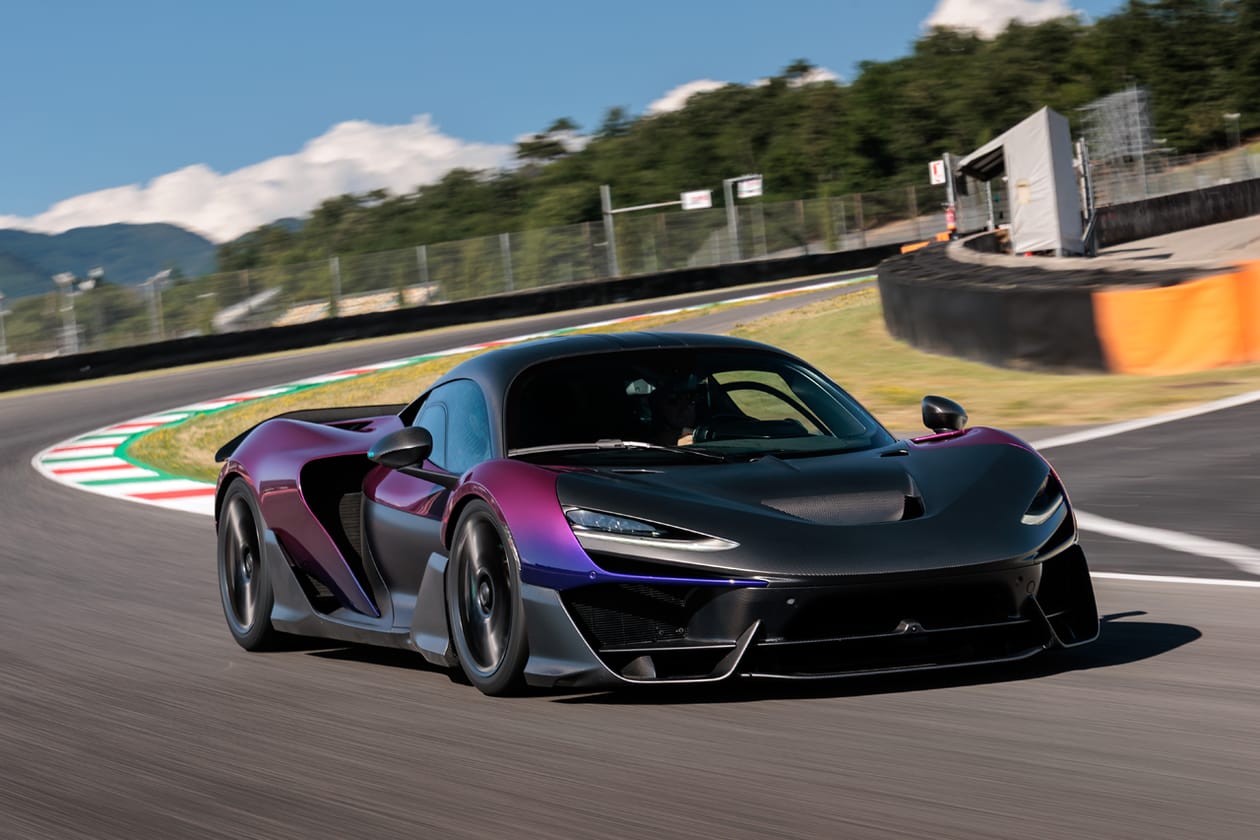
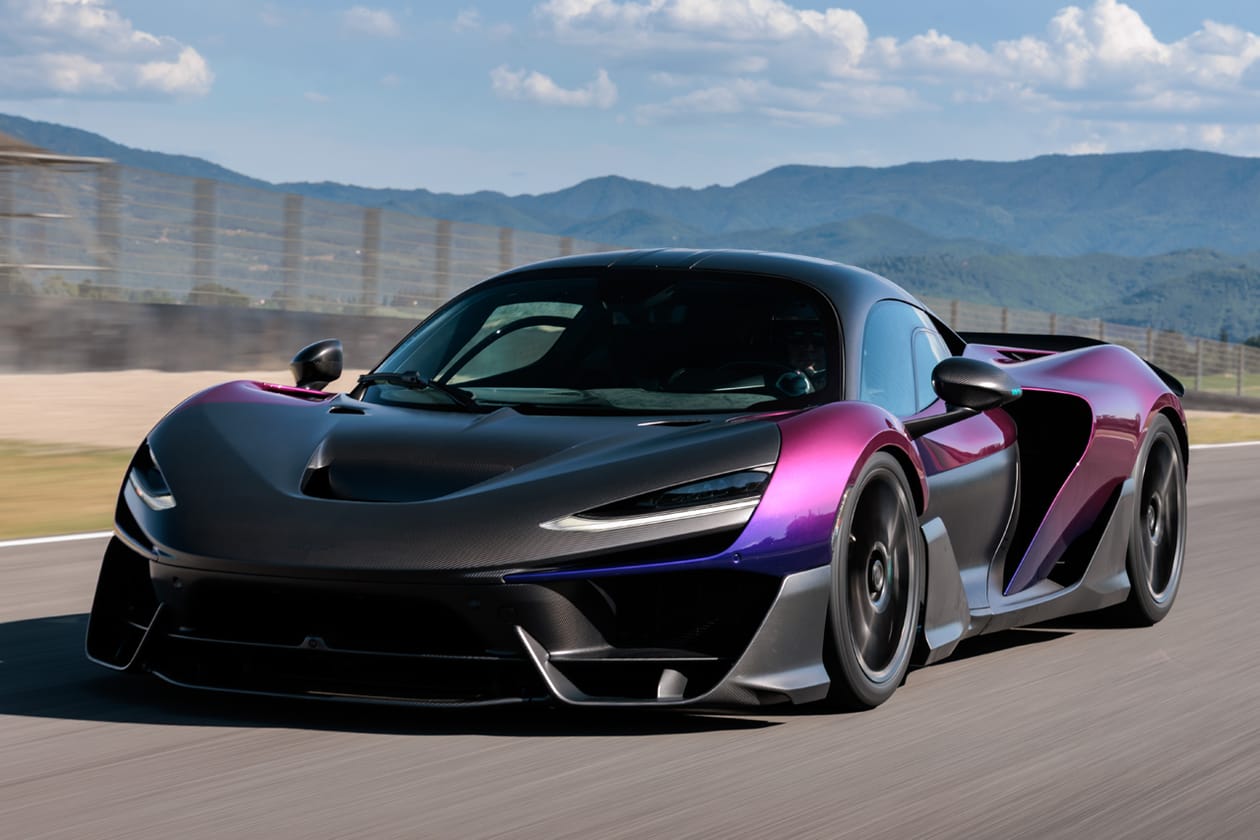
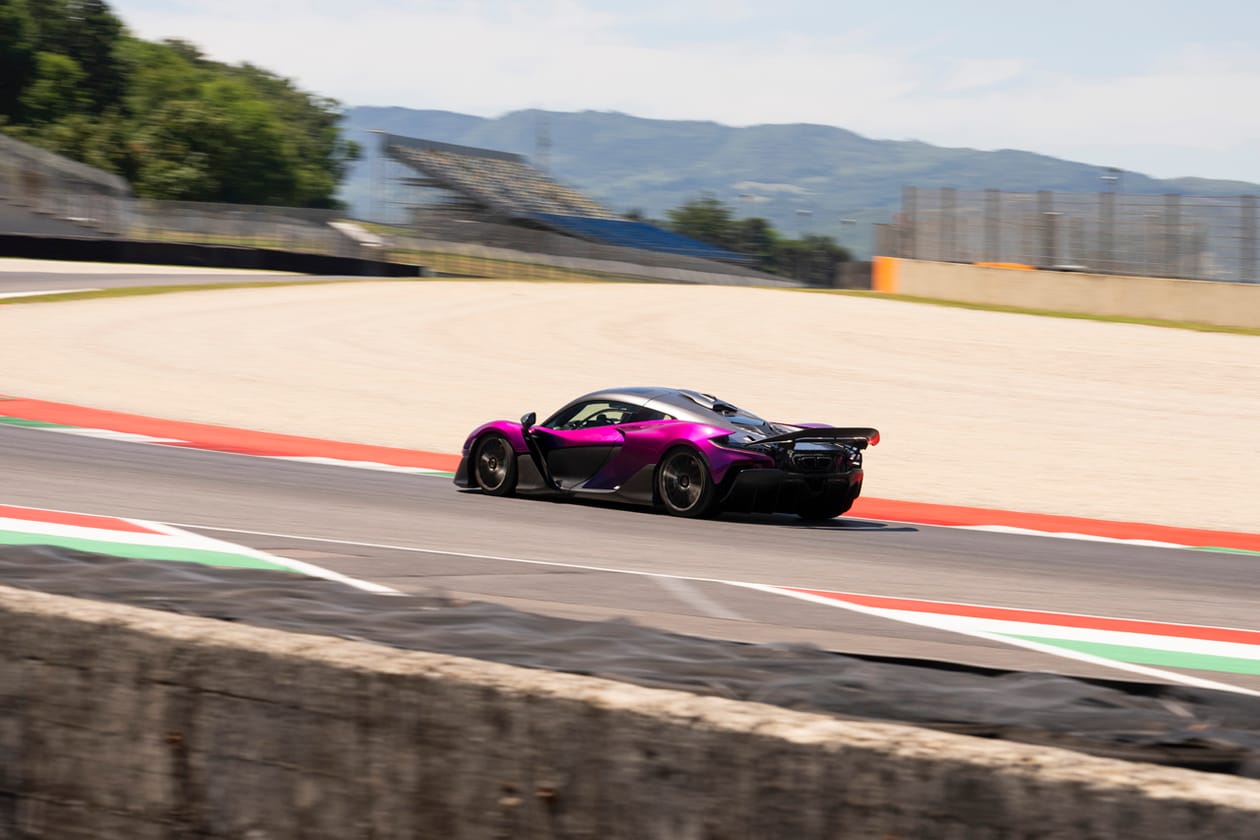
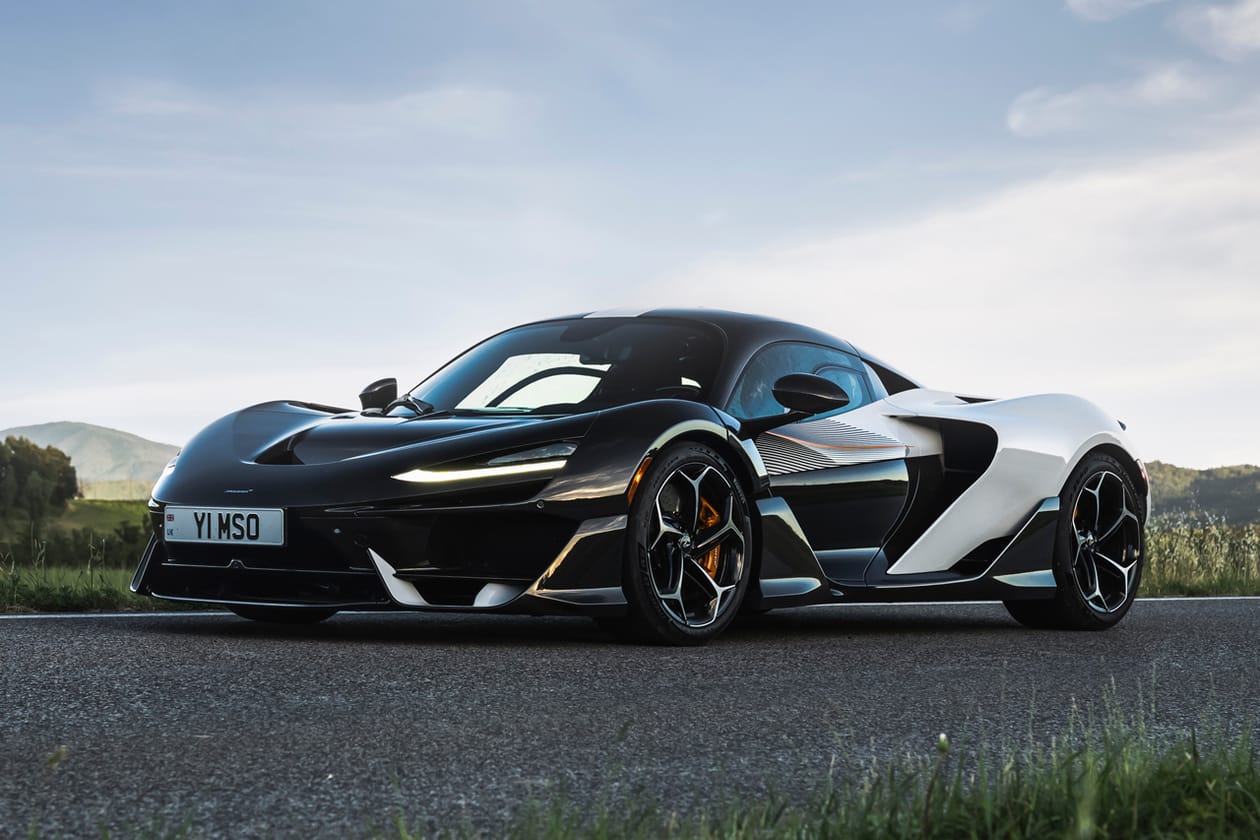
We’ll focus first on track performance. The W1 definitely has the credentials to back it up in the “arena” of circuit racing: 1,258 hp max hybrid powertrain, an Aerocell carbon fiber monocoque, a power-to-weight ratio of 899 hp per ton. The numbers can come off a bit like digit-soup, but pro racers, track drivers and the mathematically-included rely heavily on these attributes, so McLaren delivers. For us however, what really stood out with the W1 on the track was its aero.
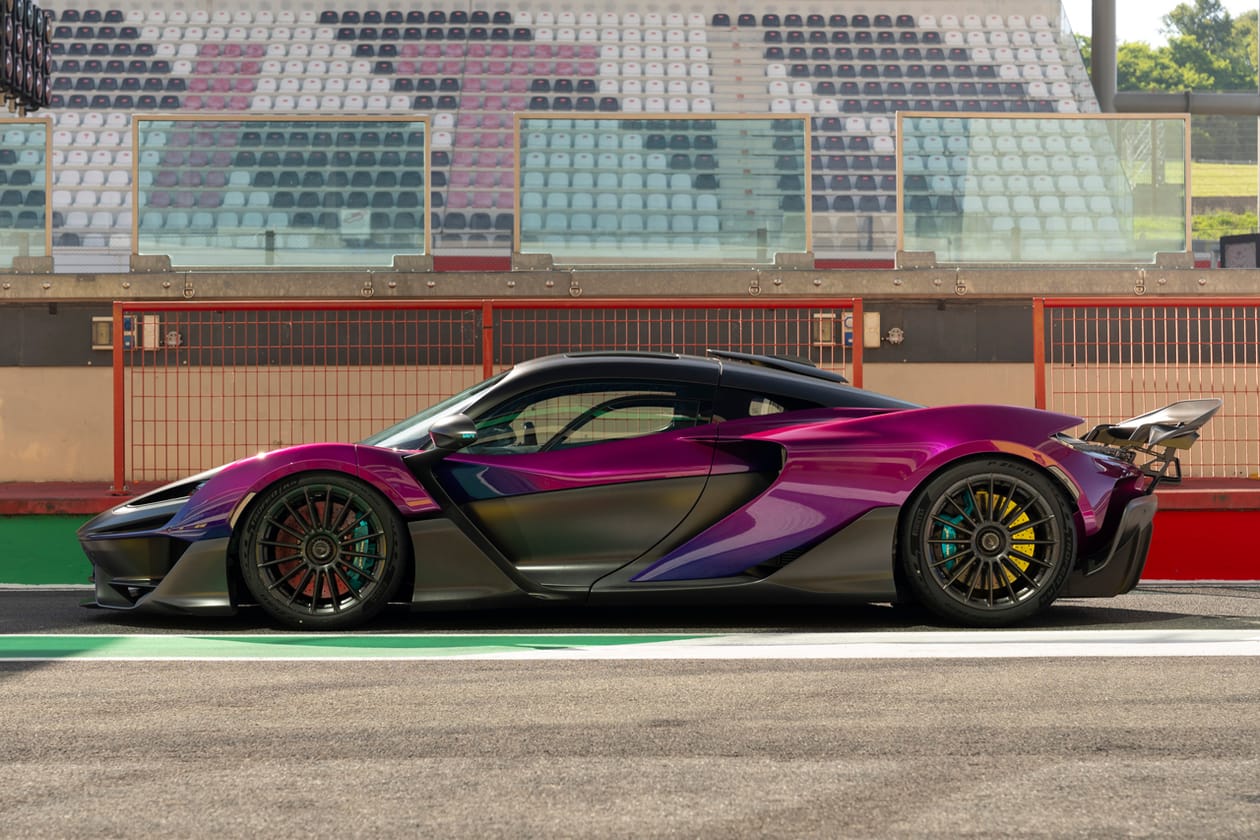
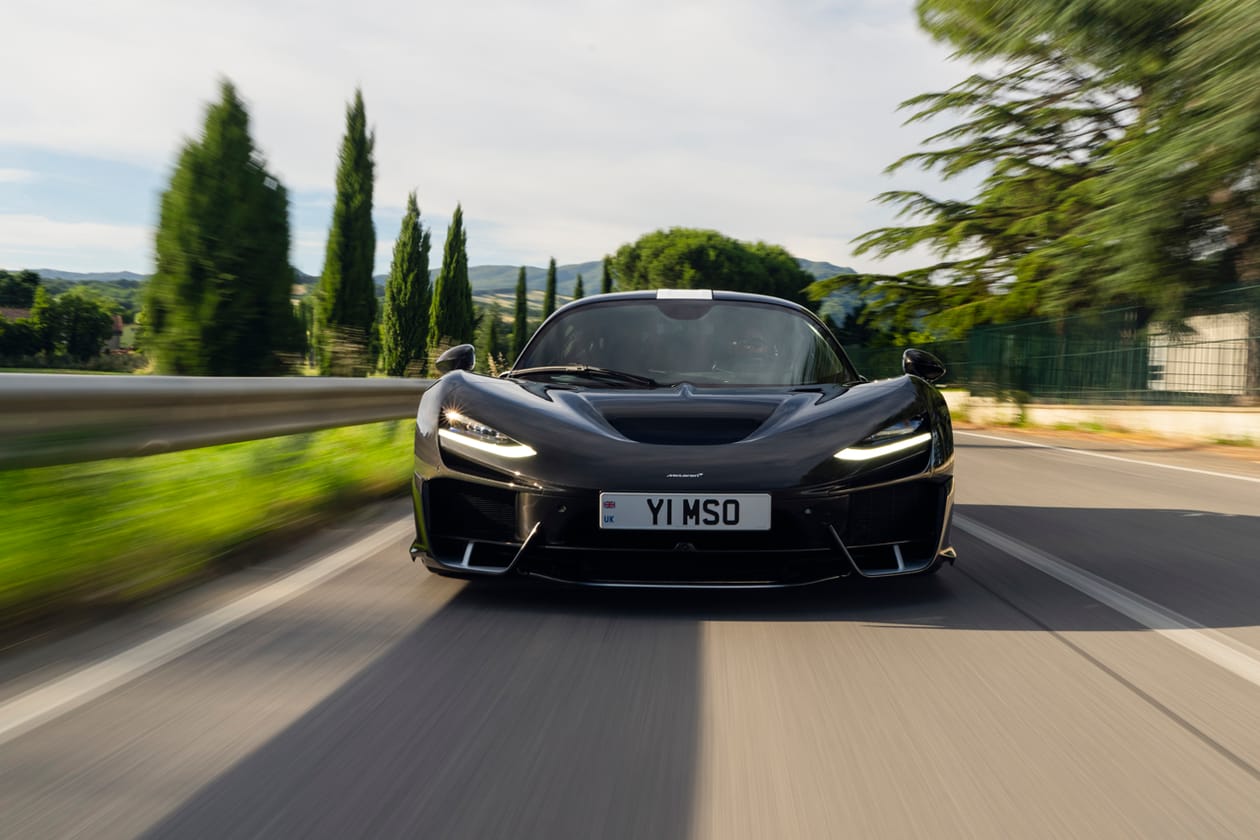
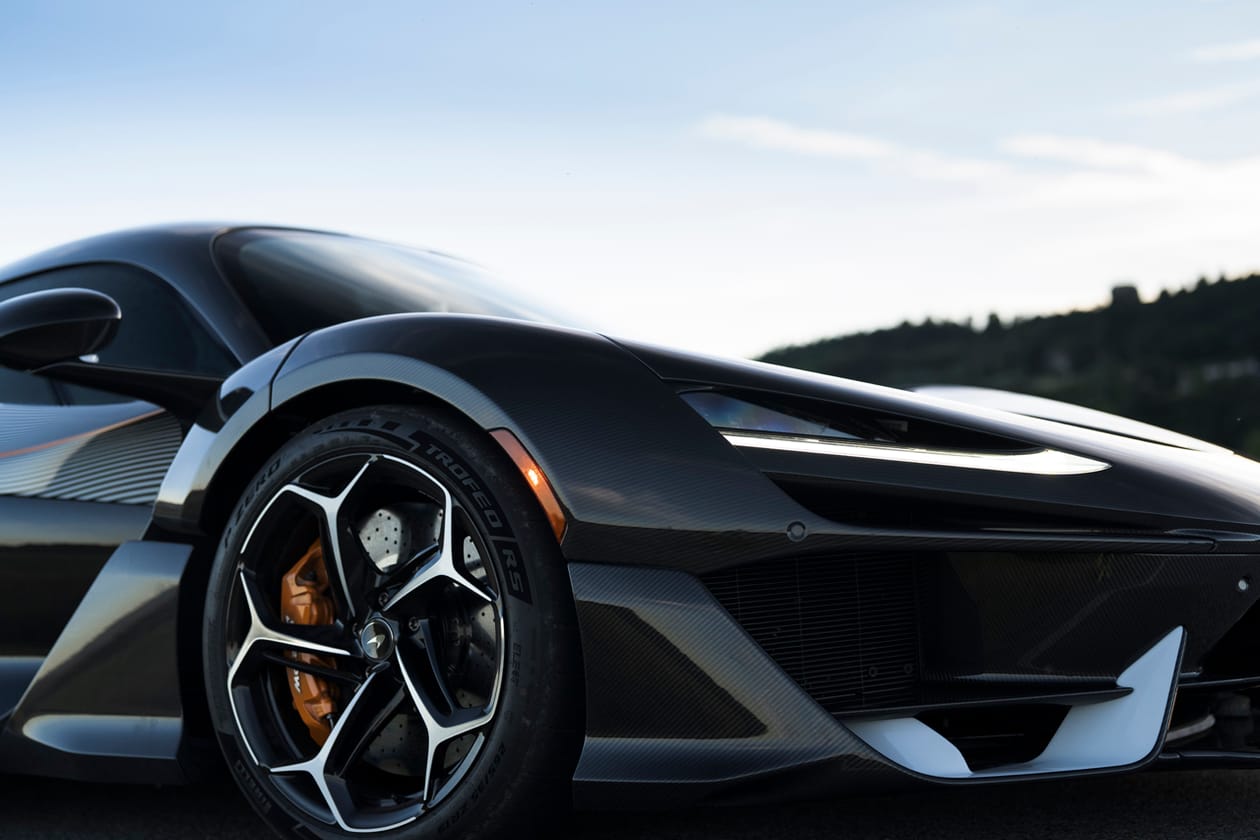
McLaren has developed a lot in the aerodynamics department for the W1. Its front splitter for example extends from the entire width of the car, providing downforce at high speed and actually actively deploying at speed. Seeing it function was very much like an engineering marvel, lowering at the push of a “Race” button. McLaren executives explained this mechanic by the way; the W1 is equipped with on-board GPS that detects a race track, and therefore allows the car to be “race-prepped” with its aero and unlocking the car’s full potential of power. Since we were at Mugello Circuit in FLorence, Italy, “showing off in Race Mode” while parked wasn’t completely necessary. In total, the front splitter moves 11º, downward at high speeds and upward during hard braking.
Mclaren
Mclaren
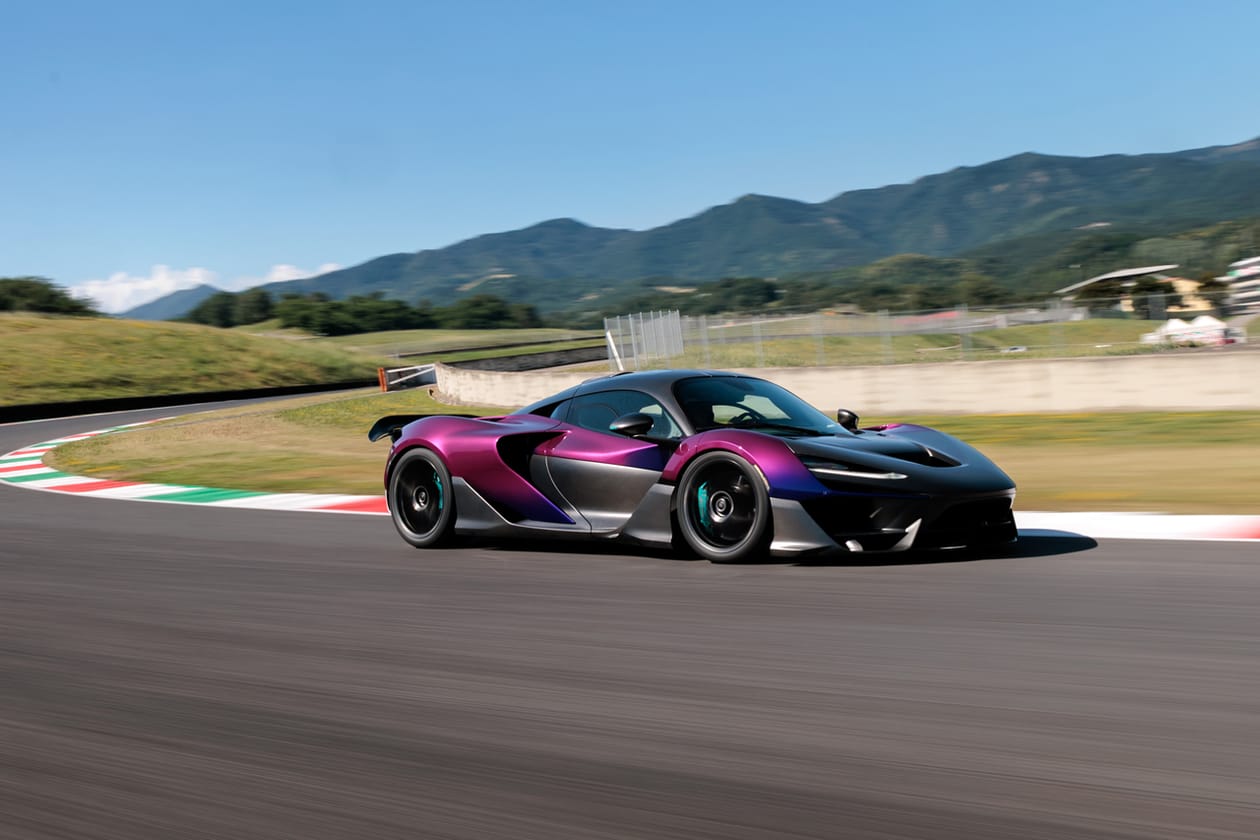
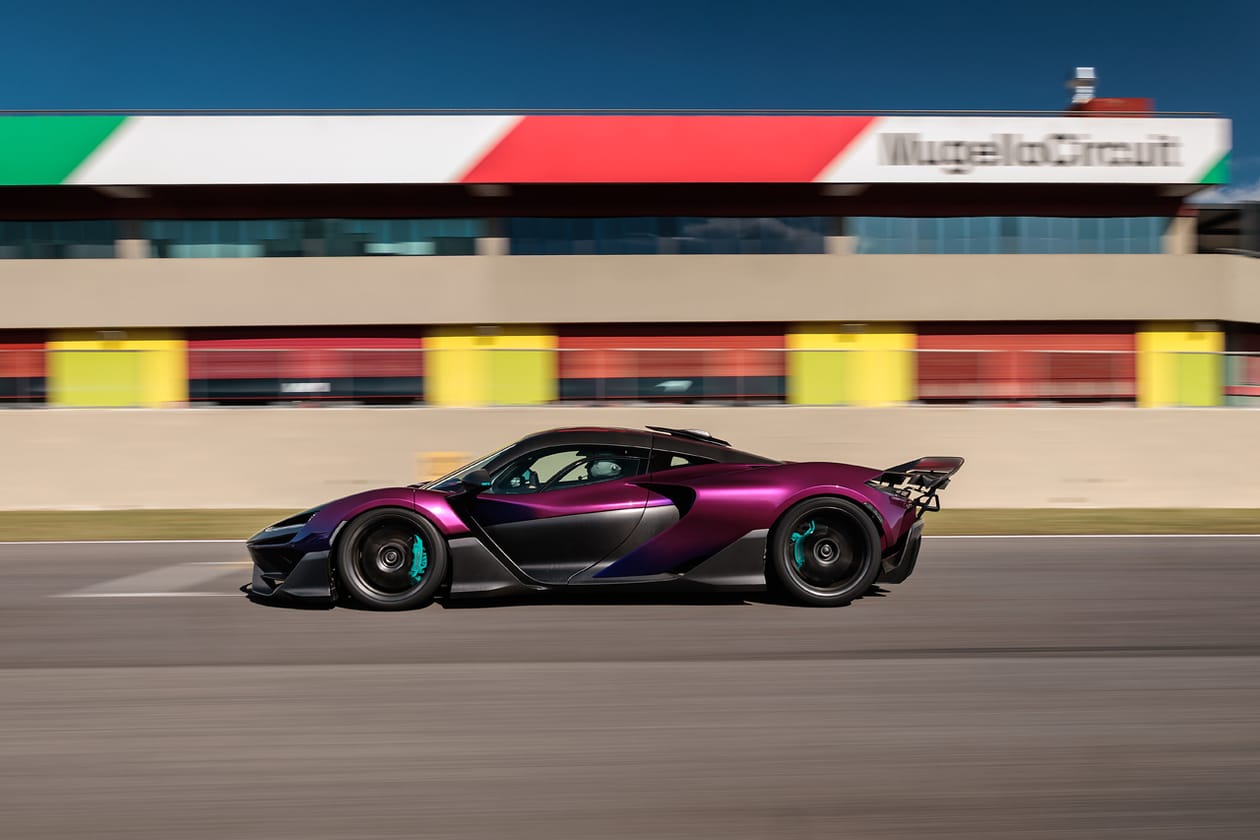
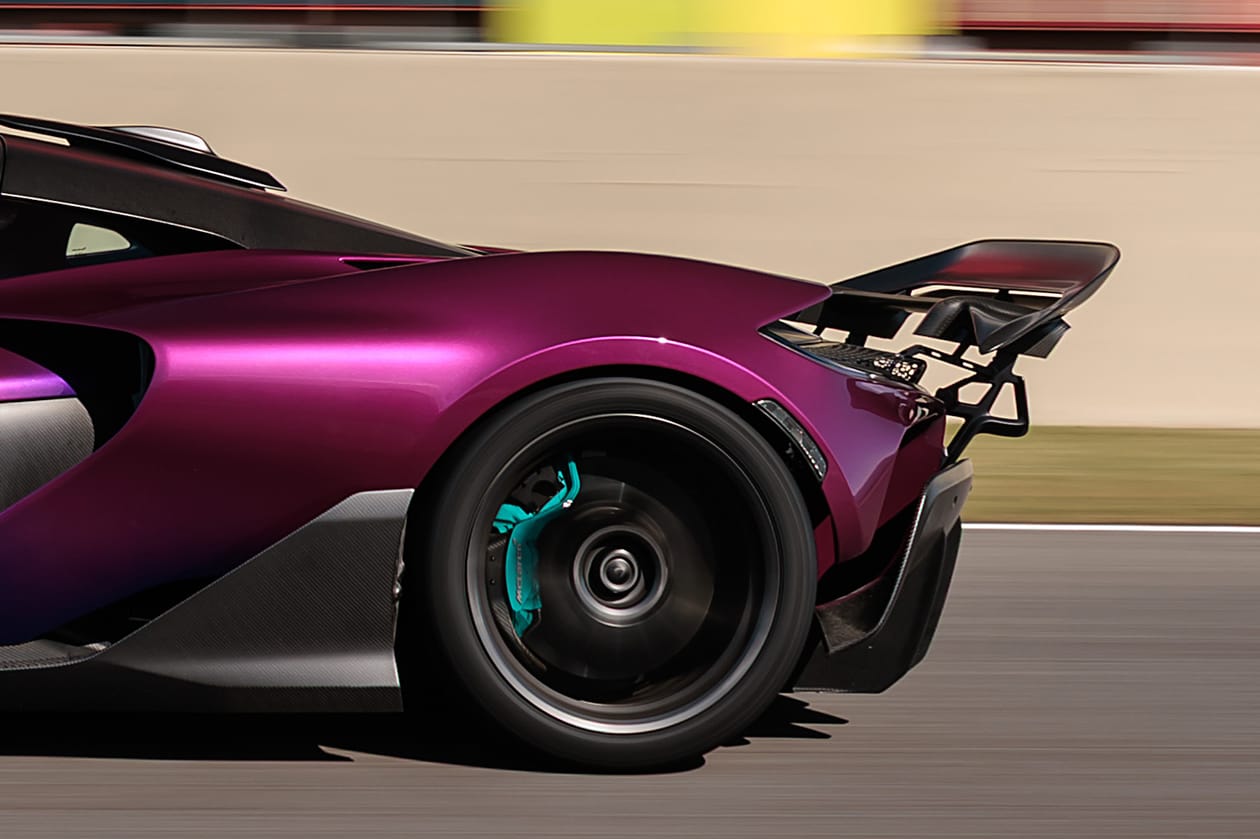
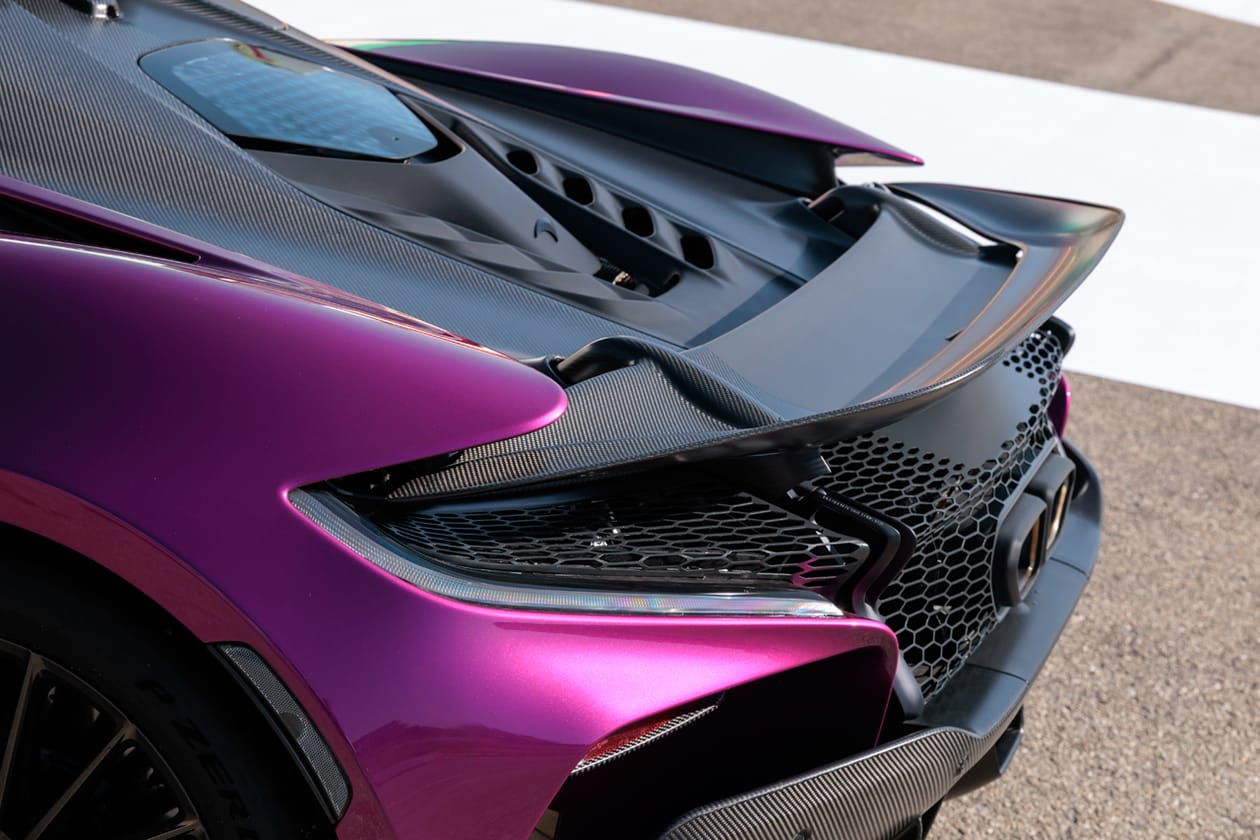
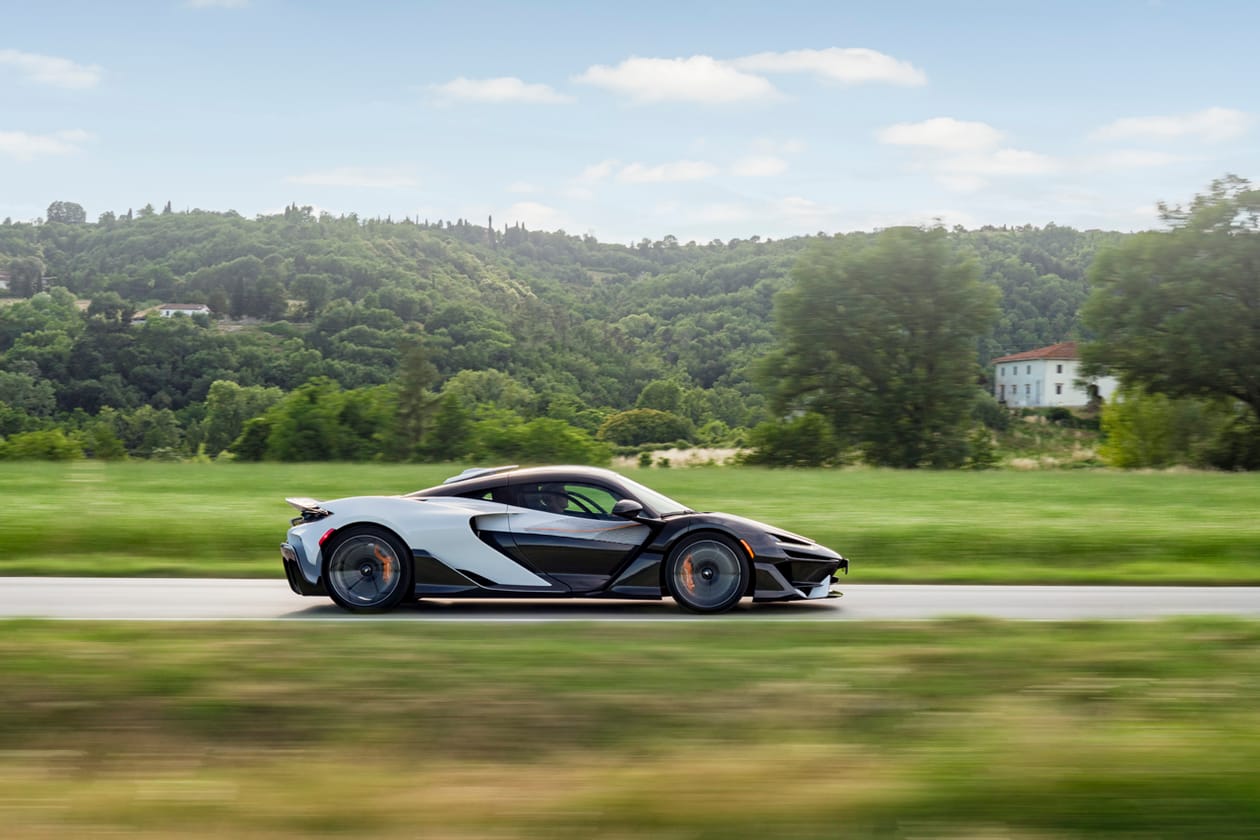
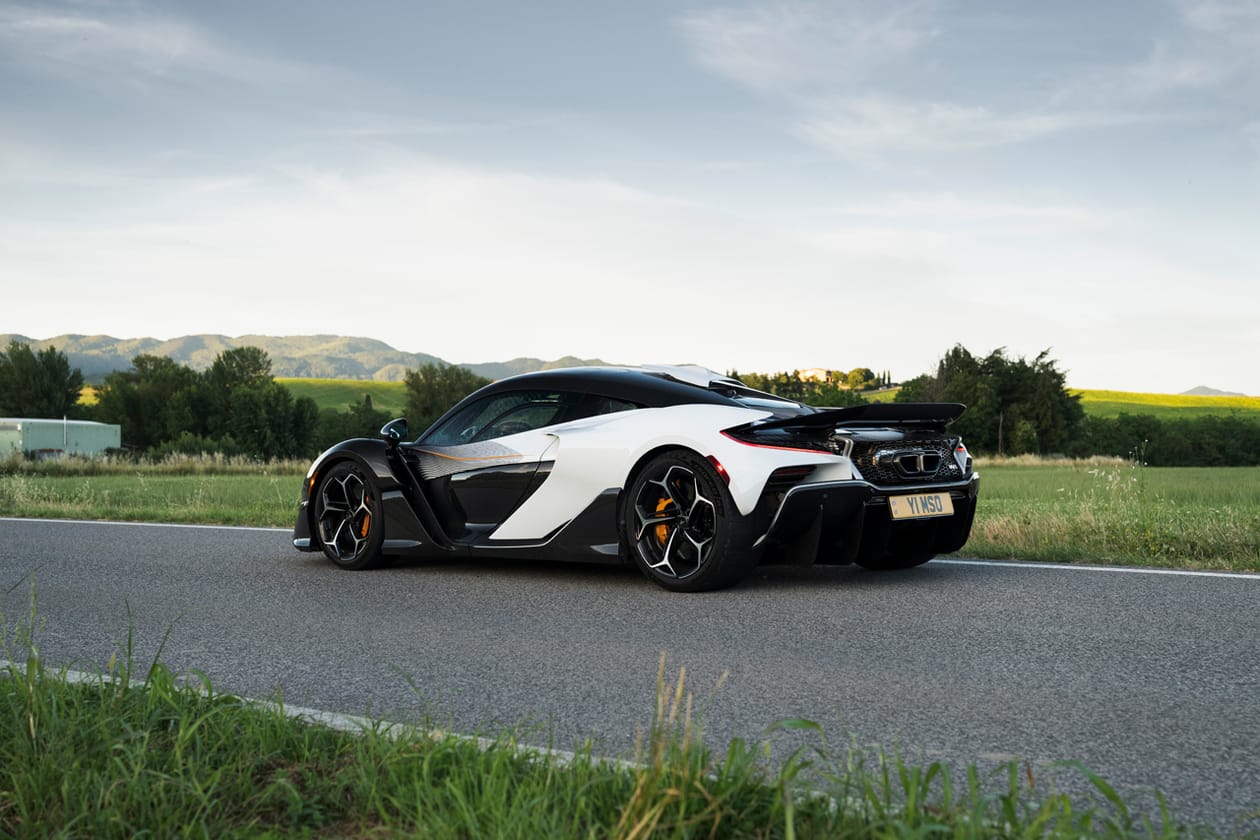
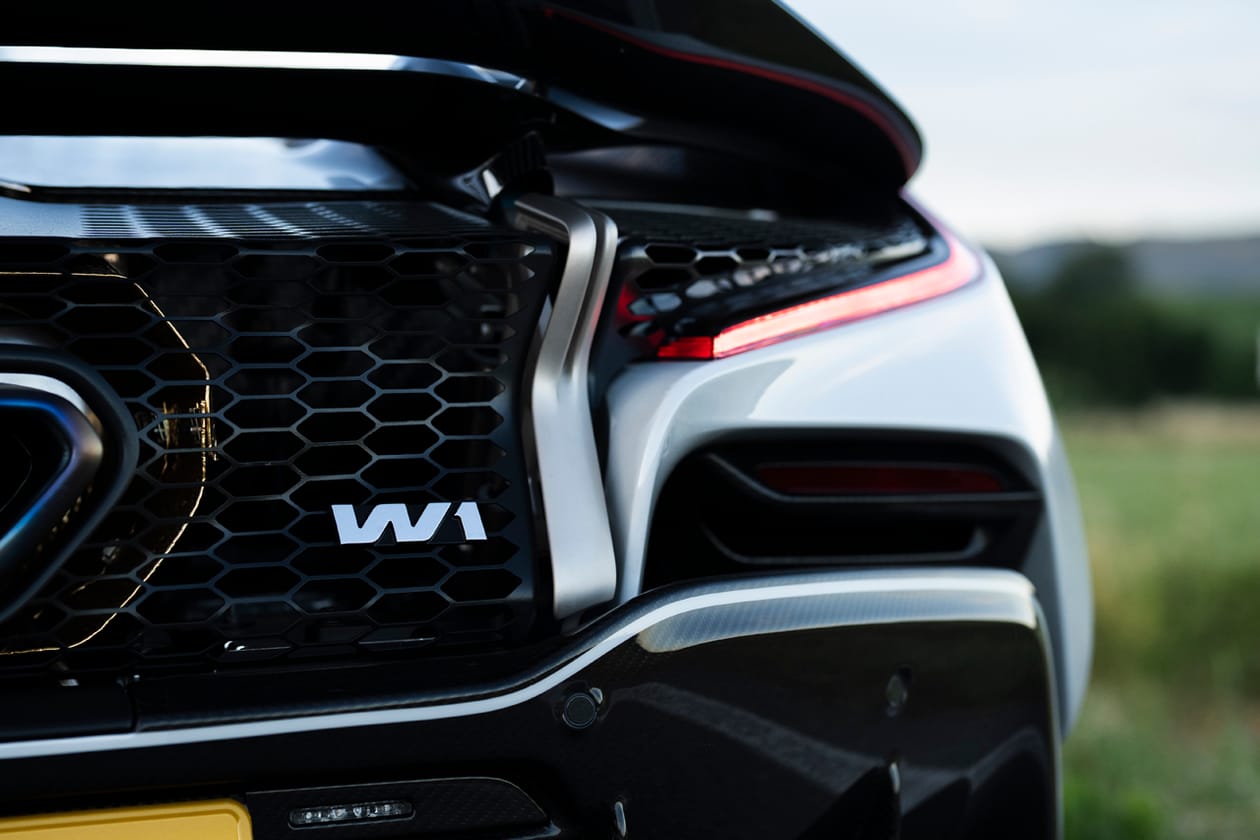
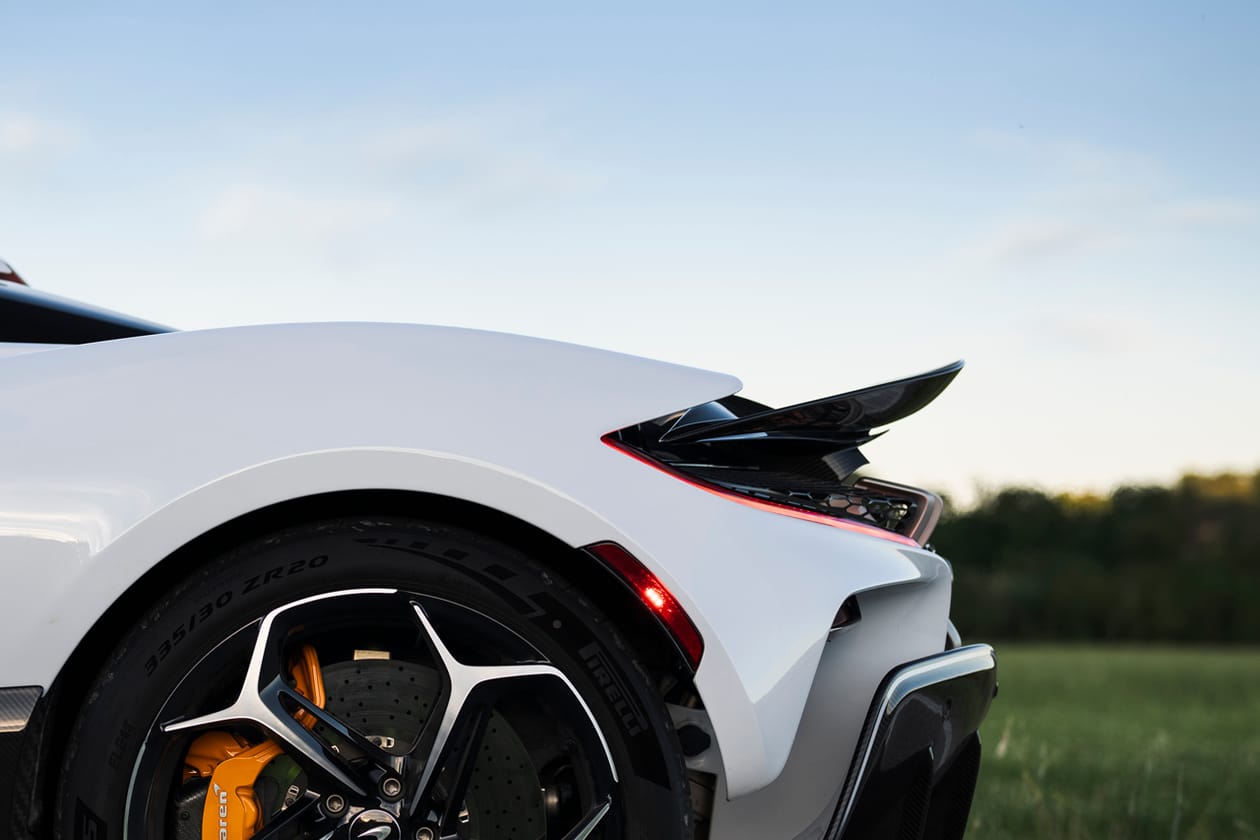
What was even more impressive was the active long tail, a first for any McLaren. The W1 is equipped with the most elaborate, sculpturally impressive rear wing we’ve ever seen. Besides its static shape, the active rear wing is fully and constantly adjusting to the car’s demands. On our drives we’ve seen it in multiple heights, lengths and positions, from still and tucked in, to extended at full length, and even upwards as a massive air brake. For the track, the wing pulls so far outward, it completely clears the rear bumper from a vertical perspective. Design-wise we must admit it looked quite off, as the posts of the uprights are too short for the assembly, exposing the ends of their stumps and making it look incomplete. Nevertheless, a maximum extension of basically 1’ foot (11.8” to be exact) is awesome and goes to show you how far – literally – the McLaren engineers went to achieve aerodynamic requirements for the W1.
So how did the car feel on the track? Simply put; fast and capable. The aero did wonders to keeping the car planted both in the long Mugello straight, as well as its consistent S-curves and long swooping corners. Our instructor/pro driver guided us through how to feel the lack of understeer as we plowed in and powered out of corners, and made us notice the lack of pitch both front and back from accel. and decel., as well as the zero body roll we felt throughout. At the end of the day, the McLaren W1’s front and rear combined will generate 1,000 kg or 2,205 lbs of downforce; That’s an entire Mazda Miata sitting on top of the car.
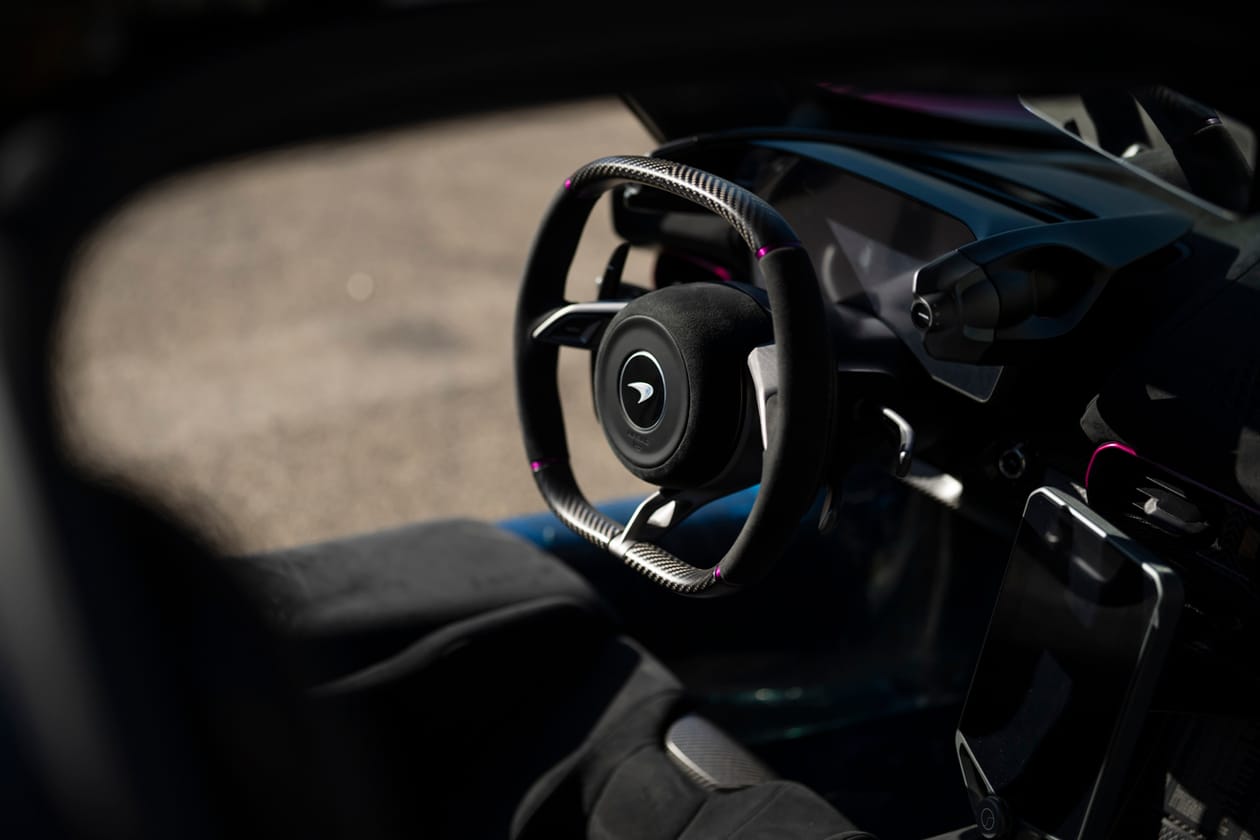
One point of notice however was the W1’s power: all 1,258 hp is only achievable when in Race Mode, and in the correct “Sprint” mode within it. If you’re not in Sprint mode, a “BOOST” toggle on the right thumb of the steering wheel will allow for that maximum extra electrical power. For one single hot lap it seems that Race and Sprint would be a no-brainer, however we couldn’t deny pressing BOOST and pretending we’re an F1 car deploying DRS (Drag Reduction System) wasn’t our favorite part of the experience. It’s a noticeable difference in power as well, like a significant shunt even while you’re already doing 120+ mph on the straight.
Mclaren
Mclaren
Mclaren
Mclaren
Mclaren
Mclaren
Mclaren
Mclaren
Mclaren
Mclaren
As a Road Car
Do you think the W1 is more suited as a track car, or as a road car? Well, McLaren wanted to cater to both scenarios, so the W1 was developed with a few key aspects that make street driving an experience as well. The results in our opinion are… mixed.
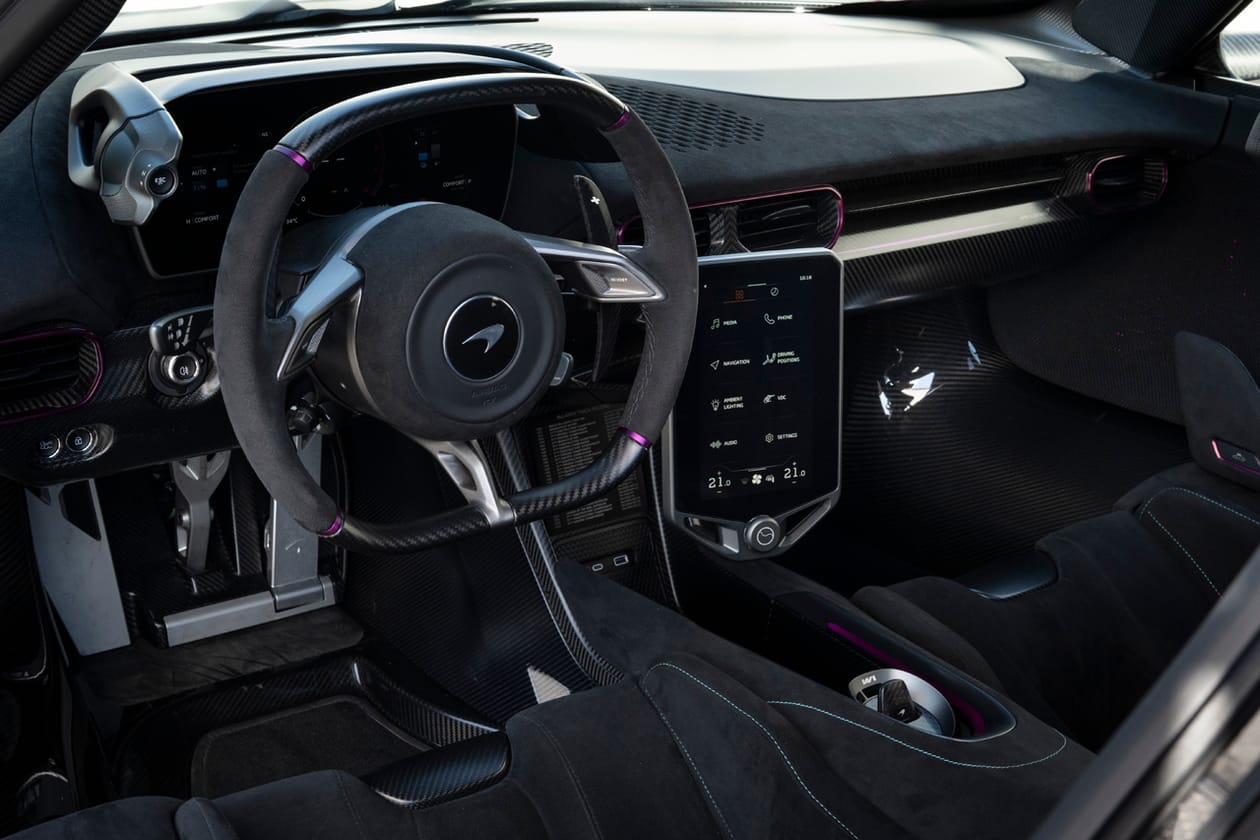
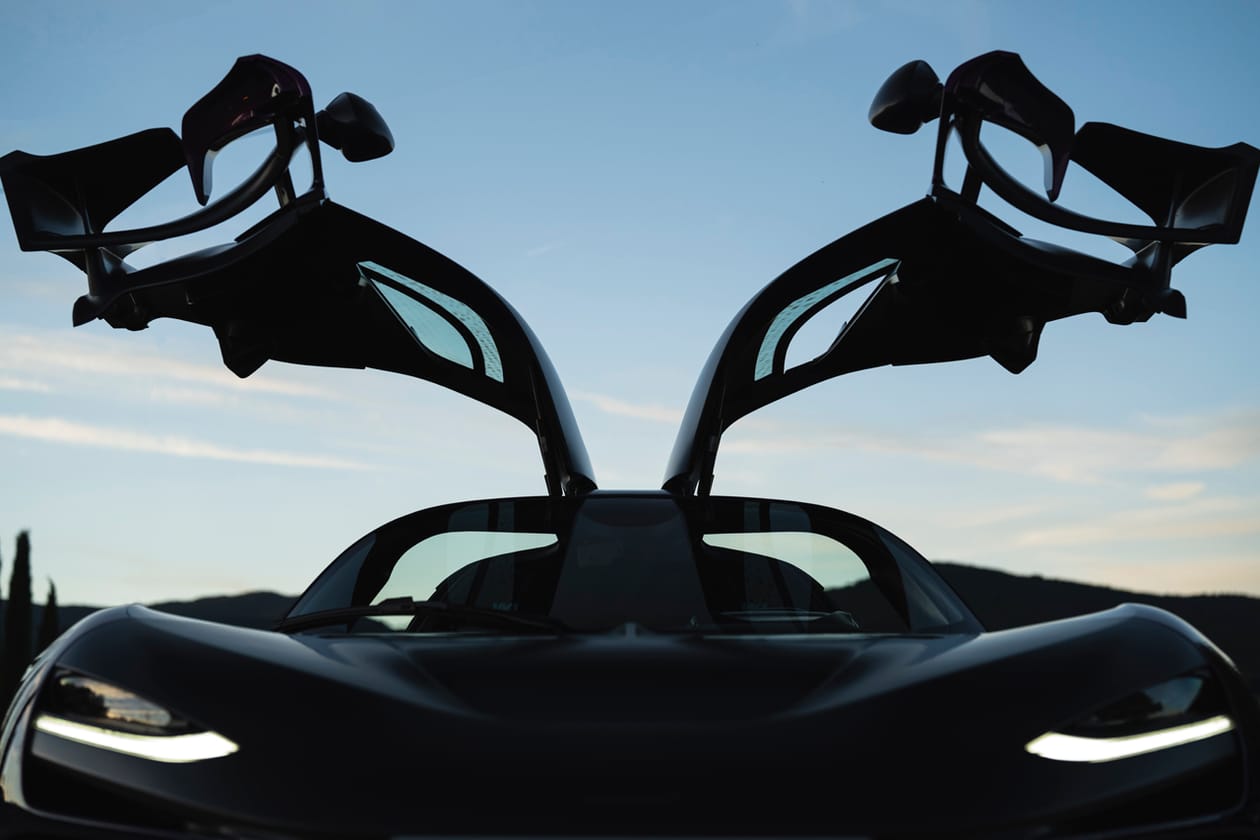
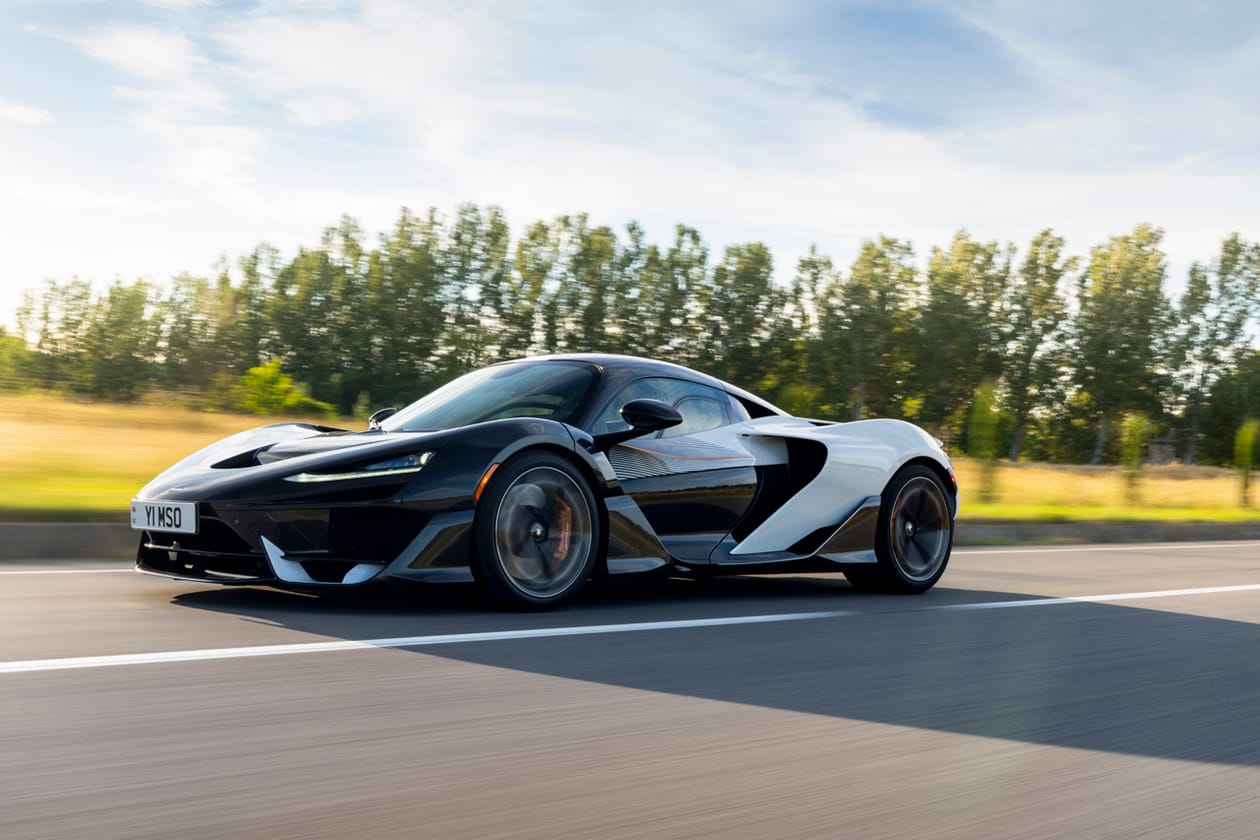
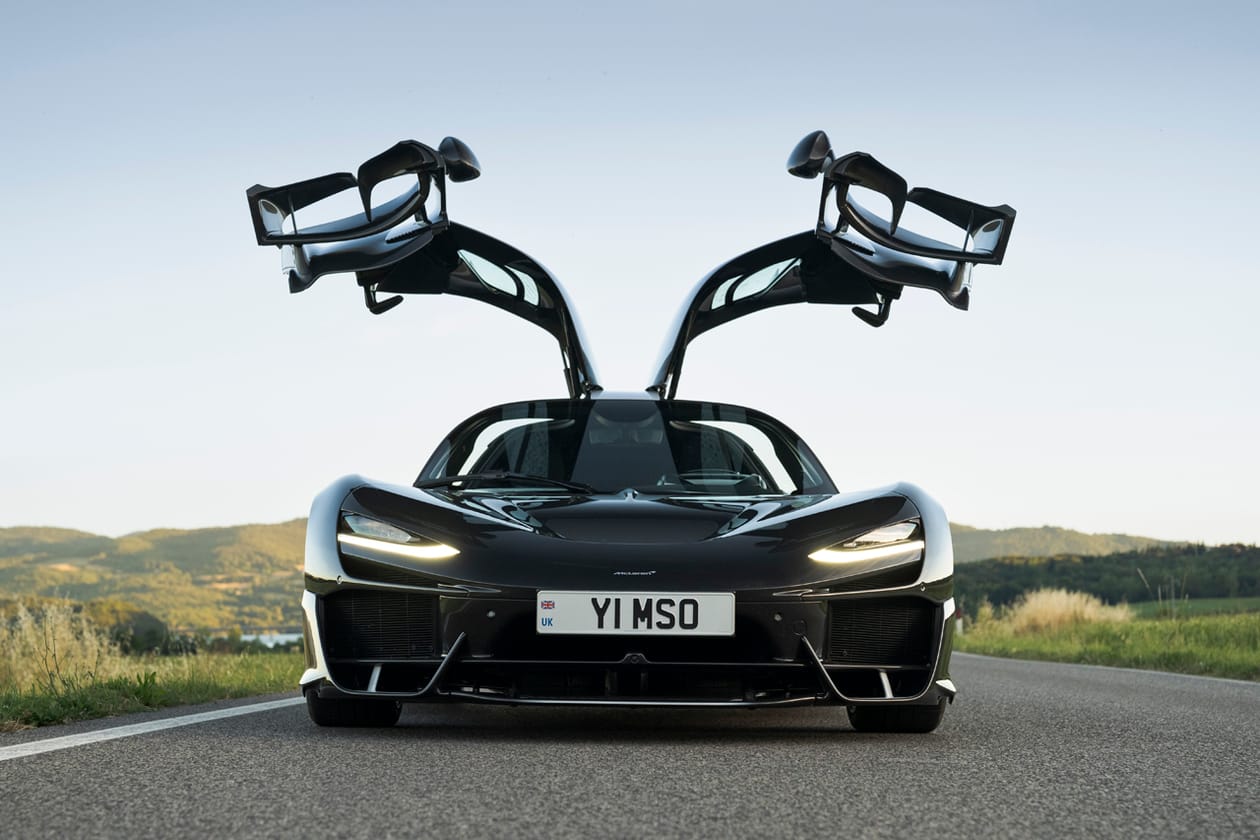
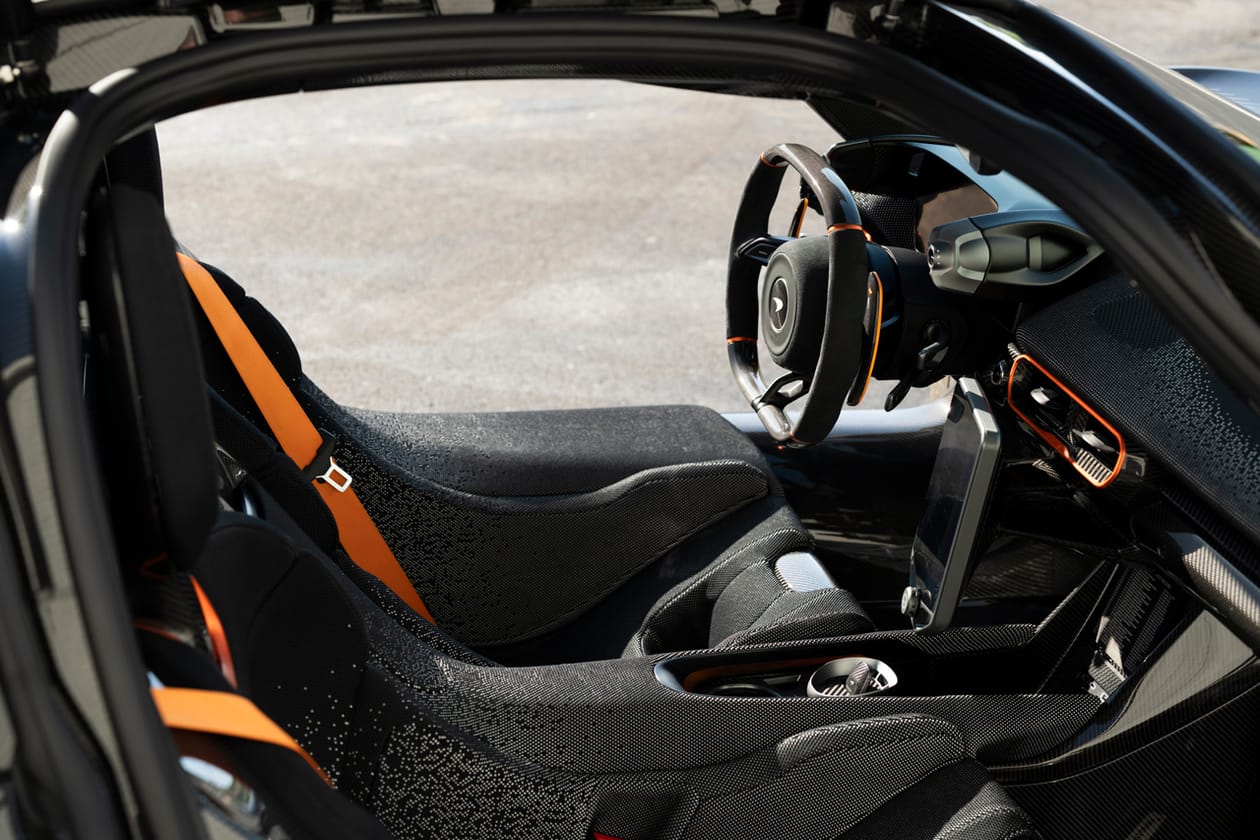
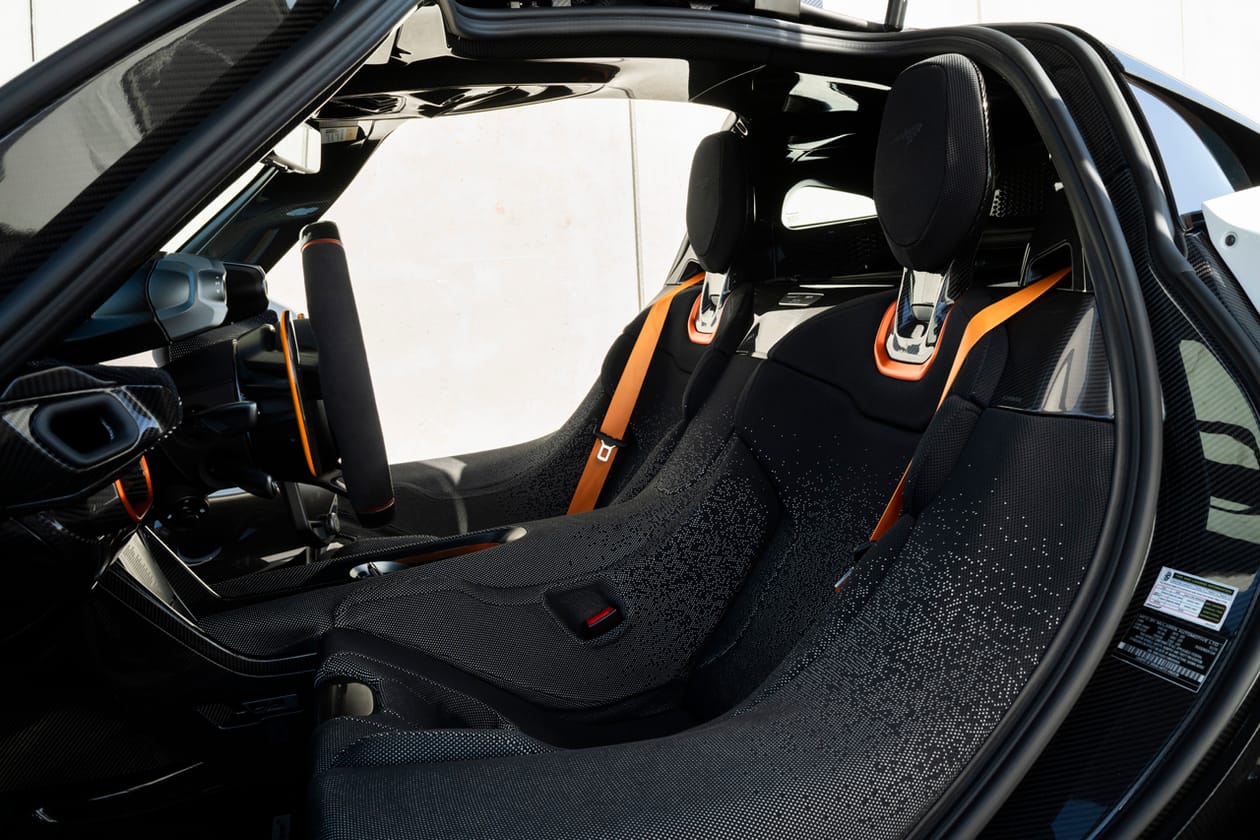
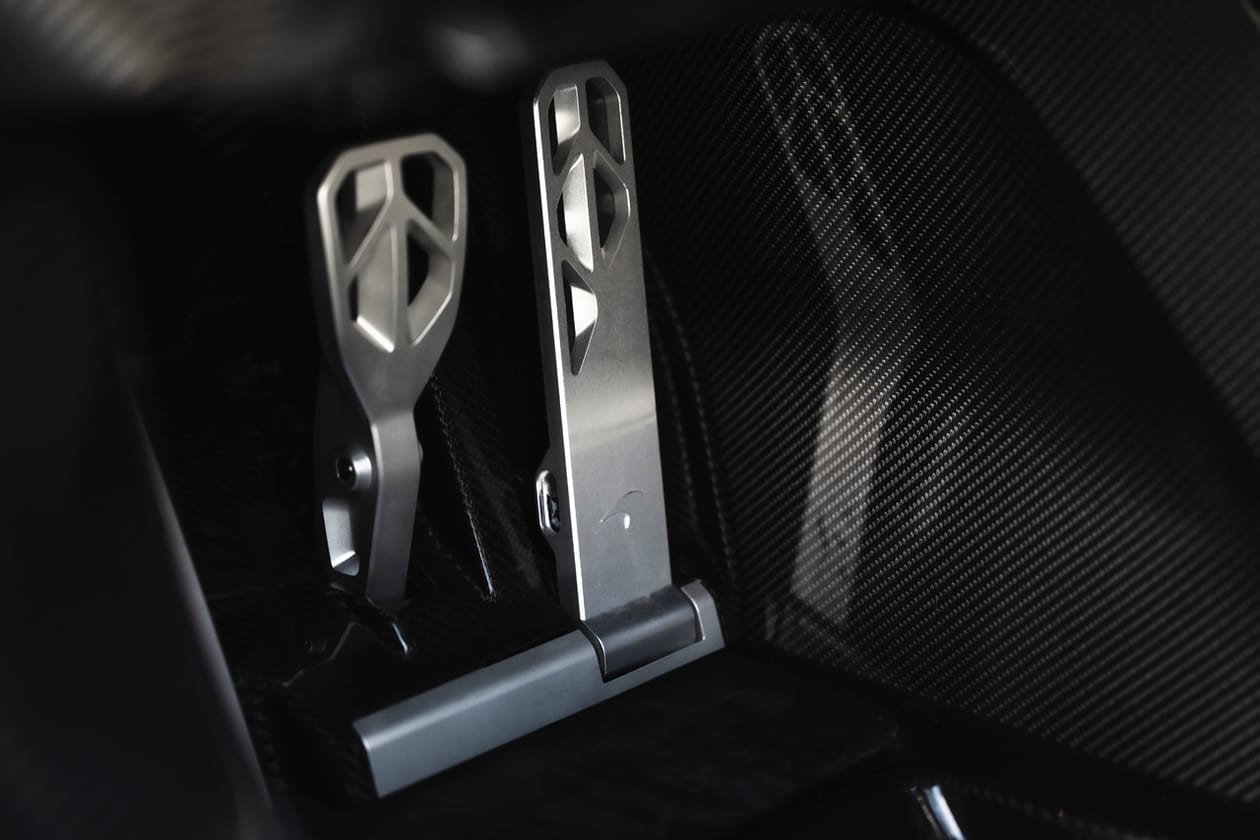
For starters, the W1 surely has presence. While the F1 and P1 had dihedral doors (attached at the A-pillar), the W1 goes with the more “traditional” gullwing style, hinged at the roof. The presentation from the outside is similarly dramatic, but inside we must admit the gullwing was hard to reach, even with the leather pull strap that was still too far for our height. All-carbon-everything still gives off an extremely sports car-esque aesthetic, from the door sills and frames to the floor and more. The embedded side windows – thanks to the gullwings – make every interaction to the outside world an inevitable hassle. Surprisingly, visibility wasn’t too compromised by the W1’s canopy and, thanks to huge wing mirrors, we could easily see the cars we overtook.
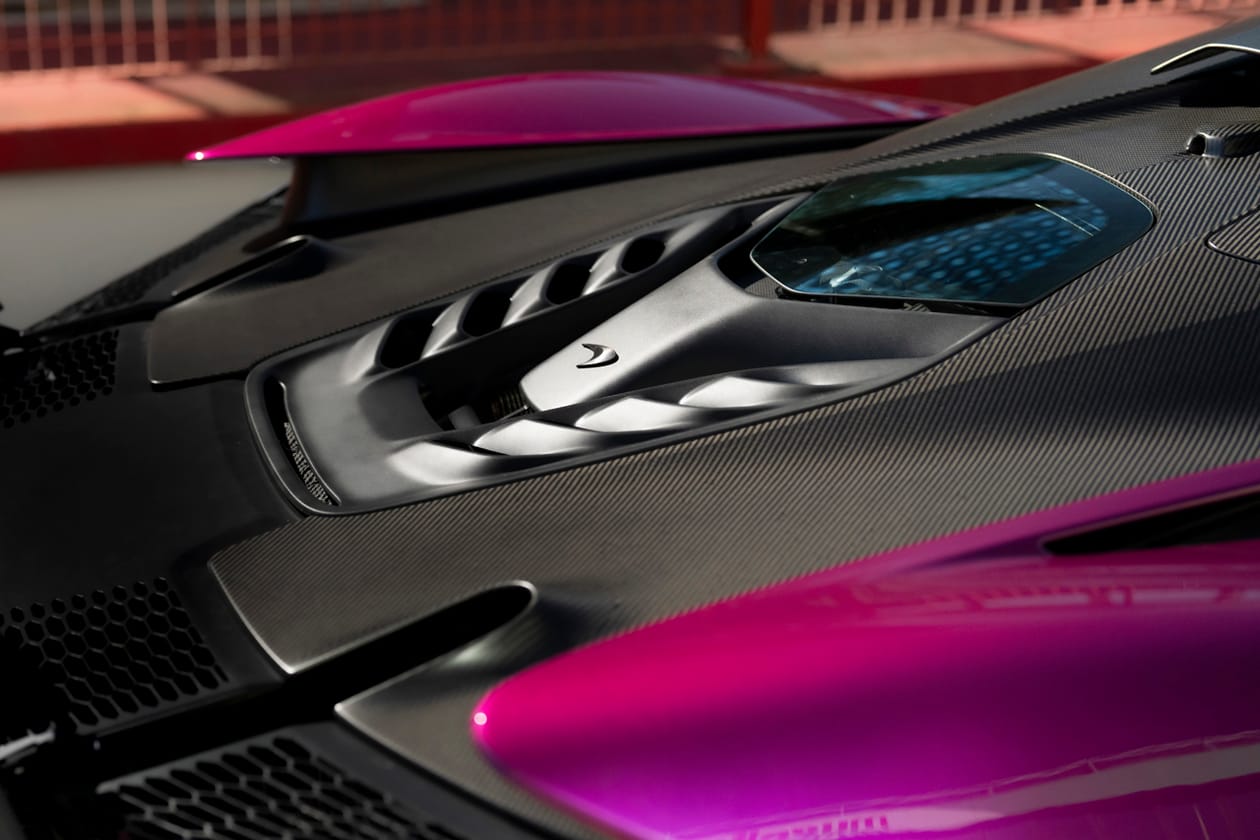
Next comes the engine. McLaren stated that in Sport mode, the car runs entirely off of the 4.0L twin-turbo V8, good for 928 horsepower. Naturally, we felt this was wayyy more than enough for the road, especially as it revved all the way up to 9,200 rpm. The delivery was very shunty as we floored it on long stretches, and the transmission – dual-clutch – shifted fast and smooth. Automatic shifting however was confused at times, at the lowest of speeds, but this has been a characteristic of dual-clutch transmissions for a while and we’ve gotten accustomed to it if we’re honest. And the noises, my lord. Turbo whistle, induction, blow-off, V8 growl – it’s all there and it all sounded absolutely epic. If we could record our entire weekend on lossless FLAC audio so it played in our heads 24/7, we would’ve.
Mclaren
Mclaren
Mclaren
Mclaren
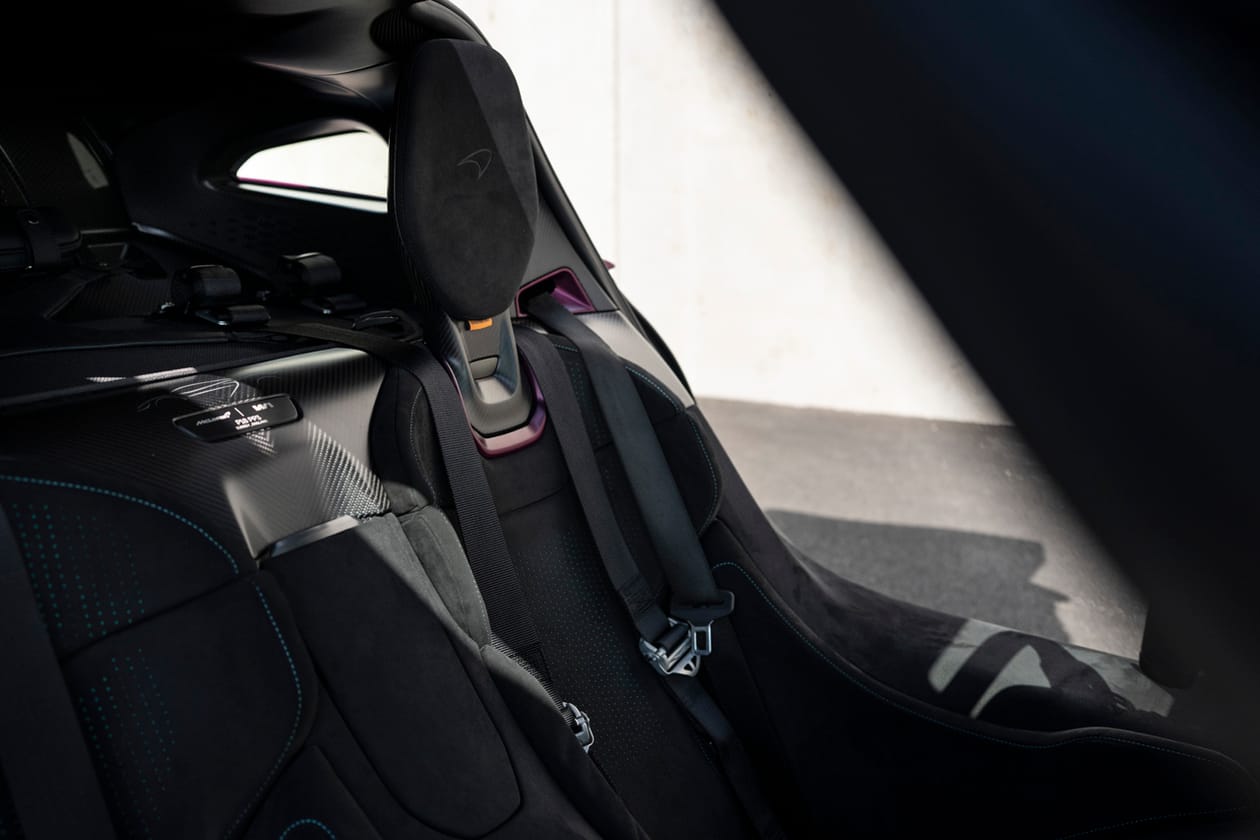
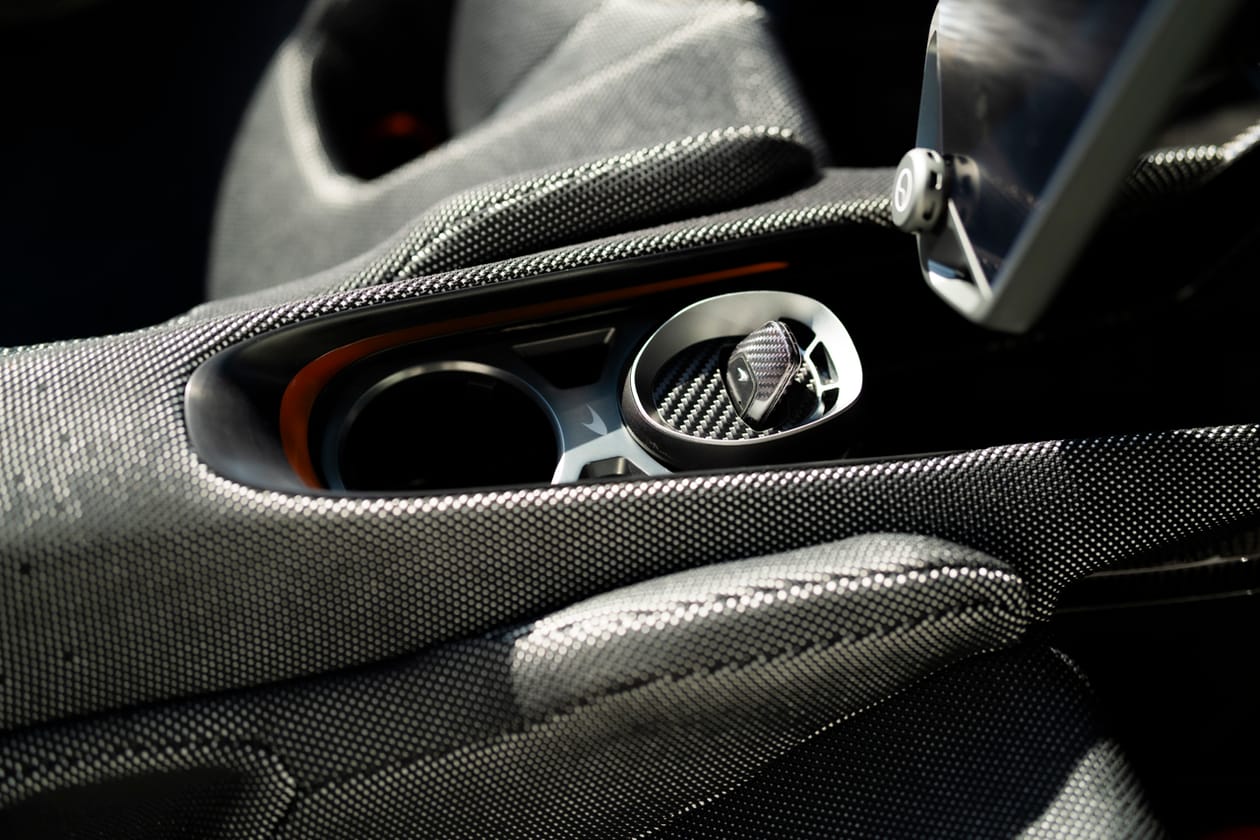
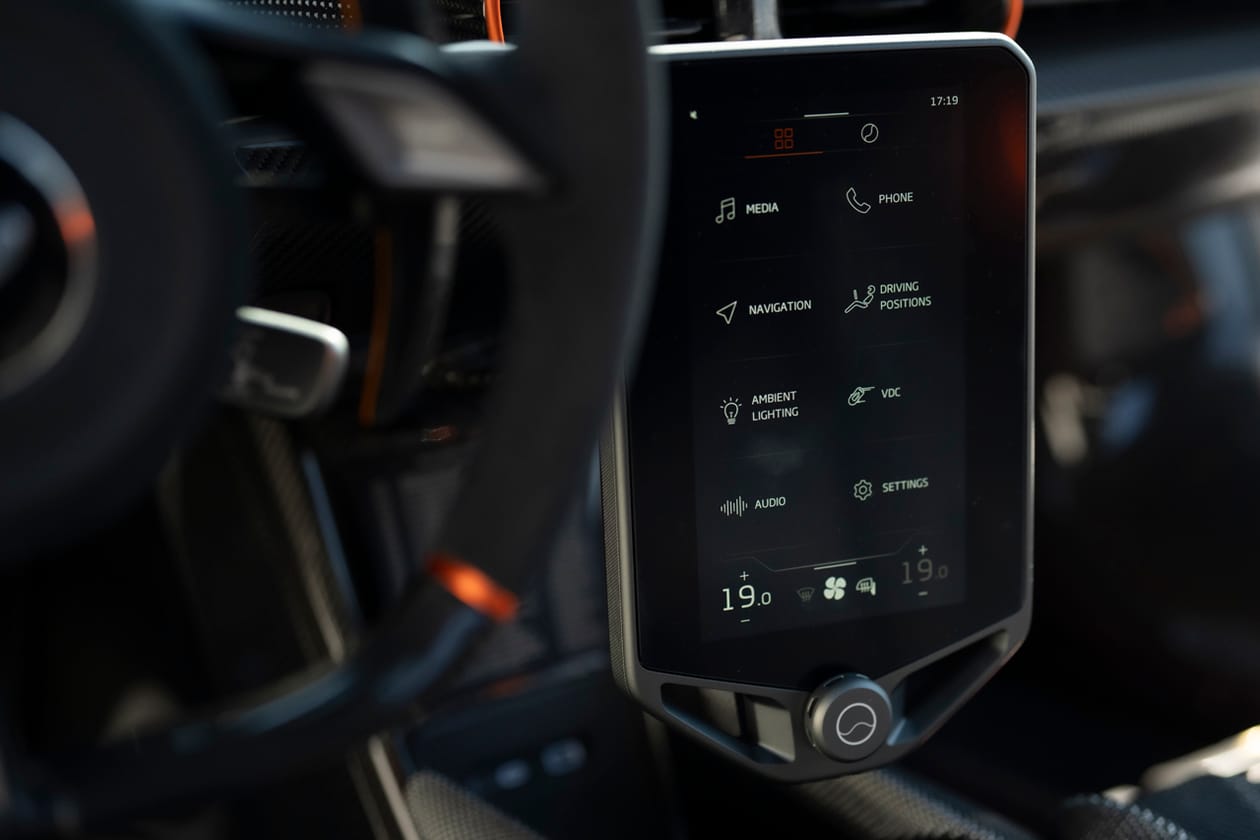
Where we think the W1 lost a bit of its way is the road-going-ness of it. For example, “Comfort” mode is a head scratcher to us. Maybe it’s just a poor choice of words, but nothing about the W1 came off as “comfortable”. Sure it made the suspension a little more compliant, and used the electric motor to smooth out shifts, but aren’t all of these things part of the maniacal nature of this multi-million dollar supercar? Maybe the technology is impressive to include, but no one will be impressed to learn you drove your McLaren W1 to Cars & Coffee in comfort mode. If it’s for long road trips, the hardcore bucket seats are a contradiction. To us, this dual identity is what dilutes the W1 to something that feels more commercial and catering, less focused. It’s a move that’s smart for the business, less the image of McLaren and its racing prowess.
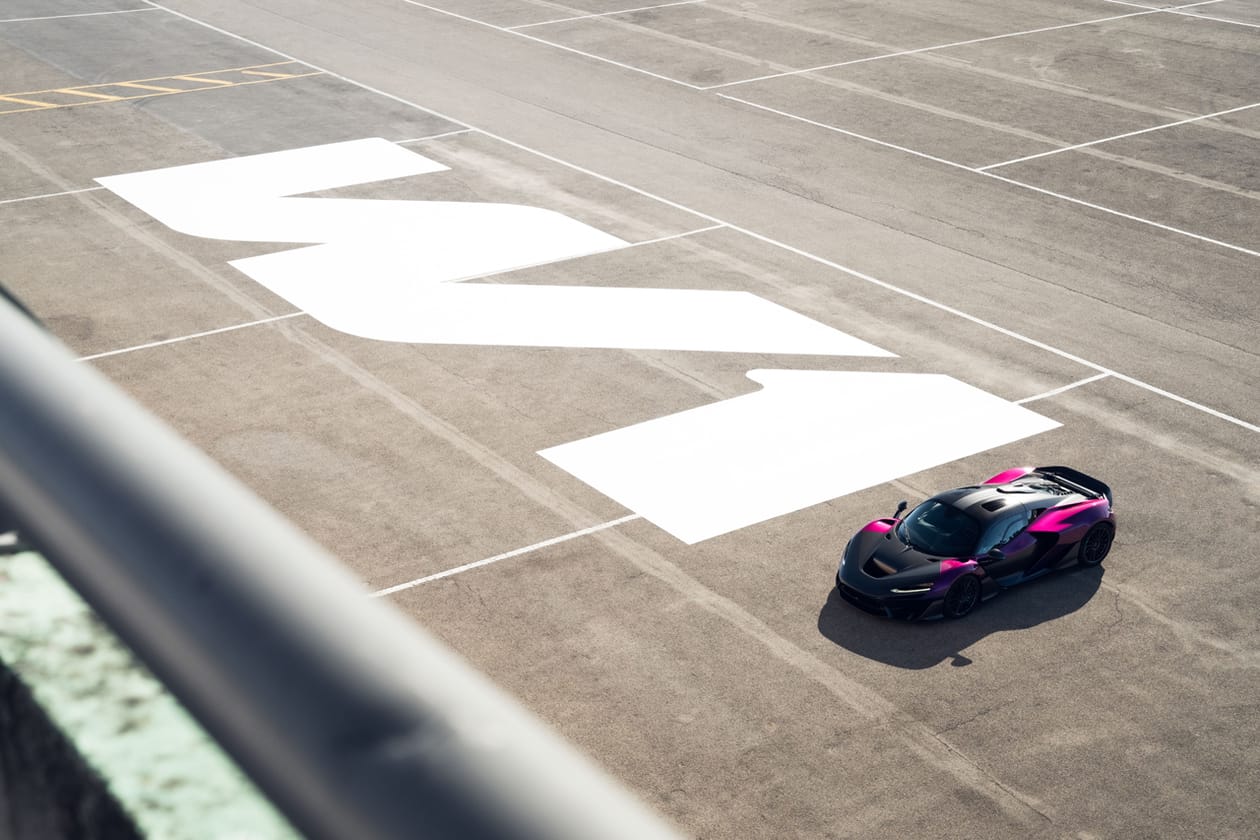
In our mind, the W1 should have focused more on the track-driving side of things, less the road-compliant stuff. Ditch “Comfort” and make the suspension as hardcore as possible. Disregard “EV only” mode – if we were your neighbors, we wouldn’t mind the two weekend mornings a month you decide to take the W1 out. Keep the “BOOST” mode but make it more of an occasion (we’re thinking bright red “EMERGENCY USE ONLY” switch), rather than a footnote.
Mclaren
Competition & Identity
The predecessors to the W1 – the P1 and F1 before it – were defining halo cars for McLaren. With the F1, McLaren had competition that helped propel its capabilities, trumping the top speeds of both the Jaguar XJ220 and Ferrari F40 to essentially crown it king. For the P1, its inclusion in the “holy trinity” of hybridized supercars in the LaFerrari and the Porsche 918 Spyder again gave the McLaren rivalry to stand against, and the P1 stood its ground for many against the other two.
This time around, it seems McLaren doesn’t have that much competition in the sector, with the Ferrari F80 being the obvious contender. Ironically, we think this is actually detrimental to the image of the W1, since enthusiasts and potential buyers are having to judge the car for what it is instead of having comparisons in the same ring. But this is a good thing for McLaren at the end of the day, and they can focus on creating something incredible.
That and the identity crisis of road vs. track in our mind soften the blow of the W1 for us. Capable and ridiculously fast as it may be, its broad range of appeal to potential owners – who are able to swallow the £2,000,000 GBP or $2.6M USD starting price nonetheless – ultimately is the W1’s main flaw. Instead of creating a top-speed monster like the F1, or the downforce king in the P1, the W1 is less concentrated in one goal and purpose.
All that being said, if you are willing and able to buy your very own McLaren W1 howver, at least you’ll be able to enjoy it literally anywhere, as that’s exactly what McLaren wants for its customers. So with that, seems like a W1n-W1n.