
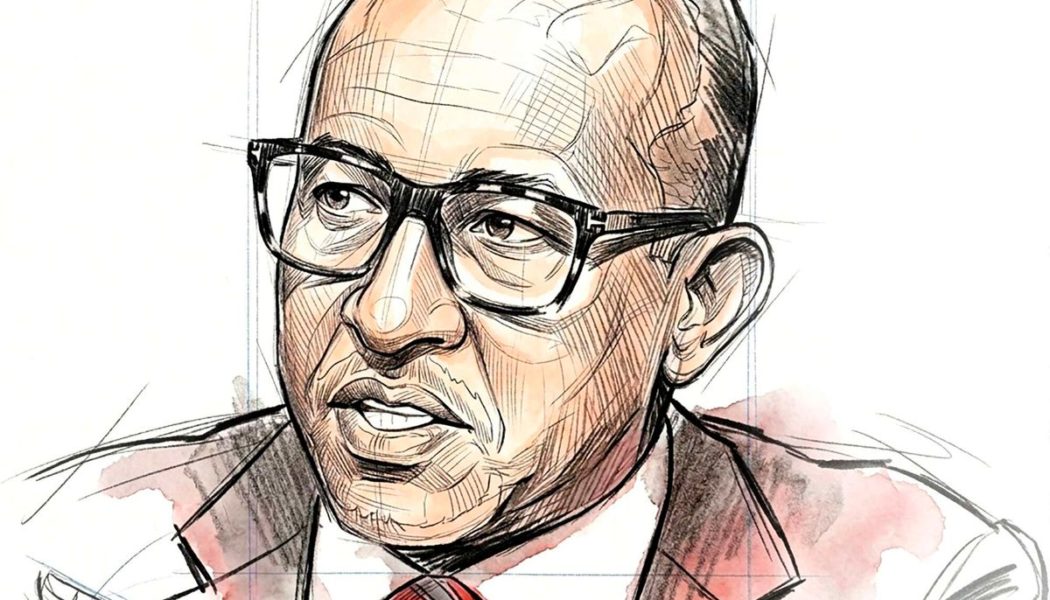
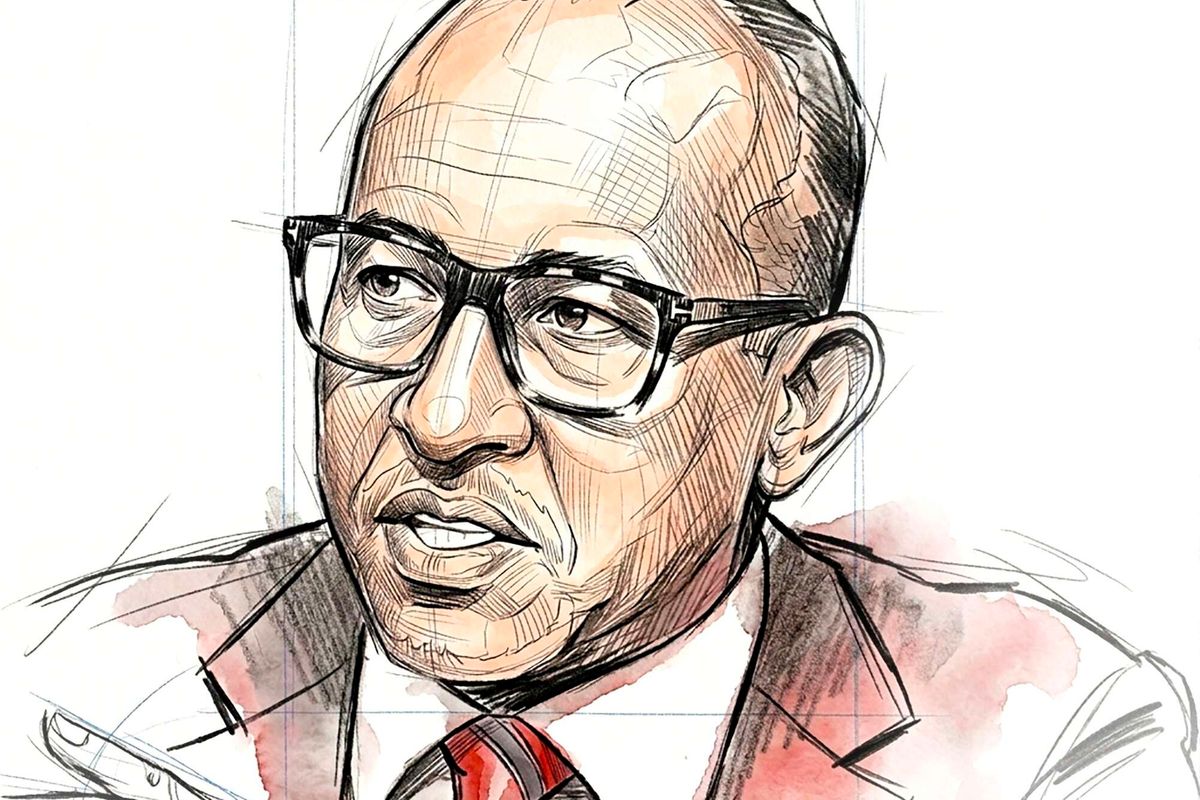
This week, the public witnessed a rare display of humility as the usually combative Cabinet Secretary (CS) Aden Duale stood before the High Court and apologised for defying a court order.
Mr Duale, arguably one of President William Ruto’s closest political allies, could have chosen to persist in his defiance. After all, it is the Executive, led by President Ruto, that wields the instruments of State power. But the CS appeared to recognise a timeless truth: while political power is transient, the rule of law is enduring.
For a man whose political career has largely been defined by unwavering loyalty to the President and an unrelenting defence of government policy, the apology marked an extraordinary moment.
It was the first time in years that one of Dr Ruto’s most outspoken lieutenants appeared visibly subdued, acknowledging the authority of a court that had only a day earlier found him in contempt.
Appearing before Justice Patricia Nyaundi, Mr Duale insisted he had never intended to disobey the Judiciary.
He said he had understood the conservatory orders issued by the court to have suspended only the proposed collaboration between Kenya and the United States over the establishment of an Ebola quarantine and isolation facility at a military installation in Nanyuki, not the country’s independent preparedness measures.
“I was driven by a zealous attempt to ensure that public health is always assured,” he told the court.
The apology spared him a possible jail term after petitioners led by the Katiba Institute and the Law Society of Kenya sought to have him committed to prison for contempt. Justice Nyaundi accepted his apology but warned against any future non-compliance.
For many Kenyans, it was an unfamiliar image of one of the country’s toughest political operators. Yet those who have followed Mr Duale’s rise know resilience has been the defining thread running through his public life. It is a resilience that has enabled him to survive political purges, Cabinet reshuffles and changing political tides. Few politicians embody loyalty to the President like Mr Duale.
Since Dr Ruto assumed office in September 2022, the Garissa politician has survived every Cabinet reshuffle. While colleagues have been reassigned or dropped, Mr Duale has remained a constant, moving from Defence to Environment and now Health—an unusual trajectory that reflects the confidence the President has in him. That trust was forged long before the pair ascended to the country’s highest offices.
Mr Duale and Dr Ruto first crossed paths politically in the Orange Democratic Movement (ODM), where both emerged as influential figures during the party’s rise in 2007. When Dr Ruto later fell out with ODM leader Raila Odinga following the formation of the Grand Coalition Government, Mr Duale gravitated towards him, becoming one of his earliest and most dependable allies.
He would remain by Dr Ruto’s side through every political reincarnation—from the United Republican Party (URP) to Jubilee and eventually the United Democratic Alliance (UDA)—earning a reputation as one of the President’s most steadfast loyalists. That loyalty came at a heavy political price.
In July 2020, during the bitter fallout between President Uhuru Kenyatta and his then deputy Ruto, Mr Duale became one of the highest-profile casualties of the purge targeting MPs aligned to the Deputy President. He was removed as Majority Leader after nearly eight years as the government’s chief legislative strategist.
Looking back on that episode in his memoir For the Record, Mr Duale described the removal as being fuelled by “betrayal, malice and a senseless witch-hunt”. His only mistake, he wrote, was choosing to stand “on the side of truth and transparency” by remaining loyal to the man who would later become President.
In hindsight, the setback proved temporary. When Dr Ruto won the presidency in 2022, Mr Duale was among the first beneficiaries, joining the inaugural Cabinet and remaining one of its few constants despite successive reshuffles. Long before poli tics, however, Mr Duale was a classroom teacher.
Armed with a Bachelor of Education degree from Moi University, he began his professional life teaching before venturing into business and later politics. He subsequently earned a Master of Business Administration from Jomo Kenyatta University of Agriculture and Technology, combining an educator’s discipline with business acumen that would later shape his political career.
He was first elected Dujis Constituency MP in 2007. He later served as Assistant Minister for Livestock in the Grand Coalition Government before becoming Kenya’s first Majority Leader under the 2010 Constitution, a position he held from 2013 until his removal in 2020.
Whether serving as Defence, Environment or Health CS, Mr Duale has repeatedly volunteered to defend some of the administration’s most controversial policies. None has generated more debate than the rollout of the Social Health Authority (SHA), one of President Ruto’s flagship reforms intended to replace the National Health Insurance Fund (NHIF).
As hospitals complained of delayed reimbursements and patients criticised system failures, Mr Duale emerged as the government’s chief defender of the reforms. He insisted the challenges were temporary and accused critics of spreading misinformation about a programme he argued would deliver universal health coverage. That defence occasionally brought him into confrontation with the media.
In one widely publicised exchange, Mr Duale criticised Nation Media Group’s reporting on SHA, accusing the newspaper of focusing on isolated failures while ignoring what he described as the programme’s successes.
He argued that persistent negative reporting risked undermining public confidence in reforms that were still being implemented. His willingness to confront critics extends beyond the media.
Earlier this year, he engaged in a heated exchange with Kitutu Chache South MP Anthony Kibagendi during a parliamentary committee session after the legislator questioned procurement matters in the Health ministry.
Mr Duale accused the MP of attempting to extort suppliers linked to the ministry—an allegation that escalated an already tense session and reinforced his reputation as a politician who rarely retreats from confrontation.
Friends describe him as forthright. Critics consider him abrasive. Either way, Mr Duale has built a reputation as one of Kenya’s most uncompromising political communicators, rarely tempering his words for political convenience.
Beyond his role as one of President Ruto’s most dependable lieutenants, Mr Duale has also positioned himself as one of the country’s most prominent voices on issues affecting the Somali community.
Over the years, he has consistently spoken against the ethnic profiling of Kenyan Somalis during security operations, arguing that the actions of terrorists should never be used to stigmatise an entire community. Following major terrorist attacks, when calls for sweeping crackdowns intensified, Mr Duale repeatedly urged security agencies to distinguish criminals from law-abiding Kenyan Somalis.
Away from the political theatre, Mr Duale presents a markedly different image. The father of five is known among friends as deeply religious, fiercely loyal and unusually accessible despite occupying some of the country’s most powerful offices. Family, he has often said, remains his anchor amid the turbulence of politics.
For nearly two decades, Duale has fought political battles with the confidence of a man convinced that forceful arguments and unwavering loyalty ultimately prevail.
Yet as he stood before the High Court this week, apologising for disobeying a court order, even one of Kenya’s most battle-hardened politicians appeared to acknowledge a lesson that transcends politics.