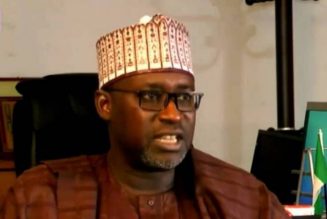

Panama hat. Cream-on-cream monochrome aesthetic. A popular and expensive cologne that conveys, if not power, then success. It’s not a menswear line; it is how Nahashon Mungai strides in, looking anything but a banker. Success doesn’t always go to your head. Sometimes it shows on your belly. “I’ve always been very lean, and suddenly now, I’m puffy,” he concedes his insecurity.
He talks about the philosophy behind creating Mansa-X, a special fund now worth Sh153 billion, at just 32. He loves horse racing, golf, fruit farming, not necessarily in that order. He speaks about parenting girls and how he teaches them about money. “My daughters crochet and paint,” he says, “but I take my cut, agency fees.”
Do you come here a lot?
I joined Muthaiga Country Club because I needed a social but family-oriented place. I was born in a very small family. Dad, mum, elder sister, and I. We’re are still very tight. You met my wife Nancy; she’s a psychologist, and I like to joke I am patient zero [chuckles]. We have daughters aged 16 and eight.
You have access to the who’s who of society. How do you keep in touch with your younger self?
I come from Ndeiya, proper ushago, in Limuru. I have maintained many of the friends I grew up with.
Did success not cause a rift in the friendships?
The people you meet later in life are the ones who view you differently. You are this financier, this whatever. My friends still call me Nash, and I feel very relaxed around them.
What kind of friend are you?
A loyal one.
What does loyalty mean?
I take most of my friends as brothers because I never had one. If you need something, I will provide it to you, no questions asked. That has hurt me in some ways because some people view you as a resource.
What’s the best thing a friend has done for you?
I don’t have a lot of friends. Recently, one bought me a Montblanc pen, a very expensive pen, in fact, the John Lennon edition, because I love The Beatles.
How does a boy from Limuru cavort with The Beatles and not Kamande wa Kioi?
My parents were exposed. My mum worked for the International Union for the Conservation of Nature. So she was well-travelled. My father was a civil engineer, and he also travelled quite a bit. I only grew up in the village because they chose to live there. My mum would play Abba, Bee Gees and all. But now I am gravitating towards Kamande wa Kioi, though [chuckles].
What do The Beatles say about you?
I didn’t say The Beatles are my favourite. It’s actually Dire Straits. I find that music absolutely fabulous. I think their lead singer, Mark Knopfler, is the best guitarist ever.
Not Jimi Hendrix?
Well, Jimi Hendrix was more of a rock and roll type; Mark Knopfler went with the folk type of playing the guitar. Jimi Hendrix’s versatility is unmatched, obviously. I think the guitars were made for him. That’s how good he was [chuckles]. I like to do things that are not popular, hence why I liked that kind of music.
Which song from that period best encapsulates your life now?
I like ‘One Song at a Time’ by Mark Knopfler. But I also like the ‘Sultans of Swing’ [starts singing]. I feel like I’m creating something unique and being talked about on the streets of Nairobi. I’m like a Sultan of Swing.
What’s a money lesson that has remained true for you over the years?
Always spend less than you would like. I’ve seen people say you only live once. But there’s a comfort that comes with knowing I can afford something, but I’m not buying it. Delayed gratification is something I really try to teach my children.
How do you ensure your daughters do not confuse your success with theirs?
Interesting you bring that up. Because when we were in Dubai, we went to the Burj Khalifa with my daughters and we saw a quote from the ruler of Dubai: ‘Hard times make hard men. Hard men make soft times; soft times make soft men. Then those soft men make hard times.’
I posted it in our family WhatsApp group and recently picked it up again with them, that they are growing up privileged. They must be very careful and continuously hungry and driven.
We talk about money openly in my house. My daughter is an artist, a painter, and during an affordable art show, she sold me one of her paintings at Sh100,000. As her agent, I removed my agency fees 15 percent, then the cost of materials (Sh31,000), emotional support for my youngest daughter Sh1,000, and transport for my wife Sh5,000. In the end, I paid her Sh46,000, and she was upset. But she learned how business works. You can make Sh100,000 and go home with nothing.
You mentioned that you lost a son in between your two children. What did that loss teach you about life?
Life is fickle. No sooner had the baby been born than we lost him. But it also made me very interested in healthcare and how it can be improved. I’m always asking myself questions like, was that handled the right way? Would it have been handled better? If that had happened, maybe my son would still be here. It wastough. I don’t think it’s something you can ever fully recover from. It’s always there at the back of your mind. That first year was really bad.
Nash, what wouldn’t one find in a parenting book?
Children can be pretty thankless, and I’m like, don’t you feel that these things you’re getting come with a lot of effort? I wonder if we were like that. Probably we were; we just never noticed.
Where do your daughters test your patience?
I’m not just praising them; I find that I have really nice watotos. I love my girls. But with their mother, they feel like they can just talk anyhow, and I have to remind them, that’s my wife you are stressing.
What’s your fatherhood flaw?
The whole sitting down, doing homework and academics with them. I’m always thinking, come on, it’s your homework, not mine. I don’t remember my parents ever wanting to do homework with me.
What’s a small thing you do to put a smile on your face?
Just being alone, so in all my houses, I always have a mancave. I like watching movies alone. And my wife has never interfered with that. It is where my creativity comes from. And when I am alone, I eat a lot of chocolate [chuckles].
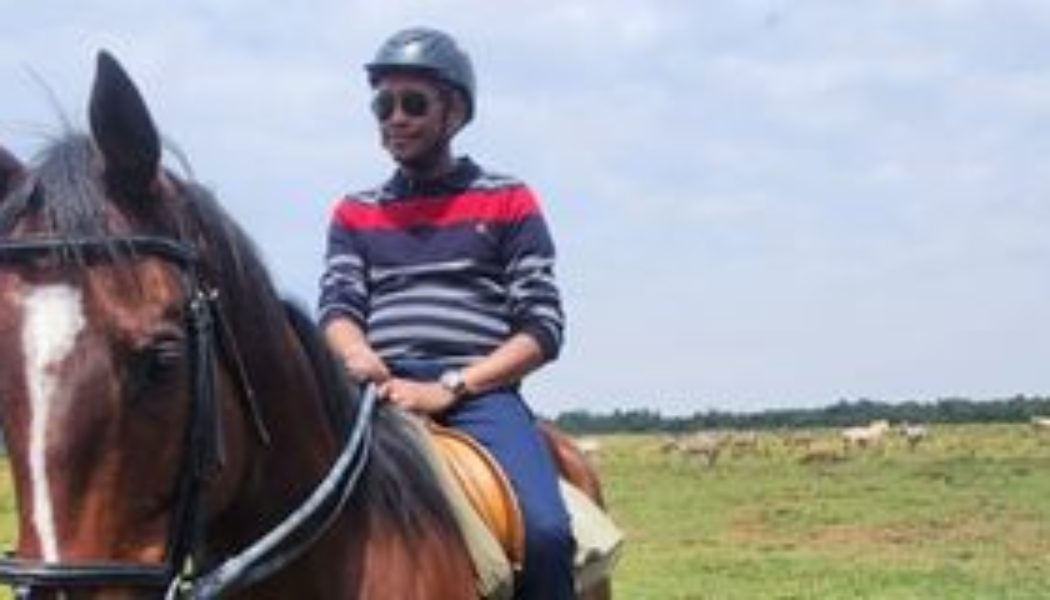
Nahashon Mungai, the Executive Director, Global Markets at Standard Investment Bank (SIB), enjoys horse riding.
Photo credit: Pool
How has the interpretation of the word wife changed over the years?
When you start, you’re lovers. Over time, you become partners in dealing with life, including raising children and building wealth, even when your perspectives are different. If you don’t break at that point, then you’re good. They say your wife is not your relative, but I disagree. They become a part of you. Which is why divorce is very tough. It’s like losing a part of you.
How has she changed your life?
She’s a cheerleader. That has helped because my ideas are radical. Eddie, she has never said no or slowed me down by doubting me. That’s her superpower. I hope my children grow to be kind, and I believe kind people also tend to be very smart. If you’re kind, a lot of people will open doors for you because everybody is going through something.
Speaking of, what bad habit have you failed to kick?
[long pause] Overthinking. It makes me see things as more perilous than they actually are. Sometimes it will even give me anxiety. But I think I get it from my mother.
Does success feel like how you thought it would when you were growing up?
I suppose. Life imitates art. One of the things I did a lot growing up was reading books and watching documentaries about successful people. A lot of the things I see in my life now are very similar to the things I saw and read about. What you don’t anticipate is the feeling, especially of betrayal, when it happens.
Success is a moving target; how do you know when you hit it?
I guess you never know [chuckles]. Success is multifaceted. When I started with my wife, I just wanted to afford a car because I had a family, and that was success then. I started as a cashier, and I just wanted to be a proper officer, which is another success, or to attain a certain level of money. This is the human condition: if you stop swimming, you sink.
What matters more than you thought it would?
Peace of mind. That is the one thing you eventually come to discover is more important than anything. So, you step away from conflicts and unnecessary excitement.
What’s life’s simplest pleasure?
Laughing. Because you can get it anywhere. And the biggest superpower is to be able to laugh at oneself. Some people are too stuck up, too concerned, too self-important. Even my team selection is very much based on characters who know how to first be very kind and take themselves lightly.
What’s your insecurity now?
I’ve started having protrusions from certain parts of my body that I didn’t have. I’ve always been very lean, and suddenly now, I’m puffy [chuckles]. My friends started getting big in their early 30s, and it’s happening to me now at 42.
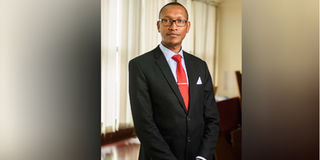
SIB Executive Director-in-charge of Global Markets Nahashon Mungai. PHOTO | POOL
What’s a small thing people do for you that makes you feel loved?
Saying thank you. I don’t have a lot of people who say thank you, as people might think. In fact, it even changed my relationship with God, because when I’m praying, I like to focus on saying thank you before anything.
If I were to read any chapter from your life, which one would you recommend?
25 to 35. That’s the age when I learned to be a father, a husband, and learned to dream and actualise those dreams at the same time. I created Mansa X when I was 32, when I left banking, when everyone thought I was crazy. I look at the young version of myself, and I’m really proud of him because he just never knew the limitations, and that has also helped me to be very careful with my children. No matter what they choose to be, I will be proudest of them if they become the best versions of themselves.
What’s an investment cliché you’re tired of hearing?
The higher the risk, the higher the return. It annoys me. There is a lot of low return that comes from mediocre investing, not because you took lower risk. Just because you’re doing something in a mediocre way does not mean that it’s less risky, and just because someone else is having a higher return doesn’t mean they necessarily took on more risk.
What do you do that’s not for money at all?
Golf. I’m very enthusiastic about it, but I’m not a very good golfer. Golf is a lot like life and business. I am also into horse racing, and here, we have a syndicate of 10 who own three horses. I can ride, but I cannot ride a racehorse. I also work a lot on my fruit farm in Limuru. Let’s not talk about whether it makes money or not [chuckles].
What’s your weekend plan?
I’ll go see my dad, who is a bit sick. Later I’ll take my girls to Naivasha for the weekend and play some golf. I got them a teacher for Kikuyu lessons too [chuckles].
Why is it important for them to learn Kikuyu?
It’d be ridiculous to abandon your heritage. My great-grandfather is Chief Waiyaki wa Hinga. And he was the first freedom fighter, killed by the British before it was fashionable to be killed by the British [chuckles]. I took them to watch a play about him in Kikuyu, and this is to make it cool for them to know your language.
What does money mean to you now?
It is the best validator in the world I live in. First, it is intimidating, but the same way Sh10 hits you psychologically is the same way a million dollars hits you. It becomes a number you take care of. Money accumulates toward people who respect it, so spend less than you make.
Give us some good advice.
In life, ‘And this too shall pass.’ But in trading, the theory is simple. If it is bad, it can always get worse haha! Take your losses early. The best traders tend to be very pessimistic. Luckily, in life, unlike markets, bad things tend to get better [chuckles]. Remember to be playful. Don’t let life dictate who you are.