

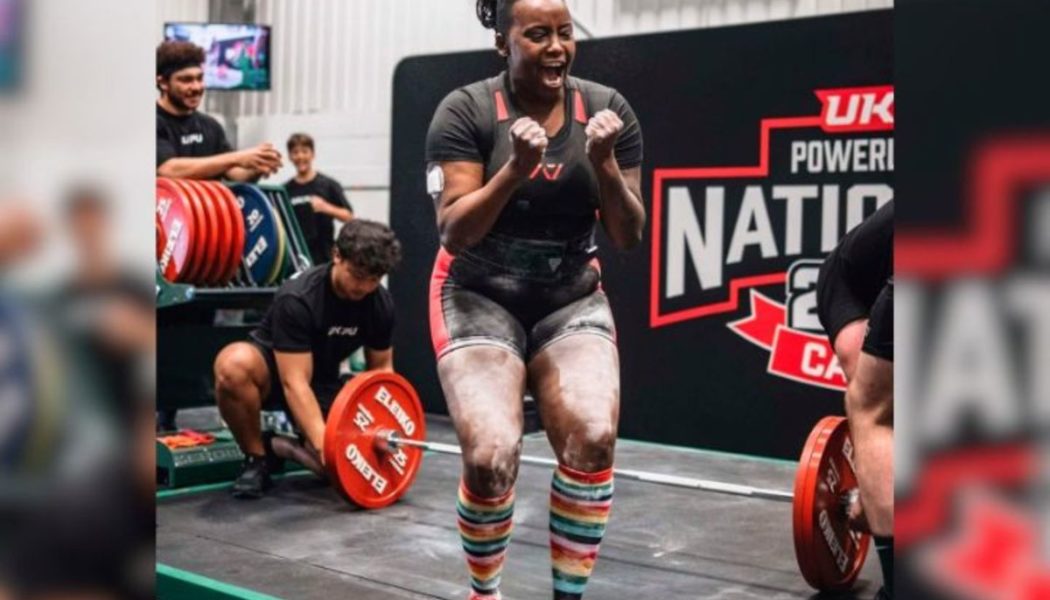
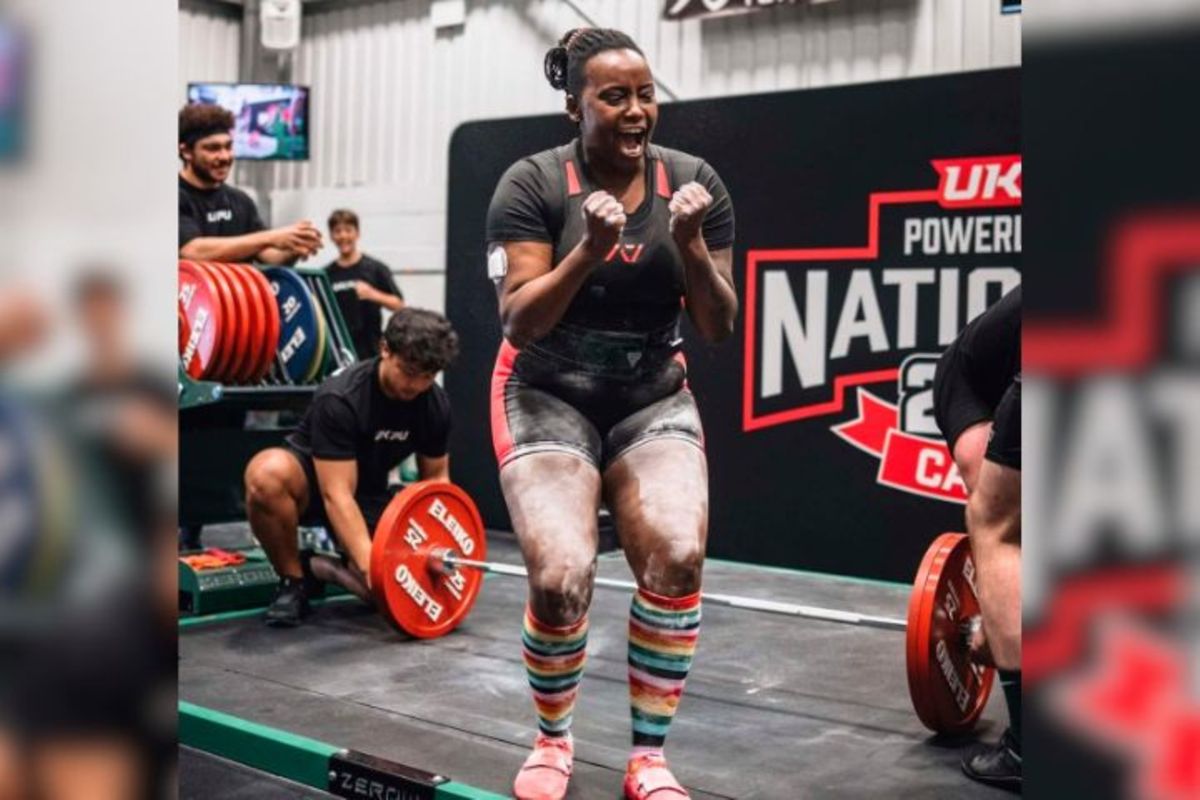
At 44, many female fitness enthusiasts opt for Pilates classes, Zumba or yoga sessions, or light weightlifting exercises. Some do long runs or brisk walking. Not Dr Gathoni Kamau.
She has built her fitness life around heavy weights. In the gym, you will find her sinking deep into squats, picking loaded barbells off the floor, and pressing heavy weights from her chest. Deadlifts exceed her own body weight.
Gathoni is a Kenyan living in Wales, working full-time as a psychiatrist. This September, she will step onto a powerlifting platform hoping to lift a total of 285 kilogrammes across three lifts. If she reaches it, she will qualify for the National Masters Competition next year, where women over 40 compete against each other. It is a goal she has been building toward slowly for more than two years.
It started oddly, with a tennis injury. Gathoni played tennis for many years, and one day she hurt her lower back and shoulder. She went to see a physiotherapist about the pain. She was given simple advice: start strength training to get stronger and protect her body. The goal was not to become a powerlifter. She just wanted to get back on the tennis court, stronger.
She went looking for a new gym.
“I didn’t know it was a powerlifting gym,” she said. “I tried it for fun.” The second time was harder. Her muscles burned. Her body strained. But she kept going.
What appealed to her was how simple it was. “Powerlifting has only three lifts: the squat, the bench, and the deadlift. We do the same things again and again, and each week you try to lift a little more than before. I liked the simplicity,” she says. “My life is very busy, and this was something simple.”
She also found something else in the gym, a feeling lifters call the pump, the rush of blood and effort that comes after a hard set. “I felt this pump and a sense of accomplishment,” she said.
She laughs when she talks about how much she hates running, one of the reasons powerlifting suits her so well.
“I hate running and moving fast, so powerlifting is for very lazy people,” she said. “I only get to train for a squat, bench, and deadlift.”
Gathoni, whose job involves caring for elderly patients, sees the effects of muscle loss every single day at work, and it shapes how she thinks about her own training.
“Strength training is very important for people as they age, because in my line of work a lot of people I see are old and very frail,” she explains. “Basically, frailty is just a lack of muscle mass.”
Besides building strength and muscles, powerlifting has given her a community.
“We go for competitions. Travel around to compete, meet amazing people who become friends,” she says. Before every competition, the lifters gather for a meal together. Since competitors must weigh in and often cut their food strictly for 12 weeks beforehand, that shared meal afterwards becomes something she looks forward to.
Four to six eggs a day
Getting ready for a competition means training hard and eating clean. Gathoni eats about five times a day. She eats between four and six eggs a day, sometimes more. For breakfast, she eats three eggs, an avocado, and one slice of bread. Mid-morning, she might have protein yoghurt or a protein shake, or two more eggs. Lunch is protein, vegetables, and a small portion of carbohydrates. In the afternoon, she eats a small portion of carbohydrates with more protein, again maybe two eggs or a protein snack. She stops eating by 8pm, making sure her last meal has protein in it.
How strictly she eats depends on her goal. If she wants to lose weight before a competition, she goes on what lifters call a cut, eating less than she burns, while still eating enough protein to protect her muscle. Gathoni does not enjoy shedding weight. “I only need to lose about three kilogrammes, which can happen in a week. The rule of thumb for eating proteins is simple. Take your body weight in kilogrammes and multiply it by 2.2. If you weigh 100 kilos, you should eat around 200 grammes of protein a day.”
Opening doors
She credits powerlifting with opening doors she might never have found otherwise, from knowing a good plumber to simply feeling like part of a neighbourhood rather than an outsider passing through.
“If you are someone who just hangs out with Kenyans all the time, you wouldn’t know these things,” she said. “It sort of opens your eyes to where you are. It opens you up to the local community.”
The sport has become a family affair too. Gathoni’s mother now trains alongside her. “I’ve made my mother do it,” she says proudly.
She points to one word first when asked what she has gained the most.
“Confidence,” she said. “And it has really helped with my diabetes control. It has helped me have some discipline, a routine, and work-life balance. To powerlift, you have to have discipline, and this spills over into your work, into your life.”
During competition season, Gathoni trains four times a week, fitting sessions carefully around her demanding job as a psychiatrist.
“During competitions, I train four times a week.”
Monday is her day off work. “I go in the afternoon, and we have a coaching session with the trainer. And then I find another evening during the week to go,” she says.
Outside of competition season, she scales back to two or three sessions a week, giving her body time to rest and recover.
Night at work, daytime at gym
Still, the road has not been smooth. Balancing a demanding medical career with a sport that requires strict eating, proper sleep, and consistent training has tested her again and again.
“Trying to balance it all and making the time is the toughest challenge, because to be good, you have to be consistent and committed. Sometimes life can be very busy and exhausting, and as I get older, it is much harder to get over a night shift.”
She describes the particular struggle of working through the night as a doctor, then somehow finding the energy to lift heavy weights days later. Eating properly becomes its own battle when hospital shifts eat into mealtimes.
“You eat about four or five times a day, so you have to prepare meals. If I’m going to work, I don’t know what’s going to happen. Am I going to have time for lunch if I’m having a very busy day? If you don’t eat well, you get fatigued, and you don’t train well. I’m just trying to balance it all. The most important thing is just to show up.”
Squat with 120kg
That mindset, showing up even on hard days, has carried her from barely lifting an empty barbell to chasing serious numbers on the platform. When she started two and a half years ago, her bench press struggled to move at all.
“I could barely lift the bar on its own, 20 kilos. We kept joking, ‘It’s my small Kikuyu hands,” she said, laughing. In her most recent competition, she bench-pressed 45 kilos. Her deadlift has grown even more dramatically, from under 100 kilos in her first competition to 125 kilos in her last one, a competition she completed while struggling with an injury.
Her squat, which she calls the hardest of the three lifts because of how low she must go, has climbed to nearly 80 kilos.
“I’m very proud of those achievements. Every week I add one kilo, two kilos. That is the thing with powerlifting. It is about progressive loading. That is why consistency and showing up is important. Over time you see the benefits.”
Now she is aiming higher than ever. Her September competition marks her first since her injury, and she is hoping to hit a combined total of 285 kilos across her squat, bench, and deadlift.
Her favourite
Powerlifting divides athletes by age group, something Gathoni sees as fairness.
“If you are over 40, you compete in the master’s group, because as you age you lose muscle mass, so it is not fair to compare someone who is 50 to someone who is 30,” she explains. “I’m going to compete in the masters age group, between 40 and 49. I’m trying to qualify for the nationals next year. I need to do a total of 285 kilos. But if I miss it this time, I will go for the competition next year in November, so it gives me time to prepare.”
Among her three lifts, one stands out as her favourite, and it happens to be the one she picked up fastest.
“Ooh, I really enjoy deadlifting. It was the one I learnt the quickest,” she said. The bench press, by contrast, has demanded far more technical work. Many gym goers assume the bench press is simple, lying flat and pushing a bar upward, but Gathoni explains there is far more to it.
“If you lie flat on the bench, that means you are just using your biceps and triceps. For you to engage your pecs and traps [muscles found in the upper body], you need your upper back off the bench. You have to learn to arch your back, because that engages more muscles; therefore you can lift heavier, and it protects your shoulders.”
Even the deadlift, which looks straightforward from the outside, carries its own hidden techniques.
“You just pick the weight up off the floor, but it is not as easy as we make it sound. It is also about learning the techniques, and that has been quite challenging too.”
Gathoni also draws strength from someone close to home. The current African powerlifting champion in her age category is a Kenyan woman over 50 years old, who lifts more than 230 kilos. “She inspires me,” Gathoni said.