

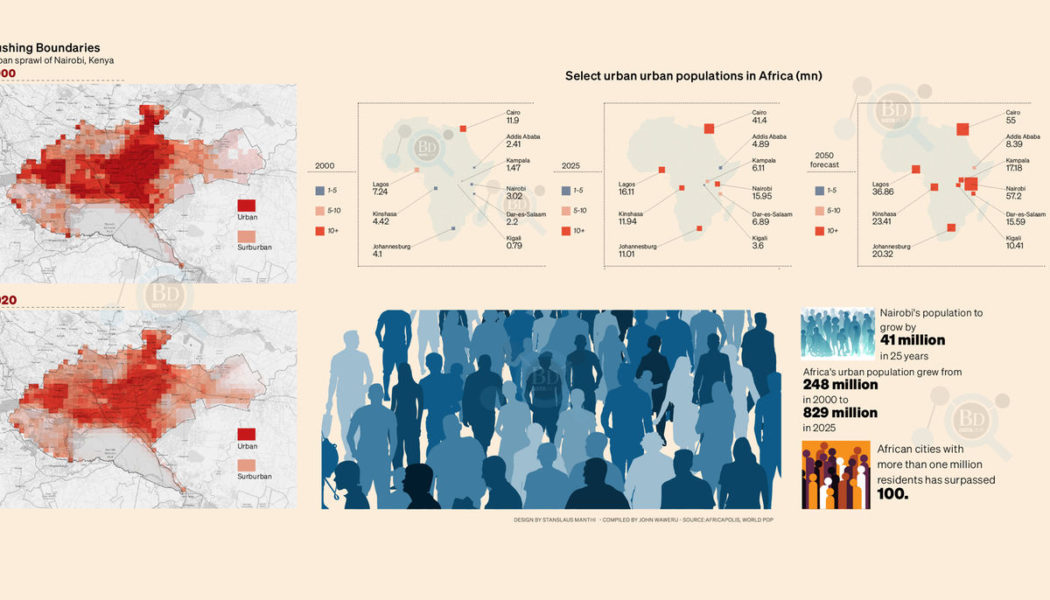
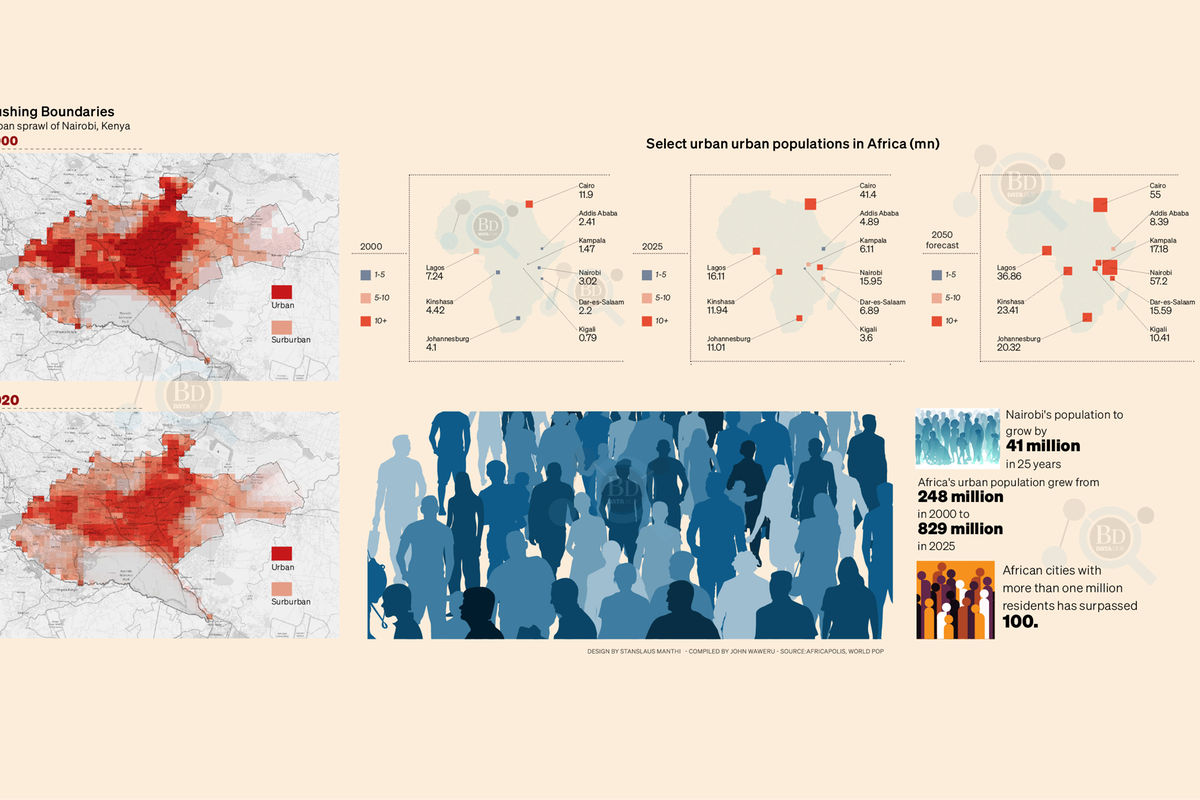
Nairobi is set to become Africa’s largest metropolitan area by 2050, overtaking megacities such as Cairo and Lagos, amid a surge in urbanisation, putting pressure on the capital’s infrastructure, housing and power to provide jobs.
Projections by Africapolis, a research and data visualisation tool developed by the Organisation for Economic Co-operation and Development (OECD), show Nairobi’s population will hit 57.2 million by 2050, up from 15.95 million in 2025.
This will place Kenya’s capital ahead of Cairo’s 55.5 million and Lagos’ 36.9 million, with Egypt and Nigeria’s capital currently having the largest population in the continent.
The growth of Nairobi’s population is the product of urbanisation and the search for opportunities like jobs by school leavers from other counties, putting the devolved system of governance in the spotlight.
Devolution was meant to disperse development and jobs outside Nairobi due to the colonial roots that have seen the capital account for 25.3 percent of Kenya’s gross domestic product.
The population surge will up demand for jobs in an economic setting where businesses are not creating employment to match the fresh graduates, a fodder for a surge in crime.
It will also put pressure on the city’s housing and ageing infrastructure, including roads, water and the sewerage network.
Africa’s urbanisation has not delivered the same economic dividend experienced in other regions. According to the Africa Urban Lab, the continent is urbanising at far lower income levels than Asia or Latin America did.
When 40 percent of Africans lived in urban areas, average income per person stood at $1,500, compared with $2,500 in Latin America and $5,400 in East Asia at the same stage of development.
Poverty is a cause and an effect of Africa’s sub-optimal urbanisation. African governments spent an average of just $27 per person annually on infrastructure between 2014 and 2020, contributing to chronic congestion, inadequate transport networks and rising housing costs.
Roads account for only about one-eighth of urban land in Nairobi, Dakar and Lagos compared with roughly a quarter in cities such as London and Manhattan, while retrofitting roads, water and sewerage after settlements are established costs three times more than planning.
Onerous regulations and uncertain tenure reduce housing supply, pushing up costs.
The United Nations reckons Africa lacks 120m houses. It notes that more than half of households that pay rent in sub-Saharan Africa spend at least 30 percent of their income on it, more than in any other region.
The continent, in other words, is not taking full advantage of what cities can give. Better urban planning would help. But Africa has an average of one urban planner per 100,000 people, a twentieth of the ratio in the OECD.
For Nairobi, the race to 57.2 million residents is about more than becoming Africa’s largest city. It is a test of whether one of the continent’s fastest-growing metropolitan regions can manage urban sprawl through timely investment in transport, housing and public infrastructure.