
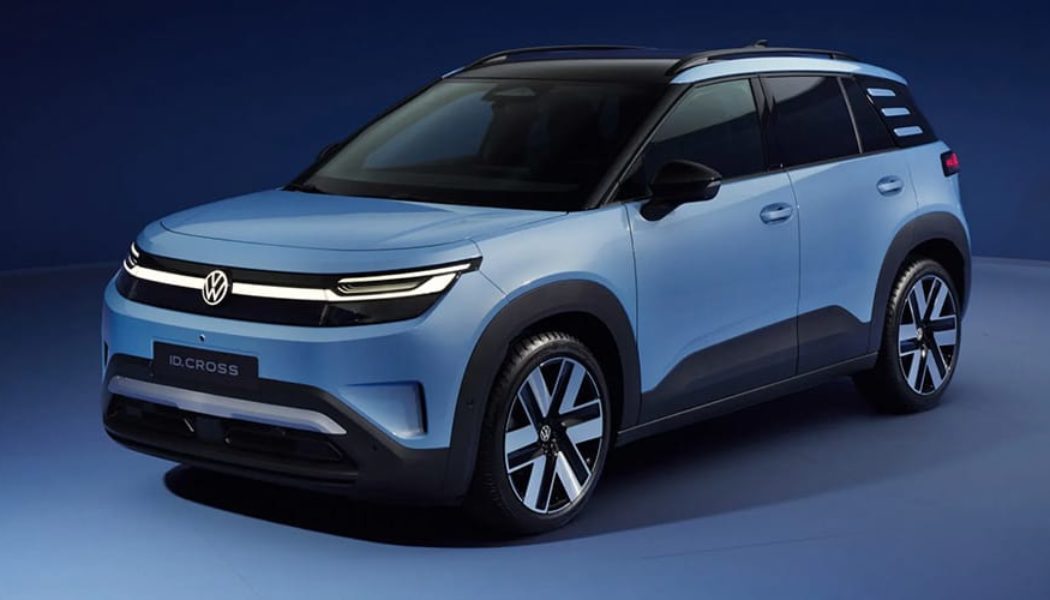
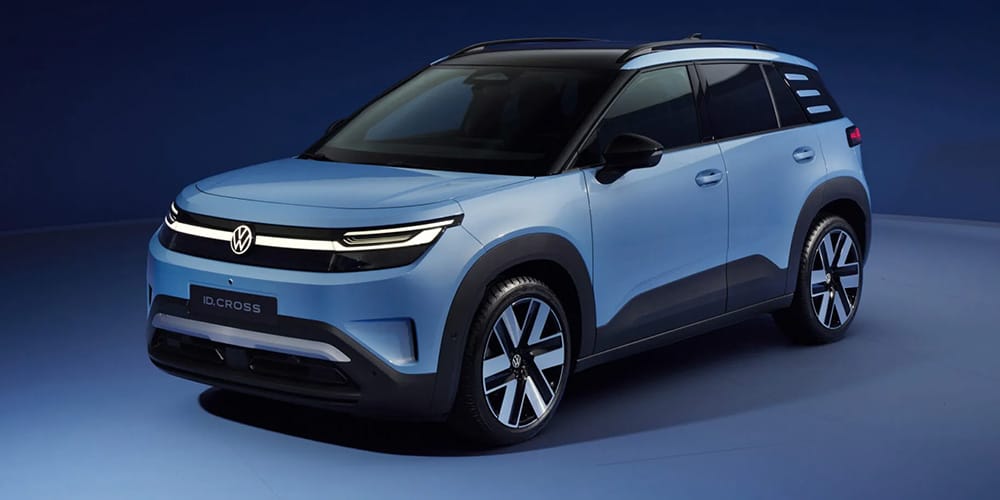
The production version of the ID. Cross debuts as an affordable subcompact SUV with a starting price of €28,000 EUR.
Available with 37 kWh or 52 kWh battery packs, the electric crossover offers a maximum range of 271 miles and up to 208 hp.
Interior design updates include the return of physical controls on the steering wheel and a dedicated 25-liter front trunk/
Volkswagen has officially unveiled the production ID. Cross, a small electric SUV that serves as the high-riding counterpart to the recently revealed ID. Polo. Measuring 4,150 mm from nose to tail with a 2,601 mm wheelbase, the subcompact crossover is scheduled to arrive in European showrooms in autumn 2026. Built on the updated MEB+ platform that underpins the Cupra Raval and Skoda Epiq, the vehicle brings confident styling and premium features to a highly competitive segment. The exterior design incorporates slim lighting, clean body surfacing and a modern silhouette that intentionally channels the upmarket appeal of the Mk4 Golf from decades past.
Following up on last year’s concept, the model relies entirely on single-motor front-wheel-drive configurations across three output levels. The entry-level variant pairs a 114 hp electric motor with a 37 kWh battery pack to deliver a WLTP-estimated range of 196 miles. A mid-tier option bumps the output to 133 hp using the same battery, while the top-spec version utilizes a 208 hp motor and a larger 52 kWh pack to achieve a maximum range of 271 miles. DC fast-charging capabilities peak at 90 kW for the smaller battery and 105 kW for the larger one, allowing for a 10% to 80% charge in approximately 24 minutes under ideal conditions. Volkswagen also integrated vehicle-to-load functionality to enable owners to power external devices directly from the car.
Smart packaging helps the ID. Cross maximize interior volume despite its small footprint. The cabin provides 475 liters of cargo space behind the rear seats, easily surpassing internal combustion alternatives like the T-Roc. A dedicated 25-liter front trunk gives drivers a convenient storage spot for charging cables. Inside, the dashboard layout features premium cloth surfaces and addresses widespread complaints about earlier electric models by reintroducing genuine clickable physical buttons on the steering wheel and center console. A 12.9-inch infotainment screen handles major functions, while buyers can add high-end options like a panoramic glass roof, matrix LED headlights, 12-way power-adjustable massage seats and a 10-speaker Harman Kardon audio system.
With a starting price of €28,000 EUR, the new release positions the German automaker to challenge a growing wave of affordable battery-powered models. While the vehicle matches the base price of the Renault 4, it provides superior driving range and interior space. The strategic pricing and improved material quality signal a clear effort to reclaim market share from aggressive international competitors. However, the model will face steep competition from the Kia EV2, which undercuts it at €26,600 EUR while offering a slightly longer driving range and a more powerful standard motor.