
Kenya’s commercial state corporations are entering a new era. The Government Owned Enterprises Act, assented to on December 5, 2025, scraps the fragmented State Corporations Act regime and shifts Government-Owned Enterprises (GOEs) under the Companies Act. The result: uniform governance, commercial discipline and a clear separation between profit-making and public service mandates.
For taxpayers, it means fewer bailouts. For investors, it opens the door to partial privatisation and listings.
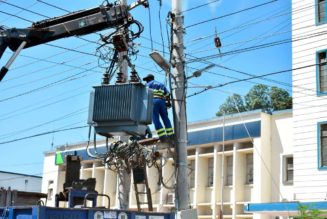
The new Act standardises everything. All GOEs—defined as companies majority-owned by the national government, operating on commercial principles and self-funded without annual parliamentary appropriations—must be incorporated as public limited liability companies under the Companies Act. Kenya Power, KenGen and Kenya Pipeline have already transitioned. Others are following.
The Act’s second major shift is structural: ring-fencing public service obligations from commercial operations. Previously, GOEs used internally generated revenue to fund public service obligations. That drained cash, created losses and pushed firms back to the Exchequer. Under the Act, commercial revenue stays in the business. Any public service obligations must be transparently funded by the Treasury. This creates an incentive for financial discipline and makes the true cost of public services visible in the budget, rather than hidden in a corporation’s balance sheet. Performance contracts will also replace loose supervision as GOEs move towards measurable accountability.
Further, each entity must develop a strategic plan and annual business plan, sign performance contracts with the National Treasury, undergo annual evaluations based on audited financial statements, and publish audited reports, performance results and anti-corruption disclosures. The Treasury will also publish performance rankings and details of director appointment processes.
The Act creates a clear pathway for private participation through partial privatisation, strategic investors and public listings. This gives Kenyans a chance to own profitable state firms while giving the government a new revenue stream.
Governance is also strengthened. For instance, minority shareholders can elect independent directors in proportion to their shareholding. That strengthens board independence and protects investors—a key demand of the capital markets.
That said, the law will not fix decades of inefficiency overnight. Success will hinge on the Treasury effectively enforcing performance contracts, boards resisting political capture, and GOEs operating on commercial principles with greater prudence. The beauty is that the necessary legal architecture is now in place.
If implemented well, the Act could shift state enterprises from fiscal liabilities to wealth-creating assets.