

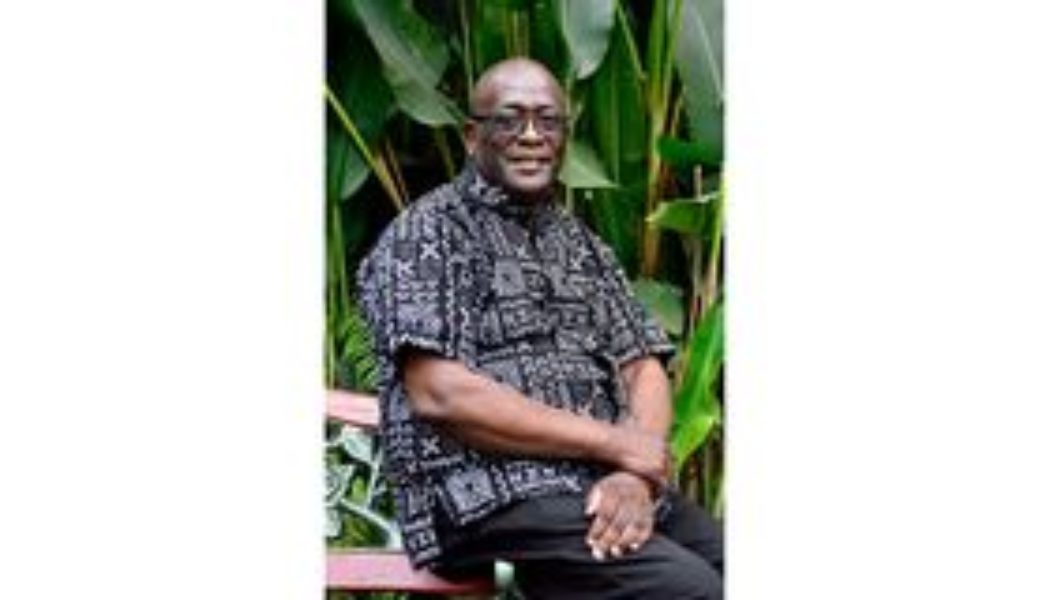
Manoah Esipisu, diplomat, former government spokesman and former High Commissioner to the UK, doesn’t answer questions so much as wander through memory and history, building his own scaffold of stories.
You could call him the chief priest of nuance, but you won’t. It would be undiplomatic.
Ask him about his career and he begins with an egg race in Kakamega. Somewhere between a Reuters newsroom, the Rwandan genocide, Commonwealth summits, State House, Buckingham Palace and cancer research, you catch on that this man isn’t recounting a career; he is showing you how a public servant is made. You are no longer in the restaurant; you are in the kitchen, watching the sausages being made.
We meet by the swimming pool at the Nairobi Serena Hotel. Evening hangs low over us. It looks like it might rain, but it’s all a ruse.
By the time our conversation ends, it becomes obvious why Manoah Esipisu doesn’t really talk about himself.
A spokesman learns that the story is always someone else’s. A diplomat learns that saying less often says more. Perhaps that is why, after 90 minutes, the clearest portrait of the man emerges not from the titles he has held, but from the values that have quietly threaded through them: restraint, service, judgment, and an enduring belief that language, used carefully, can alter the course of events.
My dad was a teacher and a preacher. He gave us books outside the curriculum. He tested your verbal understanding of things every day.
He thought, correctly, that those who had a better grasp of language had a better chance to emerge from village life into leadership.
A lot of people say they come from humble beginnings. I’ve never professed that. My dad was the person people looked up to in the village. You might be poor, but everyone doesn’t see you that way. We were taught that people look up to us. Our calling is to surpass the chaos around us.
A new headmaster said everyone who hadn’t paid full fees must go home. I went to his office and told him the President had said, on a news bulletin, that no headmaster shall send anyone home for that. He told me I was being insolent.
He sent me home indefinitely. It took eight weeks to resolve the matter.
We prosecuted the case up to the PS level. I missed my entire second term as a candidate. I used to study under a tree outside my dad’s house. When I went back, the headmaster asked my dad to cane me.
My dad refused, on the basis that it would be unjust, since I had done nothing but explain national policy. The headmaster punished me anyway. Then I sat the mocks. I got the only number one I ever got in school. The man told me: You are bright, but you have a loose nut in your head.
I was the rookie in the Reuters newsroom when Robert Ouko died. Nobody could get confirmation. I called the police commissioner at his home number, because those days Posta held everyone’s home numbers. He picked up.
That was the story that kept me at Reuters. That life then went on for nine years. I had come to Reuters from The Standard newspaper, where I had been a sports reporter. Reuters doesn’t report sports regularly, so I moved into business journalism, which I knew nothing about. They sent me to cover a budget speech. I wrote it the way Kenyan papers did: beer up, fuel up, tobacco up. The critique of my reporting was longer than the story itself.
Two weeks later, they sent me to London for my first business reporting course.
Out of every disaster comes something positive. I covered the East African markets. I knew finance ministers, presidents, central bank governors. And of course, I covered wars.
I spent weeks in Rwanda after the genocide. I covered Somalia, Eritrea-Ethiopia, DRC, Burundi, Sudan. I saw and witnessed some very gory things. My colleagues died in Somalia.
In my later days at Reuters, after 10 years of writing and analysing, I was a little restless. So I went to teach at Wits University, which I did for a year and a half. And while I was there, I got this call from the Commonwealth.
It helps to meet people before they reach their pinnacle. To you they’re just still the same people. I spoke to Kagame, Museveni, Zuma, many times, long before anyone called them President. I was the only journalist in Zambia to predict Mwanawasa would win, based on the internal power play of the ruling party. That won me an interview with him on the day of his inauguration, before he’d even moved into State House. He received me at his own house, walking around in socks. [Big grin]
Then I took the job of deputy head of communications at the Commonwealth Secretariat. Within three months my boss left, and I became marketing director. That was really where my first brush with diplomacy started. You learn to look with a very plain face. No one can read anything from you. No one can see the hand you’re playing.
My lessons came early, at my induction at the Commonwealth Secretariat. I was introduced to the new High Commissioner of Eswatini, and she asked me why Johannesburg media hated their King.
I told her, off the cuff, that he was marrying children pulled out of high school. Two days later my boss called me into a meeting with the political director and asked me to explain myself.
He told me, that question was not posed for you to answer. It was a public display of displeasure by the Kingdom, not something for an international organisation’s deputy spokesperson to comment on. If Swaziland officially complained, I was out of a job. I went and prayed that they wouldn’t. [Chuckle]
Working with Julia Gillard, then Prime Minister of Australia, taught me to unfuzz things in your head. She was hosting a Commonwealth summit during a national crisis, Qantas was on strike, the country’s main carrier grounded. She kept two visually separate setups: One for the domestic crisis, another for the international meeting.
Different backdrop, different tone, different language for each audience. I thought, this leader makes sense.
Every country needs to know its own hymn sheet for hosting a summit. You don’t build it from the ground up each time. Some of the logistical chaos you saw around the Africa-France summit wouldn’t happen if a country had one. You have your own sequence, your own protocol, that determines what happens and where.
You can negotiate some things with a co-host, but there are things that simply cannot happen. A head of state standing outside the door of your own conference, that cannot happen.
Ambassador Prof Manoah Esipisu poses for a picture after the interview at Serena Hotel on July 28, 2026.
Photo credit: Francis Nderitu | Nation Media Group
President Museveni’s working hours were crazy. You’d be told there’s a meeting in the morning. Morning comes and goes. Afternoon comes and goes. Around 9pm you’re told the President is now at State House, be on standby. By the time you’re picked up it’s midnight.
The meeting itself starts at 1am.
Don Kaberuka, then President of the African Development Bank, wanted his speeches to sound like him, not like me. Don’t write sentences you can’t finish in one breath. He didn’t want fluff. Being verbose is a problem. As a newspaper columnist I used to think in terms of, this column is 900 words and I only have 300. He was the opposite: why is this sentence even on the page?
When the call came from Nairobi to serve as spokesperson for President Kenyatta, I was still at the African Development Bank. I went to Kaberuka, my boss at the time, and asked him to help me decide.
He told me there was no decision to make. They haven’t called you because you’re the best communicator on earth, or because you have the best profile of any other Kenyan.
They’ve called you because there is a need right now that they believe you can manage. If you don’t go, 10 years from now they’ll remember that when they had a problem, they thought only you could give a certain push, and you weren’t available. Is that how you want your leaders to remember you?
I took two months before my first briefing at State House. I was asked many times why we’d hired a spokesperson who doesn’t speak. I said, I don’t understand things yet. Once I speak, there has to be finality to it. I won’t spin propaganda. That’s not my role. If the President’s spokesperson speaks, it has to mean something, it has to be credible. Poor communication is partly derived from poor action. Don’t tell people what you’ll do tomorrow. Just do it. People can live on promises for the mundane things. For the critical things, they want to see results.
As a journalist, I would go straight to the top. I’d ask the then Central Bank Governor, Micah Cheserem, a question that his director of research could have answered, or his director of banking could have answered.
But you go up, it comes down. These people end up having to speak to you anyway, because you never built the relationship with them directly. You hurt people, in a way, because you’re not doing the intermediary work. You focus so much on leadership that you cut yourself off from everyone in the middle.
When I called my first meeting at State House with my team and asked for ideas, no hand went up. Meeting ends, I ask what the story is.
They tell me, no, ideas are above our pay grade.
We are paid to implement, not to have them. I told them, if we’re going to work here, you’re going to have to give me some ideas, because I don’t carry all the knowledge. But underneath that failure was a bigger one. At medium and senior management level, you always go straight to the top. You have to learn to build relationships with your own team.
The controller, because no money comes to your team without him. The chief of staff, because he reads every speech, even the one you think is settled, and can still say, this one’s on fire. The big boss has answers, but everyone in between is important, because they play a part in delivering that answer.
I failed to get the director’s job at the Commonwealth after acting in the role for months. I was gutted. The person who got it came from a country that was a major funder with nobody in senior management. At a certain level you have to have competence, but you also have to have the support of the ranking members.
Our dad died of a stroke. Medical support wasn’t strong then. We didn’t understand the disease. I’d just left college. We weren’t really engaging with the doctors; we were overwhelmed with other things. That failure to understand is part of why I’ve become more sensitive to how we respond to health issues, not just as a family, but at a community and national level.
I have three boys and a wife. We generally lead private lives. You have to be prepared to protect your family as much as possible. But also understand that service to country sometimes means your family will suffer, because you’re not there. If the balance is between your country and your family, ordinarily your family wins every single time.
When I got married, I had my reception right here at Serena. My then boss, Nick Kotch, my bureau chief, was also my best man. He told me: Reuters will always be a jealous co-wife. Reuters will compete for time with you, and a lot of the time, Reuters will get more time than you.
My first born was born around the time of the Ethiopia-Eritrea war. You’re leaving an infant and going to Asmara. Every time your wife hears there’s been another bombing in the city, she calls, and you’re not picking up for the next day or two. Guess who’s suffering?
At State House, I didn’t take a single day of leave. Your off day doesn’t depend on you. You can be told you’re taking one, but you’re in the same town as the President. He has an off day. Not you.
You still have to work. You want to visit home, you ask for permission. If it’s not granted, you are not visiting. Nothing. So you leave it at your station. Maybe with the Commonwealth, I took some leave days. Not in the last 11 years, between government and the High Commission.
I’d love to have stayed with my children more when they were young.
They were in school in Johannesburg and Durban while I was serving at State House. Because of the hours I was keeping, I’d have only seen them occasionally either way. But occasionally in a house in Nairobi is better than occasionally in a house in Johannesburg.
You get to give them slightly more if they are close. They miss you, but they miss you less than when you have to get on a four or six-hour flight just to see them. Eventually it becomes twice a month. Then once a month.