

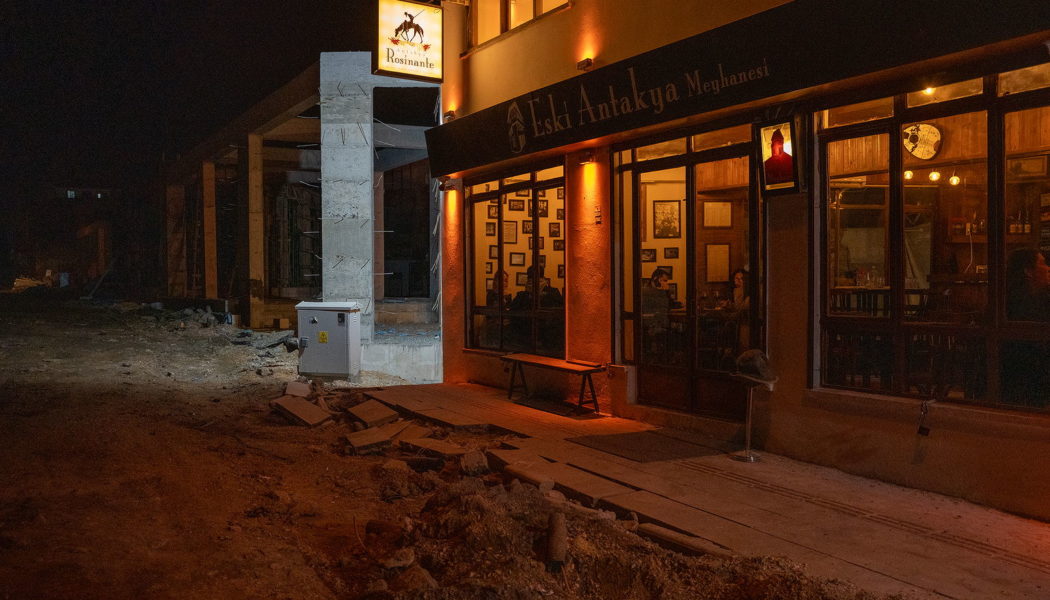
Eating and drinking together, locals are healing after the devastating disaster that decimated 90 percent of the city.
Local legend has it that Kurtuluş street, the spine of Antakya’s old city—what was the ancient city of Antioch—is the world’s first illuminated street, once lit by Roman torches at night. But on a winter evening, it is dark, with the only light coming from small fires lit by construction workers camping out beside the road. Once trodden by traders and warriors in their ancient glory, the street is now covered with mud and gaping holes.
At the end of a plank walkway laid over the mud, a door opens into warmth. Inside the newly opened meyhane, a traditional tavern, the smell of anise fills the air. Glasses clink, plates move from hand to hand, and conversation rises above the heater’s buzz. Outside, Antakya still feels like a construction site. Inside, it sounds like the city remembered how to be itself.

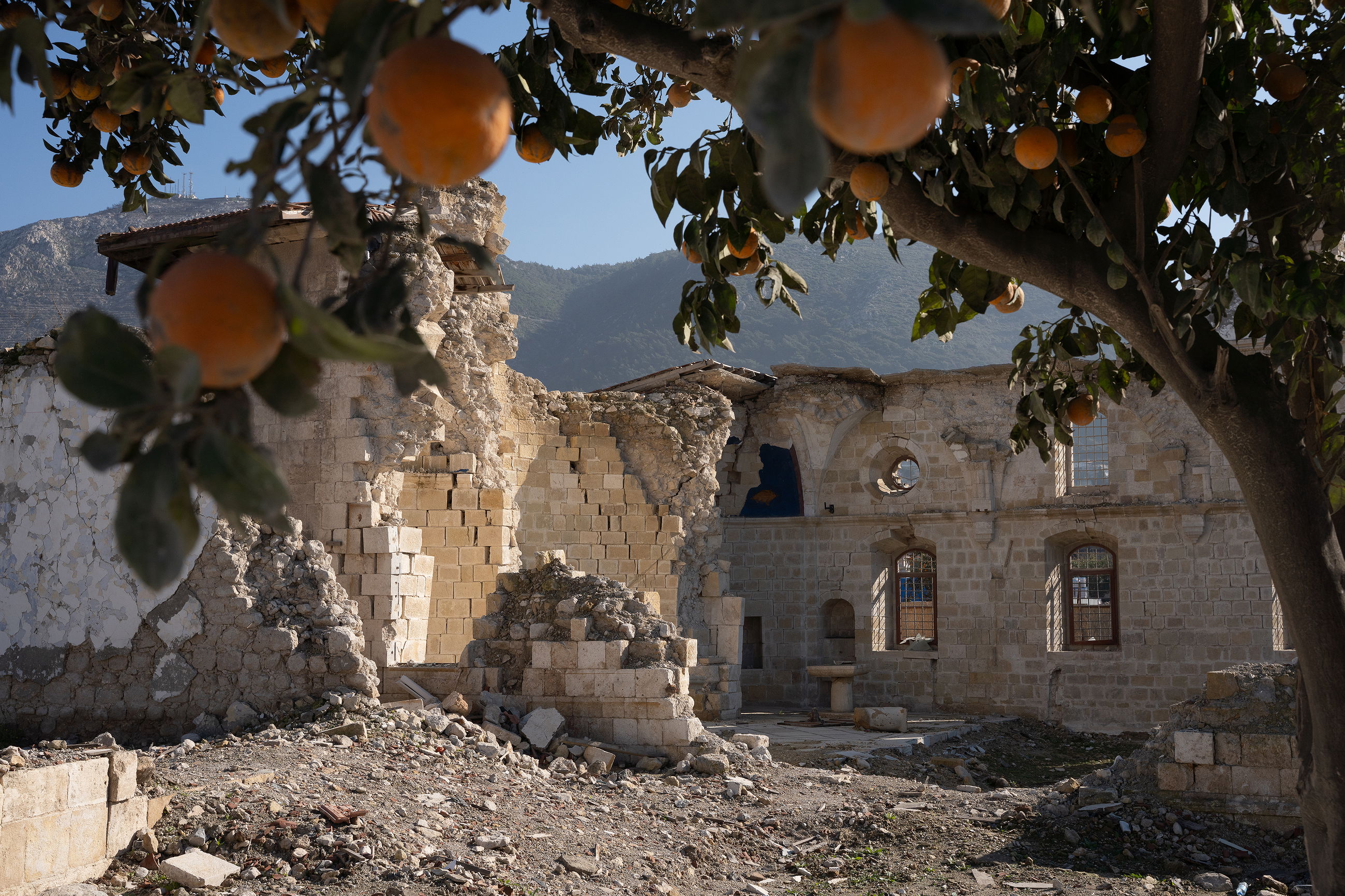
Three years after the earthquake that destroyed nearly 90 percent of Antakya’s buildings and killed at least 20,000 people across the province, the city has been forced to rebuild not only its infrastructure but its food culture. Antakya still eats, still gathers, and still shares, but the geography, routines, and social fabric sustaining those rituals have shifted since the disaster. And with them, the cuisine is changing too.
“These are the better days,” says an elderly hawker selling fresh za’atar on a cart covered with a plastic tarp a few hundred meters away from Uzun Çarşı, the Long Bazaar, an ancient trading center believed to be as old as the city of Antioch itself. Once a tight maze of stone shops laced with the scent of cumin, soap, and roasting meat, Uzun Çarşı is now vacant, filled only with construction machinery, its shopkeepers forced down the road to a temporary bazaar.
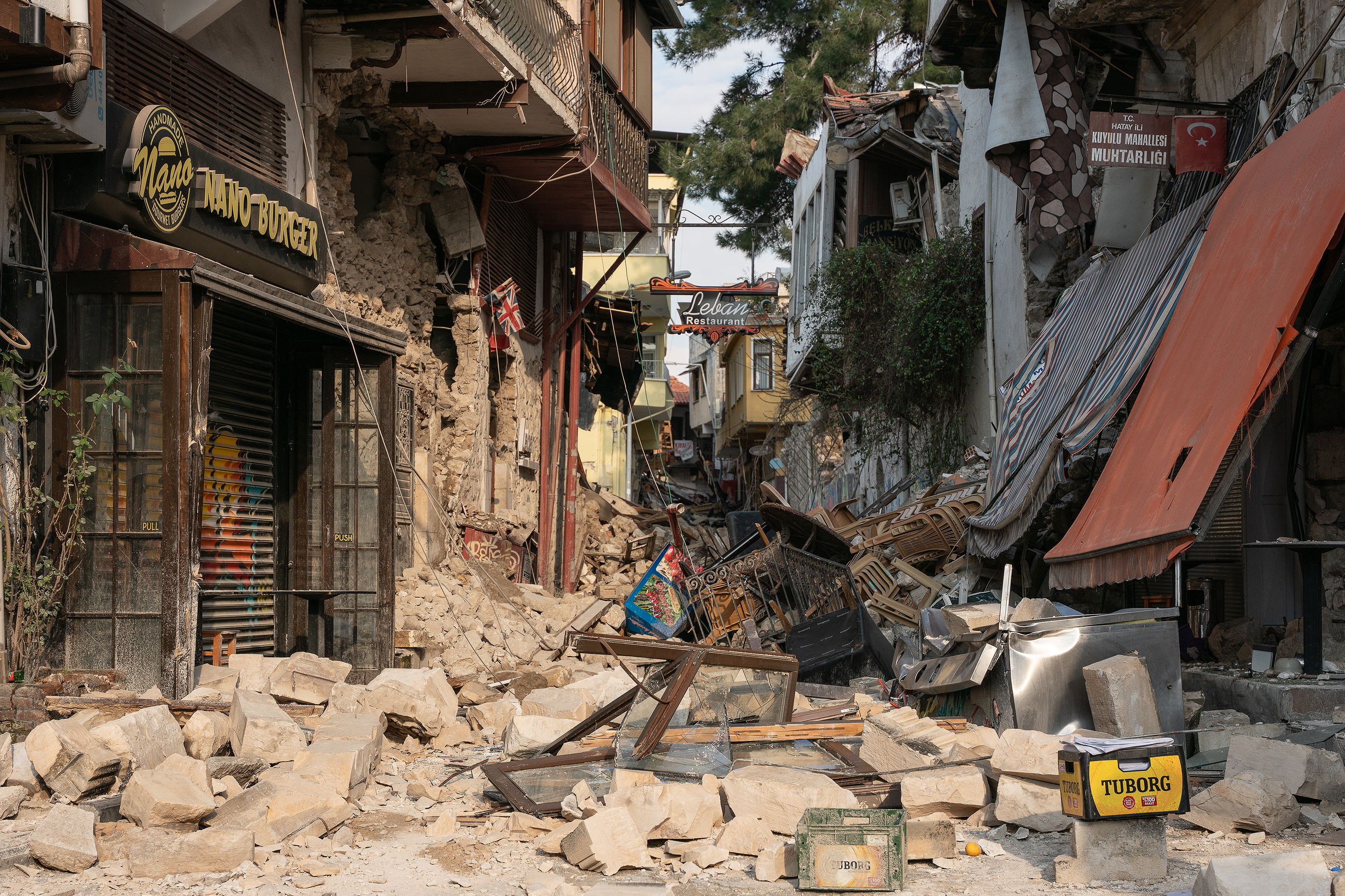
Until recent rains, the entire city center was covered in dust, says the hawker . “People didn’t even leave their houses,” he adds. “There were no customers to sell anything to for a long time.”
Aside the makeshift bazaar, traffic crawls through mud and bottlenecks on one of the few remaining north-south routes in Antakya. Construction dust fills the air, and many people in Antakya wear masks. Most cough frequently, including the hawker.
“Every delivery is a new crusade now,” says İsmail Çayır, a delivery boy at a local kebab place called Vitamin Kasabı that, like most of the businesses from the old bazaar, now operates from a temporary government-built stall.
Besides the potholes and mud, the city’s map changes every day. Construction zones swallow blocks, while empty lots mark where buildings once stood. Routes shift with the work, and drivers learn the city again each morning. Three years after the destruction, Çayır still struggles to find familiar addresses.

At another prefabricated, temporary bazaar in the city center, shopkeeper Faruk Atıcı says that the shortage of qualified labor has been one of the main problems for his business and many others. After the disaster, much of Antakya’s population scattered. Those with stable incomes and established businesses often rebuilt their lives elsewhere. But there’s a silver lining. “The ones in the diaspora created a new market,” says Atıcı, who sells traditional Mesopotamian products like olives, tomato and pepper pastes, jams, and dried vegetables. “People try to fulfill their longing with food from home.”
The people who stayed in Antakya are no stranger to that longing—to the feeling of homesickness. Much of the home they knew is now unrecognizable. “We try to go to places we knew before the earthquakes,” says Atici. “We like being in places resembling the old days.”
But Atici does not have much time for nostalgia. His family moved after the earthquakes to Arsuz, another district of Hatay Province, which means that Atıcı has to commute for three to four hours every day. “We’ve become people who eat quickly and leave,” he says. “Because there’s neither a place nor the time to sit down and eat.”

In Antakya, food has long been how people mark time, weddings, religious holidays, and weekly gatherings stretching late into the night. Long tables were the city’s social architecture. As one restaurant owner puts it, “We used to eat not to feel full but to be a part of that culture.”
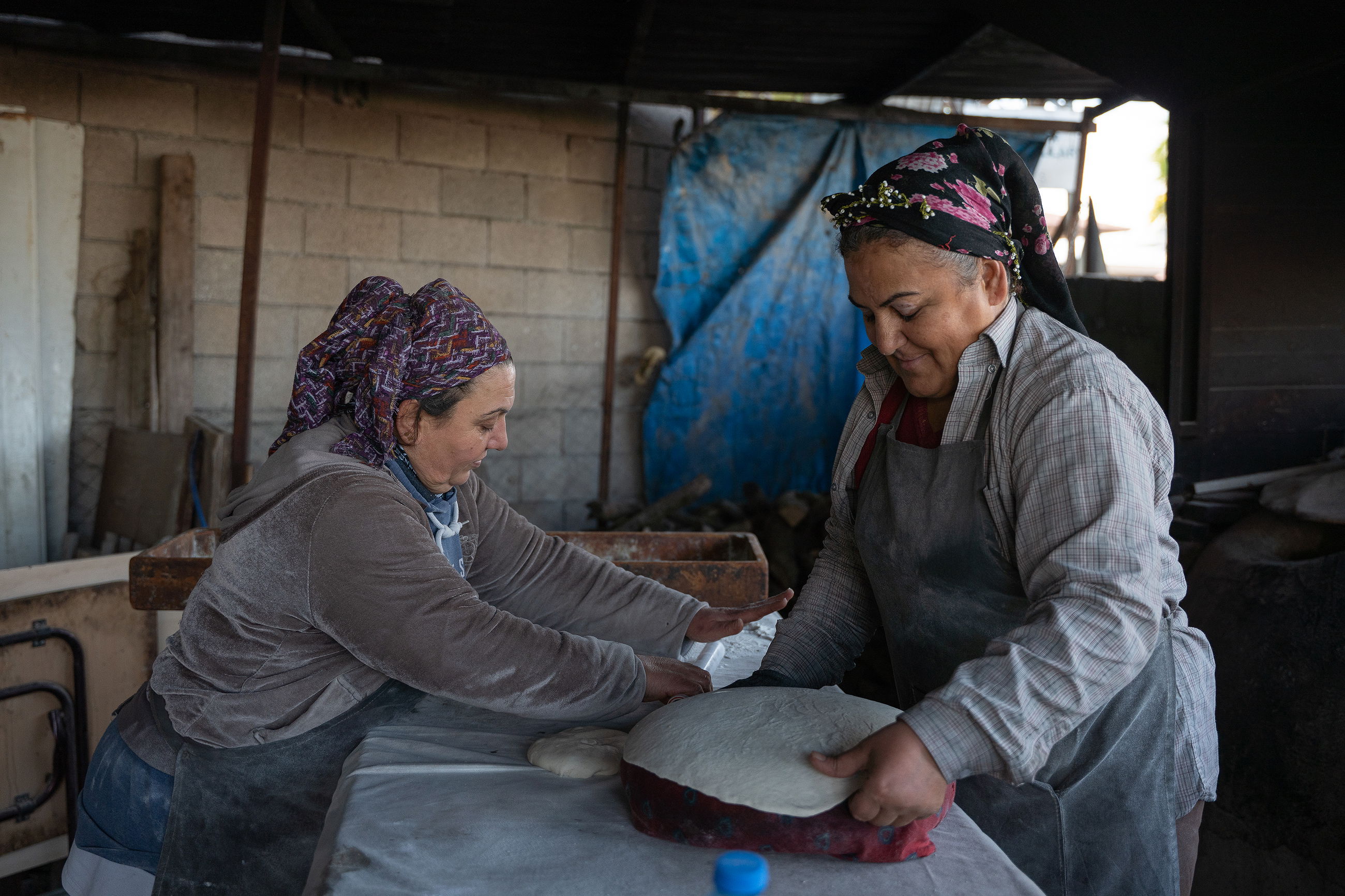
Filiz Dudaklı runs a commercial tandır house and has already been dislocated three times since the earthquakes. Dudaklı had invested heavily in her business, and the last three years have brought her to a point where she considers quitting. “You can see the line,” she says while pointing to the customers waiting in front of her stall. “But I’m tired of trying to adapt to every new condition.”
Dudaklı has rebuilt her tandır oven several times, moving from one rented space to another as landlords reclaim land for reconstruction. But the problem, she explains, is not only finding a place to bake. It is finding flour that tastes like home. And in Antakya today, that comes from only a handful of places.
One of these places is Mahmut Mısırlıoğlu’s stone mill, inherited from his father. It is one of the last remaining stone mills in the city, bearers of a 1,000-year-old tradition. Rough circular stones grind against each other, crushing grain the way they have for generations, only now powered by electricity.
“Most of the flour you now find has chemical whiteners,” says Mısırlıoğlu, running his hands over the wooden frames of sieves and stone wheels of his family’s mill as if they are all old friends. Flour dust floats in the air, settling on old machinery and giving the room the look of a shaken snow globe.

Here, they use no additives and were supplying a niche customer base even before the earthquake. “We lost 70 per cent of our customers,” Mısırlıoğlu says. Many of the bakeries and restaurants that once relied on his flour are gone, relocated or struggling to reopen. The mill used to have six workers and now employs only two, including Mısırlıoğlu.
The building that houses the mill is marked for demolition under new construction plans. Mısırlıoğlu says the equipment cannot simply be moved. The stones are heavy, calibrated over decades and tied to the space itself. He has asked for support to preserve the mill as cultural heritage. So far, none has come.
“This business will end after us,” Mısırlıoğlu says. “The mill will stop. And the bread won’t taste the same anymore.”
But for now, the stone wheels of the mill continue to turn as Antakya’s ancient center is slowly put back together. Lights glow in the windows of the newly opened meyhane on Kurtuluş Street, and the tables are set for a few more guests than the night before.
This article was supported by Inside Turkey, a project of the Institute for War and Peace Reporting. Inside Turkey commissions independent local journalists to report on Turkey’s untold stories. With additional reporting by Burcu Günaydın Özkaya.