
Summary
- Akai Professional has launched the MPC One G2 and MPC Key 37 G2, both running an 8-core processor with 4GB RAM and 64GB internal storage for four times the processing power of their predecessors
- Both units run MPC3 OS, supporting up to 32 simultaneous plugin instances and 16 stereo audio tracks in standalone, with a full Linear Arranger and USB-C hybrid connectivity offering 24×24 multichannel audio streaming over a single cable
- The MPC One G2 draws its colorway from the classic MPC4000 and MPC1000 blue, while the MPC Key 37 G2 references the cream finish of original late-1980s MPC hardware
Akai Professional has officially released the MPC One G2 and MPC Key 37 G2, two next-generation standalone production systems built around a shared 8-core processor platform that delivers four times the processing power of the previous generation. Available now through authorized dealers worldwide, both machines arrive running MPC3 OS and ship loaded with over 20GB of production-ready content, including the Native Instruments Analog Dreams MPC Edition included free at launch.
The hardware upgrade at the core of both units reframes what standalone production can realistically handle. The 8-core processor paired with 4GB RAM and 64GB internal storage pushes load times down and project capacity up, with support for up to 32 simultaneous plugin instruments and 16 stereo audio tracks without a computer in the chain. MPC 3.9 OS builds on that headroom with a full Linear Arranger that brings DAW-style arrangement to the hardware surface, alongside an integrated oscillator engine for built-in synthesis and expanded Ableton Live interoperability through direct project import and export. A 7-inch full-color multitouch display handles navigation across both units, and USB-C connectivity consolidates 24×24 multichannel audio streaming, expanded 32-channel MIDI I/O, and full host and device support into a single cable.
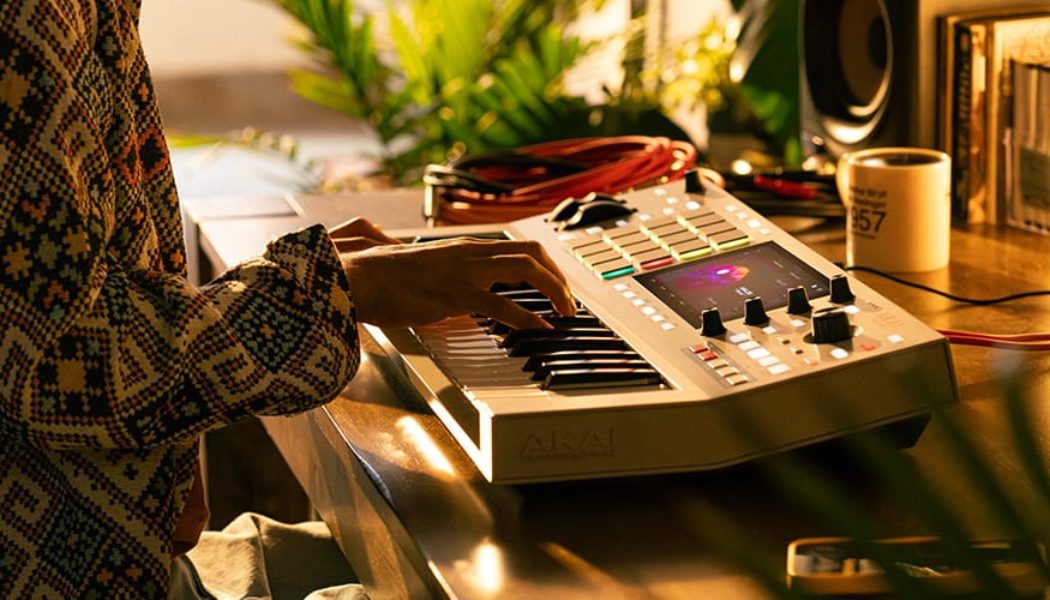
Where the two machines diverge is in how they position their players. The MPC One G2 is built around the pad-first workflow the MPC format is most associated with: 16 velocity- and pressure-sensitive RGB pads across 8 banks, 4 touch-sensitive Q-Link knobs, 5-pin MIDI in/out, and 4 TRS CV/Gate jacks giving 8 outputs total for hardware and modular integration. It ships with 11 instrument plugins and 9 expansion packs. The MPC Key 37 G2 takes the same processing core and routes it through a 37-key synth-action keybed with aftertouch, pitch bend, and modulation wheel, paired with the same 16-pad layout for producers who build melodically but want the full MPC ecosystem beneath their fingers. Its plugin roster of 13 instruments adds OPX-4, Jura, and Sub Factory to the shared lineup, and its 6 expansion packs skew toward synthesis-forward content with packs like Gemini Future Classic Synths and Orion Future Classic Workstations.
The colorway choices do meaningful work here. The MPC One G2 references the blue finish associated with the MPC4000 and MPC1000, two machines that defined the mid-2000s era of beatmaking culture. The MPC Key 37 G2 reaches further back, pulling from the cream colorway of the original late-1980s MPC hardware that established the platform’s identity in the first place. Both choices signal that Akai is leaning into the MPC’s archival weight rather than distancing the G2 generation from it, treating the refresh as a continuation of a lineage rather than a clean break. An optional Pro Pack is available for both units, unlocking Pro Stems Algorithm, Super Warp Time-Stretch, and Clip Matrix for producers who need the extended toolset.
The MPC One G2 and MPC Key 37 G2 are available now through authorized dealers and select music retailers worldwide.