

Crypto
Wazupnaija – Naija Entertainment blogs & Forums – Business – Crypto


Andorra green lights Bitcoin and Blockchain with Digital Assets Act
A small light of progress shines from Andorra, a tiny European country nestled between France and Spain. The country’s government, the General Council of Andorra, recently approved the Digital Assets Act, a regulatory framework for digital currencies and blockchain technology. The act is split into two parts. The first regards the creation of digital money, or “programmable digital sovereign money,” which can be exchanged in a closed system. In effect, this would allow the Andorran state to create its own token. The second half of the act refers to digital assets as financial instruments and intends to create an environment in which blockchain and distributed ledger technologies can be regulated. For Paul (who withheld his surname), CEO of local Bitcoin business 21Million, the new la...

Lido DAO most ‘overbought’ since April as LDO price rallies 150% in two weeks — what’s next?
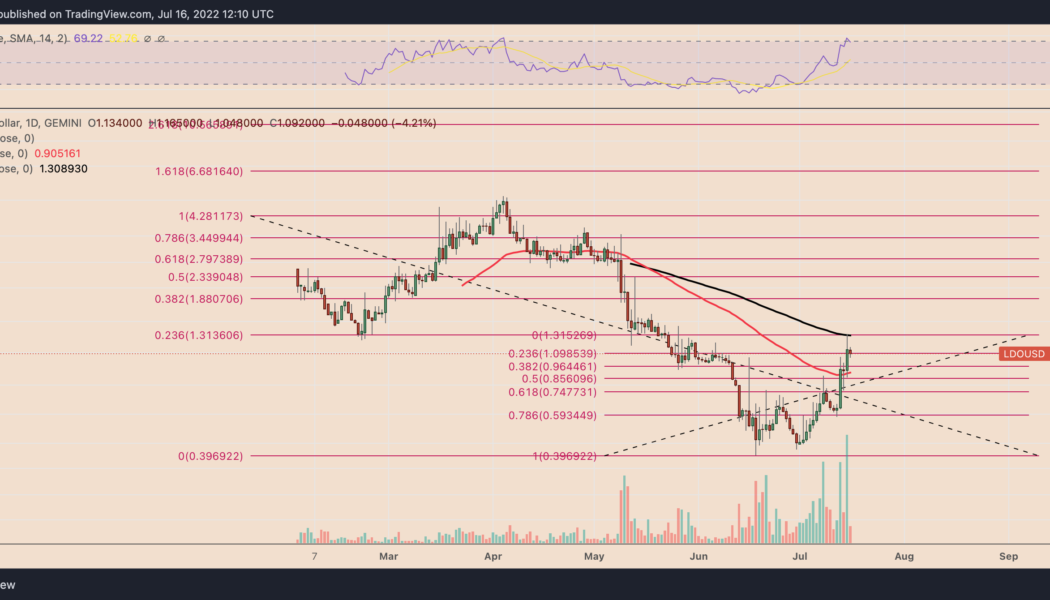
The price of Lido DAO (LDO) dropped heavily a day after its key momentum oscillator crossed into “overbought” territory. LDO undergoes overbought correction LDO’s price plunged to as low as $1.04 on July 16 from $1.32 on July 15, amounting to a 20%-plus decline. The token’s sharp downside move took its cues from multiple bearish technical indicators, including its daily relative strength index (RSI) and its 100-day exponential moving average (EMA). LDO’s latest plunge came after it rallied over 150% in just two weeks, a move that simultaneously pushed its daily RSI above 70 on July 15, thus turning it overbought. An overbought RSI signals that the rally may be nearing an end while readying for a short-term pullback. Meanwhile, more downside cues for the ...

Finance Redefined: DeFi market fell off the cliff in Q2, but there’s hope
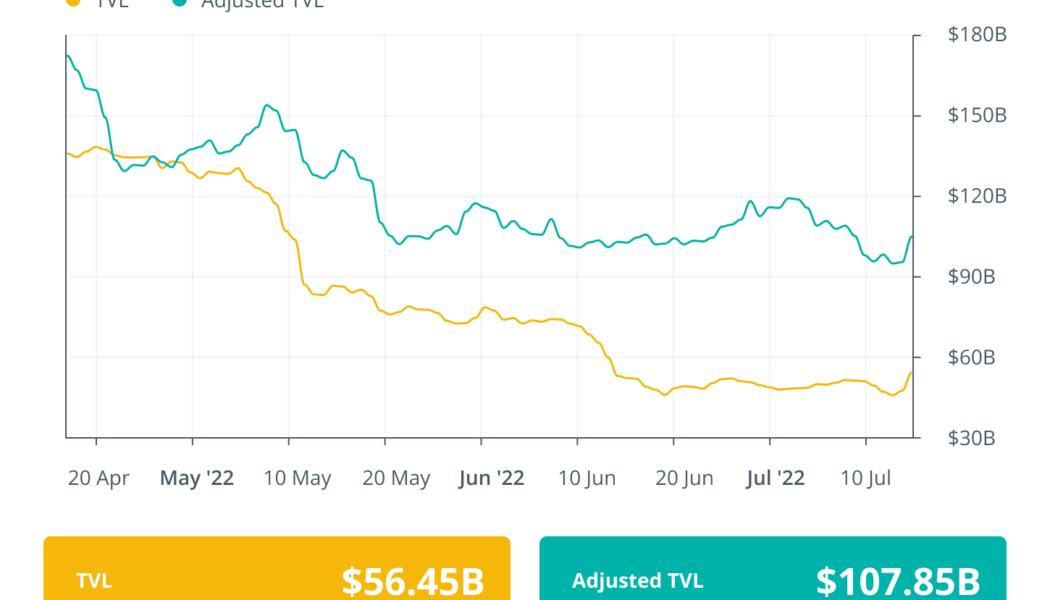
Welcome to Finance Redefined, your weekly dose of key decentralized finance (DeFi) insights, a newsletter crafted to bring you some of the major developments over the last week. This past week, the DeFi ecosystem saw several new developments despite a bearish phase brought on by the lending crisis in the crypto market. Another crypto lender, Celsius, with high stakes in DeFi protocols, filed for bankruptcy. The overall DeFi market fell to new lows in the second quarter. However, a new report indicates users haven’t given up hope. BNB Chain launched a new decentralized application (DApp) platform with an alarm feature. Vermont state regulator opened an investigation into troubled crypto lender Celsius, deeming it deeply insolvent. A DeFi researcher has predicted that Ethereum proof-of-stake...

The creator economy: How we arrived there and why we need its Web3 upgrade
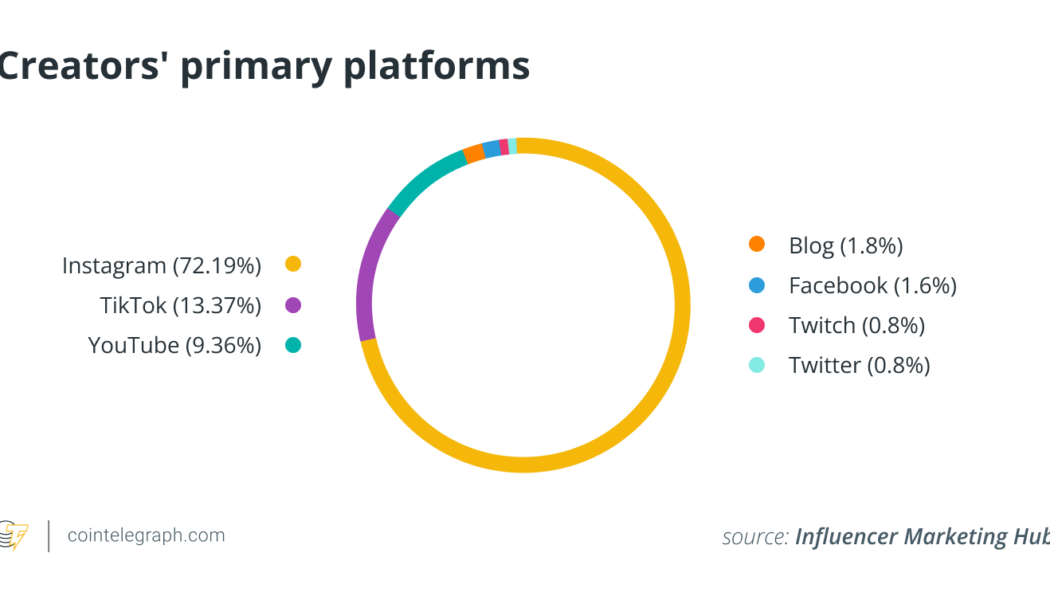
Does the term “creator economy” make you think of some idealistic environment where creativity, authenticity and passion are key values? Where true Michelangelos and da Vincis drive progress through their talents without struggling for food and proving themselves all their lives to get a chance to be recognized posthumously? If so, I’m with you. Though creativity has existed as long as humanity, we started to discuss it as the new economic paradigm not so long ago. What’s more, now we even talk about it in the Web3 dimension. To better understand what it is, first, let’s walk through the backstory of the creator economy. How did we actually arrive here? Often, looking back at the past is a great way to get real insights into what is happening today. It won’t make you yawn, I promise. The b...

The new philanthropic frontier: How Web3 could democratize donations
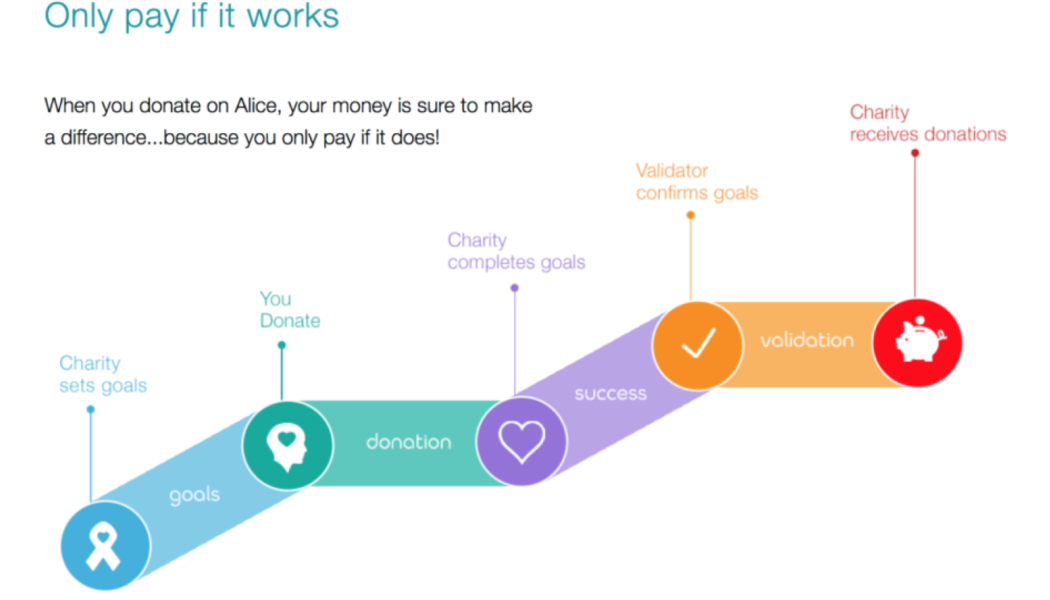
A merge between crypto and philanthropy is already underway as decentralized autonomous organizations (DAO) and nonfungible token artists alike fundraise and donate crypto to nonprofits. But what does the age-old institution of philanthropy have to learn from emerging technologies in the crypto space? Additionally, what does crypto have to offer philanthropy that could improve the sector generally? Crypto offers the potential for nonprofits to be governed in a decentralized fashion, creating conditions that maximize the influence of communities most impacted by these organizations. Despite its meme-based reputation at times, the crypto industry is actually in the midst of a major push toward true democracy. This effort begins by leveraging blockchain technology that has created the conditi...


Bit2Me to onboard 100k blocked crypto investors from 2gether exchange
Following a recent agreement between the two crypto exchanges, Bit2Me announced plans to onboard 2gether’s 100,000 crypto investors, who were recently blocked from trading due to the exchange’s inability to operate amid unfavorable market conditions. On July 10, Spanish cryptocurrency trading platform 2gether shut down its free trading services, citing its inability to justify its related operational costs due to crypto winter. Instead, the users were being charged 20 euros as maintenance fees. Providing relief to the recently displaced crypto investors, Bit2Me reached an agreement with 2gether to onboard its users without imposing any fees — allowing users to move over their holdings and resume their trading activities. In addition, Bit2Me decided to reimburse the 20 euros back to the use...


US lawmakers ask about EPA, DOE monitoring of crypto mining emissions, energy consumption
Democratic legislators from both houses of the United States Congress have sent a letter to the Environmental Protection Agency (EPA) and Energy Department (DOE) to inform them of their findings on the energy consumption of cryptocurrency mining and asking the agencies to require mining to report their emissions and energy use. Meanwhile, the Paraguayan Senate, the upper house of that country’s legislature, has passed a comprehensive bill to regulate cryptocurrency and allow miners to use excess electricity generated in the country. The six U.S. lawmakers, led by crypto cynic Elizabeth Warren, noted in their July 15 letter that crypto mining in the United States has been increasing since it was banned by China last year. The seven crypto mining companies that responded to the legisla...

Time to accumulate? 5 sectors to watch during crypto winter
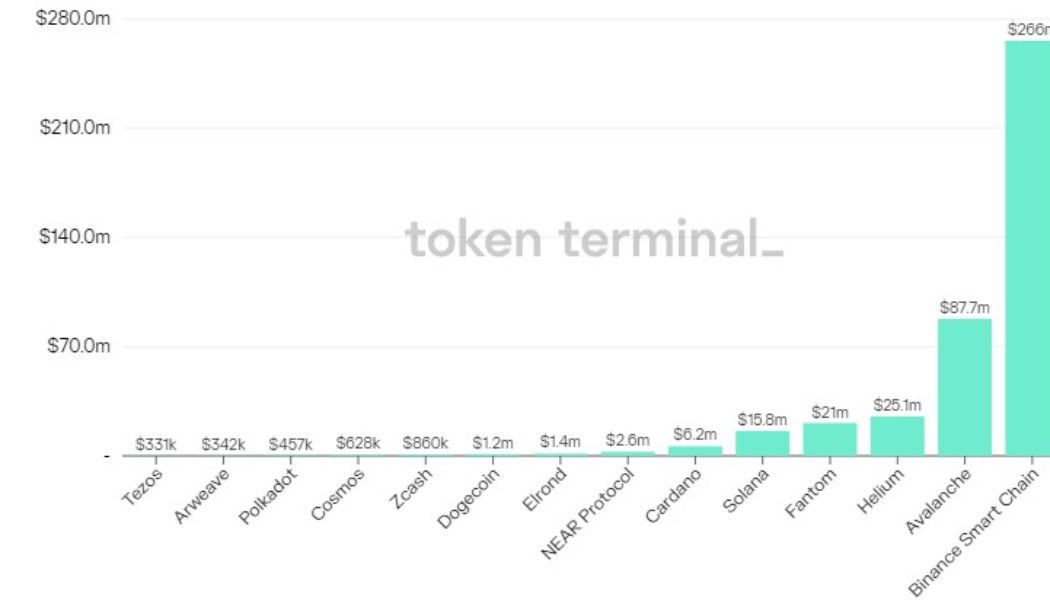
It’s weird to think that anyone could look forward to downturns in the crypto market, but that is precisely the position held by many developers and project creators who enjoy the low-pressure environment that exists during a bear market. As the saying goes, bear markets are for building, and now is one of the best times to survey the landscape to see which sectors of the market are most active in designing the platforms that will soar to new heights in the next bull cycle. Here’s a look at five sectors of the blockchain ecosystem that may present some of the best opportunities for accumulation while prices are low and demand is non-existent. Layer-1 protocols Layer-1 (L1) protocols like Bitcoin (BTC) and Ethereum (ETH) form the foundation that much of the cryptocurrency ecosystem is...


SEC commissioner Allison Lee departs, readying financial regulator for Jaime Lizárraga
Allison Herren Lee, one of five members of the United States Securities and Exchange Commission’s board, has officially left the regulatory body after more than three years as a commissioner. In a Friday announcement, chair Gary Gensler and commissioners Hester Peirce, Mark Uyeda, and Caroline Crenshaw said Lee had left the SEC, where in 2005 she started as a staff attorney at the agency’s enforcement division at a regional office in Denver. She moved on to be appointed a commissioner in 2019 under the former presidential administration, and later served as acting chair to the regulatory body for three months, until Gensler’s confirmation in April 2021. “Commissioner Lee has been a stalwart advocate for strong and stable markets, including by emphasizing the need for market participants to...

Crypto Biz: 3AC’s founders are nowhere to be found
In the world of crypto, there’s no such thing as “too big to fail.” Three Arrows Capital, once the most recognizable hedge fund in the industry, has essentially gone belly-up after its founders believed their own hype and decided to go full-degen mode during the worst macro climate of a generation. Since the proverbial shit hit the fan last month, founders Kyle Davies and Su Zhu have kept a very low profile. So low, in fact, that their whereabouts remain a mystery, according to court documents. This week’s Crypto Biz chronicles the latest developments surrounding Three Arrows Capital and explores Grayscale’s legal proceedings against the United States Securities and Exchange Commission (SEC). Liquidators can subpoena 3AC founders despite ‘tricky issues’ with crypto assets We may not ...


You can transform the world with blockchain: Dr. Jane Thomason
Jane Thomason is an Australian academic who spent 15 years running hospitals and doing development work abroad followed by a 20-year stint building a $250-million revenue company. Thomason — now a blockchain adviser to the World Health Organization — says she “had an epiphany” while thinking about the 2004 Tsunami in Indonesia, in which the lives of over 200,000 people were washed away. “No one knew the identities of the people coming to the hospitals — all the identity documents were gone, all the bank records were gone, all the health records were gone. People wanted to send money to the people who were alive, but no one could send money directly.” Dr Jane Thomason believes in the power of blockchain to help make the world a better place. Thomason believes that if this data had bee...

DeFi token AAVE faces major correction after soaring 100% in a month
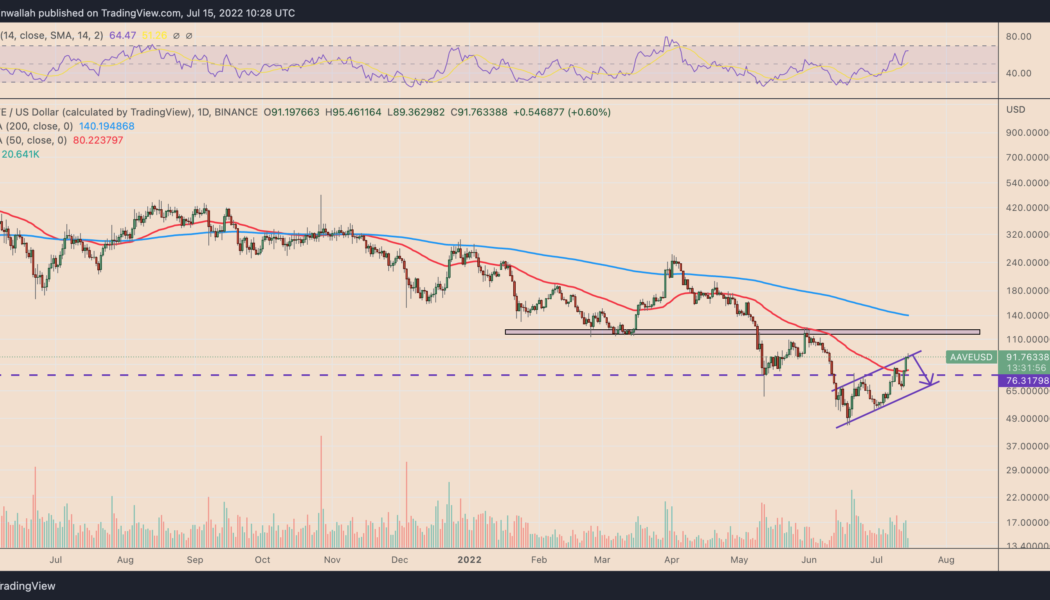
The price of Aave (AAVE) has more than doubled in a month, but its bullish momentum could be reaching a point of exhaustion. AAVE price tests key inflection level Notably, AAVE has surged by over 103% after bottoming out locally at $45.60 on June 18, hitting almost $95.50 this July 15. Nevertheless, the token’s sharp upside retracement move has brought its price closer to the level that triggered equally sharp pullbacks since early June. In other words, AAVE has been testing an ascending trendline resistance that constitutes a “bear flag,” a bearish continuation pattern. For example, the trendline’s previous test on July 9 ended up in a 20% downside move. Similarly, a similar attempt on June 24 pushed AAVE price lower by nearly 30%. AAVE/USD daily price chart. ...
