

Crypto
Wazupnaija – Naija Entertainment blogs & Forums – Business – Crypto


90% of surveyed central banks are exploring CBDCs — BIS
A survey conducted by the Bank for International Settlements, or BIS, suggested that many central banks around the world are looking into rolling out a central bank digital currency, or CBDC. In a paper released on Friday, the BIS Monetary and Economic Department said 90% of 81 central banks surveyed from October to December 2021 were “engaged in some form of CBDC work,” with 26% running pilots on CBDCs and more than 60% doing experiments or proofs-of-concept related to a digital currency. According to the BIS, the increase in interest around CBDCs — up from roughly 83% in 2020 — may have been driven by a shift to digital solutions amid the COVID-19 pandemic as well as the growth in stablecoins and other cryptocurrencies. “Globally, more than two-thirds of central banks consider that they ...

Crypto, like railways, is among the world’s top innovations of the millennium
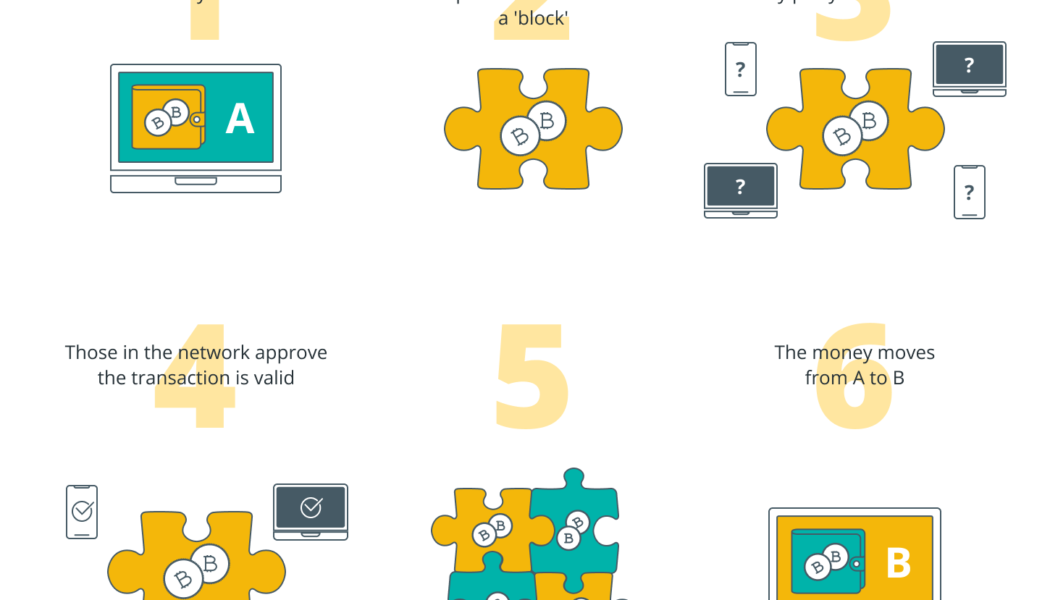
You are about to read a half-fiction witty story based on Stuart Hylton’s review of “the making of Modern Britain” and my interpretation of the blockchain’s impact on today’s world. I found it fascinating how the description of the industrial age front-runner technology resembled the awe and fear of blockchain in modern times. Some quotes are so relevant that changing the “railroad company” to “blockchain protocol” would give the same shilling. After several “bubbles” (actually eight so far) and some huge announcements — remember Libra and TON? — I figured it was a good time to coin (pun intended) the history of the emerging technology that could be the biggest innovation in the last 500 years. An intriguing comparison Why bother? From a distance of two centuries, it is difficult to grasp ...

For the crypto industry, supporting sanctions is an opportunity to rebrand
One of the first punitive measures leveled against Russia in response to the military invasion of Ukraine was the implementation of economic sanctions aimed at isolating the country from the international financial system. On March 12, Russian banks lost access to the international payments and messaging network SWIFT, and private sector payment companies, such as Visa, PayPal and Mastercard, were close behind. But while these highly regulated and publicly scrutinized organizations were quick to react to the crisis, concerns quickly mounted that the Russian state, as well as companies and oligarchs associated with it, could turn to digital currency exchanges as a backdoor to side-step sanctions. In the United Kingdom, the Bank of England and Financial Conduct Authority asked crypto firms t...


There’s more to NFTs than just PFPs — 5 ways nonfungible tokens will transform society
The nonfungible token (NFT) sector has undergone a surge in popularity over the past year and a half as projects like Bored Ape Yacht Club and CryptoPunks captured the attention of the general public. While the idea of fetching a six-figure payday for the latest trending digital art piece has been a major factor in the attention placed on the sector, the truth is that the crypto industry has only scratched the surface of what NFT technology is capable of. Here’s a rundown of some of the next frontiers in the development of NFT technology that has the potential to make substantial changes in everyday life. Medical records and identification Medical records and identification documents are vital pieces of information that are easy to misplace and difficult to replace, even in the digit...

Any dip buyers left? Bulls are largely absent as the total crypto market cap drops to $1.65T
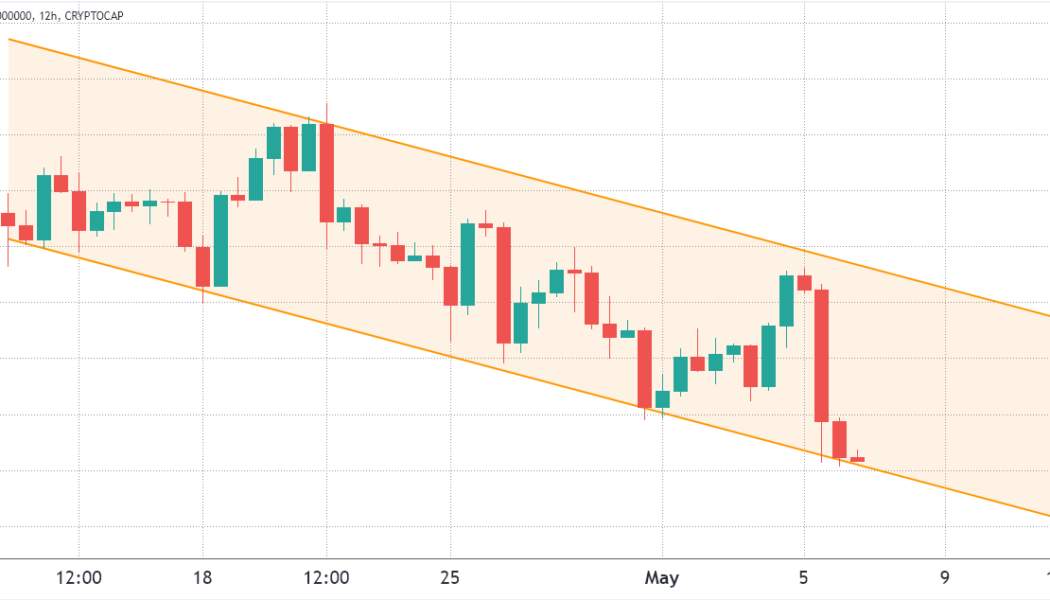
The total crypto market capitalization has been trading within a descending channel for 24 days and the $1.65 trillion support was retested on May 6. The drop to $1.65 trillion was followed by Bitcoin (BTC) reaching $35,550, its lowest price in 70 days. Total crypto market cap, USD billion. Source: TradingView In terms of performance, the aggregate market capitalization of all cryptocurrencies dropped 6% over the past seven days, but this modest correction in the overall market does not represent some mid-capitalization altcoins, which managed to lose 19% or more in the same time frame. As expected, altcoins suffered the most In the last seven days, Bitcoin price dropped 6% and Ether (ETH) declined by 3.5%. Meanwhile, altcoins experienced what can only be described as a bloodbath. Below ar...


Digital sovereignty: Reclaiming your private data in Web3
As the Fair Data Society puts it, we are laborers in the data economy. Our personal data — basically, the digital blueprint of our lives — gets collected by platforms we interact with, most often in a non-transparent way. At best, it is used to improve our user experience. At worst, our privacy gets breached, monetized and even weaponized against us. It all started with the emergence and growth of the user-generated web, as seemingly free social media networks, search engines and companies saw a new opportunity of profiting and went into the business of gathering, storing, analyzing and selling user data. By 2022, the data market had grown immensely. According to Statista, a total of 64.2 zettabytes of data had been created, consumed and put online worldwide by 2020. By 2025, this number i...


US Fed hikes interest rates, Bitcoin plunges below $36K, and Argentina’s central bank says no to financial institutions offering crypto: Hodler’s Digest, May 1-7
Coming every Saturday, Hodler’s Digest will help you track every single important news story that happened this week. The best (and worst) quotes, adoption and regulation highlights, leading coins, predictions and much more — a week on Cointelegraph in one link. Top Stories This Week Fed hikes interest rates by 50 basis points in effort to combat inflation On Wednesday, the United States Federal Open Market Committee (FOMC) voted to raise interest rates by 0.5%, marking its biggest upward adjustment in over two decades. It was the second rate increase of 2022, with seven increases expected in total for the year. In a press conference following the FOMC meeting, Federal Reserve Chair Jerome Powell further cemented the need to continue raising interest rates to combat inflation. ...

How to avoid front runners on decentralized crypto exchanges
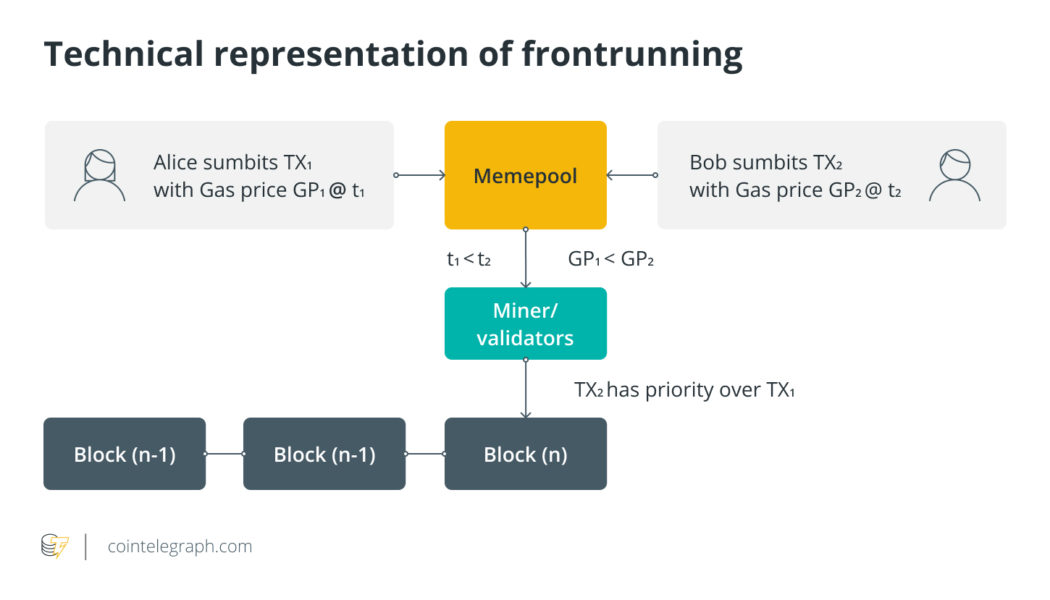
Decentralized exchanges (DEXs) nip in the bud several issues concerning their centralized counterparts such as concentration of liquidity in the hands of a few players, compromise of funds in case of a security breach, closed control structure and more. One issue, however, that has refused to subside is front-running. Unscrupulous players are still finding ways to defraud unsuspecting traders. If you have received less than expected when placing a trade on a DEX, there is a pretty good chance of you getting hit by front runners. These bad actors exploit the automated market maker (AMM) model to make profits at the expense of unsuspecting traders. This article will explain the attack vector and help you understand the basic concept of front-running in crypto trading, the potential consequen...

Anchor Protocol rebounds sharply after falling 70% in just two months — what’s next for ANC?
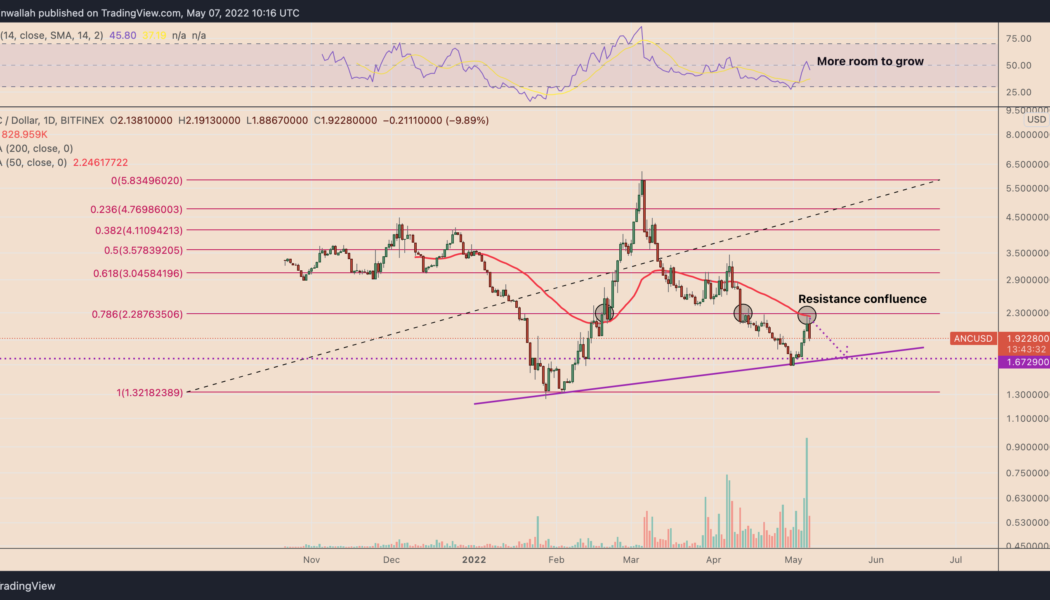
Anchor Protocol (ANC) returned to its bullish form this May after plunging by over 70% in the previous two months. Pullback risks ahead ANC’s price rebounded by a little over 42.50% between May 1 and May 6, reaching $2.26, its highest level in three weeks. Nonetheless, the token experienced a selloff on May 6 and May 7 after ramming into what appears to be a resistance confluence. That consists of a 50-day exponential moving average (50-day EMA; the red wave) and 0.786 Fib line of the Fibonacci retracement graph, drawn from the $1.32-swing low to the $5.82-swing high, as shown in the chart below. ANC/USD daily price chart. Source: TradingView A continued pullback move could see ANC’s price plunging towards its rising trendline support, coinciding with the floor near&...


The United States turns its attention to stablecoin regulation
The United States continues to be a global leader in embracing the cryptocurrency industry thanks to the work of Sen. Patrick Toomey, with the White House being at the forefront of crypto regulation. Last year, President Joe Biden signed a $1.2 trillion bipartisan infrastructure bill — and it included some new legislation that would impact the crypto sector. And more recently, the U.S. president announced a “whole-of-government” approach to regulating cryptocurrency in an across-the-board executive order directing multiple government agencies to answer specific questions on cryptocurrencies. The U.S. for the last year has clearly been seeking to help make the crypto industry more sustainable, which will make it significantly easier for cryptocurrency platforms to operate. But the Stablecoi...

Bitcoin clings to $36K as data suggests BTC price sell-off came from short-term holders
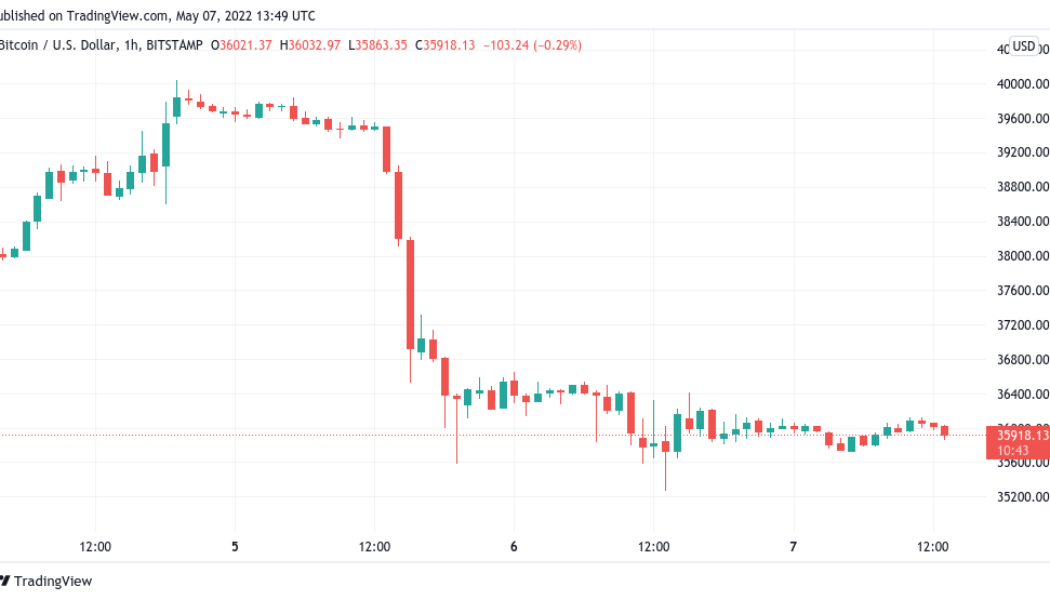
Bitcoin (BTC) found a new home at $36,000 into May 7 as volatility finally cooled into the weekend. BTC/USD 1-hour candle chart (Bitstamp). Source: TradingView Terra down at least $250 million in crunch Data from Cointelegraph Markets Pro and TradingView showed BTC/USD circling the $36,000 mark overnight after losing 12% in just 72 hours. Still near its lowest levels since late February, the pair had nonetheless avoided a rematch of 2022 lows at the time of writing despite low-volume weekend market conditions. In his latest Twitter update on May 6, popular trader Anbessa highlighted the planned support level to buy Bitcoin in what he described as a “fakeout” — a zone beginning at just under $33,000. #Bitcoin Update Twitter friendly, easy words BTC support, BTC fakeou...

Bitcoin’s Velvet Revolution: The overthrow of crony capitalism
If Karl Marx and Friedrich Engels were somehow transported to the present day and given a newspaper, the apparent lack of class conflict would probably make the revolutionaries think they’d won. They would see a society split on all manner of subjects — from identity politics to the correct COVID-19 strategy — but virtually silent on the eternal struggle between labor and capital, the oppressors and the exploited. How different it would be if they’d returned just 10 years ago when the Occupy movement was in full swing, with tent cities springing up in protest against crony capitalism, corporate greed and a reckless, out-of-control financial sector. A decade on, the same problems persist, but they’ve become a barely discernible background hum amid the roiling, raging culture wars. The 1% ma...
