

Crypto
Wazupnaija – Naija Entertainment blogs & Forums – Business – Crypto

Institutions increase exposure to Grayscale Bitcoin Trust as GBTC discount nears 30%
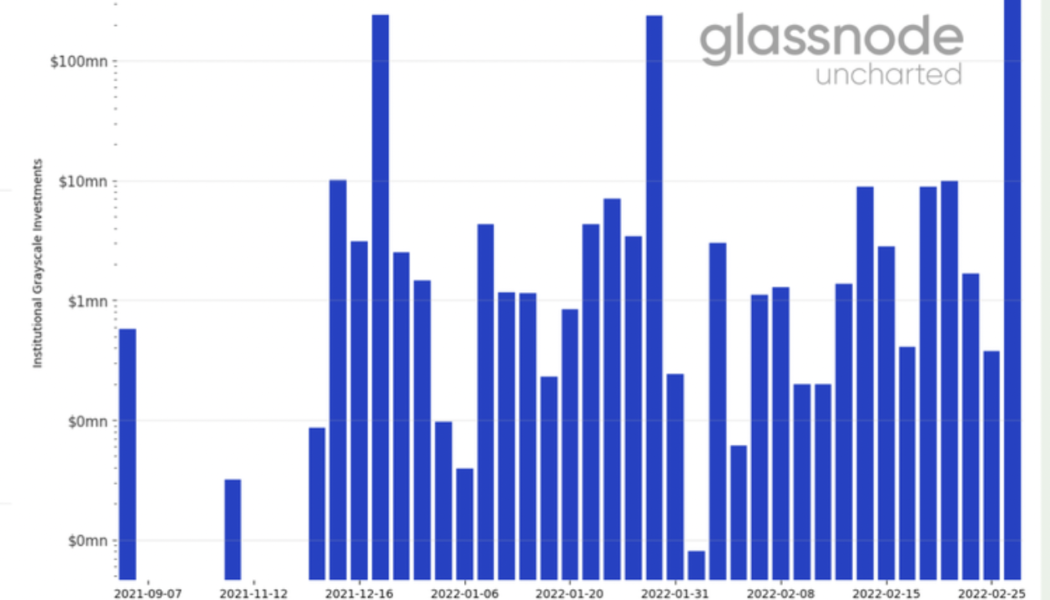
Institutional investors are returning to accumulate Grayscale Bitcoin Trust (GBTC) shares as the discount to spot price his risen to nearly 30%, data on Glassnode shows. Since December 2021, some weekly sessions saw investors pouring in between $10 million and $120 million into Grayscale’s flagship fund. Meanwhile, the biggest capital inflow — amounting to nearly $140 million — appeared in the week ending on Feb. 25, as shown in the chart below. Institutional Grayscale Investments since September 2021. Source: Glassnode No selloff yet among high-profile GBTC backers The GBTC trust attracted investments as global markets faced back-to-back shocks in the past few months, including a dramatic selloff in the technology stocks, followed by Russia’s invasion of Ukraine that left many...
Institutions increase exposure to Grayscale Bitcoin Trust as GBTC discount nears 30%
Institutional investors are returning to accumulate Grayscale Bitcoin Trust (GBTC) shares as the discount to spot price his risen to nearly 30%, data on Glassnode shows. Since December 2021, some weekly sessions saw investors pouring in between $10 million and $120 million into Grayscale’s flagship fund. Meanwhile, the biggest capital inflow — amounting to nearly $140 million — appeared in the week ending on Feb. 25, as shown in the chart below. Institutional Grayscale Investments since September 2021. Source: Glassnode No selloff yet among high-profile GBTC backers The GBTC trust attracted investments as global markets faced back-to-back shocks in the past few months, including a dramatic selloff in the technology stocks, followed by Russia’s invasion of Ukraine that left many...


Non-crypto natives launch social tokens to engage with community and fans
The COVID-19 pandemic, along with other recent events, have revealed the need for a fully digital economy, giving rise to Metaverse ecosystems, Web3 platforms and the adoption of digital currencies. For example, the Ukrainian government recently reached out to the crypto community on Twitter asking for donations in Bitcoin (BTC), Ether (ETH) and Tether (USDT). Nonfungible tokens, or NFTs, have also gained mainstream adoption as artists and creators across the globe have discovered new forms of monetization with these models. While innovative, these use cases also demonstrate the notion that blockchain-based concepts that emerged early on often take years to resonate with mainstream society. Social tokens in 2022 This also appears to be the case with social tokens o tokens that are is...
Non-crypto natives launch social tokens to engage with community and fans
The COVID-19 pandemic, along with other recent events, have revealed the need for a fully digital economy, giving rise to Metaverse ecosystems, Web3 platforms and the adoption of digital currencies. For example, the Ukrainian government recently reached out to the crypto community on Twitter asking for donations in Bitcoin (BTC), Ether (ETH) and Tether (USDT). Nonfungible tokens, or NFTs, have also gained mainstream adoption as artists and creators across the globe have discovered new forms of monetization with these models. While innovative, these use cases also demonstrate the notion that blockchain-based concepts that emerged early on often take years to resonate with mainstream society. Social tokens in 2022 This also appears to be the case with social tokens o tokens that are is...


6 Questions for Reeve Collins of BLOCKv
We ask the buidlers in the blockchain and cryptocurrency sector for their thoughts on the industry… and throw in a few random zingers to keep them on their toes! This week, our 6 Questions go to Reeve Collins, co-founder of BLOCKv — a platform for creating, minting and distributing next-generation programmable NFTs. I have always found myself at the forefront of new trends and technology developments. I started in 1997 at the first-ever online advertising agency when the internet was in its infancy. As the “dot-com boom” matured, I created one of the first ad networks in 2000 before shifting into the online branded entertainment space in 2007. By 2013, I was diving headfirst into the world of Bitcoin, and this exploration led me to invent the first-ever stablecoin, Tether, in 2014 and the ...
6 Questions for Reeve Collins of BLOCKv
We ask the buidlers in the blockchain and cryptocurrency sector for their thoughts on the industry… and throw in a few random zingers to keep them on their toes! This week, our 6 Questions go to Reeve Collins, co-founder of BLOCKv — a platform for creating, minting and distributing next-generation programmable NFTs. I have always found myself at the forefront of new trends and technology developments. I started in 1997 at the first-ever online advertising agency when the internet was in its infancy. As the “dot-com boom” matured, I created one of the first ad networks in 2000 before shifting into the online branded entertainment space in 2007. By 2013, I was diving headfirst into the world of Bitcoin, and this exploration led me to invent the first-ever stablecoin, Tether, in 2014 and the ...

Cointelegraph partners with Nitro Network to bring digital mining and decentralized internet to the masses
Over the past few years, nonfungible tokens (NFTs) have become a multibillion-dollar industry and have solidified themselves among the most tech savvy. They have opened the portal to infinite possibilities and carved out a new direction for the future of the internet. Enter Nitro Network, which is set to revolutionize the NFT space and take it to new heights. With its groundbreaking Non-Fungible Miners (NFMs), Nitro Network will solidify the decentralized web, all while offering generous rewards to its users. That is why Cointelegraph has partnered up with Nitro Network, to pioneer the future of a decentralized internet through the Non-Fungible Miner. NFMs are a unique innovation — an NFT that provides all users the ability to digitally mine Nitro’s native token, NCash, from anywhere in th...

Price analysis 3/4: BTC, ETH, BNB, XRP, LUNA, SOL, ADA, AVAX, DOT, DOGE
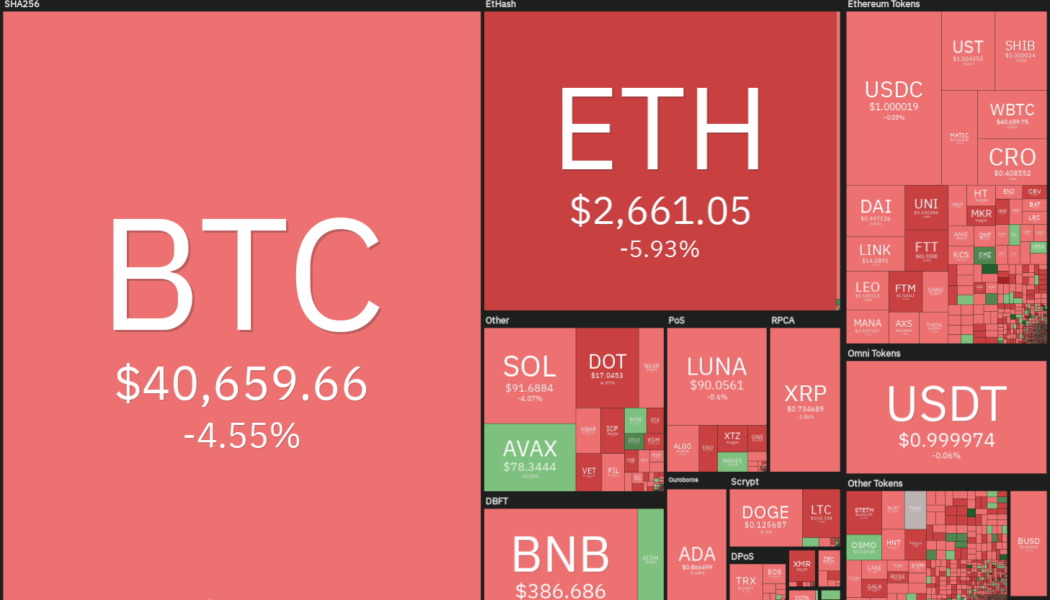
The equity markets in Europe and the United States are seeing a sea of red as traders continue to sell risky assets due to the geopolitical situation. Bitcoin (BTC) and several major cryptocurrencies are also witnessing profit-booking after the recent rise. Another reason that could be keeping investors on the edge is the upcoming Federal Open Market Committee (FOMC) meeting on March 16. A statement from Fed hair Jerome Powell on March 2 highlighted that the central bank is likely to hike rates this month. Fitch Ratings chief economist Brian Coulton expects core inflation to remain high in 2022 and the Fed to boost the “Fed fund rate to 3% by the end of 2022.” Daily cryptocurrency market performance. Source: Coin360 ExoAlpha managing partner and chief investment officer David Lifchit...


US Virginia Senate allows state banks to offer crypto custody services
The Senate of Virginia in the United States unanimously approved a bill amendment request that now allows traditional banks operating in the Commonwealth of Virginia to provide virtual currency custody services. Delegate Christopher T. Head introduced the bill (House Bill No. 263) back in January 2022, seeking an amendment to allow eligible banks to offer crypto custody services: “A bank may provide its customers with virtual currency custody services so long as the bank has 26 adequate protocols in place to effectively manage risks and comply with applicable laws.” The bill passed Senate with a sweeping 39-0 vote and is waiting to be signed into law by Governor of Virginia Glenn Youngkin. Banks that intend to offer this service to clients will need to adhere to three specific requir...

The post-consortia era: How enterprises are embracing Web3 structures
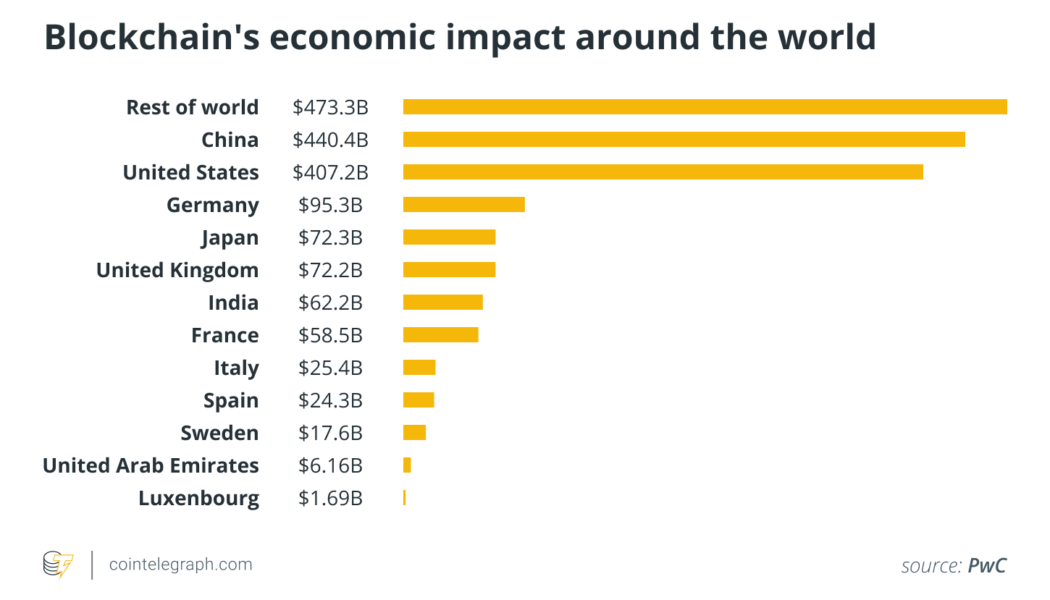
Now that the initial hype surrounding blockchain applications and the prolonged blockchain “winter” that followed are left behind, we now find ourselves in the middle of a “spring” that is helping organizations reimagine how they deliver value. So much so that blockchain is expected to add $1.76 trillion to the global economy by 2030, according to PWC. A significant chunk of this uptick is expected to come from business-to-business (B2B) implementations, which stand to gain the most from the security, immutability and streamlining opportunities afforded by blockchain-based transactions and relationships. With processes that involve multiple partners, dozens (if not hundreds) of products and cumbersome bureaucracy for almost any business process, it’s hard to overstate how much enterp...

Impermanent loss challenges the claim that DeFi is the ‘future of France’
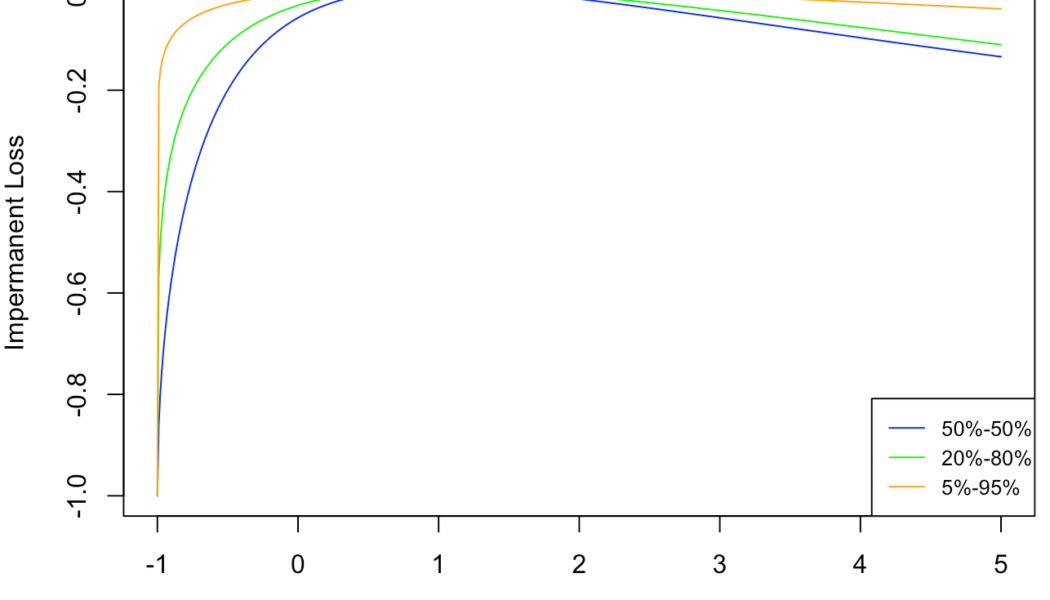
Impermanent loss is one of the most recognized risks that investors have to contend with when providing liquidity to an automated market maker (AMM) in the decentralized finance (DeFi) sector. Although it is not an actual loss incurred from the liquidity provider’s (LP) position — rather an opportunity cost that occurs when compared with simply buying and holding the same assets — the possibility of getting less value back at withdrawal is enough to keep many investors away from DeFi. Impermanent loss is driven by the volatility between the two assets in the equal-ratio pool — the more one asset moves up or down relative to the other asset, the more impermanent loss is incurred. Providing liquidity to stablecoins, or simply avoiding volatile asset pairs, is an easy way to reduce impermanen...

Terra, Avalanche and Osmosis lead the L1 recovery while Bitcoin searches for support
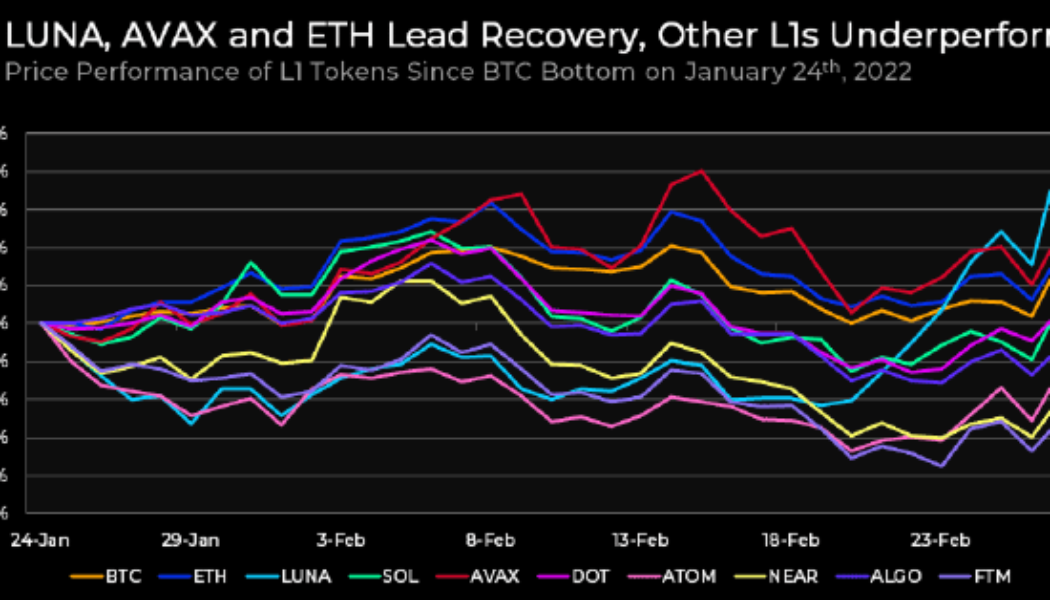
The layer-one (L1) ecosystem has received increased attention in recent months as users search for new investment opportunities in the Cosmos (ATOM), Fantom (FTM) and NEAR. Following January’s market sell-off, where Bitcoin (BTC) price dropped to bottom below $34,000, much of the L1 field has struggled to regain its momentum. Price performance of L1 tokens since Jan. 24. Source: Delphi Digital According to data from Delphi Digital, since the BTC bottom on Jan. 24, the only L1 to experience a notable gain in price include Terra (LUNA), Avalanche (AVAX) and Ethereum (ETH). Terra ecosystem growth The price growth seen in LUNA was in large part due to the announcement from the Luna Foundation Guard that it had raised $1 billion to form a Bitcoin reserve for the ecosystem’s Terra US...
