

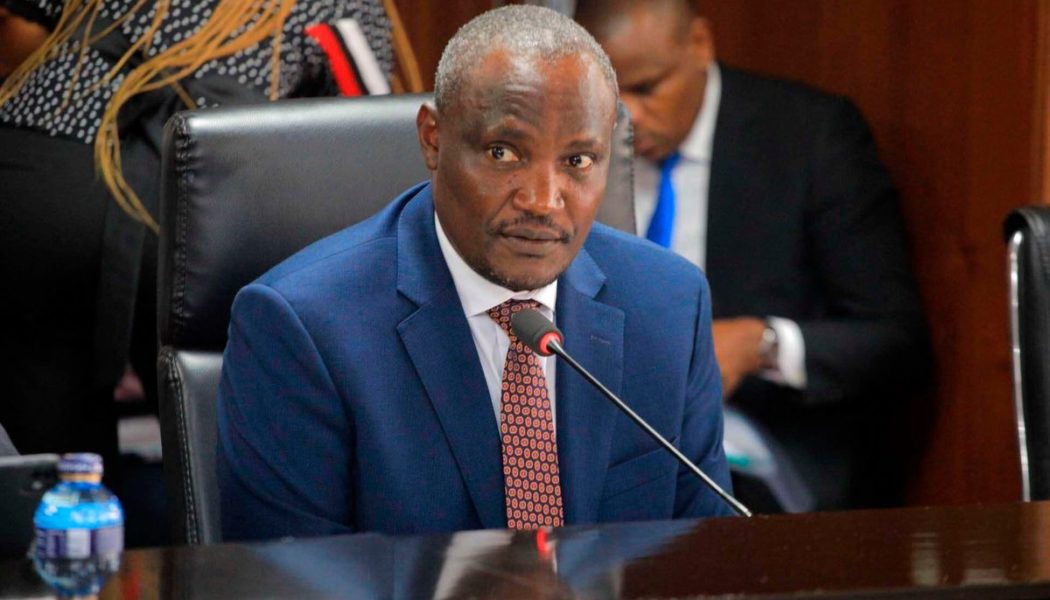
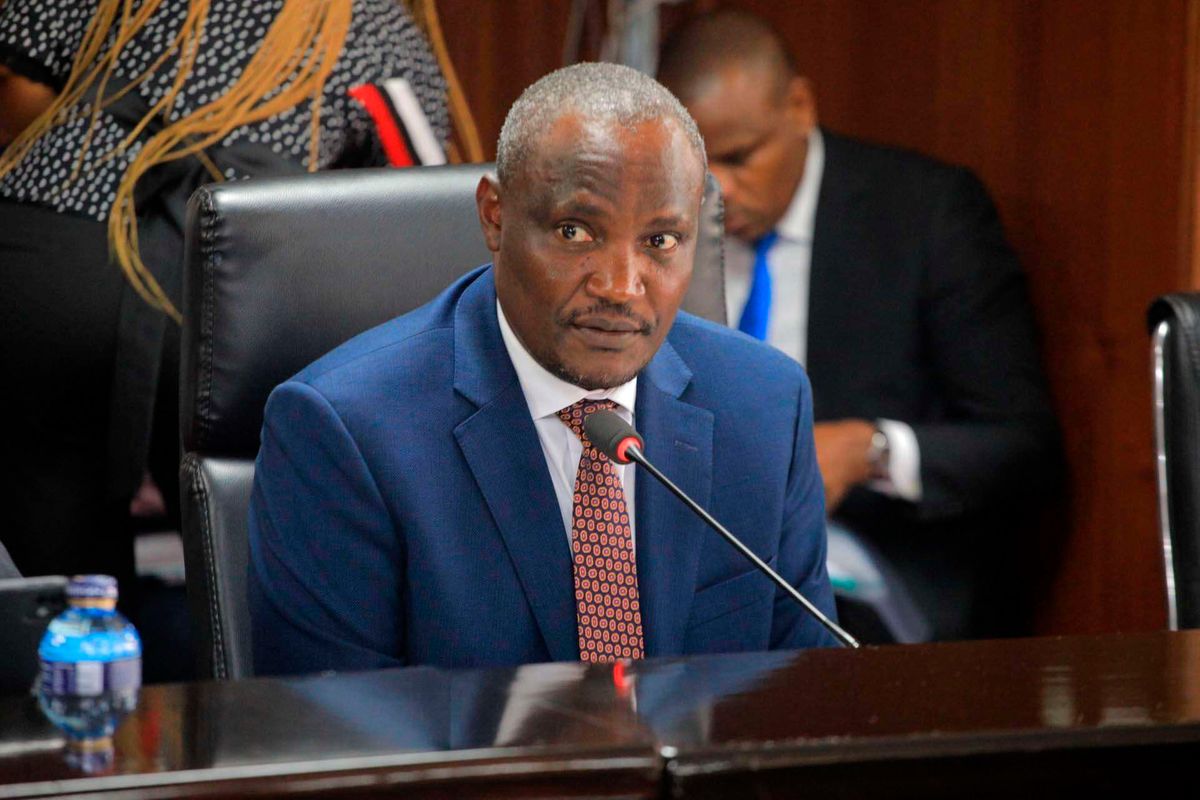
Former Consolidated Bank of Kenya CEO Samuel Muturi has lost his bid for reappointment after Treasury Cabinet Secretary John Mbadi blocked the bank board from giving him a fresh three-year term, sparking a legal battle.
Mr Muturi had sued the bank, alongside Mr Mbadi and acting CEO Dominic Murage, seeking either a fresh term based on the board’s favourable recommendation or damages and reliefs of at least Sh76.35 million.
However, the Employment and Labour Relations Court dismissed Mr Muturi’s petition, finding that his three-year contract, which lapsed in October 2025, did not confer an automatic right to renewal despite a positive performance record and recommendation by the bank’s board.
In the judgment, the court held that the renewal of a CEO’s contract in a State corporation is not solely a board decision but is subject to concurrence by the parent ministry—in this case, the Treasury.
The court also upheld the appointment of Dr Murage as the acting CEO following the expiry of Mr Muturi’s term, terming it a lawful and necessary step to ensure continuity of the bank’s operations.
“The court holds that the petition lacks merit and is dismissed. The contract ended by effluxion of time, and the Cabinet Secretary was not bound by the recommendations of the board on the extension of the contract,” reads the judgment delivered on May 15.
Before tapping Mr Muturi’s replacement on October 8, the Treasury Cabinet Secretary fired three directors on October 3 after they insisted on Mr Muturi’s second term and rejected the push for the recruitment of a new CEO. Mr Mbadi advised the remaining two of the seven directors to hire Dr Murage, a lecturer at the University of Nairobi, as acting CEO.
Dr Murage’s appointment came days after he stepped down in the race for the Mbeere North parliamentary seat in a by-election in favour of the candidate of President William Ruto’s United Democratic Alliance (UDA). The appointment of Dr Murage came as his brother, Charles Njagagua, was removed as chairman of Consolidated Bank.
Mr Mbadi appointed Dr Murage pending certification by the Central Bank of Kenya (CBK), sparking a row with the regulator. The CBK argued that the lender had breached its rules that demand executives pass a fit and proper test before their appointment.
In the May 15 judgement, the court also declined to award Mr Muturi damages equivalent to three years’ salary, with the judge noting that non-renewal of a fixed-term contract does not amount to unfair termination and does not require justification unless expressly provided in law or contract.
“The remedy sought is not legally tenable. The remuneration of an employee is contractual and in the instant case, the contract was for three years. There is no employer obligation beyond the contract,” said the judge.
Mr Muturi had argued that he met all the requirements for reappointment, including applying for renewal six months before the expiry of his term and attaining favourable performance ratings from both the State Corporations Advisory Committee and the bank’s board.
The board had subsequently recommended his reappointment for a further three-year term, citing improved financial performance at the lender during his tenure.
However, Mr Mbadi declined to approve the renewal and instead directed the bank to begin the process of recruiting a new CEO, even as Dr Murage was picked as the acting CEO. Dr Murage, a financial scholar and lecturer, was seconded from the University of Nairobi.
In a meeting held in September, four of the six directors opted to challenge the Cabinet Secretary’s decision and insisted on Mr Muturi.
However, the former chairman, Mr Njagagua, and Jane Njogu (Treasury’s representative on the bank’s board) sided with Mr Mbadi.
In a letter dated September 17, the Cabinet Secretary acknowledged receiving a letter signed by four directors requesting extension of the CEO’s contract but insisted on ending Mr Muturi’s term.
On October 3, Mr Mbadi revoked the appointment of three of the four directors who had signed the letter, save for Florence Oluoch, who had been appointed in November last year. President Ruto revoked Mr Njagagua’s chairmanship on the same day, leaving the bank without a substantive board.
In rejecting Mr Muturi’s petition to be given a fresh term, the court found that a fixed-term contract lapses automatically upon expiry and does not create a legitimate expectation of renewal.
The judge further ruled that a positive performance appraisal and board recommendation, while relevant, do not amount to an enforceable legal right to contract renewal without approval from the relevant authorities.
Mr Muturi had also challenged the Treasury’s role, arguing that the power to appoint or reappoint a CEO rests exclusively with the board under governance guidelines. The Treasury holds a 93.4 percent stake in the lender and the remainder is in the hands of other State institutions.
However, the respondents (Dr Murage, Mr Mbadi and the bank) maintained that under the State Corporations Act and applicable governance framework, the Cabinet Secretary’s concurrence is mandatory, given the government’s ownership and oversight role in the bank.
The court agreed with the position, effectively affirming the Treasury’s influence over leadership decisions in State-owned entities.
Consolidated Bank posted a net profit of Sh198.18 million at the end of last year, emerging from a net loss of Sh155.22 million in the previous year. The latest profit is the first one in 11 years, with the previous net profit coming in 2014 at Sh44.42 million.