
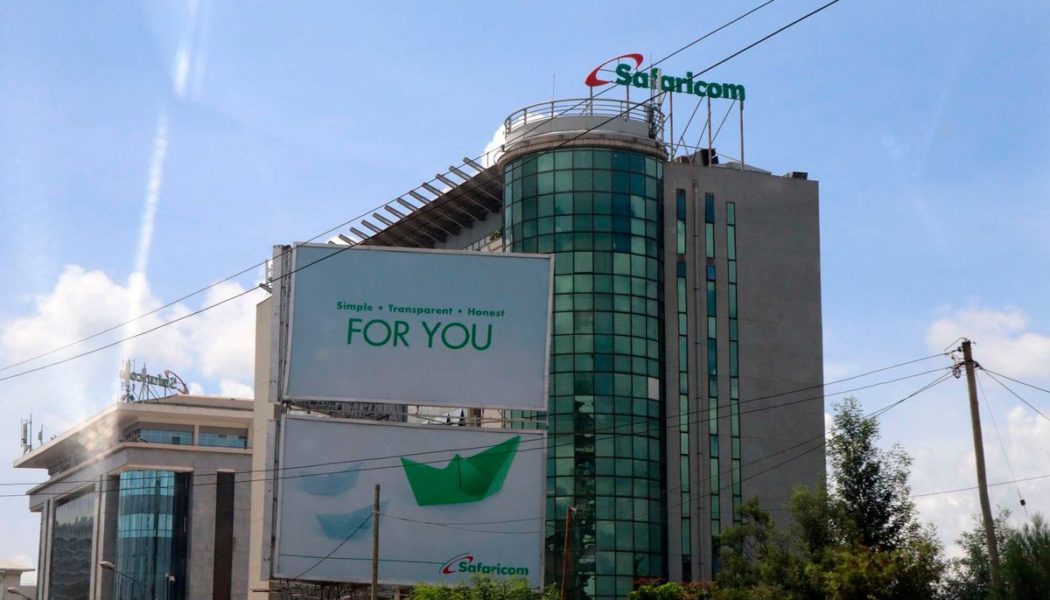
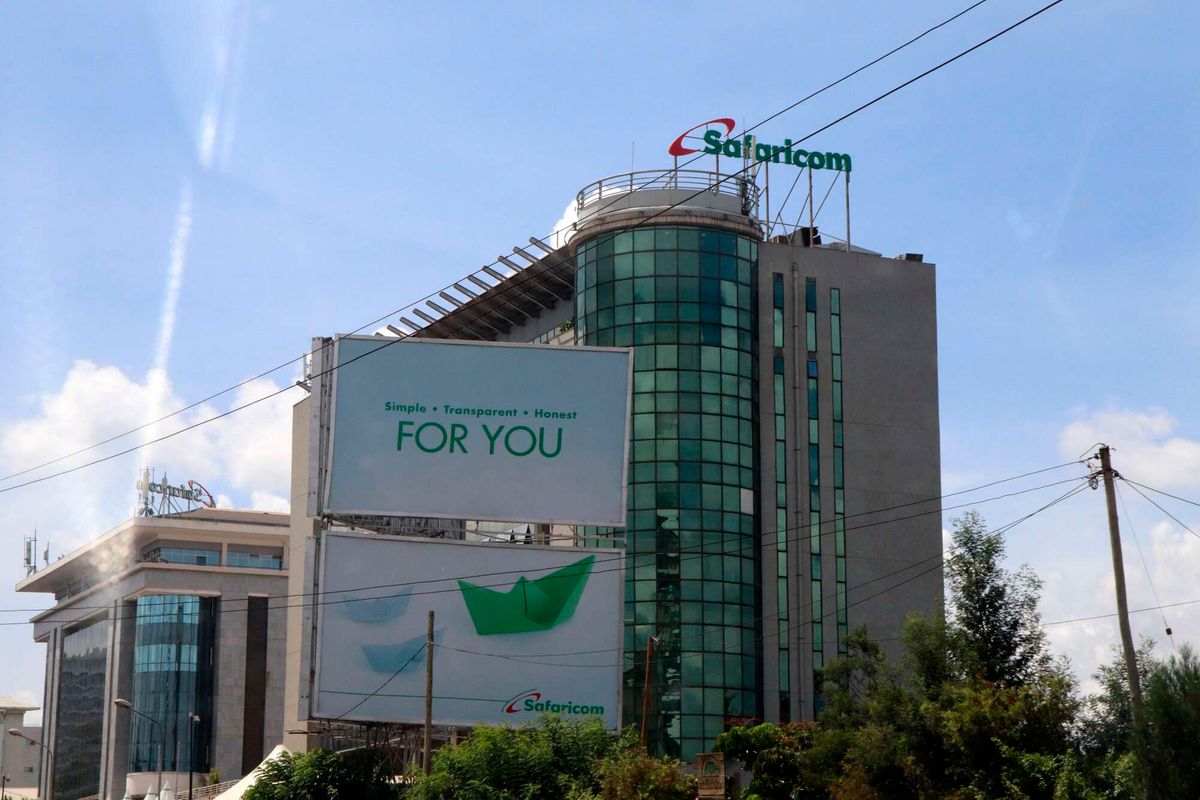
Senior Safaricom managers were awarded 20.1 million shares with a current market value of Sh707.5 million for free in the year ended March 2026 as compensation for their past performance.
The employees had been awarded 15.4 million shares the year before, with the Nairobi Securities Exchange-listed firm spending billions of shillings over the years to keep the stock compensation scheme running.
Safaricom’s chief executive Peter Ndegwa and chief finance officer Dilip Pal are among the beneficiaries of the stock awards.
Mr Ndegwa’s ownership in the telco rose to 12.09 million shares—now worth Sh425.8 million—in the review period according to disclosures in the company’s latest annual report.
He held 8.74 million shares of the company in the prior year.
Mr Pal’s holdings rose from 2.22 million shares to 2.35 million shares currently valued in the market at Sh82.9 million.
Safaricom buys its own shares in the open market and allocates them to specific employees who eventually take ownership three years later when they are free to sell the stocks or continue holding them in their personal accounts.
The telco’s recent share price rally has lifted the value of the shares awarded, boosting the fortunes of the recipients of the stocks.
“During the year, the Trust purchased 6.8 million shares at a cost of Sh143.2 million (2025: 27.6 million shares at a cost of Sh445.8 million),” the company said of its employee share award scheme.
“In addition, 20.1 million shares, with a historical cost of Sh350 million (2025: 15.4 million shares at Sh257.0 million), vested and were transferred to eligible employees.”
The trust exhausted all the shares after the latest awards, which comprised the 6.8 million that were purchased in the review period and a balance of 13.3 million that was carried forward from the prior year.
“The company recognises a receivable from the Trust in respect of shares purchased on its behalf. At the reporting date, the Trust held nil shares (2025: 13.3 million shares at a cost of Sh206.8 million),” the report said.
The free shares and Safaricom’s long-term stock price rally have made the company’s stock-based compensation one of the most lucrative among the country’s publicly-traded firms.
The telco’s share price has nearly tripled from the lows of Sh12.2 in October 2023 to close at Sh35.2 on Friday, driven by the firm’s profit growth and higher dividend payout.
Safaricom’s net profit—including Ethiopia—rose 36.9 percent to Sh95.6 billion in the year ended March 2026 while the dividend payout surged 66.6 percent to Sh2 per share.
Reduced start-up losses in Ethiopia and increased influence of Vodacom Group Limited—which has taken a controlling stake of 55 percent in Safaricom—has further made the stock attractive to investors.
The telco has focused on giving high-scoring managers shares at no cost after closing a separate scheme where a more diverse group of employees were previously offered an opportunity to buy shares at a fixed price of Sh5.4 each.
Unlike other employee share ownership plans (Esops), Safaricom’s has not diluted investors since the stocks are bought from the existing pool in the open market.
Other NSE-listed firms have dilutive employee share ownership plans (Esops) where new stock is issued and given to qualifying staff for free or at discount.
HFCB Group, for instance, earlier this year allocated 94.27 million shares under a new Esop scheme approved in 2025. The shares are equivalent to a 4.77 percent stake, placing the scheme as the fifth largest shareholder in the listed mortgage lender.
Equity Group’s shareholders in 2024 voted to issue 198.6 million shares to its Esop where employees will be able to buy stocks at a discounted price of 50 cents per share.
NCBA Group, which has not implemented its Esop for more than seven years, says it will soon start allocating the 21.8 million shares to qualifying employees.
Diversified trading firm Car and General (C&G) meanwhile scrapped its dormant employee share ownership plan (Esop) as it considers an alternative remuneration scheme to motivate its staff.
Esops are usually designed to attract and retain employees, with the workers usually able to access the shares after several years on a rolling basis.
They are also seen as aligning the interest of workers with those of shareholders. By owning stock in their company, employees are exposed to the upside and downside of their performance and decisions.
The alignment of interests is however weaker when employees are given shares for free or at a negligible cost.
Most of the shares tend to be taken up by top executives who are seen as the most critical talent in driving strategy and culture, especially in competitive sectors such as finance.
The majority of NSE-listed firms pay their employees including senior managers in cash.